

[Editor's Note: Please see UPDATE below on showing of second film.]
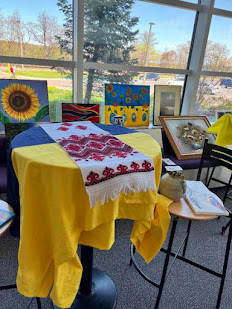
HOUGHTON -- A traveling exhibit on Native American Boarding Schools will be in the Opie Reading Room of Michigan Tech's Van Pelt Library from March 11 to 22, with an opening from 6:30 p.m. to 9 p.m. Wednesday, March 11. This opening event will include the 25-minute film Remember the Children followed by a facilitated discussion with boarding school survivors, refreshments and visiting the exhibit.
UPDATE: Since Michigan Tech is closed Sunday and Monday, March 15 and 16, the date and location for the showing of the second film, Indian Horse (104 min.), have changed. On Wednesday, March 18, the film Indian Horse will be shown in Ballroom A2 of the Memorial Union Building (MUB) with a discussion and refreshments from 6:30 p.m. - 8:30 p.m. The exhibit will be open 24/7 in the Opie and Van Pelt Library through March 22. All events are free and open to the public.
Native American boarding schools’ legacy continues to impact Native American people today. Known survivors in the UP are listed on an exhibit panel. When visiting the exhibit, participants can scan a QR code with their smartphones to listen to boarding school survivors tell their stories.

The Keweenaw Unitarian Universalist Fellowship (KUUF) is partnering with Biskaabiiyaang Collective, a Michigan Technological University student organization (formerly the American Indian Science and Engineering Society), Trinity Episcopal Church Houghton, Canterbury House, and the Michigan Tech Van Pelt Library to host this Walking Together Finding Common Ground Traveling Exhibit. The exhibit was created by the Episcopal Diocese of Northern Michigan, the Great Lakes Peace Center and the Beaumier Heritage Center at Northern Michigan University and describes the impact of Native American boarding schools.

The traveling exhibit and related events are intended to raise awareness of the fact that there were at least 417 federal Indian boarding schools in the U.S. from 1819 to 1980, four of which were in the Upper Peninsula and two in lower Michigan. 139 Indian residential schools operated in Canada from 1828 to 1997. Tens of thousands of Indigenous children were forcibly abducted from their families and sent to faraway boarding schools run by the federal government or by religious organizations where they were given English names, forced to cut their hair, and forbidden to speak their languages. Many children were beaten, starved and abused in these schools. More than 1,000 children died.

"The federal government took deliberate and strategic actions to isolate children from their families, deny them their identities, and steal from them the languages, cultures and connections that are foundational to Native people," said former Interior Secretary Deb Haaland.
For more information, visit https://nmu.edu/walking-together/home or contact Joan Chadde at jchadde@gmail.com or call her at 906-369-1121.
Editor's Note: Photos and captions here are courtesy https://nmu.edu/walking-together/boarding-school-era.































No comments:
Post a Comment