See our right-hand column for announcements and news briefs. Scroll down the right-hand column to access the Archives -- links to articles posted in the main column since 2007. See details about our site, including a way to comment, in the yellow text above the Archives.

Friday, August 27, 2010

Updated: Isle Royale Wolf-Moose study helps humans understand ecosystems

Isle Royale wolves in winter. Wolves first came to Isle Royale in about the year 1950 by walking on an ice bridge from Canada. (Photo © and courtesy J. Vucetich. Reprinted with permission.)

By Peter Mayer*

HOUGHTON -- Isle Royale National Park is a wild place, the dwelling of prowling wolf packs and foraging moose. Isolated from the mainland by at least 15 miles of Lake Superior water, the island provides an invaluable setting for passionate researchers. Ecologist John Vucetich and Wildlife Ecologist Rolf Peterson co-lead the Michigan Technological University research team that studies wolf and moose interaction, producing knowledge relevant to understanding ecosystems all over the world.

Isle Royale wolf. (Photo © and courtesy J. Vucetich. Reprinted with permission.)

According to Vucetich, the archipelago is an optimal location for gathering information on species interaction. The limited diversity of species supplies a much simpler ecosystem than is typical of continental environments. Wolves are the only predator to moose and moose comprise 90 percent of the wolf diet. Because of this, the single-prey-single-predator system can be studied intimately.

"It’s important when we manage natural systems in various parts of the world to understand how they work," Vucetich said. "Isle Royale is one of these places that we can watch for a long time . . . it’s a relatively simple system. There are fewer components here."

The simplicity of that single predator system makes it easier to understand what’s going on, he added.

Vucetich, Peterson and their team have generated data that has various biological implications. Their research has produced considerable insight into wolf mortality rates, the functioning of wolf predation on moose, and the effects of wolf predation on prey populations. This information can be applied to the relationships of predator-prey populations in a variety of ecosystems.

The project has been going on for 50 years, the longest predator-based study in the world. Vucetich, who has been working on the team for 19 years, said the study's longevity reinforces its importance.

"The more we study," Vucetich said, "the more we realize how poor previous studies were . . . these first 50 years are going to be different than the next 50 years. It’s kind of a scientific exercise in humility that lets us know that if you watch something for a short while, you may get the wrong impression."

Isle Royale moose. (Photo © and courtesy J. Vucetich. Reprinted with permission.)

When Isle Royale became a national park in 1931, moose had already lived there for 30-some years after swimming across Lake Superior from Canada; but wolves did not inhabit the island for another 20 years, crossing the Lake Superior ice to arrive at their new home. In 1974, the gray wolf population had been confined to a small area of northern Minnesota and Isle Royale.

"Rolf began working on the project in the early 1970s," Vucetich noted. "Over the decades his observations have led to great insights about how nature works -- everything from learning the wolves have a strong preference for old and weak moose to using moose bones to discover that poor nutrition early in life increases the risk of arthritis later in life. Rolf retired from Michigan Tech University a few years ago, but his commitment to the wolves and moose is as strong as ever."**

Wolves are currently on the U.S. Endangered Species List, which protects them as a non-game species. On May 4, 2009, wolves were temporarily delisted in the Western Great Lakes region, but the U.S. Fish and Wildlife Service withdrew the delisting on July 1, 2009.

A number of Upper Peninsula sportsmen believe wolves cause deer scarcity in different parts of the region and reduced hunting success. The perceived reduction in deer numbers has stirred a debate over the protective status of wolves. The Department of Natural Resources and Environment (DNRE) estimated the wolf population at 577 in the UP, an 11 percent increase over the previous year, according to the 2009 DNRE Wolf Management Report. As long as Isle Royale is studied, models can be produced for sustainable management of wolf populations in the U.P.

The wolf-moose research team is motivated by a scientific and philosophical respect for the natural world as well as an appreciation for the beauty of the island. The importance of Isle Royale as a nature preserve cannot be overstated, Vucetich said.

"The primary value for wolves on Isle Royale (is) the large number of visitors that come to the island and appreciate knowing there are wolves here and appreciate knowing how their populations work," Vucetich said.

For the scientist and the visitor, Isle Royale is truly a gem in the middle of the largest (in surface area) lake in the world. Its beauty is awe-inspiring, its conditions hospitable to its inhabitants, and its value as a nature preserve make it a rare and flourishing legacy of the U.S. conservation movement.***

Editor's Notes:
Update:
Setting it straight: We regret a previous error in this article, which has now been corrected. Both Rolf Peterson and John Vucetich are co-leaders of the research team for the Isle Royale Wolf-Moose study.

* Visiting reporter Peter Mayer wrote this article as part of his work in David Clanaugh's summer journalism class at Michigan Tech. This is Mayer's second article for Keweenaw Now. See also his July 28 article, "Local soccer league promotes diversity, camaraderie among kids from different schools."

** See the Aug. 16, 2010 article "Michigan Tech ecologists link early malnutrition, later arthritis in Moose," by Jennifer Donovan, on the Michigan Tech Web site.

*** For more information on the Wolf-Moose study, visit their updated Web site, The Wolves and Moose of Isle Royale.

Lahti condemns Michigan Senate majority for refusal to reappoint Upper Peninsula Natural Resources Commissioners

HANCOCK---State Representative Michael Lahti this week blasted the Michigan Senate Majority leadership for refusing to reappoint two Republican commissioners representing the Upper Peninsula to the Natural Resources Commission and locking UP citizens out of their ability to have a say in policymaking decisions of the Department of Natural Resources and Environment (MDNRE).

Lahti said such political games could leave the UP with no say in important policy decisions on the state's land and water and claimed such a move is against Michigan's constitution.

"The Senate Majority leaders are playing a political game with these appointments; and that means that the Upper Peninsula will not have proper representation and input on decisions that affect our jobs, tourism, and our way of life," said Lahti. "This is exactly the kind of partisan bickering and political infighting in Lansing that so many Michigan citizens are tired of. These ploys have no place in a state government that should be focused on creating jobs and protecting families."

The Michigan Senate Majority last week refused to consent to the re-appointments of Natural Resource Commissioner J.R. Richardson, first appointed in 2007, and Natural Resource Commissioner John M. Madigan, first appointed in 2002. Richardson and Madigan are both lifelong UP residents and the only UP residents on the NRC.

"They've been doing a good job," Lahti said. "They were looking after UP interests. It's the first time we've had two members from the UP on the Commission."

Senate Majority leadership has refused to approve any of the Governor's appointments or re-appointments of Democrats or Republicans to state boards and commissions for individuals whose terms would begin after an arbitrary deadline of September 2, despite having the constitutional right and responsibility to make such appointments. Senate Majority leaders have stated they want these appointments left vacant to be filled by the next governor. Both Mr. Richardson and Mr. Madigan are Republicans.

Both are also fishermen and active in sportsman's organizations.

Richardson, of Ontonagon, a graduate of Michigan Tech University, received the Michigan Department of Natural Resources Partner in Conservation Award in 1993 for his work with the local sportsman's groups on habitat rehabilitation and fish plants and for his management of an award-winning wastewater treatment plant in Michigan. His 31-year career in the paper industry ended in 2007. Since December 2007 he has worked for the New York-based TRAXYS Corporation, which is creating renewable energy alternatives for producing power in the Upper Peninsula.

Madigan, of Munising, is a past board member of the Alger County Fish and Game Alliance and is a member of other hunting and fishing organizations. He also worked as a charter boat captain on Lake Superior while attending college at Northern Michigan University.

The Michigan Natural Resources Commission (NRC) is a seven-member public body whose members are appointed by the Governor and subject to the advice and consent of the Senate.

Editor's Note: Visit the Michigan Department of Natural Resources and Environment (MDNRE) Web site to learn more about the NRC and its members.

Thursday, August 26, 2010

Hey, Ho! Come to the Fair!

HANCOCK -- The Houghton County Fair opens at 3 p.m. TODAY, Thursday, Aug. 26, at the Fairgrounds and Houghton County Arena in Hancock.


It's always fun to hear the roosters welcoming visitors to the Fair! Here are some blue-ribbon winners from last year's Houghton County Fair. (2009 Video clip by Keweenaw Now)

Today, Thursday, Aug. 26, events include the Kenya Safari Acrobats at 5 p.m. on the Midway, the Open Horse Show -- Speed at 5 p.m. in the Horse Arena and the Miss Houghton County Queen Pageant at 6:30 p.m.

In addition, a Poultry / Rabbit Show will be held at 6 p.m. in the Small Animal Barn. Exhibit Buildings are open from 6 p.m. to 10 p.m. today, Thursday.

On Friday, Aug. 27, events and exhibits begin at 9 a.m. and continue through 10 p.m. Highlights include a Senior Citizens' Day Program from noon to 4 p.m. in the Indoor Arena; Swine, Market Steer, Dairy and Beef shows at 9 a.m., 11 a.m. and noon, respectively, in the Livestock Pavilion; Equine Freestyle Demonstration at 1 p.m. in the Horse Arena; Kivijat Dancers at 1:30 p.m. and the Country Drifters at 2:15 p.m. on the Indoor Stage; the Horse Jumping Show at 5 p.m. in the Horse Arena; and the Farm Tractor Pull at 7 p.m. in the Main Event Arena.

On Saturday, Aug. 28, exhibits open at 11:30 a.m., but come early to see the Livestock skill-a-thon at 9 a.m., the Youth Horse Show at 10 a.m. and the Celebrity Horseshow Pitching Tournament at 11 a.m.

Saturday is Kids' Fun Day in the Exhibit Building, starting at noon. A Youth Talent Show will take place at 1 p.m., followed by the Kenya Safari Acrobats at 1:30 on the Indoor Stage. The Acrobats perform several times during the day.* Tom Katalin will also perform at 5 p.m. and 7 p.m. on the Indoor Stage.

For a real Fair experience, don't miss the Draft Horse Pull at 3 p.m. in the Main Arena and the Livestock Auction at 4:30 p.m. at the Livestock Pavilion.

On Friday and Saturday, Exhibit Buildings close at 1o p.m. but the Midway entertainment remains open.

On Sunday, Aug. 29, the Open Horse Show begins at 9 a.m. with the Draft Horse Show running between breaks and at about 10 a.m. Exhibit buildings are open from 11:30 a.m. to 5 p.m. Sunday. A highlight event Sunday is the Demolition Derby Car/Minivans at 2 p.m. in the Main Event arena.

*See the complete Schedule on the County Fair Web site.

Pipe organ concert to benefit Keweenaw Heritage Center Aug.26

CALUMET -- A pipe organ concert will take place at 7 p.m. TONIGHT, Thursday, Aug. 26, at the Keweenaw Heritage Center at St. Anne's in Calumet. Thomas Kraska will be the featured organist on the 1899 historical Barckhoff tracker pipe organ.

The historic, restored Barckhoff organ in the Keweenaw Heritage Center at St. Anne's in Calumet. (Keweenaw Now file photo)

Mr. Kraska is a resident of Chapel Hill, NC, and a summer resident of Big Traverse Bay. He is a retired chemical engineer and plays the organ part time in his church in Chapel Hill and also in Houghton at the St. Peter and Paul Lutheran Church.

Joining Mr. Kraska will be area musicians Sidney Butler on the harp, Libby Meyer on the violin, Kay Seppala on the flute and vocalist Barbara Lide. This beautiful ensemble will make for an enchanting evening of music.

The 1899 Barckhoff organ restoration was completed in 2009. Recently professional organist Christina Harmon of Dallas, Texas, came to the Copper Country to make a CD recording on the Barckhoff and seven other area historical pipe organs. Ms. Harmon was impressed that so many late-18th- and early-19th-century pipe organs remain in our area and wanted to make a recording of them to expose them to the world. Ms. Harmon discovered these unique pipe organs when she was invited by Pine Mountain Music Festival last summer to perform an organ recital.

Tickets for Thursday evening's performance will be available at the door for $5. The proceeds from this concert will benefit the handicap accessible project at the Keweenaw Heritage Center at St. Anne's.

Click here to read about the 1899 Barckhoff organ restoration.

Wednesday, August 25, 2010

Kennecott/MDEQ bypass Michigan’s Sulfide Mining Law: Legal Brief from Appellants

MARQUETTE -- Save the Wild UP has made available in pdf format the legal brief filed in July 2010 in the Washtenaw County Circuit Court by Appellants -- the National Wildlife Federation, the Keweenaw Bay Indian Committee, the Yellow Dog Watershed Preserve and the Huron Mountain Club -- in their case against the Michigan Department of Natural Resources and Environment (MDNRE), formerly the Michigan Department of Environmental Quality (MDEQ), and Kennecott Eagle Minerals Company (KEMC).

Save the Wild UP states the following in their Aug. 20, 2010, posting: "This brief is clear and for the most part, quite understandable, with overwhelming evidence that we are not protected at all by Michigan’s sulfide mining laws, because the MDEQ has chosen to permit Kennecott to ignore and violate the principle provisions of that law, and has virtually exempted Kennecott from cleanup of any area outside the current fence line, again in violation of the law’s provisions. As a result, miners, the environment, and citizens of the Upper Peninsula have NO PROTECTION against catastrophic failure of the mine or widespread pollution of streams and lakes. No other news media have published this evidence so far, but every concerned citizen needs to know what is going on."

Click here to read the brief.

Tuesday, August 24, 2010

Opinion: Reasons to VOTE NO on the Houghton County Justice Center

By George Dewey*

Reason #1 -- It is TOO BIG: the proposed size of 110 beds is not justified.

The data provided by the Justice Center Committee does not support the projections of needed jail size. The data used by the Committee to estimate needed capacity in 2040 uses total Jail and Work Camp population since 1990. In projecting need, every other county in the UP used data since 1996. If Houghton County uses the same range of data as the other UP Counties, the projected need is much smaller.

Using inmate data (both jail and workcamp) since 1996 (same as other counties), the projected average daily inmate population in Houghton County in 30 years is under 60 inmates. If 60 is multiplied by 1.25 to account for classification (male/female), peaking, and maintenance -- a reasonable size jail would be closer to 80 total including work release (since work release numbers were used in the original projections).

The Committee notes that the current county budget will not cover the expected costs of operating the new jail complex. It is possible that the jail is intentionally oversized to provide income from renting out beds to adjacent counties to cover the increased operating costs. If the jail serves adjacent counties as expected, it in effect becomes a regional jail financed by Houghton County taxpayers.


Reason #2 -- It is TOO EXPENSIVE

The cost estimates do not tell the entire story. Borrowing $15 million over 30 years will require taxpayers to pay a total of $15 million in interest over the life of the bonds (assuming interest at 5.5 percent for 30 yrs). The total project cost over 30 years is closer to $30 million.

For a home worth $100k, the expected yearly tax increase is projected to be $44.40 -- so over the thirty-year life of the bonds, the total tax assessment would be $1,333. If your house is worth $50,000, your total tax assessment would be $667; and, if your home or business property is worth $200k, your total tax assessment over the life of the bonds would be $2,664. Business owners and landlords will pass along this new tax, so renters will also pay for this tax increase.

A recent Daily Mining Gazette poll asked readers if "we should increase taxes to avoid laying off teachers." By an overwhelming majority, readers rejected the idea of raising taxes to avoid laying off teachers. Asking Houghton County residents to raise their taxes to build a new jail but not raise taxes to avoid laying off teachers seems like the wrong priority. Asking Houghton County residents to increase their taxes in a time of such financial uncertainty does not make sense!

Reason #3 -- It is the WRONG LOCATION for a Large Regional Jail.

The county should seriously consider creating a regional jail at Camp Kitwen. Many other counties in the UP have similar needs for updated jail facilities. Camp Kitwen has a large bed capacity and would cost less than the current jail proposal. Considering facility costs (the state owes $5 million in Bonds), and remodeling costs (Houghton County jail consultant estimated $5.5 million remodeling costs to convert Camp Kitwen to a jail) -- a regional jail at Camp Kitwen would cost less to build than a new regional jail in central Houghton (Sourcebook, p. 9 -- "The proposed Justice Center is planned and sited to provide a range of future options for regional partnerships, with Houghton County as the lead partner"). The proposed plan shows a jail complex spanning over 1 ½ city blocks with plans for expansion. (Sourcebook, p. 5 -- "It is possible, if not likely, that other counties would be interested in boarding inmates in the new jail as space is available. The proposed Justice Center is sited and designed to facilitate efficient future expansion"). The idea of regional jail in central Houghton that could eventually span two entire city blocks does not make sense!**

The additional operating costs for a Camp Kitwen regional jail that were noted in the Sourcebook could be covered by income generated by renting beds to other UP counties in need of additional jail space. The jobs created by this regional jail facility would help replace some of the local jobs lost when Camp Kitwen closed.

Editor's Notes:
* The author of this article, George Dewey, is a Houghton resident.

** Click here to access the Houghton County Justice Center Committee Sourcebook.

County justice center proponents seek public support

By William Frantz*

This drawing shows the projected design for the new Houghton County Justice Center to be located to the west of the present Houghton County Courthouse. (Photo © 2010 and courtesy Bill Fink Communications, LLC. Reprinted with permission.)

HOUGHTON -- In fall of 2009, the Houghton County Commissioners Office asked their Law Enforcement Committee to conduct a study of the current jail and district courtroom facilities. The committee was asked to recommend the changes required to better serve current laws and state regulations; they were also instructed to inquire on potential locations for the new facility. As a result of their investigation, Houghton County officials came to the official conclusion that virtually nothing in the current jail and courthouse meets current standards and state-mandated requirements. Staff and inmate safety, legal affairs and rehabilitation were found to be sub-standard.

County officials proposed a solution: a justice center, to be built on the county-owned property directly west of the existing court house.

Nearly a year later on a warm Tuesday evening in the Houghton County town hall, the outrage and dispute from taxpaying citizens could be heard. Individuals wondering why other options had not been explored were quickly informed by officials that there were no other plausible alternatives.

"We are just jumping through hoops. Why aren’t other alternatives to this justice center being explored? You (the commissioners) are running us around in circles," said Mary Ann Predebon, a taxpaying citizen of Houghton County opposed to the justice center.

For each public proposal, the commissioners gave a valid reason why the justice center was a better choice. One of the alternative proposals included constructing the new justice center near the county airport, home of the Houghton county jail work camp facility. This possibility was deemed unfeasible because of the distance between the airport and the circuit courtroom as well as the increased risk of inmate transportation.

Another alternative presented at the discussion was a suggestion to add a second floor to the existing jail. The commissioners insist that even with a full second floor, the existing jail footprint of 7,900 sq. ft. is too small for present and future needs. Previous engineering studies have also determined that existing walls could not support a second floor.

"The existing facility is insufficient and outdated," said Marjorie Chandonais, captain of the current Houghton County jail. "If you look at all of the facts, it (the justice center) is the only logical choice for Houghton County."

Houghton County's main jail and Sheriff's Office as they exist today, next to the Courthouse. (Photo © 2010 and courtesy Bill Fink Communications, LLC. Reprinted with permission.)

Chandonais continued to state additional reasons why the current jail must be replaced. "Every year we have state inspections from Lansing that we fail," she noted.

Chandonais added that electrical, plumbing, spatial and safety issues are all mounting reasons why a new jail is needed.

Many citizens wonder why the recently abandoned state prison Camp Kitwen can’t be used as a new county jail. Camp Kitwen has the capacity and standards needed to fulfill state requirements; however, it is mandated by state law that the Sheriff's office must be located within Houghton city limits.

Citizens are also wondering if Houghton County can afford a $15 million dollar facility.

"You make this sound like it's a done deal, like you've made up your minds and we've got no say in this. Don't forget whose money you're spending," said Predebon.

"The average home owner would pay about $30 a year to pay it off, and that rate would drop with time," said Chandonais when asked how much taxpayers can expect to pay each year for the new facility.

Edward Jenich, financial chairman of the Commissioners Office, insists that $30 a year is a small price to pay to invest in the future of Houghton county. Jenich also stated that the $15 million dollar project is the most practical solution to solve the problem permanently.

Despite public opposition voiced at the July 13, 2010, Houghton County Board of Commissioners Meeting, the commissioners voted three to one in favor of putting the $15 million bond issue to a vote on the Nov. 2, 2010, Election Ballot.**

Although the proposed justice center currently looks like the most viable option, there has not been an official decision. Houghton County commissioners hope to have the issue settled by Fall of 2010.

For more information on the progress of the justice center, as well as the schedule of meetings for presenting the project to the public and local city, village and township officials, please visit http://www.houghtoncounty.net.

Click here for the Report of the Justice Center Study Committee, which is a Power Point presentation including more photos by Bill Fink Communications, LLC.

Click here to access the Houghton County Justice Center Committee Sourcebook, which has many details on the project as well as diagrams showing the proposed design.

Editor's Notes:
* Guest reporter William Frantz wrote this article as part of his work in David Clanaugh's summer journalism class. This is Frantz's second article for Keweenaw Now. See also his July 14, 2010, article "MTEC Smart Zone celebrates grand opening of Michigan Tech Lakeshore Center."

** Click here for the minutes of the July 13, 2010, Houghton County Commissioners meeting.

Monday, August 23, 2010

Audio interview: Pewabic Garden cultivates community

The Pewabic Street Community Garden in Houghton offers city residents an opportunity to plant both vegetables and flowers and to tend and harvest their own garden plot right in the city. (Photo by Keweenaw Now taken today, Aug. 23, 2010)

By Eric Rosenberg

HOUGHTON -- For the past four years, the Pewabic Street Community Garden has existed as a way for members to get out a little in order to enjoy the benefits of raising one’s own plants alongside those of one’s own neighbors.

The website for the group describes the garden as "a volunteer organization that provides friendly gardening spaces to the surrounding community."*

The Pewabic Street Community Garden is located near the Houghton County Courthouse in Houghton. (Photo by Keweenaw Now taken today, Aug. 23, 2010)

To learn more about where the garden has been, where it is now, and where it may go in the future, I spoke with Sarah Cheney and Elena Busova, both of whom have been with the garden since the beginning. The report can be heard by clicking below.


Click above to hear the report on community gardens, in particular the Pewabic Street Community Garden. Audio clip © 2010 and courtesy Eric Rosenberg.

* The Pewabic Street Community Garden blog has more information for those interested, while updates on the Ryan Street Community Garden can be found at http://ryanstreetgarden.blogspot.com. Additionally, the American Gardening Association, and ways to get involved with that group, can be found on their Web site, http://www.communitygarden.org/.

Editor's Note: Guest reporter Eric Rosenberg completed this audio interview as part of his work in David Clanaugh's summer journalism class at Michigan Tech. This is Rosenberg's third article for Keweenaw Now. See also his July 16 article, "Lake Superior Day commemorates the Great Lake July 18," and his Aug. 4 article, "Joe Kirkish offers words for love of language."

Proposed Justice Center to be presented at public meetings

HOUGHTON -- The proposed Houghton County Justice Center will be the topic of public meetings hosted by the League of Women Voters. The program will be repeated at three public meetings at the Portage Lake District Library and one at Calumet Schools to give voters several opportunities to hear the presentation.

The meeting dates are the following:

At Portage Lake District Library: 7 p.m. Tuesday, Aug.24; 7 p.m. Wednesday, Sept. 29; 7 p.m. Thursday, Oct. 28.

At Calumet Elementary School multipurpose room: 7 p.m. Wednesday, Oct. 6.

Updates of the power point and sourcebook documents about the proposed Justice Center are available on the website www.houghtoncounty.net.

Sunday, August 22, 2010

Michigan Tech’s Reading as Inquiry Program creates community connections

By Samantha Stauch*

HOUGHTON -- Today, Aug. 22, incoming students and families will begin to pour onto the Michigan Tech campus. Students are bringing their gaming consoles, clothing and possibly an interesting story about their trip -- maybe a story explaining just how exactly their parents fit those 32 suitcases into the family’s Volkswagen Beetle.

Although these students come from all over the country, even from all over the world, they will share an important experience that can connect them to the community of the Keweenaw as well as to one another -- Sherman Alexie’s novel The Absolutely True Diary of a Part-Time Indian. Some will have read the book over the summer. Others may be reading it now and chuckling at its humor while pondering its serious issues. Alexie's novel is this year's choice for the Reading as Inquiry Program.

Each year, incoming students are asked to read a book for this program, which has many diverse and important goals.

"(It) prepares them for college level reading and helps build connections for them. When students meet for the first time they already have something in common and can talk about the book," said Katie Russell, assistant director of Michigan Tech’s COMPASS (Center for Orientation, Mentoring, Parents, and Academic Student Success) and this year’s co-coordinator for the Reading as Inquiry Program.

This year’s book, The Absolutely True Diary of a Part-Time Indian, centers around a character named Junior, a high school student growing up on a Spokane Indian reservation. Junior decides that he has to make some major changes. The book discusses the many difficulties and successes Junior encounters while taking the steps that could change his life forever.

"I loved the book!" said Beth Wagner, Michigan Tech’s assistant vice president of Student Life. "It is a coming-of-age story and is a good story for incoming students. It is a good story about transitioning."

Some themes covered in the novel may be difficult to discuss. Alexie addresses alcoholism, eating disorders and poverty. The author specifically focuses on difficulties many Native Americans face living on reservations in the United States.

Native Americans living here in the Keweenaw may identify with some of the issues addressed in the novel.

"I grew up here on the reservation," said Lori Muhlig, Michigan Tech's Native American Outreach coordinator for the American Indian Science and Engineering Society. "A lot of what Alexie says about living on a reservation is true."

According to the author’s website, http://www.fallsapart.com/truediary.htm, this novel was based a great deal on Alexie’s own life experiences. The main character, Junior, and Alexie share many parallel characteristics. Both Junior and Alexie are from a Spokane Indian Reservation. Both Junior and Alexie suffer from a condition called hydrocephalus (a condition where there is water on the brain). These similarities along with the clever and often funny cartoons add a very personal element to the writing.

"Alexie is such a good writer and tells stories in a way that moves it along quickly and he’s funny," said Robert Johnson, Department of Humanities professor and co-coordinator of the Reading as Inquiry Program. "(Alexie) takes what might be a bitter issue and makes you laugh about it, but he doesn’t let you off the hook."

Wagner also noted how Alexie engages the reader to contemplate the serious issues beneath the humor.

"I particularly like the author because he’s very introspective," Wagner said. "He doesn’t give anybody a break. He points out the strengths and weaknesses of all his characters."

The process for choosing a book takes about a year, beginning in the fall. A committee is formed that consists of Michigan Tech faculty from all disciplines along with current Michigan Tech students and staff. Throughout the academic year, committee members receive recommendations, review a number of books and narrow the list down to a few contenders. After reading all the books, the committee comes to a consensus on which book will be selected.

The recommendations can come from Michigan Tech faculty, staff, students and community members. One opportunity for students to make suggestions comes at the end of Orientation Week. All new students are asked to take a survey in order to provide feedback about their Orientation experience. At this time they are able to comment on the Reading as Inquiry program and to suggest any books they would like to see the next group of incoming students read.

Along with the official book selection committee, Wagner also headed a second committee, made up of current students that read through this year’s top contenders. The student group’s reading was done in conjunction with the official Reading as Inquiry committee. According to Wagner, this year’s chosen novel was the student group’s first choice as well.

During Orientation week students will have the opportunity to participate in discussion groups. This will be time set aside for a campus-wide discussion about The Absolutely True Diary of a Part-Time Indian.

These groups will be facilitated by discussion leaders who come from the Student Life staff as well as other members of Michigan Tech’s faculty and staff. According to Johnson, the Reading as Inquiry program is one of the most inclusive programs on campus. About 170 faculty and staff members will lead discussions with about 1200 students.

Chris Anderson, a member of the Wikwemikong Unceded Indian Reserve on Manitoulin Island, Ontario, and a current masters student in Applied Science Education at Michigan Tech, will be a discussion leader this year. He appeared to be looking forward to leading a discussion group and gave the impression that he enjoyed reading the novel. Anderson commented that he has re-read it a number of times.

"Choosing this book as a summer reading can help make connections between the community and the university," Anderson said. "We all need heroes and positive role models. This novel has the potential to be planting the seeds for education."

Along with reading the novel and participating in group discussions, students and community members have multiple opportunities to be involved. Copies of the book have been given to the Portage Lake District Library and the Keweenaw Bay Ojibwa Community College Library. Finlandia students will also have opportunities to read and discuss the book in some of their classes. On September 14 the author Sherman Alexie is scheduled to visit Michigan Tech campus and will be giving a speech in the Rozsa Theater beginning at 7 p.m. This year a special event will conclude the program: A Powwow will be held at 1 p.m. on Oct. 23 in the SDC (Student Development Complex) Multipurpose room.

The Absolutely True Diary of a Part-Time Indian brings to the Keweenaw a unique story of an adolescent who, like many of us, is looking to make a major change. The protagonist's personal journey can bring to light some issues that some readers may not expect. Some individuals may be reluctant to discuss these issues. Regardless, this book holds the potential to make a bridge between the community and the Michigan Tech campus while enriching the education of students.

*Editor's Note: Guest reporter Samantha Stauch wrote this article for David Clanaugh's summer journalism class at Michigan Tech. This is her third article for Keweenaw Now. See also her articles "Portage Library Summer Reading Program: More than just a good read" and "Playtime in the Park means summer fun for kids, parents."

Friday, August 20, 2010

Deer Chase Race needs volunteers Saturday, Aug. 21

From Marc Norton, Race Director:

CALUMET -- Deer Chase needs for Saturday, Aug. 21:
  • 5 Intersections while the racers leave town, 10-15-minute commitment
  • 4 intersections to bring them safely back into town (up to 3-hour commitment, 11 a.m. to possibly 2 p.m.)
  • 3-4 more aid station workers, 10:30 a.m. to 1:30 p.m. (two out in the woods two at finish)
Kids' Race:
  • 12 intersections to get the kids safely in and out of town at 2 p.m. (>1 hour, 15 minute commitment)
  • Timing chip retrievers for kids' race 2:15 p.m. to 3:15 p.m.
Please call or visit Cross Country Sports, 337-4520, 507 Oak Street, Calumet, to volunteer for these positions.

If you are racing, perhaps a family member could help? Best to show up at Cross Country Sports by 9 a.m. Saturday morning. All but two of the positions are car-friendly. Race starts at 10 a.m.

Thanks for supporting Swedetown Trails!

Editorial: State parks offer low-cost getaways

By State Representative Mike Lahti*

Autumn is on the horizon and with winter creeping closer than many of us are ready to admit, we must make the most of our last snow-free days. I can't think of a better way to do that than by getting out and exploring the wilderness of our state parks.

In this tough economy, many families have scaled back on travel plans and are looking within their local communities for rest and relaxation. Fortunately for us, we don't have to go very far as state parks offer a great, low-cost getaway.

The U.P. is blessed with beautiful state parks that draw in thousands of visitors from all over the state and nation. I want to make sure that these attractions are around for generations to come; that's why I recently fought to protect funding for Michigan's Department of Natural Resources and the Environment (DNRE) 2010-2011 budget – a move that will reopen more than a dozen state campgrounds and protect our state's vital natural resources.

As the Chairman of the House Appropriations Subcommittee on DNRE, I know that making these budget changes is important to protecting our land, air and water and the jobs of our workers who depend on them. We must preserve the attractions that draw tourists to our state. That's why I fought so hard to re-open the state campgrounds that were closed during last year's budget cuts.

The budget that passed the House will reopen 12 state campgrounds, require the DNRE director to meet semi-annually with timber representatives to discuss strategic issues of the timber industry, establish and expand Citizen Advisory Councils, prohibit the DNRE from charging children under 18 admission fees to enter the State Historical Museum, and fund the Cormorant Population Control and Aquatic Nuisance Control programs.

My vote this year on the DNRE budget is in addition to House Bill 4677, which is now law. This plan will help us raise $38.1 million to protect Michigan's state parks and support local recreational programs through the voluntary purchase of a "recreational passport."

Our state's beautiful natural resources have suffered under our budget crisis. Our state parks are important tourism destinations and an essential element of our residents' quality of life. It is vital that Michigan invest in these resources to ensure that they are properly maintained and cared for.

Under the plan, instead of the current system of charging residents as they enter parks, all residents will have the option to buy an annual passport when they register their vehicles with the Secretary of State. Non-resident and commercial vehicles must still obtain motor vehicle and boating access site permits.

If you haven't been camping or exploring in the U.P. yet, there's still plenty of time. I will continue to fight for our natural resources to ensure that great opportunities like these are around for years to come.

So grab your sleeping bag, long johns and your friends and family and check out a state park to embark on what could become a lifelong passion or simply provide some quality time with your loved ones away from the hustle and bustle of everyday life.

* State Representative Mike Lahti (D-Hancock) is the Chairman of the Appropriations Subcommittee for the Department of Natural Resources and Environment (DNRE). He represents the 110th House District, which covers Baraga, Gogebic, Houghton, Iron, Keweenaw, Ontonagon counties and part of Marquette County. To contact him, call (517) 373-0850 or toll-free (888) 663-4031 or e-mail mikelahti@house.mi.gov.

Thursday, August 19, 2010

Stewards of Bete Grise to hold 2nd Annual Picnic Aug. 22

HOUGHTON -- Stewards of Bete Grise Preserve will hold their Second Annual Picnic from 1 p.m. to 4 p.m. Sunday, Aug. 22, at the preserve.

The public is invited to meet on the beach at 1 p.m. and share in a pot luck lunch at 1:30 p.m. Musicians are invited to bring instruments for a jam session -- unplugged -- at 2 p.m. Other items to bring include a dish to share, beverages, place settings, chairs or blankets, kites and beach toys.

DIRECTIONS: From U.S. 41 take the Lac La Belle Road 9.5 miles toward Gay to the Bete Grise Preserve parking lot.

This map shows the location of the Bete Grise Preserve and the picnic area on the beach. If heading south from Lac La Belle, the parking lot is on the left. Click on map for larger version. (Map courtesy The Nature Conservancy and Houghton Keweenaw Conservation District)

Stewards of Bete Grise foster protection and appreciation of a unique Great Lakes Coastal dune-swale system through stewardship and education.

For more information call 482-0214.

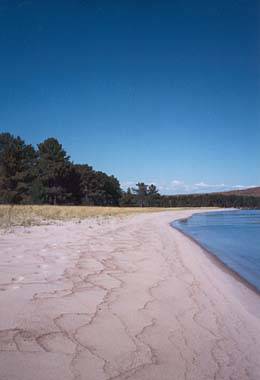
Photo: Bete Grise beach. (Keweenaw Now file photo)

Wednesday, August 18, 2010

Lahti to request response from DNRE on letter from citizens concerned about Kennecott Eagle Mine

LANSING -- State Rep. Mike Lahti (D-Hancock) today told Keweenaw Now he plans to meet with the Michigan Department of Natural Resources and Environment (MDNRE) concerning the recent letter to Michigan legislators requesting an amendment suspending sulfide and uranium mining be added to a proposed Great Lakes oil and gas drilling ban.*

The letter asks legislators to hear the concerns of Upper Peninsula residents opposed to the Rio Tinto-Kennecott Eagle Project sulfide mine and to the potential dangers it poses to natural resources, especially water quality. It says state regulators, in particular the former Michigan Department of Environmental Quality (MDEQ), now the Michigan Department of Natural Resources and Environment (MDNRE), did not follow the law in granting permits to the Kennecott Eagle Project on the Yellow Dog Plains near Marquette and Big Bay.**

Lahti said he plans to arrange a meeting with the DNRE this week to ask them for a response to the letter.

"These are strong statements (in the letter)," Lahti said, "and I'm just going to ask them to respond to these accusations."

Lahti said he had spoken with the DNRE in the past concerning the Kennecott mine and he had also attended, in Big Bay, a presentation by Jack Parker, a mining expert, whose 2009 report titled KEMC Eagle Project: A Fraudulent Permit Application? outlines severe problems with the underground portion of Kennecott's Eagle Mine permit application. The report is mentioned in this letter. Parker is also working on a new report which continues to warn that the mine, as presently designed, will be unstable.***

Lahti said he wouldn't support adding an amendment on the sulfide mining to the proposed Great Lakes oil and gas drilling ban, but he wants to hear what the DNRE has to say about the accusations in the letter. He intends to invite Rep. Steve Lindberg (D-Marquette), who represents the 109th District, to attend the meeting with the DNRE.

Editor's Notes:
*
The
Joint House Resolution GGG, introduced by Rep. Dan Scripps (D-Leland), on June 16, 2010, proposes an amendment to the state constitution of 1963, to prohibit the drilling of a well for the exploration or production of oil or natural gas within the Great Lakes or beneath the bottomlands of the Great Lakes. Such an amendment would have to be approved by the people of Michigan in the next general election.

** Click here to read the letter sent to legislators.

***Click here to read Jack Parker's 2009 report.

Updated: Letter to Michigan Legislators requests amendment to proposed Great Lakes drilling ban

Editor's Note: This is an important letter from two concerned citizens who are requesting that others join them in calling and writing to the Michigan legislators listed at the end of the letter. Toll-free numbers and email addresses for the legislators to whom this letter was sent are provided below. Feel free to copy the letter and email it to each legislator or to write a similar letter with your own comments.

By Catherine Parker and Richard Sloat

Greetings Legislators,

The DEQ/DNRE has presented itself as incapable and possibly unwilling to follow the law in presenting its approval of a potentially dangerous mining project.

QUESTION: "Did you apply this section of the statute to your analysis?"

MAKI: "I did not, no."

When Joe Maki, head of the mining team charged with reviewing the permit application for Kennecott’s Eagle Project, was asked, under oath, if the team had applied a key portion of Michigan ’s nonferrous metallic mining law (Part 632) to its analysis, he replied, "I don’t believe so, no."

Recent calls by Michigan legislators for a permanent ban on oil and gas drilling beneath the Great Lakes ask for the strongest possible measures to protect the Lakes. These measures must include the entire Great Lakes Basin. Ground and surface water contamination created by the mining industry ultimately affects the big lakes as well as local lakes, streams, and aquifers.

The Legislature must bring this issue up for debate. The process by which the mine permitting team has operated is obviously flawed. The current law is not being enforced and is inadequate for protecting the water, land and air for the citizens of Michigan and future generations.

We ask you to add an amendment to the proposed permanent ban on drilling beneath the Great Lakes, requiring the suspension of all non-ferrous and uranium mining activities while the Part 632 mining law and permitting process is reviewed. Accompanying this review, a thorough investigation should be conducted into ongoing noncompliance at the Kennecott Eagle Mine Project. *

During the 2008 court proceedings in Lansing, Maki admitted that the DEQ did NOT comply with Number 3 of Section 63205, in Part 632, which states that the applicant for a mining permit has the burden of establishing that the mining operation "reasonably minimizes actual or potential adverse impacts on air, water and other natural resources and meets the requirements of this act."

These state regulators, charged with the protection of our natural resources and environment, did NOT follow the law. MDEQ was presented with over 1,000 pages of unequivocal evidence that Kennecott’s sulfide mine proposal does not meet the state’s legal requirements and would result in profound pollution, impairment and destruction of air, water and other natural resources. The evidence was simply ignored.

Mining expert Jack Parker wrote a 33-page report outlining severe problems with the underground portion of Kennecott’s Eagle Mine permit application. The report -- titled KEMC Eagle Project: A Fraudulent Permit Application? -- details Kennecott’s rock sampling and rock testing procedures, which are NOT representative of the ore body; lack of sound mining analysis to prevent the mine from collapsing; doctoring of design data; absence of case histories; potential for mine fires; misinterpretation of surficial geology and of horizontal rock stresses; and other pressing issues. Inexplicably, MDEQ did not react.

In the introduction to his report Parker writes, "After three years of studying the application and related documents my original opinion has not changed, but I would add a conclusion that either the writers and all of the reviewers were not experienced and competent in mining and geology, or that their intent was to deceive, to ensure that permits would be issued without delay. Maybe both." **

Parker is currently preparing another report emphasizing that further review of the application shows that the mine will be UNSTABLE, and that those who ignore the warning will share the consequences.

Since the DEQ/DNRE did not and still does not have the expertise to evaluate applications for mining permits and have allowed noncompliance with Part 632, they should issue no permits. Current permits approved under Part 632 must be revoked, mining-related activities must cease, and the Eagle Mine Permit Application must be subjected to an independent scientific review. All reviews to date have NOT been independent. All have been based on defective Kennecott interpretations of the raw data.

The mining industry has acquired mineral leases on over 1 million acres in the U.P. The Upper Peninsula has 7.2 million acres in total; but, due to the unique geological features of the Western U.P., current exploration and mining activities are concentrated in that area. In essence, one third of the western portion of our peninsula may be affected by mining-related activities and the hazards which accompany it. The cumulative effects from a multitude of poorly regulated mining projects could be devastating and irreversible.

In 2004, the EPA reported that 156 hardrock mining sites nationwide were on or had the potential to be on the National Priorities List (NPL) for cleanup under the Comprehensive Environmental Response, Compensation and Liability Act (CERCLA), with potential cleanup costs of up to $24 billion dollars.

Production of acid mine drainage (AMD) may occur during mine operations and may continue for many years after mines are closed and tailings dams are decommissioned from operation; consequently, evaluation of AMD is often a long-term proposition which usually adds up to high costs for site characterization, monitoring and cleanup.

Kennecott’s Eagle Mine project is the first to be permitted under Michigan ’s new Nonferrous Metallic Mining Regulations, enacted in December 2004, but there are others in the works. Kennecott owns mineral rights to nearly half a million acres in the U.P. and reports as many as six additional projects lined up. Two other mining companies, Orvana and HudBay, are expected to begin the permitting process within the next two years.

With the recent increase in mining exploration and granting of new mineral leases by the DNRE, the people of Upper Michigan, and many below the bridge as well, have grave concerns about the adequacy of current environmental safeguards.

Opposition to "sulfide mining" in Michigan includes university professors, area physicians, religious leaders, environmental groups, Native Americans, and sportsmen’s groups. In 2006, an organized petition drive collected more than 10,000 signatures objecting to the Eagle Project.

Recent articles and comments by Congressman Bart Stupak should have raised concerns from Michigan legislators about the hazards of non-ferrous metallic mining in Michigan. As he points out, Kennecott should be required to pay for independent baseline hydrological and geological studies, equivalent to U.S. Geological Survey (USGS) standards.

There are economic considerations, as well. Kennecott is being allowed to "high-grade" at the Eagle Mine site, as they did at the Flambeau mine, near Ladysmith, Wisconsin. They plan to take only the richest ore, making the rest difficult for someone else to come in and mine. That does not meet the requirement to recover the resources responsibly. Taxes and royalties should be increased dramatically. Adequate funding must be put in place, collected from the mining companies themselves, to provide for oversight and reclamation and to pay for damage done.

With debate scheduled to ban oil drilling in the Great Lakes, this is an opportune time for the legislators to add an amendment to the resolution, suspending all non-ferrous and uranium mining activities until the regulators get their act in order.

The flawed process demonstrated during the permitting of the Eagle Project has set a dangerous precedent, one that is likely to devastate our most precious resource, our fresh water, and the present and future generations that depend so much upon it.

Michigan ’s Constitution states, "The legislature shall provide for the protection of the air, water and other natural resources of the state from pollution, impairment and destruction." Please consider our request and act on it in a timely manner. It is imperative that you do so.

Thank you for your time and consideration.

(Signed) Catherine Parker and Richard Sloat, on behalf of the concerned citizens of this state.

* Session is scheduled to open TODAY, Wednesday, August 18. A decision must be made by the legislature before September 2 in order for the drilling ban to be placed on the ballot.

** Click here to read Jack Parker's report.

Please call the following Michigan legislators at the toll-free numbers listed below. (This letter has been sent to them. You may wish to send it again to their email addresses.) When you call, simply state, "I support the recently proposed amendment to the oil and gas drilling ban in the Great Lakes for suspension of sulfide and uranium mining."
Revised Update: Call the representative of your own district first. MIKE LAHTI is the 110th District (including the Keweenaw and Big Bay) Representative. Then call the sponsors of the Joint House Resolution GGG, DAN SCRIPPS and REBEKAH WARREN, and call GARY McDOWELL, who is running for Congressman Stupak's First District seat in the U.S. House of Representatives.

MIKE LAHTI -- Toll-Free (888) 663-4031 mikelahti@house.mi.gov
STEVEN LINDBERG -- Toll-Free (888) 429-1377 stevenlindberg@house.mi.gov
JUDY NERAT -- Toll-Free (866) 779-1108 JudyNerat@house.mi.gov
GARY McDOWELL -- Toll-Free (888) 737-4279 garymcdowell@house.mi.gov
MARY VALENTINE -- Toll-Free (877) 633-0331 maryvalentine@house.mi.gov
DEB KENNEDY -- Toll-Free (866) 725-2929 DebKennedy@house.mi.gov
REBEKAH WARREN -- Phone: (517) 373-2577 rebekahwarren@house.mi.gov
(or contact Rep. Warren through her Web site: http://053.housedems.com/contact/ )
DAN SCRIPPS -- Toll-Free (888) 642-4101 DanScripps@house.mi.gov
ANDY DILLON -- Toll-Free (888) 737-3455 andydillon@house.mi.gov
LISA BROWN -- Toll-Free (877) 822-5472 LisaBrown@house.mi.gov

Tuesday, August 17, 2010

Playtime in the Park means summer fun for kids, parents

By Samantha Stauch*

Sonia Goltz of Houghton and 2-year-old grandson Brant Northey enjoy some sliding. (Photos © 2010 and courtesy Samantha Stauch)

HOUGHTON -- Each Wednesday during the summer at the Centennial School playground families gather for the Playtime in the Park program. As parents visit among themselves children clamor up a giant caterpillar -- grinning once they are sitting atop it. The children seem to be full of smiles and laughter as they play. All present seem to enjoy being outside on such a beautiful summer morning. The cool breeze is a great comfort after all the heat this area has been experiencing.

Playtime in the Park is a free community program provided for children under age four by the Keweenaw Family Resource Center (KFRC). The Playtime in the Park program runs from 10 a.m. to noon every Wednesday from June to September. Each Playtime in the Park offers time for free play, an organized activity and a snack. It gives parents and children an opportunity to enjoy the outdoors and provides time for socializing.

Brent Gaff does some gardening for today’s Playtime in the Park activity.

"It is playtime for parents and kids," said Connie Gaff of Houghton. "You never threaten them with (taking away as a punishment) playgroup. You say, 'Oh well you can’t watch that movie later,' because you want to go too."

KFRC Executive Director Catherine Benda and her staff are pleased to see how the program has developed.

"When the program began," Benda said, "the expectation was that only people from the area would come to the playtime in their area. . .but we have an entourage of parents that make that Wednesday their weekly outing day and move from park to park each week."

For Kathy McLean of Houghton and Marie Ross of Hancock, this is a family get-together. They brought their grandchildren, 7-year-old Maddie and 3-year-old Dominic. Cindy McLean, the children's aunt, comes along to help keep an eye on them.

Dominic enjoys keeping his balance at the Centennial School playground.

"We enjoy coming together and we go to lunch after," commented Ross. "It’s great for socialization with other kids as well."

For today’s snack Hancock’s Virginia Monroe brought finger Jell-O. Monroe did not bring any children to the group, but she did bring her love and admiration for the program. Monroe started volunteering for the program about 12 years ago when her daughter, Judy Harkonen, current KFRC board president, encouraged her to do so.

"My daughter…grabbed me and said, 'Do something,'" said Monroe.

So she does, by bringing a snack for the children that come to enjoy Playtime in the Park. Monroe said she loves having the opportunity to watch the children grow up. Once the snack was brought out, the children rushed from the playground to the picnic area -- eager to enjoy the goodies. Many of them were jiggling and poking at their snack -- laughing and smiling as they enjoyed the unique traits of a special snack.

It's snack time for, from left, Brent , his sister Katie and their cousins Tori and Ally, who enjoy a snack of cheese crackers and finger Jell-O.

Each week about 30 children participate in the Playtime in the Park program with about 50 families registered. Parents say it is easy to see how this program benefits the community and they appreciate what it provides for them.

"(It) provides opportunities for gross motor play, gets parents and kids outside, (and) it allows for children to socialize. It also links parents to other parents, and friendships are formed. It provides opportunities for parents to connect with other community programs," said Benda.

Benda added that the children and parents leave playtime with something very valuable -- friends.

The following are the upcoming dates and locations of Playtime in the Park:
Aug. 18 -- Centennial School Playground
Aug. 25 -- Hancock Beach
Sept. 1, 15 and 29 -- Lake Linden
Sept. 8 and 22 -- West Houghton Park

To participate in Playtime in the Park you can register upon arrival or through an online form that you can bring to the park. To find out more information about Playtime in the Park or any of the other KFRC programs, visit the KFRC Website.

*Editor's Note: Guest reporter Samantha Stauch wrote this article for David Clanaugh's summer journalism class at Michigan Tech University. This is Samantha's second article on Keweenaw Now. See also her July 28 article, "Portage Library Summer Reading Program: More than just a good read."

New links from Yellow Dog Plains

YELLOW DOG PLAINS -- The following are two new links from the Yellow Dog Plains posted after the 3rd Annual Protect the Earth Great Lakes Community Gathering held July 30, 31 and Aug. 1 in Baraga and near Eagle Rock.

New Web site: STOP

After the Protect the Earth walk on Aug. 1, Charlotte Loonsfoot, a Keweenaw Bay Indian Community (KBIC) member, returned with family and friends to the Yellow Dog Plains to pray, gather berries, fish and camp in protest of the Kennecott Eagle Mine.

"S.T.O.P. (Stop Toxins and Other Pollutants) is the name of our group passed down from our elders at the Keweenaw Bay Indian Reservation," Loonsfoot explains.

A new Web site, STOP - Stop Toxins and Other Pollutants, brings readers up-to-date on the new camp.

Click here to read STOP updates on the camp.

"Music in the Northwoods"

Two songs by E. Halverson of Baraga, singer and musician -- who performed at Protect the Earth -- can be heard on Headwaters News.

Headwaters News writer Gabriel Caplett, who plays back-up guitar, said the songs were recorded on the banks of the Yellow Dog River. Click here to listen to "Music in the Northwoods."

Red Metal Radio Show 2010 to be broadcast live Aug. 19

CALUMET -- The Red Metal Radio Show 2010 will be broadcast live from the Calumet Theatre by Eagle Radio FM 105.7 at 7 p.m. on Thursday Aug. 19.

In its second season, the show will take the live and the listening audience on a streetcar ride from Hubbell to Electric Park, visiting Lake Linden, Laurium and Albion Station along the way.

Life in the Copper Country in 1910, 100 years ago, will come alive as area musicians play music from back then and local folks speaking as Keweenaw residents from that time discuss important local issues.

Oren Tikkanen, Red Metal Radio Show director, says, "Last year's Red Metal Radio Show had the theme of 'Let your ears take a walk around Calumet/Red Jacket in 1909.' This time we will give our audience another year and another part of the Keweenaw. We want to do it again in 2010."

Many of the musicians and readers, as well as technical staff, have signed on again for another season, looking for a second year of successful programming, building on the success of the inaugural show.

The Copper Country Community Arts Council Regional Regranting Program funded by the Michigan Council for Arts and Cultural Affairs with support from the National Endowment for the Arts, as well as Keweenaw National Historical Park, are offering help with expenses as are a number of local sponsors with Main Street Calumet in the lead.

Tickets for attending the show at the Calumet Theatre are $7.50 and are available at the theatre box office or at the door. Doors open at 6 p.m., and everyone must be seated by 6:50 p.m.

The Red Metal Radio Show is a highlight of this week's Main Street Calumet Heritage Celebration through Saturday, Aug. 21. Visit the Main Street Calumet Web site for the schedule.

For more information call Main Street Calumet at 337-6246 or email info@mainstreetcalumet.com.

Portage Library to host family program on earthworms Aug. 17

HOUGHTON -- If you’ve ever wondered just what it is that earthworms do, come to the Portage Lake District Library and find out.

Erik Lilleskov will present "Earthworms: Not Just for the Birds" from 6:30 p.m. to 7:30 p.m. TONIGHT, Tuesday, Aug. 17. Participants will learn that earthworms are ecosystem engineers that have huge impacts on soils and the ecosystems they inhabit. They will also discover that earthworms are fun to learn about.

This family friendly program invites everyone to come and learn about earthworms that live in the Keweenaw. Participants will go outside and look for earthworms, practice identifying them, and build an earthworm home with which they can watch earthworms in action. They will also help build an earthworm home for the children’s area in the library.

Lilleskov is a Research Ecologist with the US Forest Service. He studies how organisms affect soil processes and is studying earthworm effects on forest ecosystems.

Library programs are free and everyone is welcome to attend. For more information, please call the library at 482-4570 or visit www.pldl.org.

Sunday, August 15, 2010

New Quincy Haven Apartments to provide energy-efficient special needs housing in Hancock

By Michele Bourdieu

HANCOCK -- While pouring rain caused postponement of the scheduled ground breaking for the Quincy Haven Apartments on Friday, Aug. 13, 2010, the Ground Breaking Ceremony for the new facility for special needs residents celebrated the beginning of a dream come true for Gail Ross, executive director of the Hancock Housing Commission and Foundation, who has worked for several years to make the project a reality.

Gail Ross, executive director of the Hancock Housing Commission and its Foundation, addresses a community audience at the Aug. 13 Ground Breaking Ceremony for Quincy Haven Apartments, held at Lakeview Manor. Ross worked tirelessly for several years to secure funding for the facility, which will provide affordable housing for low-income residents with special needs. Click on photos for larger versions. (Photos by Keweenaw Now unless otherwise indicated)

The ceremony and celebration luncheon took place at Lakeview Manor in Hancock, which will soon be the neighbor of the projected Quincy Haven Apartments -- a three-story, 24-unit special needs supportive housing facility with 18 one-bedroom and six two-bedroom apartments. It will be designed to accommodate physically disabled individuals in a modern, energy-efficient building to be located on the Hancock Housing Commission's property adjacent to Lakeview Manor, Hancock's current public housing facility.

In reply to many requests received by the Hancock Housing Commission, the new Quincy Haven Apartments will accommodate physically disabled/handicapped persons as defined by the Americans with Disabilities Act (ADA). Currently the Commission has no handicap-accessible units that will meet ADA regulations and design criteria. Furthermore, through the housing commission’s membership on the Continuum of Care Coalition, a need has been identified for this type of housing in this area.

This drawing by OHM Engineering (formerly Hitch Engineering), designers for the project, shows the projected Quincy Haven Apartments as an extension to the left or west side of the present Lakeview Manor residence in Hancock.

"The target population for this project is low- and extremely low-income individuals and families with physical or mental disabilities, homeless persons and survivors of domestic abuse," said John Haeussler, Hancock Housing Foundation vice president.

Addressing an audience of local community leaders and residents at Lakeview Manor in Hancock, Haeussler gave a history of the planning for the $4.8 million project, which is now fully funded.

"In March 2005 Hancock Housing Commission President John B. Garber (now deceased) and Executive Director Gail Ross approached the Hancock City Council in support of their mission to create a non-profit corporation to provide affordable housing to persons with special needs in the area," Haeussler said.

By 2006 the IRS approved the Hancock Housing Foundation as an official 501C (3) non-profit corporation, Haeussler added. The project was presented to the Hancock City Council and the Hancock Planning Commission, and by 2007 the project and its impact on the community were presented at the City's Economic Development Summit.

"A strong collaborative effort of city and state government, service providers and neighboring residents resulted in a consensus to pursue funding for a special needs supportive housing facility in the City of Hancock," Haeussler explained.

During the Friday, Aug. 13, Ground Breaking Ceremony for the new Quincy Haven Apartments, community leaders wait inside Lakeview Manor for the rain to stop for the actual ground breaking. Pictured here, from left, are Christine Miller of the Michigan State Housing Development Authority (MSHDA); Hancock Mayor Bill Laitila; State Rep. Mike Lahti (D-Hancock); Tim Seppanen, vice president of Yalmer Mattila Construction and project manager; Ron Antila, Hancock Housing Commission president; Gail Ross, Hancock Housing Commission and Foundation executive director; Tracie Williams, OHM Engineering local office general manager; and Jamey Markham, vice president of Range Bank.

Haeussler read a letter of congratulations to the Hancock Housing Foundation from U.S. Senator Debbie Stabenow, who stated, "It is exciting that your vision of creating a supportive and affordable living space for vulnerable populations is becoming a reality. This will be a wonderful addition to the community. I know the residents will appreciate having a home that accommodates their needs and enables them to live independently."

Haeussler introduced Ross, who extended thanks to all who worked against many obstacles to obtain funding for the project and to OHM Engineering (formerly Hitch Engineering) and Yalmer Mattila Construction.

"Quincy Haven Apartments will provide an atmosphere in which individuals and families can gain confidence and independence in their lives," Ross said.

Michigan District 110 Rep. Mike Lahti (D-Hancock), now a candidate for the Michigan Senate, praised Gail Ross for her "intestinal fortitude" and "hard work" on this project for the community.

Michigan District 110 Rep. Mike Lahti (D-Hancock), now a candidate for the Michigan Senate, addresses the guests at the Aug. 13 Quincy Haven Apartments Ground Breaking Ceremony at Lakeview Manor in Hancock.

"Lakeview Manor has been a good neighbor for this city for many years. It is providing safe, affordable housing for residents of the Copper Country. Quincy Haven will do the same for folks with special needs," Lahti said. "Gail worked tirelessly with MSHDA (Michigan State Housing Development Authority) to get (the project) done for the community."

Mark Dennis, Hancock Housing Commission vice president, said the new building would have the same brick exterior as Lakeview Manor but would be much more energy-efficient.

"Every window, every light -- all the washers, dryers and refrigerators -- will be Energy Star related," Dennis said.

In addition, the entire building will feature signage with Braille, audible/visual alarms and lever door handles. Public spaces will also be designed for accessibility. All units will include individual heating and cooling systems, high speed internet capability, energy efficient windows and doors, mini blinds and an individual balcony or patio.

Dennis said the funding for the project is all arranged through various sources and the project will serve the whole western U.P. without being a tax burden on Hancock residents.

Funding sources include MSHDA, the American Recovery and Reinvestment Act (ARRA) and the Federal Home Loan Bank of Indianapolis. The units will also be subsidized by 18 Project-Based Vouchers from MSHDA and 6 Project-Based Vouchers from the Hancock Housing Commission Section 8 Rental Assistance program.

"It's been a long, hard fight but it's worth it," Dennis said. "It's going to be a great asset to our community. That's for sure."

The new building will benefit from the Hancock Housing Commission's 40 years of public housing management at Lakeview Manor and will integrate all residents to a centrally located administrative office, 24-hour on-call maintenance staff and all the amenities to the existing operations.

Dorn Dittmer, an 8-year Lakeview Manor resident, noted the advantage of maintenance-free living in the current facility, especially snow removal.

Hancock Mayor Bill Laitila acknowledged the hard work that Ross and others have put into the project planning.

"It took a lot of effort by many, many people to get this done," Laitila noted. "The public doesn't realize how many pitfalls they had."

Tim Seppanen, vice-president of Yalmer Mattila Construction and project manager, called Gail Ross a model of professionalism, who sets standards of excellence.

"Gail Ross has been our captain, our coach, our team leader in this project," Seppanen said. "She fought a successful battle with ovarian cancer while bringing the planning to completion."

To symbolize making a wish for the dream of Quincy Haven, Ross brought to the ceremony small boxes of butterflies from Florida to set free according to a Native American legend, which she distributed to guests on a small card that said, in part, "Since a butterfly can make no sound, the butterfly cannot reveal the wish (that is whispered to it) to anyone but the Great Spirit who hears and sees all. In gratitude for giving the beautiful butterfly its freedom, the Great Spirit always grants the wish."

Gail Ross, Quincy Haven Apartments executive director, prepares to set her butterfly free to symbolize her wish to make Quincy Haven a dream come true. Guests at the Ground Breaking Ceremony received a small box with a butterfly for the "Butterfly Release" part of the ceremony.

Mary Tuisku, former Hancock Housing Commissioner and former City Councilor, had praise for the project and for Ross's persevering efforts.

"It's truly a dream come true. It's a recognition of the responsibility that every society should have to take care of those who are in need," Tuisku said. "There aren't enough words to describe what a wonderful person Gail is and how she persevered to set her butterfly free."

Guests at the Aug. 13 Quincy Haven Apartments Ground Breaking Ceremony at Lakeview Manor in Hancock set butterflies free to symbolize a wish coming true. (Photo © 2010 and courtesy Roland Burgan*)

Bucky Beach, pastor of Good Shepherd Lutheran Church in Houghton, gave an opening prayer and a benediction at the end of the ceremony.

"One of the things I like about this community is that it takes care of its own, and that's important," Beach said.

Steve Albee, former Hancock Housing Commissioner, admires a liberated butterfly during the ceremony celebrating Quincy Haven Apartments.

Jordan Peterson of Houghton displays two butterflies that paid him a visit during the Butterfly Release.

Tracie Williams, general manager of OHM Engineering, Houghton office, said they would be moving to a new office in Hancock at the end of this month. She estimated the project would take 12 months of construction.

Seppanen noted construction would begin on Monday, Aug. 16.

*Editor's Note: See more of Roland Burgan's photos of the Quincy Haven Apartments Ground Breaking Ceremony on the City of Hancock Web site.