See our right-hand column for announcements and news briefs. Scroll down the right-hand column to access the Archives -- links to articles posted in the main column since 2007. See details about our site, including a way to comment, in the yellow text above the Archives.

Tuesday, September 25, 2012

Lake Superior Binational Forum to hold public meeting on impacts of nonferrous mining Sept 28 in Marquette

ASHLAND, WIS. -- The Lake Superior Binational Forum will hold an open public meeting called "The Impacts of Nonferrous Mining in the Lake Superior Basin: Overview and Updates" from 12:30 p.m. to 5:30 p.m. on Friday, Sept. 28, in the Community Room at the Peter White Public Library, 217 N. Front Street, in Marquette, Michigan. Forum meetings are free and open to the public with no need to pre-register, although seating at the library is limited to 150.

Lake Superior Binational Forum meetings are free and open to the public. Pictured here are members of the audience offering public comment at the March 23, 2012, Forum in Ashland, Wis. -- the first of three open public meetings about the impacts of mining activities in the Lake Superior basin. The second meeting will take place Friday, Sept. 28, 2012, in the Peter White Library in Marquette. (Photo by Allan Baker for Keweenaw Now.)

Speakers include representatives from the Lake Superior Binational Forum, the Lake Superior Binational Program, Michigan Tech University's Center for Water and Society, the Keweenaw Bay Indian Community, National Wildlife Federation, and employees with Rio Tinto mining company. (See below for the agenda)

"We have scheduled speakers that represent different perspectives about mining so we can learn from each other and understand more about how mining activities in the Lake Superior basin affect the economy and environment," said Bruce Lindgren, Forum U.S. co-chair.

Bruce Lindgren, Lake Superior Binational Forum U.S. co-chair, introduces speakers at the March 23, 2012, Binational Forum in Ashland, Wis. (Photo by Allan Baker for Keweenaw Now.)

Members of the public are invited to a public comment period starting at 4:30 p.m. when anyone is welcome to express comments about mining and other issues as they relate to Lake Superior.

The Lake Superior Binational Forum offers this second of three public meetings about the impacts of mining in the Lake Superior basin at this upcoming meeting in Marquette. A third and final meeting about nonferrous mining activities is scheduled in the Minnesota Iron Range in March 2013. The meetings are funded through a Great Lakes Restoration Initiative grant administered by the U.S. Environmental Protection Agency.

Susan Hedman, U.S. Environmental Protection Agency Region 5 administrator, speaks at the March 23, 2012, Lake Superior Binational Forum in Ashland, Wis. (Photo by Keweenaw Now)

The first public meeting--held in March 2012 in Ashland, Wisconsin  -- focused on the historical, environmental, and economic impacts from ferrous mining in the basin. All
audio and video recordings of that meeting are available on the Lake Superior Binational Forum's web site.*

September 28, 2012, Meeting Agenda:

1 p.m. Welcome to Marquette and this Meeting -- Lake Superior Binational Forum Members Jon Magnuson and Ron Sundell, Marquette
1:10 Welcome to Marquette -- Commissioner Jason Schneider, City of Marquette
1:20 Presentation of the Lake Superior Binational Program's 2012 Environmental Stewardship Awards to Michigan Recipients -- Jon Saari and Chauncey Moran, a tie in the U.S. Adult Individual category
1:40 Historical Environmental Impacts from Nonferrous Mining in the Basin -- Mike Ripley, Lake Superior Binational Program, Superior Work Group Mining Committee, Sault Ste. Marie, Michigan.**
2:10 A rare glimpse into the past: Lake Sediments Reveal Long-term Methylmercury Records from Mining -- Dr. Charles Kerfoot, Professor of Biological Sciences, Michigan Tech University, Houghton**

2:40 BREAK

2:55 Protecting Water Quality through Regulations -- Michelle Halley, Attorney, National Wildlife, Marquette

At a meeting preceding the Lake Superior Binational Forum meeting in Ashland, Wis., last March, National Wildlife Federation (NWF) Attorney and Senior Manager F. Michelle Halley presents a summary of a recent NWF report on sulfide mining. (Keweenaw Now file photo)

3:25 The Roles and Contributions of Native American Tribes in Mining Issues -- Jessica Koski, Mining Technical Assistant, Keweenaw Bay Indian Community, Baraga

At the Ojibwa Senior Citizens' Center in Baraga last February, Jessica Koski, Mining Technical Assistant, Keweenaw Bay Indian Community, shows maps of UP mining projects in her update preceding the film Locked Out, shown as part of her Mining Impacts on Native Lands Film Series. (Keweenaw Now file photo)

3:55  How Communities and Rio Tinto Eagle are Shaping Modern Mining -- Simon Nish, Director of Communities, Communications and External Relations, and Jim French,
Director Health, Safety and Environment, Rio Tinto Eagle Project

Aerial view of the Rio Tinto Eagle Mine, with Eagle Rock, an Ojibwa sacred site, at right. (Photo © and courtesy Jeremiah Eagle Eye)

4:30 Q and A and Open Public Comment -- Facilitated by Rita Hodgins
5:30 Adjourn

The Binational Forum has also developed an extensive section about mining throughout the basin on its site. Users can access information about all aspects of mining in
Michigan, Minnesota, Wisconsin, and Ontario.

The Lake Superior Binational Forum is a citizen stakeholder group of American and Canadian volunteers who work together to provide input to governments about management efforts and to educate basin residents about ways to protect and restore the lake basin's natural resources. The U.S. Coordinator's office is located at the Sigurd Olson Environmental Institute on the Northland College campus, Ashland, Wisconsin, and is supported by a grant through the U.S. Environmental Protection Agency and the Great Lakes Restoration Initiative.

For more information visit www.superiorforum.org, call (715) 682-1489 or email binationalforum@northland.edu.

* Click here for audio and video recordings of the March 23, 2012, Forum in Ashland: "Mining Impacts and Lake Superior: A Basinwide Approach."

** Click here for a short video clip from Mike Ripley's presentation, "Historical Impacts of Ferrous Mining in the Lake Superior Basin," at the March 2012 meeting in Ashland, where he spoke about the stamp sand in the Keweenaw and mentioned Dr. Kerfoot's work on mercury.

Monday, September 24, 2012

UPDATED: MDEQ Director asks EPA to allow permit for CR 595

By Michele Bourdieu

LANSING -- The Michigan Department of Environmental Quality (MDEQ) has sent a letter to the Environmental Protection Agency (EPA) asking the EPA to remove their
objections to the proposed County Road 595, a haul road for Rio Tinto that would impact wetlands and streams in a 21-mile wilderness corridor, connecting the Rio Tinto Eagle Mine on CR AAA with the Humboldt Mill near US 41.

This wetland in the proposed CR 595 corridor is one of many sensitive areas that would be impacted by the proposed wilderness road intended primarily for hauling ore from the Eagle Mine to the Humboldt Mill. (Photo © and courtesy Jessica Koski)

Dan Wyant, MDEQ Director in Lansing, states in the Sept. 17, 2012, letter, "At USEPA's August 28, 2012, public hearing in Marquette, local elected officials expressed overwhelming support for this road, which will reduce truck traffic in populated areas while improving access to a remote part of northwest Marquette County. While that support was far from unanimous at the hearing, the voice of the elected representatives of the local populace speaks to the benefits of this road."*

State Senator Tom Casperson (R-Escanaba) reacts to being booed by a large number of people in the audience at the Aug. 28, 2012, EPA public hearing on CR 595 after he stated most of his constituents support the road. (Photo © and courtesy Jeremiah Eagle Eye)

"His comment, 'far from unanimous,' is the only acknowledgement Wyant makes of the many comments made by local residents, sportsmen, Native Americans and members of environmental and conservation groups who oppose the road and who made it clear during the hearing that these 'elected' representatives do not represent them on this issue," said Joanne Thomas, a UP resident who followed accounts of the hearing in various local media.

In a letter to EPA, Catherine Parker of Marquette objected to the idea that the road would benefit the public.

"This is not a project that was worked up for the public benefit, and EPA’s concerns are with the regulations," she noted. "They do not have to weigh economic factors or bow to pressure from industry."

Parker also notes MDEQ staff are hampered in their efforts to follow the rules of the Clean Water Act (CWA) by their limited budget and by political pressure from state and local officials.

"Michigan has been in trouble with this before, and is still, apparently, unable to discharge its responsibilities properly with regard to CWA regulations. Budgetary concerns, regulatory capture, and the current political climate have made it difficult to impossible for even the most conscientious staffers to achieve outcomes that are consistent with their ideals," Parker writes. "In a recent meeting between DEQ’s Dan Wyant and local environmentalists, Wyant said that DEQ intended to 'excel at customer service,' and that he was happy to announce that Michigan would be keeping its wetlands program, with another $1.5 million in funding from Governor Snyder.  It isn’t hard to read between the lines, here."

In their April 23, 2012, letter objecting to the proposed CR 595, EPA expressed their concerns for the potential impacts to wetlands and streams, the existence of better alternatives and the inadequate wetland mitigation plan.**

In his letter to EPA, Wyant continues, "As director of the MDEQ, I believe the improvements to the Road Commission's proposal since last April (he refers to the USEPA's April 23 objection letter) have brought this project to the point that Michigan will soon be in a position to issue a permit under state authorities. Any permit that MDEQ issues will be appropriately conditioned to ensure that all USEPA objections will be fully resolved."

Residents, tribal representatives note road would threaten valuable ecosystem

In their comments to EPA on this proposed wilderness road, Jim and Nancy Haun of Skanee wrote, "The 595 Highway through the mountains will disrupt the wildlife corridor and reduce wildlife numbers as well as interfere with historic wildlife trails. The disturbed wetlands and streams will impact the way of life of many animals, plants and vegetation. The CR 595 will become the backbone of a huge  mining and logging district and cannot help but change the flora, fauna and wildlife forever."

The Hauns also noted they had observed in the area of the proposed road a small stream that flows out of a marsh filled with rare Pitcher Plants.

These rare Pitcher Plants grow in a marsh in the area of the proposed CR 595, which, if built, would impact more than 24 acres of wetlands, mostly high quality forested wetlands.* (Photo © and courtesy Nancy Haun)

In their letter to EPA concerning CR 595, The Keweenaw Bay Indian Community commented on the impacts to wetlands and to plants used for medicinal purposes by
tribal members.

"The significant impacts associated with the development of this mine haul road in a relatively pristine area (along with additional foreseeable secondary development associated with it) within our 1842 Treaty territory poses a considerable threat to treaty reserved resources still used and being revitalized by tribal members for subsistence, cultural and medicinal purposes," the letter states.

"In 1993, the Great Lakes Indian Fish and Wildlife Commission (GLIFWC) published 'Plants Used by the Great Lakes Ojibwa,' which provides detailed data and information about traditional plant use and occurrence in the northern Great Lakes region, including within the proposed CR 595 corridor," the KBIC letter continues. "Many of these essential culturally significant plants occur specifically in wet areas and wetlands. Rights to access, harvest and use these resources are protected through treaty-reserved usufructuary rights within the project area. CR 595 and additional foreseeable potential developments would have significant impact on important remaining wetland plant resources and habitat. Many culturally important plants were not adequately documented by the applicant, some of which may be threatened species."

Jessica Koski, KBIC mining technical assistant, who spoke at the Aug. 28 EPA Hearing on CR 595, had this to say in reaction to MDEQ Director Wyant's recent letter to EPA: "Allowing a public entity to utilize its authority to apply for permits in the name of public interest primarily for the direct benefit of a private mining interest sets a dangerous precedent for other similar industrial projects that may affect our Community and treaty resources."

Koski said her own personal concern is whether the state agency is compromising its important environmental protection role for political decision-making.

Don Henson, a botanist who has worked in the Upper Peninsula, wrote to the EPA about his concerns that the road and the noise and vibrations from the trucks would threaten rare ecosystems containing plants that could have future medicinal purposes. It will also "increase the ability for the introduction of disease and invasive species that larger, relatively undisturbed (in many places) ecosystem segments prevent," Henson says.

This is a drawing of one of Rio Tinto's trucks that would be used to haul ore on the proposed CR 595. According to Dan Blondeau, Rio Tinto advisor, Communications and Media Relations for the Eagle Mine, "The trucks will be washed prior to leaving the mine site and the trailers will be covered. The side dump trailers reduce the rattling that comes with rear dump trailers." (Image courtesy Dan Blondeau, Rio Tinto)

"The diversity and interdependence of the organisms in these soil ecosystems is so specialized that extremely careful attempts to move them to the lab for further study has not worked for about 95 percent of the organisms in this amazing ecosystem," Henson adds. "There are all forms chrysotile present. Chrysotile is the the easiest rock mineral formation for me to identify, given that I am a less than a professional geologist but one who, as a botanist, has learned a lot about geology just to look for plants that are specific to certain substrates. In spite of this I see no reference to the contents of the disturbed soil from the Eagle Project, other than general dust size control attempts that are said to be planned, but no mention of what the dust contains. I wonder why that would be?"

In his letter to EPA, MDEQ Director Wyant concludes that the Marquette County Road Commission has made significant improvements to their January 2012 application for the MDEQ permit for CR 595.

"Those improvements include clarification and amplification of the alternatives analysis that demonstrate the proposed route is the least environmentally damaging practicable alternative to achieve the project purpose," he states. "The Road Commission's application now includes reduced impacts to streams via shorter and wider stream crossings or bridges. The road footprint has been narrowed or removed across the rare and imperiled wetlands to reduce impacts. The proposed route has been modified in several locations to avoid critical wetlands and further reduce overall impacts. Other concerns expressed in the EPA's objection letter will be addressed by conditioning of any permit the state issues. This will include a comprehensive plan for monitoring and minimizing wildlife collisions and invasive species monitoring and eradication. Finally, the mitigation plan has been significantly improved, now consisting of preservation of a large, critical tract of land adjacent to the McCormick Wilderness."

Wyant's letter is addressed to Dr. Susan Hedman, Administrator, USEPA Region 5, 77 West Jackson Boulevard (R-19J), Chicago, IL 60604-3590.

UPDATE from Yellow Dog Watershed Preserve:

The Yellow Dog Watershed Preserve (YDWP) reported this afternoon, Monday, Sept. 24, 2012, that they received a message from Melanie Haveman of EPA Region 5 Water Division's Watersheds and Wetlands branch, saying the EPA will not meet the originally stated Oct. 1, 2012, deadline for announcing the status of the CR 595 permit application.

In an email message, YDWP reported, "The EPA received a lot of comments and will spend time going through all of them before making their decision. They will come up with a timeline for the release of their decision on the permit and provide the timeline to the MDEQ. It is possible that they could approve the permit at the state level but not at the federal level. At this point the Marquette County Road Commission has submitted most if not all of their information."

Notes:

* Click here for Part 1 of our article on the Aug. 28, 2012, EPA Hearing on CR 595.
Click here for Part 2 of our EPA Hearing article. Both parts of the article include video clips of the hearing.

** Click here to read the April 23, 2012, objection letter from EPA to the MDEQ. Michigan is one of two states -- the other is New Jersey -- that have the authority to issue wetlands fill permits under the Clean Water Act. EPA retains oversight authority to object to proposed projects that do not comply with federal guidelines.

Sunday, September 23, 2012

Friends of Portage Library to host Summer's Bounty Social potluck Sept. 24

HOUGHTON --The Friends of the Portage Lake District Library invite everyone to bring  appetites and favorite summer dishes to share for an evening of good eating among good friends.

The Summer’s Bounty Social is from 6 p.m. to 7:30 p.m. Monday, Sept. 24. For this potluck event, people are asked to bring their favorite dish made from locally available fruits or vegetables. Foods can be fresh or frozen, sweet or savory, and hot or cold. If participants want to share their recipe, copies for all can be made at the library.

Community garden members and local producers who want to participate may set up a display with information about their project or business. Please contact Chris at the library for more details.

Door prizes featuring local food products will be given away throughout the evening. Guests will enjoy an arrangement of summertime music, and table service and beverages will be provided by the Friends of the Library.

Everyone is invited to this free event. For more information, please call the library at 482-4570 or visit www.pldl.org.

Saturday, September 22, 2012

Keweenaw Community Drum to host 10 Billion Beats global event TONIGHT, Sept. 22

HANCOCK -- The community is invited to participate in the 10 Billion Beats global intention event from 6:30 p.m. to 8:30 p.m. TONIGHT, Saturday, Sept. 22, , at the Copper Country Community Arts Center in Hancock.

Members of the Keweenaw Community Drum group honor the late Greg Wright, who co-founded the group with drum maker Bill Anderson, at the Horsetail Scramble, Churning Rapids, on July 4, 2012. The group welcomes new members. (Photo by Keweenaw Now)

10 Billion Beats is a drumbeat of positive intention sent around the world. Starting in Central Daylight Time on 9/21/2012, the wave has followed the sunset westward sounding for one hour at 7 p.m. in each time zone as the intention circles the Earth and concludes 24 hours later on 9/22.

This grassroots effort is for everyone who wishes to positively effect the Earth and all her inhabitants through the power of collective intention.

Bring your drums, rattles, and bells if you have them. Some instruments will be available to borrow. Participation is free.

Visit keweenawcommunitydrum.blogspot.com for more event information or call Bill Anderson at 483–4269.

Finlandia University to present 14th annual Sibelius Academy Music Festival Sept. 23-28

HANCOCK -- Finlandia University is pleased to present the 14th annual Sibelius Academy Music Festival. Events will take place Sept. 23 to 28, 2012, in metropolitan Chicago and Michigan's Upper Peninsula. This year's musicians are a classical music piano/cello duo and a Finnish folk music quartet.

Members of the Contemporary Finnish folk band "Hohka." (Photos courtesy Finlandia University)

Contemporary Finnish folk band "Hohka" mixes Finnish tradition, catchy pop tunes, and global atmospheres in a unique, energetic blend. Hohka's four musicians -- Meriheini Luoto (violin), Valtteri Lehto (kantele), Veikko Muikku (accordion) and Maksim Purovaara (bass) -- formed their band in 2006. In November 2011, the band won the Nordic folk music band competition, Nord11. The music and compositions of Hohka sound fresh and incorporate small vignettes and stories.*

Musical Duo: Pauli Jämsä, Piano, and Liina Leijala, Cello

When pianist Pauli Jämsä was accepted into the Sibelius Academy youth department in 2006, he became certain that he had chosen the right path. Now he studies in the Academy's soloistic department, as well as at the University of Vienna, Austria.

Pianist Pauli Jämsä.

"The great pleasure in playing chamber music is the possibility of sharing the music -- not only with the audience, but also with colleagues," he says. "It is inspiring to share the magic of music."

In January 2012, Liina Leijala completed her master's degree in music at the Sibelius Academy. Now, she is studying at the University of Music and Performing Arts, Vienna.  Happiness is shared, says one famous writer. Similarly, Liina believes that one side of music is also to be shared. The other side, she explains, is a hedonistic joy.

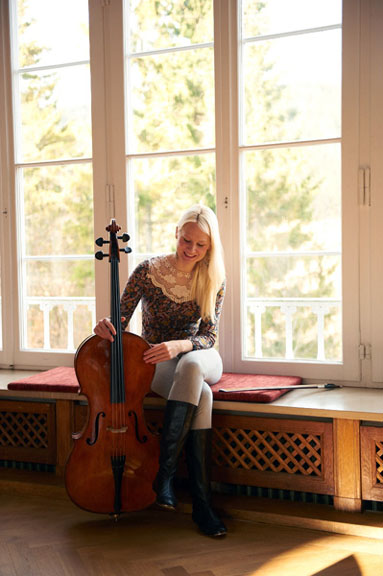
Liina Leijala with her cello.

"The unique character of performing music is what I like the most about it: you show your inner view to yourself and others," she reflects.

Here is the Schedule of Events:

Sunday, Sept. 23, 2:30 p.m. 14th annual Sibelius Academy Music Festival concert. Estonian House of Chicago, 14700 Estonian Ln., Riverwoods, Illinois. Concert tickets are $20 for adults, $15 for students and seniors.

Tuesday, Sept. 25, 7 p.m. 14th annual Sibelius Academy Music Festival event. Meet the Musicians. Finlandia University Finnish American Heritage Center, Hancock, Michigan. Free, open to the public.

Wednesday, Sept. 26, 7 p.m. 14th annual Sibelius Academy Music Festival concert. Finlandia University Finnish American Heritage Center, Hancock. Tickets are $10 for adults; $5 for students; Finlandia students attend free.

Friday, Sept. 28, 7:30 p.m. 14th annual Sibelius Academy Music Festival concert. Calumet Theatre, 340 Sixth St., Calumet, Mich. Tickets are $10 for adults; $5 for students; Finlandia students attend free.

Click here to buy tickets on line.

For the most accomplished student-musicians in Finland and around the world the Sibelius Academy is the destination for the best and brightest. The prestigious Sibelius Academy, founded in 1882 and named for Finnish composer Jean Sibelius, is one of the largest and best regarded music academies in Europe. Visit the Sibelius Academy website at www.siba.fi/en/.

For information, call 906-487-7512 or visit www.finlandia.edu/sibelius-fest.

* Visit the band's website at www.hohka.net.

Thursday, September 20, 2012

Updated: Celebrate diversity at annual Parade of Nations Saturday, Sept. 22

Argentina and Afghanistan flag bearers lead the 2011 Parade of Nations across the Portage lift Bridge from Hancock to Houghton. This year's parade begins at 11 a.m. this Saturday, Sept. 22, on Quincy Street in Hancock. (2011 file photos by Keweenaw Now)

HOUGHTON -- Floats and marching groups bearing flags of many nations will hit the streets of Hancock and Houghton at 11 a.m. Saturday, Sept. 22, for the annual Parade of Nations. UPDATE: While all are hoping for good weather, the parade will happen rain or shine or snow! Participants should line up in Hancock at 10 a.m.

Chinese students, one of the largest groups of international students at Michigan Tech, are well represented in the 2011 Parade of Nations.

After the parade, crowds will gather at the Dee Stadium for a multicultural festival starting at noon, featuring international foods at 26 booths.

Visitors enjoy a large selection of international cuisine in Dee Stadium after the parade.

The festival includes a gala show featuring the Michigan Technological University Dance Team and the Michigan Tech Hip Hop Club, the Copper Country Cloggers, the Kivajat Dancers, songs by the Hassle Family, and a Chinese dance by Summer Gu. The Medievalist Club will also perform, as will the International Student Association.  Admission is free.

The Copper Country Cloggers entertain at the 2011 Parade of Nations show. They will perform again this year in Dee Stadium -- along with several other dance and musical groups.

The festival this Saturday is from noon to 4 p.m. at the Dee Stadium. Bring your appetite! Try tasty international food from dozens of food booths offering delicious ethnic specialties, desserts and more. The entertainment is endless. Enjoy bands, singing, dances, and, for the children, free pony rides, face painting and supervised arts and crafts.

More photos from the 2011 Parade of Nations ...

From Pakistan to Poland, flags and traditional dress represent many countries as the 2011 Parade of Nations heads across the Portage Lift Bridge from Hancock to Houghton.

Japanese students from Finlandia University enjoy some international cuisine during the 2011 Parade of Nations festival in Dee Stadium.

Anna Leppanen, left, and Meghan Pachmayer offer Finnish treats for sale during the 2011 Parade of Nations festival.

Indian students perform one of their popular dance routines.

Copper Country Suzuki musicians perform during the 2011 Parade of Nations festival.

Don't miss this great Copper Country celebration of diversity and fun for the whole family!

Wednesday, September 19, 2012

Finlandia University Gallery to exhibit "John Richardson: Recent Sculpture," opening Sept. 20

HANCOCK -- "John Richardson: Recent Sculpture" will be featured at the Finlandia University Gallery, located in the Finnish American Heritage Center, Hancock, Sept. 20 to Oct. 17, 2012.

Case Study No. 19. Wood, cast bronze, rubber, and paint, by John Richardson. 2011. (Photos courtesy Finlandia University)

An opening reception for the artist will take place at the gallery from 7 p.m. to 8:30 p.m. Thursday, Sept. 20. The reception is free and open to the public. Refreshments will be served.

John Richardson’s sculpture has been described as a "visual koan," a visual Zen Buddhist riddle. Although he did not arrive at this description himself, the portrayal captures Richardson’s propensity to shift perceptions of how one views reality.

"At my best, I hope to create a sculpture that shifts perceptions of other objects in the world, even if only very slightly; a sculpture that is both interdependent and independent of me," says Richardson.

Richardson’s sculptures challenge conventional notions of reality by introducing forms that cannot be regarded as seamless components of ordinary experience. His work then becomes a metaphor for principles of reality that reach beyond the interests of a single artist.

Richardson works in a variety of media, including cast and welded metals, rubber, glass, wood, plastic, and stone. His sculpture explores the contemporary experience of space as it is influenced by the predominance of mediated images, screens, and communication technologies.

Case Study No. 22. Cast bronze with patina, plastic, and wood (oak) with paint, by John Richardson. 2012.

"My sculpture often exists fully in space, in contrast to a traditional relief sculpture that adorns an architectural surface," notes Richardson. "Unlike a traditional relief, my art has at least two dominant sides, although it is compacted as if in two-and-a-half dimensions, rather than fully embodied in three."

Richardson has participated in more than 50 national group exhibitions, most recently in summer 2012 at the Causey Contemporary Gallery, New York City. His numerous solo shows include the University of Minnesota-Morris in March 2012.

Richardson’s work is held in numerous private and public collections, including the Michigan Legacy Art Park, Thompsonville; Xiadu Park, Yanqing, China; the Open Air Museum of Steel Sculpture, Coalbrookdale, England; and the Lumsden School, Lumsden, Scotland.

Richardson earned master of arts and master of fine arts degrees in sculpture at the University of Wisconsin-Madison, and a bachelor of arts from the University of Puget Sound, Tacoma,Wash. He teaches at Wayne State University, Detroit, where he is the area coordinator for sculpture and chair of the department.

The Finlandia University Gallery is in the Finnish American Heritage Center, 435 Quincy Street, Hancock. Gallery hours are Monday to Friday 8 a.m. to 4:30 p.m., Thursday 8 a.m. to 4:30 p.m., and Saturday, 12 p.m. to 4 p.m., or by appointment.

Lawsuit filed challenging hunting, trapping of Minnesota wolves

From Center for Biological Diversity
Sept. 18, 2012

Gray wolf photo courtesy Wikimedia Commons/Retron.

MINNEAPOLIS -- The Center for Biological Diversity and Howling for Wolves filed a lawsuit on Sept. 18, 2012, against the Minnesota Department of Natural Resources challenging the agency’s failure to provide a formal opportunity for public comment on recently approved rules establishing wolf hunting and trapping. The conservation groups are seeking a preliminary injunction to prevent the opening of hunting and trapping seasons this fall.*

"The state rushed to issue wolf hunting and trapping rules without giving people a real chance to voice their opinions," said Collette Adkins Giese, a Minneapolis-based attorney with the Center. "Especially considering the tremendous controversy around hunting and trapping of Minnesota’s wolves, state officials should have followed the law carefully to make sure they fully understood how the public felt about their decision."

Minnesota’s 2001 wolf-management plan provided that wolves would not be hunted or trapped for five years after any removal of their Endangered Species Act protection, but the state legislature eliminated those safeguards last year by passing a budget bill that included a rider authorizing the Department of Natural Resources to open wolf hunting if the agency first provided an opportunity for public comment. In January 2012, the wolves’ federal protection was stripped away; but instead of opening a formal comment period, the department offered only an online survey. (More than 75 percent of respondents opposed the wolf hunt: Of 7,351 responses, only 1,542 people supported a wolf season.)

"Wolves already die at high rates from many causes, including human intolerance and persecution," said Maureen Hackett, founder and president of Howling for Wolves. "Minnesotans benefit economically, culturally and ecologically by having wolves in the wild. As a state, we have so much to gain by keeping wolves undisturbed."

Wolf hunting is scheduled to begin Nov. 3 with the opening of the deer firearms season; the state’s rules provide that 6,000 licenses will be sold to kill 400 wolves. The lawsuit filed on Sept. 18, 2012, asks the Minnesota Court of Appeals to prevent implementation of wolf hunting and trapping rules until the court can issue its decision in the case.
Livestock producers have pushed for hunting and trapping to reduce the state’s population of approximately 3,000 wolves. But hunting and trapping may actually increase conflicts between wolves and domestic animals by disrupting pack dynamics and creating more lone wolves that are more likely to target livestock out of desperation.

There are tested, nonlethal options to safeguard livestock from wolves, including guard dogs, flagging and fencing. Hunting and trapping is premature until state managers can gauge the impacts of a state management plan that allows the killing of wolves to protect domestic animals.

The Center for Biological Diversity is a national, nonprofit conservation organization with more than 375,000 members and online activists dedicated to the protection of endangered species and wild places.

Howling for Wolves was created to be a voice for wild wolves. It aims to educate the public about Minnesota’s wolf population and let people know how they can take action to keep wild wolves in a self-sustaining existence. For more information visit www.howlingforwolves.org.

* Click here for the Injunction document.

Portage Library to host Healthy Aging seminars

HOUGHTON -- The Portage Lake District Library will host a four-week course on Wednesdays that will explore the end of life options that are available in the Keweenaw.

Beginning on Wednesday, Sept. 19, the Community Coalition on Grief and Bereavement will present "Healthy Aging: Continuing Life’s Journey by Tying Up Loose Ends." Each seminar will focus on a specific topic and will be held from 6:30 p.m. to 8:30 p.m. Participants can expect a supportive atmosphere, group discussions, and an opportunity for questions and answers.

On Sept. 19, family physician Thomas McConnon, MD, will speak about "Living Healthy." Dr. McConnon will review how people can choose a healthy life style to embrace the normal changes that people experience as they age. He will also discuss the physician/patient relationship with an emphasis on the need for good communication and planning.

The Sept. 26 seminar will focus on "Dying with Support," and will be presented by Ray Weglarz, the Development Director of Omega House. Weglarz will explain what the hospice movement is and the changes it has brought to health care. He will discuss how people can expect the possibility of dying pain-free and with support. Information about Omega House will be available.

On Oct. 3, a panel of local funeral directors will present "Decisions for the End of Life." Neil Ahola, Ron Antila, Jeff Dennis and Mark Dennis will discuss today’s funeral industry and give suggestions for pre-planning.

On Oct. 10, local Attorney and Certified Financial Planner Roger Helman, J.D., CFP, will present "Planning for the End of Life." Helman will explain decisions that need to be made and discuss the legal documents that are required.

All library programs are free and everyone is welcome. People can register and get more information by calling the library at 482-4570 or by emailing Nancy Beyers Wakeman at nlwakeman@gmail.com.

Tuesday, September 18, 2012

Calumet Art Center to host Country, Bluegrass musical fundraiser Sept. 20

Pete Antilla and The Traprock Valley Crew will play Country and Bluegrass for a fundraiser at the Calumet Art Center Sept. 20. (Photo courtesy Calumet Art Center)

CALUMET -- The Calumet Art Center will hold a musical fundraiser from 7 p.m. to 9 p.m. on Thursday, Sept. 20. Pete Antilla and The Traprock Valley Crew will perform Country and Bluegrass music. Donations will benefit the Calumet Art Center Youth Programs.

The Calumet Art Center is at 57055 Fifth Street, Calumet.

Former Hancock Mayor Barry Givens appointed for two-month City Council opening

HANCOCK -- At a special meeting on Sept. 12, 2012, the Hancock City Council nominated and voted to appoint former Mayor Barry Givens to fill -- for the September and October 2012 meetings -- an open at-large seat vacated by the recent resignation of Councilor Jim Hainault.

"We have absolutely three excellent candidates," said Councilman John Haeussler, who seconded Ted Belej's motion to nominate Givens. "It's too bad we don't have nine seats on the Council."

The three candidates, who applied for the appointment by the deadline of Sept. 10, were Givens; Kevin Hodur, owner of the Keweenaw Archive, an arts and crafts supply business; and Bonnie Holland, executive director of the Jutila Center for Global Design and Business.

Four votes were necessary for the appointment, and four "yes" votes were cast by Councilors John Haeussler, Jeremie Moore, William Laitila and Ted Belej. Councilors Lisa McKenzie and John Slivon cast "no" votes. McKenzie had nominated Bonnie Holland for the open seat, but her motion for the nomination was not seconded.

McKenzie said she nominated Holland because she has been very active on the Downtown Development Authority (DDA).

"She (Bonnie) was the first one to support the facade grants through the DDA for the downtown, and she always brings fresh ideas," McKenzie said. "I hope she considers the write-in. Of course I'm more than happy to have a councilor like Barry sitting on the Council again. He was very good, too. But I think it would be nice to have new ideas."

Before the vote, Slivon noted he had a problem with the nomination of Givens.

"My problem with Barry is that there's this perception that he's the person who was primarily responsible for the excrescence under the bridge. A lot of people don't like that, and I'm one of them. When he was Mayor, I was at the meeting when he was asked if he knew what was supposed to happen with the property, and he said that he did not. I don't know what his position is with Moyle -- I think he's the chief engineer? How could he possibly not know? And the building was not built to specifications."

Slivon explained later that his understanding was that the entire structure (a condominium next to the Portage Lift Bridge) was to be no higher than the roadway level and the proposal that Moyle presented to the city satisfied that requirement.

"Then Moyle apparently changed their mind," he added, "and what was finally built was a building that unfortunately was higher than he thought the City Council had originally agreed to and quite different in character than the original design."

In the opinion of many residents, the height of the building results in an obstruction of the viewscape on and near the bridge.

Slivon said he thought Kevin Hodur would also be a good candidate.

"He's a businessman and he's got city planning in his Ph.D. education, so he'd bring some experience to the job," Slivon said.

Givens will be sworn in at the regular September meeting of the Council tomorrow, Wednesday, Sept. 19. He will serve only two months until the November election. Should he wish to remain on the Council, Givens will have to file a declaration of intent form by Oct. 26 to run as a write-in for a two-year term ending in 2014.

In that case he would run against any Hancock residents who file this declaration of intent (also by Oct. 26) to run as a write-in candidate for the open at-large Council seat.

In other business at the special meeting, the Hancock City Council approved Resolution Number 8-12 for an increase of $7,333 in operating funds for the City's Transit Operation for Fiscal Year 2012 -- approving  execution of the Revised MDOT (Michigan Department of Transportation) Project Authorization.

At their regular meeting tomorrow, Sept. 19, the Council will consider appointment to Personnel/Finance Committee and Public Works/Utility Committee to replace Jim Hainault’s positions.

Click here for the Agenda for the Sept. 19, 2012, Hancock City Council Meeting.

Monday, September 17, 2012

Michigamme Moonshine Art Gallery exhibits work by Ed Gray, Bryan Kastar

MICHIGAMME -- "Of Moose and Men," a new show at Michigamme Moonshine Art Gallery, features art work by two artists: Ed Gray and Bryan Kastar. The exhibit opens today, Sept. 17, and will run through Oct. 27, 2012. A reception will be held from 2 p.m. to 4 p.m. on Sunday, Sept. 23, in the Gallery.

"Reliquary -- Mineshaft 1." Pottery by Ed Gray. (Photo courtesy Michigamme Moonshine Art Gallery)

Ed Gray employs traditional techniques to create exciting and beautiful clay pots and vessels. According to the artist, many contemporary potters are returning to these ancient methods for the unusual effects created by fire and smoke.

"The finished pot is always a surprise and cannot be duplicated," Gray says. "My work is primarily pit-fired."

The pit, which is four ft. across and three ft. deep, is filled with a variety of combustibles to create a smoky pattern of whites and darks on the surface of the clay. Gray’s knowledge of how fire interacts with the surface of the pot and the minerals found naturally in the ground allow him to manipulate and influence the general appearance of the art. Unique combinations of native minerals can be used to produce stunning red and blue-green hues bound into the pottery.

His work has been shown at the Smithsonian Museum and other prestigious venues. Much of Gray’s work connects to the natural world and teachings from his grandmother in
Traverse City, where he was born and raised. Dragonflies, bears and turtles are motifs that reflect his regard for storytelling, harmony, and the environment. Smaller pieces can serve as reliquaries for contemplation.

Gray, who has been producing art for sixty years, now is ready to "reach the torch" to a new generation of aspiring artists. His recent efforts have been devoted to teaching and mentoring students from four to ninety-two.

Artist Ed Gray demonstrates the use of a potter's wheel in the Calumet Art Center on First Friday, Sept. 7, 2012. Observing the demonstration are, from left, Patricia Van Pelt of Hancock; Mark Lounibos, Finlandia University professor of English; and his daughter, Lucy, 8. Gray opened the Calumet Art Center a few years ago for the teaching of art, history and culture. (Photo by Keweenaw Now)*

"For me, teaching is the most important thing to do," says Gray. "I want young people to learn and carry on the old traditions."

Bryan Kastar’s newest paintings focus on wild animals in various settings. "I like to paint animals in their actual environment," Kastar explains. "That is where their personalities stand out."

"Bull Moose Crossing." Acrylic painting by Bryan Kastar. (Photo courtesy Michigamme Moonshine Art Gallery)

In keeping with his U.P. connections, Kastar has produced several paintings of moose.

"There is a certain majesty in a moose, a presence," the artist notes. "The animals that I have observed and photographed for this project were unafraid and unperturbed."

The project has given Kastar a fresh appreciation for moose: "I came to realize that they are very intelligent creatures."

Kastar is a very deliberate and attentive painter. His compositions and concepts are carefully executed on a blank canvas where he strives to capture the feeling of his subjects. He uses pure colors in a subtle way that gently elicits the feeling of wildlife. His paintings are conceived to tell a story by showing more than one aspect of his subject.

"I want the viewer to be drawn in," Kastar says. "It’s my own way, and I hope people like it."

The Michigamme Moonshine Art Gallery is at 136 E. Main, HC 1 Box 3477, Michigamme, MI 49861. For more information call 906-323-6546.

* Editor's Note: To learn more about the Calumet Art Center and their classes visit their Web site.

Sunday, September 16, 2012

Penokee Hills Rich in Natural Wonders and Human History

By Margaret Comfort and Steve Garske

A delightful and educational afternoon was had by all during a mid-August hike in the Penokee Hills east of Mellen, Wisconsin. The trip was organized by the Northwoods Native Plant Society (NWNPS), and led by local botanists Ian Shackleford and Steve Garske. Also on hand to help guide us was Sherry Zoars, NWNPS coordinator (1).

Beautiful rock formations along the Tyler Forks River. (Photos © and courtesy Margaret Comfort and Steve Garske)

The hike began along the Tyler Forks River. This legendary river officially comes into being at O'Brien Lake, south of the Penokee Range. As it flows south and west, the river is fed by wetlands and streams. It then abruptly turns north towards the Penokee Hills. By the time it makes its way to the big hill we were about to visit, it has become a substantial river (and a Class II trout stream). Having heard reports of a canyon on the river, we followed a well-worn path leading upstream. A short walk brought us to the enchanting spot pictured above, with low waterfalls and a very picturesque vertical-sided gorge.

We then headed up the hill. A short walk along an old logging road through mature sugar maple forest brought us face-to-face with a bit of area history: the remnants of the original Tyler's Fork iron mine. The Tyler's Fork mine was named after Captain T. F. L. Tyler, an early minerals explorer in what is now the Mellen area.

According to local author and historian Bruce Cox, iron ore was discovered at this location around 1856 by a Mr. Latham. A "practical mining man" named Angus McDonald verified the ore body soon afterwards, but was called away and didn't return until 1888. Development of the mine began around this time. Two shafts were sunk to 225 and 300 feet, a railroad spur was built, and the mine began shipping ore two years later. The mine employed up to 200 men and shipped about 60,000 tons of iron ore before being abandoned in the late 1800s. In 1907 an attempt was made to reopen the mine, but low iron prices combined with the fact that the spur line had been removed shafted the attempt (2).

Today one can still see the rock foundation of the old hoist engine, as well as waste rock piles, now overgrown by balsam fir. A series of exploration pits is also still evident.

 
Ore pile from the old Tyler's Fork iron mine sits next to the old railroad grade.

 The foundation of the powerhouse for the mine.

A row of exploration pits can be seen at the old mine site.

The Tyler's Fork mine site is a vivid reminder of how the scale of industrial mining has changed. The entire site of the old mine, including waste rock and ore piles, occupies less than 1 percent of this 4.5-mile long hill that would be "Phase I" of the proposed Gogebic Taconite (GTac) open pit iron mine. Should this mine be built, by the time this phase was completed this entire hill would be gone and an open pit 4.5 miles long, up to 0.6 miles wide and more than 900 feet deep would take its place. The overburden and waste rock would be piled on Iron County lands to the south, forming a massive pile of rubble the size of Rib Mountain (near Wausau, Wisconsin), according to calculations by independent geologists. Cartographer Carl Sack has created a detailed map of all this (3: See link below to download map).

After visiting the old mine site, we followed an old two-track logging road west, along the north side of the hill. On each side of the road we were flanked by mature hardwood forest interspersed with seeps and wetlands. Pink flagging hung from branches along the south side of the road, marking the locations where the GTac company had applied for a permit to drill boreholes to characterize the deposit. On March 15, 2011, GTac applied for a permit to drill eight exploratory holes (4). The Wisconsin DNR issued the permit a few days later (5). Then in early June 2011 GTac announced that they would probably need to drill as many as 30 holes to characterize the site (6). But soon afterwards, GTac put the entire project on hold until the state's mining law was changed, and none of the holes were ever drilled (7). The pink flagging marking the locations for the prospective holes still hangs from the trees.

Flagging marks the location of a potential drill hole for the open-pit iron mine planned by Gogebic Taconite in 2011.

Along our walk participants pointed out some of the botanical treasures that light up the summer woods. Fringed loosestrife (Lysimachia ciliata) is an attractive and little known native wildlflower that favors wooded seeps, floodplains and wetland edges. It spreads underground to form a carpet on moist to wet, lightly to moderately shaded sites, and makes an excellent border or wildflower planting. Tall sunflower (Helianthus giganteus) grows in similar habitats (usually in light shade to full sun though), and is one of our choice late summer wildflowers. And nodding trillium (Trillium cernuum) was busy making seeds.

Sundrop-like flowers of fringed loosestrife brighten our path.

You're not so tall, Mr. Sunflower! On sunny, moist sites tall sunflowers can reach more than seven feet tall.

Nodding trillium with its bright red seed capsule.

Starting around 1958, renewed interest in iron mining led to 233 cores being drilled in this part of the Penokee Range, including some along this hill. We saw several of the old holes during our walk. An interesting article by Deanna Erickson relates a tour of the area by state senators and local officials in 2006 and mentions these cores (8).

A fellow hiker checks out an exploration hole along the crest of the hill.

The Penokee Hills and the wetlands to the south form the headwaters of a large number of streams and several major rivers. These include Ballou Creek, Bull Gus Creek, the Tyler Forks River, and the Bad River. The main branch of the Bad River begins at Caroline Lake. From there it makes its way north to Copper Falls State Park. The Tyler Forks River also flows to the Park, before cascading over spectacular Brownstone Falls and into the Bad River. The Bad River continues its journey north, flowing through the Bad River Reservation and eventually reaching the Kakagon-Bad River Sloughs and Lake Superior. The Kakagon - Bad River Sloughs support what may be the largest and most pristine wetland complex on the Great Lakes. That complex supports what may be the largest and most productive wild rice beds in the world. These rice beds are an irreplaceable cultural and economic resource for the Ojibwe people. The sloughs were designated a National Natural Landmark in 1973. All together, about a dozen lakes south and west of the proposed mine site and more than 24 streams and rivers running through the site would be impacted by the mine (9).

Much of the concern about the environmental damage from the proposed mine has focused on the region's lakes, rivers, and streams. These risks are substantial -- including increased sedimentation; lowering of the surrounding water table; and acid mine drainage, which would carry acidified runoff and toxic heavy metals downstream towards Lake Superior. But less attention seems to have been given to the forests and wetlands that would be obliterated if this mine were to proceed.

The Penokee region supports some of the healthiest and most productive northern hardwood forests in the state. It forms a natural corridor of forests and wetlands joining the Chequamegon National Forest in northern Wisconsin to the Ottawa National Forest in western Upper Michigan. And many consider it one of the most scenic areas of the state as well.

A view of the next Penokee hill, from this one.

On March 6, 2012, the Wisconsin State Senate declined to pass the House mining bill (widely understood to have been written primarily by GTac) by one vote, with all 16 Democrats and Republican Dale Schultz of Richland Center voting against the bill. Within hours the GTac president announced that the company was "leaving Wisconsin." The company continues to linger in the shadows, though. A letter from the Wisconsin Manufacturers and Commerce (WMC) (leaked to Progressive Magazine) outlines WMC's strategy of waiting for a Republican-controlled senate in November to push GTac's bill through (10). And a recent Ironwood Daily Globe article quotes GTac president Bill Williams as saying that the company is still considering the area (11).

For millennia the Penokee hills have towered above the surrounding landscape, the worn-down roots of an ancient mountain range that was once as high as the Rockies are today. A billion years of wind, rain, freezing temperatures and glaciers have not been able to erase them from the landscape. But the final chapter in their history has yet to be written. What will be left of the Penokees 50 or 100 years from now? Their fate is in our hands.

NOTES:

1. Click here to learn more about the Northwoods Native Plant Society.
2. Cox, Bruce. Mines of the Pewabic country of Michigan and Wisconsin. Volume 3: Wisconsin Iron. Wakefield, Michigan: Agogeebic Press, 2005. Click here for information about this book.
3. Click here to download map.
4. Click here for the March 15, 2011, exploration license application.
5. Ansami, Ralph. "WDNR grants permit for Gogebic Taconite. Ironwood Daily Globe 19 Mar. 2011. 
6. Simonson, Mike. "GTAC may drill 30 exploration holes." Ashland Daily Press 10 June 2012.
7. Hawley, Jon. "Bewley updates local Democrats on mining." Ironwood Daily Globe 10 Oct. 2011.
8. Erickson, Deanna. "Another Northwoods Mine?" Northwoods Wilderness Recovery 5 Mar. 2008 (updated) <http://www.northwoodswild.org/component/content/article/99-another-north-woods-mine >
9. "Iron Mining In the Penokee Range - What's at Risk." Report by The Nature Conservancy. <http://www.nature.org/ourinitiatives/regions/northamerica/unitedstates/wisconsin/penokeeminingreport.pdf >  See also: "Proposed Changes to the Iron Mining Regulations and the Associated Risk to Wisconsin’s Natural Resources." By The Nature Conservancy. <http://www.nature.org/ourinitiatives/regions/northamerica/unitedstates/wisconsin/wi-mining-bill-summary.pdf>
10. See http://www.progressive.org/scot/wmc.pdf
11. Hawley, Jon. "GTAC still considering area." Ironwood Daily Globe 25 Aug. 2012.

Saturday, September 15, 2012

Bete Grise Beach Clean Up is Sept. 16

BETE GRISE -- The Houghton Keweenaw Conservation District invites volunteers to help with their annual September Bete Grise Beach Clean Up from 9 a.m. to noon on Sunday, Sept. 16.

Beach at Bete Grise Preserve. (Keweenaw Now file photo)

Meet at 9 a.m. at the Bete Grise Preserve or at the Bete Grise public beach. A team captain will be at each site to greet you.

Join volunteers in caring for our beaches by removing litter and collecting information on beach health. Information collected during Adopt-a-Beach events is used in pollution prevention education and in making positive changes for our Great Lakes beaches.

This clean up is sponsored by the Houghton Keweenaw Conservation District. For questions, contact: Sue Haralson at 482-0214 or 369-3400.

Friday, September 14, 2012

Celtic Festival opens TONIGHT, Sept. 14, at Houghton County Fairgrounds; Highland Games, Concert to be Sept. 15

HANCOCK -- The 2012 Celtic Festival and Copper Hammer Highland Games opens with a Ceildh in the barn at the Houghton County Fairgrounds at 7 p.m. TONIGHT, Friday, Sept. 14, 1500 Birch St., Hancock. This is an open mike, so bring your Celtic songs, poems, jokes, tunes, etc., and share your talent -- OR just come and hang out.

Admission of $5 gets you in for the entire weekend, including the Highland Games on Saturday, Sept. 15, at the Fairgrounds and the Tuatha Dea concert Saturday evening in the 4-H Building (be sure to get a wristband).

Performers who have signed up so far include the duo of harpist Sidney Butler and vocalist Courtney Clisch, who have prepared a variety of Celtic pieces, from a traditional Welsh tune to a modern work which blends Celtic and Middle Eastern themes; whistle player John Sundquist and pianist Pat Oakes; traditional singer Melissa Lewis and banjo player Doug Bacon; and fiddler Kelly Suvanto and guitarist Oren Tikkanen. Last year there were pipers and dancers, and who knows what may happen this time -- it's a Ceilidh!*

Click here for more info about the Celtic Fest activities.

*From Wikipedia: "In modern usage, a céilidh or ceilidh /ˈkeɪlɪ/ is a traditional Gaelic social gathering, which usually involves playing Gaelic folk music and dancing. It originated in Ireland and Scotland, but is now common throughout the Irish and Scottish diasporas."

Thursday, September 13, 2012

Letter: Opinion: To the People of the UP, concerning Rio Tinto Eagle Forums

Rio Tinto has made arrangements to present their point of view by meeting with the public, discussing the project and answering questions asked by the people, at several forums.

Considering that the presentations will, naturally, be designed to present RT and Kennecott and the project and the future in a good light, and that the general public, (apart from those anticipating considerable financial gain from the enterprise) have very little expertise upon which to base their questions, I, the only trained, independent, experienced mining engineer showing interest in the project, would like to help the people to ask the right questions which, if answered, would lead to a better understanding of what is going on and what lies in the future.

The questions should be asked in writing and in public speaking, insisting on clear responses, i.e., no corporate boilerplate and no "Because we say so!" responses such as we have heard so far.

These questions should be asked at each and every forum and provided to the media for publication. No secrets are involved. There is no misinformation, no slander, no defamation, nothing objectionable.

They (Rio Tinto) will, of course, invite questions and will, of course, answer them openly and transparently. I trust that means honestly -- but that is nowhere stated specifically.

To help them do that I am going to present just nine simple, straightforward basic questions, expecting simple, straightforward basic answers, as advertised. This preview will help RT to prepare responses.

1. Have you, the designated spokespersons, read and understood the 2006 application for mining permits? If not, then why not? How can you speak for the project?
2. Did you notice, in the presentation concerning rock quality and rock mass ratings  (RQD and RMRs, on which the mine design and the safety factors were founded) -- they actually excluded long sections of poor rock which would threaten stability?
3. Did you know that if those excluded rocks were included, as of course they should be, then the design calculations would lead to Factors of Safety lower than 1.0 -- predicting instability of mine and surface, i.e., probable collapse?*
4. Did you know that this matter has been brought to the attention of KEMC and Rio Tinto management, including HQ in London, and that they neither acknowledge the warning nor change the design methodology?
5. Is it wise to press on with mine development without those changes? Please explain.
6. On a slightly different topic: Do you expect to mine only the hi-grade ore, lasting about seven years?
7. Why not plan to blend in the lower-grade "mineralized peridotite," which is still valuable, to gain an additional 1,700,000,000 dollars and another 16 years of mine life?  That, surely, would be the responsible way to mine the deposit -- which you expound in your prospectus. It is also required by law.
8. With reference to "Open and transparent" dealing with the public -- what other local deposits show promise of ore in the proven, probable and possible categories? We too need to plan our future and the future of our environment -- for all time.
 9. Why not revert to the original ore transportation plan -- to truck to a railhead near Marquette and ship direct to concentrator -- knowing that most of the "waste" in the high-grade ores will be recoverable and marketable iron and sulfur? No milling, no tailings, simplest transportation, more income. That should benefit us all.

That should be enough questions for starters. Be sure to insist on clear responses.

Thank you for this opportunity to contribute.

Sincerely,

Jack Parker, Mining Engineer
Toivola, MI 49963

* Editor's Notes: For details on this opinion of the instability of the Eagle Mine, see our December 6, 2010, article "Mining expert Jack Parker says Eagle Mine likely to collapse."

Click here to see the schedule of Rio Tinto community forums.

1913 Copper Strike Centennial planning meeting to be in Ontonagon Sept. 15

1913 Michigan Copper Strike Centennial poster. Click on poster for larger version. (Poster courtesy Michigan Tech Archives).

HOUGHTON -- A public meeting will be held at 1 p.m. Saturday, Sept. 15, at the Ontonagon Theatre in Ontonagon for discussing activities to mark the centennial of the 1913 Michigan copper miners’ strike. The nearly year-long strike by members of the Western Federation of Miners is one of the most significant events in Copper Country history and also figures critically in national labor struggles of the era.

The meeting is intended to confirm specific events during the commemoration. Historical exhibits, speakers’ events, tie-in activities for K-12 students, tours of historic sites connected to the strike, a scholarly symposium on historical topics, a memorial ceremony at the Italian Hall site, and other activities will engage both local residents and out-of-town visitors in remembering and understanding this important era in local history.

The meeting is free and open to the general public. For more information contact the Michigan Tech Archives at 906-487-2505, e-mail copper@mtu.edu, or visit 1913strike.wordpress.com.

Khana Khazana to begin season with Thai cuisine Sept. 14

HOUGHTON -- Khana Khazana (food treasure), a weekly international lunch cooked and served by international students at Michigan Tech, will kick off this semester with Thai food this Friday, Sept. 14.

This week's menu will include stir-fried fish with curry powder, a chicken and potato dish served in a special Thai curry, a spicy fruit salad with lime and tamarind sauce and jasmine rice.

Lunch is served from 11 a.m. to 1:30 p.m. every Friday in the Memorial Union Commons (Food Court). A full meal costs $6.95 and includes a beverage. Individual entrees are available for $2.50 each.

Khana Khazana is a collaborative project of international students and Michigan Tech Dining Services.

Copper Country Autism Awareness to host Family Fun Day Sept. 15

HOUGHTON -- Copper Country Autism Awareness is hosting its first annual Family Fun Day from 10 a.m. to 2 p.m. Saturday, Sept. 15, 2012, at the Houghton Elementary School, 203 West Jacker Ave., Houghton. The event is free and open to the public.

If your family has a child with autism this event is for you. Drop in anytime during the day and enjoy games, bouncy houses and various other fun activities. Casein- and gluten-free snacks will be available.

Updated: Electronics recycling collection to be Sept. 15 at Health Dept. in Hancock

HANCOCK -- An electronics recycling collection will be held from 9 a.m. to noon on Saturday, Sept. 15, at the Western UP Health Dept., 500 Depot St., Hancock (the blue building).

Use Water St. to access the Health Dept. and help avoid congestion on Hancock St. You can recycle batteries for $1.50/lb. and all manner of electronic equipment: computers, printers, cell phones, VCR and DVD players, etc., for FREE. This is a project of RSVP (Retired and Senior Volunteer Program).

Update: Businesses interested in participating in the collection must contact the RSVP office at 482-7382 prior to collection day for approval, fees and drop time.

Risks of electronic waste:

Most electronic devices contain metals and other hazardous materials, which pose a significant threat to human and environmental health if mismanaged, landfilled, or incinerated. Listed below are the materials, which pose the greatest threat from mismanaged electronic waste.

Lead: Computer monitors and televisions contain the greatest amount of lead, approximately 4-6 pounds, in the form of leaded glass. Circuit boards from electronic devices typically contain small amounts of lead in the form of solder.

Cadmium: Most typically found in rechargeable nickel-cadmium batteries, but may also be present in plated contacts and switches, and PVC wire.

Mercury: Most typically used in bulbs that provide energy-efficient illumination in electronics. Electronic waste is the leading source of mercury in landfills.

For more information see the RSVP Web site.

Community Arts Center to host live, silent auction TONIGHT, Sept. 13

HANCOCK -- Adventures, dinners, guided tours, and art are among the many special items that will be up for auction as a fundraiser for the Copper Country Community Arts Center (CCCAC).

The CCCAC will hold a live and silent auction of goods and services from 6 p.m. to 9 p.m. TONIGHT, Thursday, Sept. 13, in the CCCAC ballroom, with the live auction beginning at 6:30 p.m. Join us for a fun evening with live music and hors d'oeuvres from the Keweenaw Co-Op.

The evening will be hosted by Ray Sharp as auctioneer, with musical entertainment by Tom Hiltunen. Some of the times up for bid in the live auction include: A Garden Full of Daffodils, Two Shitake Logs, Sunset Bonfire with Champagne on the Beach, Computer help from We Help Use Tech, Brockit Photoshoot, Karelian Piirakkaa Baking Session, Edible Mushroom Nature Hike, Vegetarian Dinner, Weekend at Lightfoot Bay, Organization for Your Worst Space, Beadwork Lesson, Geology Tour, Baskets of Canned Goods, Fabulous Dessert for Your Special Occasion, SPASHDANCE Sailboat Excursion, Algomah Honey House Meadery Tour and Tasting, Meegan Flannery Painting, a sculpture piece by Susie Kilpela and much more in the silent auction.

Call the Arts Center at 482-2333 for more information. Admission to the event is a suggested donation of $5-$20.

The Copper Country Community Arts Center is located at 126 Quincy Street in Hancock and is dedicated to "Fostering an Environment where the Arts and People Grow Together."