See our right-hand column for announcements and news briefs. Scroll down the right-hand column to access the Archives -- links to articles posted in the main column since 2007. See details about our site, including a way to comment, in the yellow text above the Archives.

Saturday, November 28, 2020

MDHHS issues citations, Liquor Control Commission suspends liquor licenses for violations of public health order to contain COVID-19 spread

On Wednesday, Nov. 25, the Michigan Department of Health and Human Services (MDHHS) issued citations and the Michigan Liquor Control Commission (MLCC) suspended liquor licenses to establishments that are in violation of the recent public health order issued on Sunday, Nov. 15, which was put in place to control the spread of COVID-19 and protect public health by establishing restrictions on gatherings, including prohibiting gatherings of patrons in food service establishments.*

Café Rosetta in Calumet was among those fined for violations.

The MLCC issued emergency suspensions of the liquor licenses and permits held by Michigan businesses in Fremont, Newaygo and Fenton. Licensees’ multiple violations of the current MDHHS Emergency Order include the following:

  • Allowing non-residential, in-person gatherings.
  • Providing in-person dining.
  • Failure to require face coverings for staff and patrons.
  • Failure to prohibit patrons from congregating.

"Our office is working closely with the Commission as it exercises its duties and we are prepared to prosecute these summary suspensions," said Attorney General Dana Nessel. "Although none of us wants to take such actions, the deliberate and blatant defiance of the state emergency public health orders by these owners put their businesses at risk. While we are heartbroken at the toll these closures invariably have on the businesses affected, first and foremost the state has an obligation to protect the lives of our residents."

MLCC Commissioners ordered emergency suspensions of the liquor licenses and permits held by the following:

    Cory’s Restaurant, Inc. d/b/a Jimmy’s Roadhouse located at 8574 S. Mason Dr., Newaygo. The Commission ordered an emergency suspension of its licenses and permits: Class C and SDM liquor licenses with a Specific Purpose Permit (Food), Outdoor Service Area Permit, Sunday Sales (P.M.) Permit, and Dance Permit on Nov. 24, 2020.
    B. and D., LLC d/b/a Brew Works of Fremont, located at 5885 S. Warner Ave., Fremont. The Commission ordered an emergency suspension of the Class C/Specially Designated Merchant (SDM) and Brew Pub licenses, and permits for an additional bar, Dance-Entertainment, Catering, Sunday Sales (P.M.), Outdoor Service, Specific Purpose (Food), Specific Purpose (Golf), and Specific Purpose (Bowling) on Nov. 24, 2020.
    The Meeting Place LLC, located at 3600 Owen Rd, Fenton.  The Commission ordered an emergency suspension of the Class C and Specially Designated Merchant licenses and permits for Sunday Sales (A.M. and P.M.) and Outdoor Service on Nov. 25, 2020.

A virtual hearing before an Administrative Law Judge is scheduled on Dec. 4, 2020, for each of the above-named licensees via Zoom to determine whether this summary suspension should continue, or other fines and penalties should be imposed.

In addition, citations were issued by MDHHS to the following establishments, with penalties of up to $1,000 for each violation or day that a violation continues:

 -   Big Boy of Sandusky, 422 West Sanilac, Sandusky ($5,000)
 -   Café Rosetta, 102 Fifth Street, Calumet ($1,000)
 -   Woodchips Barbecue, 315 West Nepessing Street, Lapeer ($1,000)
 -   The Meeting Place, 3600 Owen Road, Fenton ($1,000)

Information was received by MDHHS from local health departments and local law enforcement regarding non-compliance with the order. The civil fines are due within 30 days of receipt of the citations. Additional establishments are slated to be cited.

"The vast majority of restaurant and bar owners are doing the right thing and they have temporarily closed their indoor service to help prevent the spread of the virus," said MDHHS Director Robert Gordon. "We know this is not easy for anyone, this is not an action we take lightly, but the sooner we can mitigate the spread of COVID-19 the sooner we can all get back to doing the things we enjoy."

As of Wednesday, Nov. 25, there had been more than 320,000 confirmed cases of COVID-19 in Michigan, resulting in more than 8,600 deaths. Michigan’s COVID-19 daily death average has quadrupled in the last five weeks.

"Cases of COVID-19 are incredibly high across the state, and these orders are in place to help prevent the spread of the virus, save lives, and protect our frontline workers,” said Dr. Joneigh Khaldun, chief medical executive and chief deputy for health at MDHHS. "We need to do everything we can to alleviate the stress on our hospitals and health care workers. Food service establishments like restaurants and bars can help play a critical role by following the order and most of them are doing their part."

The public can report any suspected non-compliance issue at an establishment directly to the MLCC online or by calling the MLCC Enforcement hotline, toll-free, at 866-893-2121.

Information around this outbreak is changing rapidly. The latest information is available at Michigan.gov/Coronavirus and CDC.gov/Coronavirus.

Inset photos: Attorney General Dana Nessel, MDHHS Director Robert Gordon, MDHHS Chief Medical Executive and Chief Deputy for Health Dr. Joneigh Khaldun. (Photos courtesy michigan.gov)

*Editor's Note: See our Nov. 17, 2020, article, "MDHHS issues 3-week Epidemic Order, effective Nov. 18, to save lives, protect frontline heroes during Fall COVID-19 surge."

Wednesday, November 25, 2020

Michigan Board of State Canvassers certifies state voting results with hours of public comment; GSA acknowledges Biden victory

 By Michele Bourdieu

In a lengthy, live-streamed meeting on Monday, Nov. 23, 2020, members of the Michigan Board of State Canvassers meet to take public comment before and after their vote to certify the Michigan 2020 general election results. (Photo by Keweenaw Now) 

LANSING -- Following about three hours of listening to public comments and sometimes questioning the speakers or commenting themselves, the four members of the Michigan Board of State Canvassers voted Monday afternoon, Nov. 23, to certify the Michigan 2020 general election results. The vote was three "yes" and one abstention.

Board Chair Jeannette Bradshaw, Democrat; Board Vice-Chair Aaron Van Langevelde, Republican; and Julie Matuzak, Democrat, voted "yes." Norman D. Shinkle, Republican, abstained.

In a press release issued shortly after the vote Monday, Governor Gretchen Whitmer stated, "I commend the three members of the State Board of Canvassers who voted to follow the law and certify the 2020 election results today. The people of Michigan have spoken. President-elect Biden won the State of Michigan by more than 154,000 votes, and he will be our next president on January 20th. I also want to thank Secretary of State Jocelyn Benson and the local clerks across Michigan who made sure this year's election was free, fair and secure, and the voters who turned out in record numbers to make their voices heard. Now, it’s time to put this election behind us and come together as a state to defeat our common enemy: COVID-19."

Michigan Attorney General Dana Nessel also commended the State Board of Canvassers for their certification vote.

"I commend the members of the Board of State Canvassers for today’s vote to certify our election results. A record number of citizens turned out to vote in an election that was fair, secure and transparent. It is now the responsibility of every official and leader in this country to ensure that the will of the voters is heard. The Board’s actions today did exactly that in Michigan and I appreciate and respect their courage under these historic circumstances."

Michigan Secretary of State Jocelyn Benson also commented positively on Monday, and she noted audits to follow.

"Democracy has prevailed," Benson said. "Today’s vote of the State Board of Canvassers to certify Michigan’s November election confirms the truth: the election was fair and secure, and the results accurately reflect the will of the voters.

"A record breaking 5.5 million Michigan citizens cast ballots in this election, more than ever before in our state’s history. Their will is clear and unequivocal.

"Now we turn to the important work of implementing a statewide risk limiting audit and local procedural audits to affirm the integrity of the process and identify opportunities for improvement. And we will continue working with lawmakers at the state and federal level to strengthen our elections even further in the months ahead.

"Our democracy, like the election officials who administer it, is resilient. Today it and they survived an unprecedented attack on its integrity. There will no doubt be more similar attacks in the future, based in falsehoods and misinformation. But then, as now, we will be ready to respond as always with facts, data, and the truth."

CNN: After Michigan Board certification, GSA acknowledges Biden's win

Zachary B. Wolf of CNN's "What Matters" in an email Monday evening, Nov. 23, said the vote by the Michigan Board of State Canvassers has "likely" ended President Trump's attempt to steal the presidential election.

"After the Michigan board certified President-elect Joe Biden's victory there, the Trump-appointed head of the GSA (General Services Administration) ended her blockade and 'ascertained,' Biden's victory, unlocking funds for Biden to pay transition staff and work with the current government," Wolf wrote.

In a Nov. 23, 2020, letter addressed to The Honorable Joseph R. Biden, Jr., GSA Administrator Emily Murphy writes the following:

"As you know, the GSA Administrator does not pick or certify the winner of a presidential election.  Instead, the GSA Administrator’s role under the Act is extremely narrow: to make resources and services available in connection with a presidential transition. As stated, because of recent developments involving legal challenges and certifications of election results, I have determined that you may access the post-election resources and services described in Section 3 of the Act upon request. The actual winner of the presidential election will be determined by the electoral process detailed in the Constitution.

"Section 7 of the Act and Public Law 116-159, dated October 1, 2020, which provides continuing appropriations until December 11, 2020, makes $6,300,000 available to you to carry out the provisions of Section 3 of the Act. In addition, $1,000,000 is authorized, pursuant to Public Law 116-159, to provide appointee orientation sessions and a transition directory. I remind you that Section 6 of the Act imposes reporting requirements on you as a condition for receiving services and funds from GSA."*

Public comments, questions from Board members precede, follow certification vote

For the first three hours of the meeting on Monday afternoon, members of the Board of State Canvassers listened to several comments from city and township clerks, elected officials and poll workers. Board members asked questions of some of the speakers. Here are some excerpts:

Christopher Thomas, senior advisor to Detroit City Clerk Janice Winfrey for the general election, said he was involved in the planning for the Nov. 3 election and was prepared to answer questions from the Board.

"Detroit had 174,000 mail ballots, representing 68 percent of the vote," Thomas said. "So the desire to vote by mail in a time of pandemic was palpable in the city of Detroit." 

Thomas pointed out several improvements in Detroit over previous elections, such as technology and extensive planning to handle the mail-in ballots, including 21 satellite sites and 30 drop boxes around the city.

Board member Norman Shinkle asked Thomas if he knew of any circumstances that would allow a delay in state certification.

"Without a 'yes' you don't have anything," Thomas said.

He noted that the law says recounts, audits and investigations are waiting for this Board to act.

"If you have the completed returns, I don't think you can adjourn," Thomas said. "I think you're mandated to certify when you have the complete results.

Board Vice-Chair Aaron Van Langevelde said he wanted to clarify the role of the Board of State Canvassers. He noted the election law says the Board "shall" (has a legal duty to) canvass the state results based on the certified results from all the counties and asked Thomas if he was aware of legal authority beyond that. 

Thomas said he believed the Board has no further authority. It cannot investigate fraud. It is not a judicial body.

Daniel Baxter, director of elections for the city of Detroit, who was in charge of all activities involved in tabulating absentee ballots for the Nov. 3 election, spoke in detail about the people recruited and trained to tabulate those ballots, the use of the electronic poll book for accuracy and efficiency, the shifts organized for the poll workers and more. The training and preparation extended from Sept. 23 to Oct. 31. He spoke of how proud he was of the poll workers and their supervisors.

"No matter what happened on election day, whether or not challengers shouted 'Stop the vote' in the TCF Center, whether or not they were violating social distancing rules or whether they stood in the middle of the processing center without their mask on, nothing and I mean nothing deterred our poll workers from being engaged," Baxter said. "They stayed focused throughout that entire operation."**

Despite just returning from the hospital and dealing with a serious medical emergency in her home, Detroit City Clerk Janice Winfrey spoke later during the meeting saying she wished to assure voters that her position and the Detroit office of elections are nonpartisan.

"My charge is to administer the election process, ensure that voters know when the election day is, and ensure that they know where they go and vote on election day," Winfrey said.

Confirming what Baxter said about the training of poll workers, Winfrey added that they went to great lengths to assure an open, transparent, professional process.

Shinkle challenged both Baxter and Winfrey about hiring enough Republican poll workers. Winfrey said some applied too late to be trained properly and some did not admit what their political party was so she could not say for sure that there was one Republican for each precinct.

Some University of Michigan law students, who observed the polling process in the TCF, commented on the professional attitude of the poll workers, even when they were harassed as Baxter had described.

Sumner Truax, a resident of Ann Arbor, was one of these students.

"I saw no fraud, no impropriety on the part of the poll workers. I saw hundreds of professional, dedicated civil servants who were doing the important and frankly the mundane work that makes our democracy run -- which is just counting the votes," Truax said. "And that so many people turned out in the middle of a global pandemic to serve our country is, I think, the sign of a healthy democracy."

However, he added, democracy is only healthy if the votes matter and if their work matters.

"And it's healthy only if the gatekeepers, who are you, people like you, do your jobs," Truax told the Board.

Elizabeth Temkin, a third-year University of Michigan law student, observed absentee vote counting at the TCF Center as a nonpartisan challenger. She said she spent most of the afternoon on Nov. 4 at one table, where word got around that a lawsuit had been filed and soon the Republican challenger at her table said she would be challenging every ballot coming forward -- for no particular reason.

"The only way to describe this was an effort to suppress the votes of a predominantly Black and presumably Democratic electorate," Temkin said. "It was stunning to see such a large-scale effort to disenfranchise voters, and it has been even more disheartening to witness what has followed -- repeated attempts to undermine the democratic process."

Jeff Timmer, who was a member of the Board of State Canvassers from 2009 to 2012, said if the Board has all the returns of the election from the counties it must certify the results today (Nov. 23).

Timmer noted whether the margin of votes is more than 154,000 as in Biden's lead over Trump in Michigan or a narrower margin as it was four years ago, the Board has a routine administerial function to certify the results.

"Do your mandatory duty. Certify Michigan's election results," he told the Board.

Noting he agreed with Timmer on the obligation of the Board to certify the returns, Van Langevelde asked Timmer whether, in his experience on the Board, there was ever any authority for them to go beyond the returns and review anything else.

Timmer noted there were times when the Board deadlocked on language, but they were reminded by the courts that they had an obligation to follow the letter of the law and did not have the liberty to insert their opinions.

Susan Nash, Livonia City Clerk and president of the Association of Wayne County Clerks, said they had record numbers of voters and there were some human errors, but she believed the voters need to know their voices were heard and their votes were counted.

"I'm all for an audit," Nash said. "We need to certify this election so we can move forward so we can do an audit, so we can look into this, and we can let the voters know that everything was done."

Nash added she appreciated Livonia's 300 to 400 poll workers as well as all the clerks in Michigan who worked hard so the voters could have their voices heard.

Barb Byrum, Ingham County clerk, said she represented the 145,569 voters in Ingham County and the more than 5.5 million Michiganders who voted in this election.

"It is up to the 83 County Boards of Canvassers, not the State, to certify the vote totals within their jurisdiction," Byrum said. "The State does not get to do the County's job under state law."

Byrum said the job of the Board of State Canvassers is only to certify the election numbers from the counties as given to them by the Secretary of State. Anything else, including an attempt to postpone the certification, would be a "power grab" that would disenfranchise the voters, she added.

Byrum noted the current assault on democracy has its source in President Trump, who is putting pressure on elected representatives to bend to his will. However, she said she had faith in this State Board to do their duty and certify the election.

"The eyes of our Nation are on the four of you today. They are watching and they are waiting," Byrum said.

In spite of the testimonies of previous speakers that delaying the certification would be illegal, Laura Cox, Michigan Republican Party chair, asked the Board to do just that.

Cox complained that Republican challengers who observed the process of vote counting, especially those in the TCF center, were treated with disrespect and hostility. She accused the Attorney General and the Secretary of State of antagonism as well.

"... I implore the Board of Canvassers to provide a meaningful review of Wayne County," Cox said.

Monica Palmer, Republican chair of the Wayne County Board of Canvassers, answered questions from Shinkle on her county board's meeting for certification, where she had first voted against certification and later voted "yes."

Palmer said, after the certification vote was tied, that she decided later to vote "yes" on advice from Jonathan Kinloch, vice-chair of the Wayne County Board of Canvassers, that an audit could be done. However, she wasn't aware that an audit could not be done before certification. She also complained about threats against her family.

76th Michigan House District Representative Rachel Hood of Grand Rapids confirmed that Secretary of State Benson has said there will be a statewide audit, after certification. She noted there is no legal or logical basis for delaying certification.

"This is a managerial and simple task that's necessary in order to resolve the very concerns individuals may be sharing about the accuracy of our election," Hood said. "We need the certification in order to move forward with verification."

Just before the vote to certify, three members of the Board of State Canvasssers made their own comments on the Nov. 3 election.

Vice-Chair Van Langevelde said, "I think any allegation of voter fraud should be taken seriously and investigated. I believe in this case a post-election audit should be conducted, and I believe complaints of election fraud need to be investigated and if found must be prosecuted under the law. The state law is clear that we do not have that authority and other entities do. And I encourage those state officials to act and do what they can to preserve election integrity."

Van Langevelde added that this Board has an obligation to follow the law as written and not attempt to exercise power they do not have.

"We have a clear legal duty to certify the results of the election as shown by the returns that were given to us," he said. We cannot and should not go beyond that."

Board member Shinkle gave several references to past Michigan elections, claiming that Michigan has a problem conducting elections since confusion and uncertainty follow the state's elections. He called for a review of Michigan's election procedures to avoid problems in future elections.

"I am asking the Michigan legislature to conduct an in-depth review of all election processes and procedures in Michigan," Shinkle said.

He made a motion for the Board to vote on presenting this request to the legislature. Following the certification vote, the Board voted on that motion, which passed 4-0.

Board member Julie Matuzak, who made the motion to vote for the certification, also said she agreed with Shinkle that Michigan needs to look at its election procedures and modernize them to assure voters that elections are fair. She mentioned the ballot proposal changes that made it easier to vote absentee and to register the same day as voting.

"We have to allow for earlier processing of absentee ballots, in my opinion," Matuzak said.

She noted while she didn't see evidence of fraud there are lots of human errors in the election process.

"There are many things the legislature and only the legislature can do to fix this."

For about six more hours after the certification vote, people who still wished to comment remained on line for the chance to speak for only a minute and a half.

Elizabeth Benyi of Calumet told Keweenaw Now she commented at the Board of State Canvassers meeting but wasn't able to give her comment until more than 4 hours into the meeting, after the certification vote.

"I applaud the Board of Canvassers for doing what is codified in the Michigan Constitution which they swore an oath to uphold: that the Board of Canvassers shall certify the election results," Benyi said. "To do otherwise would have overturned the 5.5 million taxpayers' votes across Michigan."

She told the Board that as a voting taxpayer she had attended the Oversight Committee hearing for the State of Michigan last week and heard testimony from both Republican and Democratic county clerks that did their due diligence and duty and certified the results of the Nov. 3rd election.

"They stood by those certifications and stated in no uncertain terms the election process was secure, was fair and was correct. And I believe them. All 83 county clerks in Michigan certified their election results," Benyi added in her comment. "I also want to give a sincere shout out to all the clerks, all the poll workers and the agencies that supported the election process to keep it fair and secure in extraordinary times."

One of those who waited the longest to comment was Lansing resident Robin Smith, who served as a precinct chair in this election. Smith thanked the Board for their vote of certification. She said she welcomed the open process of having challengers observe democracy playing out.

"Michigan residents voted, their vote matters, and it counted. And in the words of Thurgood Marshall, 'Where you see wrong, inequity or injustice, speak out,'" Smith said. "We will not stand for the deliberate attempt to target and disenfranchise black and brown voters here in Michigan -- not here, not now and not in this moment. Too many people -- our forefathers and foremothers -- fought for our right to vote, and for me today I stand for our vote to stand."

Another person who waited patiently to speak, after participating early in the day in the mile-long car caravan in Lansing calling attention to the need for the certification vote, was Wayne County resident and organizer Rai LaNier of Michigan Liberation and the We Make Michigan Coalition.

"I want to first thank the Secretary of State, poll workers, ballot counters, county clerks, and the three State Board of Canvassers who did their job, respected the will of the people and conducted a free and fair election," LaNier said. "However, my biggest thanks goes to the many brave and dedicated  organizers of the great state of Michigan -- especially our black and brown, queer, trans and women organizers who despite a year of pandemic, police brutality and civilian death threats pushed through it all to get out the vote and secure historic turnout."***     

Houghton County to participate in statewide audit

Houghton County Clerk Jennifer Kelly, who was re-elected in the Nov. 3 election, told Keweenaw Now she is happy that the Board of State Commissioners certified the election results, since every county canvassing board in Michigan had certified their votes.

"The State Board did their job," she said. 

Kelly said she will be doing the risk limit audit. This means that the state will give each county in Michigan a checklist for an audit of a minimum of three cities and/or townships in the county. She will have to verify, for these areas, almost everything that was done for the Nov. 3 election, following the checklist. Kelly will then send her findings to the state.

Barry Fink, president of the League of Women Voters of the Copper Country (LWVCC), said the LWVCC members communicated this to the Board: "The election was fair, the results are accurate and it is time to move forward."

Now that the Board has certified the election, "audits will be conducted in accordance with state law," she added.

Inset photos: Governor Gretchen Whitmer, Attorney General Dana Nessel, Secretary of State Jocelyn Benson. (Photos courtesy michigan.gov)

Notes:

* Click here to read the rest of the letter from GSA Administrator Emily Murphy to President-Elect Joe Biden.

** See the Nov. 6, 2020, Detroit Free Press article, "'Get to TCF': What really happened inside Detroit's ballot counting center."

*** Rai La Nier also spoke during a press conference presented on Facebook by the We Make Michigan Coalition just before the Board of State Canvassers meeting on Nov. 23, 2020. 

**** Click here for a video recording of the Nov. 23, 2020, Michigan Board of State Canvassers meeting, including public comments, on YouTube.

Tuesday, November 17, 2020

MDHHS issues 3-week Epidemic Order, effective Nov. 18, to save lives, protect frontline heroes during Fall COVID-19 surge

By Michele Bourdieu

Michigan Department of Health and Human Services (MDHHS) Director Robert Gordon announces the new emergency Epidemic Order to limit indoor social gatherings and other group activities for 3 weeks in order to slow the spread of COVID-19 in Michigan. (Photo by Keweenaw Now)

LANSING -- The Michigan Department of Health and Human Services (MDHHS) issued a new emergency order on Nov. 15, 2020, that enacts a three-week pause targeting indoor social gatherings and other group activities in an effort to curb rapidly rising COVID-19 infection rates. Governor Whitmer, Chief Medical Executive and MDHHS Chief Deputy for Health Dr. Joneigh Khaldun, and MDHHS Director Robert Gordon held a press conference on Sunday, Nov. 15, to discuss this new order, which will take effect at 12:01 a.m. Wednesday, Nov. 18.

Governor Gretchen Whitmer began the press conference by pointing out how Michigan's early response to COVID-19 last spring, following the advice of health experts, saved thousands of lives -- from health care workers putting in long hours in hospitals to truck drivers delivering necessary supplies, restaurants shifting to take-out, teachers finding creative ways of distance learning and ordinary people staying home and masking up when they went out. Yet now the entire country is experiencing a surge in COVID-19 cases.

Michigan Governor Gretchen Whitmer opens her Nov. 15 press conference, available to the public on Facebook. (Photo by Keweenaw Now)

"We are in the worst moment of this pandemic to date," Whitmer said. "We are at the precipice and we need to take some action, because as the weather gets colder and people spend more time indoors this virus will spread. More people will get sick and there will be more fatalities. This is the worst public health emergency our nation has faced in over a century."

Whitmer noted while we cannot control the virus surge, we can control how we combat it by uniting in our response to it.

"Our collective action can control the severity and length of this wave if we all do our part," she said. "A leading model shows that if we don't take aggressive action right now we could soon see 1,000 deaths per week in Michigan."

By acting aggressively now and working together we can slow the spread and save lives, Whitmer added. The new Epidemic Order from MDHHS is geared toward following public health experts' advice to limit indoor gatherings in order to slow the spread and avoid overwhelming hospitals.

"Getting this health crisis under control is absolutely essential to getting our economic crisis under control. If our public isn't healthy, our economy isn't healthy," Whitmer said.

Federal help is also needed, the Governor added. She expressed her hope that Senator McConnell, House Speaker Pelosi and President Trump will deliver a recovery stimulus package as the federal government did last spring.

With Thanksgiving coming, Whitmer asked Michiganders to make a short-term sacrifice by not spending the holiday with people outside their household.

MDHHS Chief Deputy for Health Dr. Joneigh Khaldun then announced present Michigan statistics: As of Nov. 14, MDHHS announced a total of 251,813 confirmed cases and 7,994 deaths due to COVID-19. Models predict that by Feb.15, Michigan could have as many as 20,000 additional deaths due to COVID. Test Positivity rates range from 9 to 15 percent across the state. Case rates range from 349 cases per million in the Traverse City region to 791 cases per million in the Upper Peninsula.

MDHHS Chief Deputy for Health Dr. Joneigh Khaldun gives statistics on the numbers of positive COVID-19 cases and deaths in Michigan. She notes while these are numbers, they are people, family members, friends and loved ones. (Photo by Keweenaw Now) 

"And many more of those cases, even if they live, they are facing potentially significant long-term health consequences," Dr. Khaldun said, "things researchers are still learning more about -- things like heart problems, kidney problems, difficulty breathing, difficulty concentrating and others. If we do not act now there's no question that the next several months will be deadly and grim."

Dr. Khaldun noted Michigan is doing well with testing -- testing an average of 54,000 people a day last week. But more testing needs to be done.

"If we do not test we will not be able to find the disease and won't be able to stop its spread," Dr. Khaldun said. "So if you think you need a test, please get a test. That includes if you have symptoms or if you have been exposed."

To find a testing site, go to the Web site www.michigan.gov/coronavirustest or call 211.

Dr. Khaldun thanked those who are doing the right thing -- wearing a mask, washing hands, not gathering in groups -- and urged them to continue taking these precautions. Unfortunately, though, messaging and warnings are not enough. Every week outbreaks are increasing (up to 980 now), putting us all at risk. Many of these are associated with gathering indoors, including schools. Of the 200 outbreaks in schools MDHHS is investigating, 49 percent of them are associated with high schools, and almost 2/3 of the cases associated with these outbreaks are in high schools.

While Michigan hospitals are almost at capacity, doctors and hospitals are still committed to providing important medical services to non-COVID patients as well, Dr. Khaldun explained. 

MDHHS Director Robert Gordon presented a summary of the new emergency Epidemic Order during the press conference. (See photo above.)

"Indoor gatherings are the greatest source of spread, and sharply limiting them is our focus," said Gordon. "The order is targeted and temporary, but a terrible loss of life will be forever unless we act. By coming together today, we can save thousands of lives." 

Gordon noted COVID-19 spreads especially in places where people gather indoors. It spreads from dinner tables to nursing homes, from hockey games to ICUs.

"This order rests on the firm legal authority created by the Michigan legislature after the Spanish flu 100 years ago," he explained. "Our actions now echo actions then. They're grounded in evidence and experience and reflect input from public health experts in Michigan and around the country."

Under this order, indoor residential gatherings are limited to two households at any one time. However, MDHHS strongly urges families to pick a single other household to interact with over the next three weeks, consistent with new guidance released by the department. The order is aimed at limiting residential and non-residential gatherings where COVID-19 spreads rapidly. Bars and restaurants will be open for outdoor dining, carry-out and delivery only. Gyms will remain open for individual exercise with strict safety measures in place. Casinos, movie theaters and group exercise classes will be closed. Professional and college sports meeting extraordinary standards for risk mitigation may continue without spectators; however, all other organized sports must stop. Colleges and high schools may proceed with remote learning, but must end in-person classes.

Click on this chart from MDHHS for a larger view of what the new emergency Epidemic Order requires and allows. (Image courtesy Michigan Department of Health and Human Services)

This order is not a blanket stay-home action. It leaves open work that cannot be performed from home, including manufacturing, construction and health occupations. Outdoor gatherings, outdoor dining and parks remain open. Individualized activities with distancing and face masks are still allowed: retail shopping; public transit; restaurant takeout; personal-care services such as haircuts, by appointment; and individualized exercise at a gym, with extra spacing between machines.

In-person K-8 schooling may continue if it can be done with strong mitigation, including mask requirements, based on discussion between local health and school officials. Governor Whitmer’s administration has worked around the clock to protect Michigan’s teachers and childcare workers and the other heroes serving on the front lines of the pandemic.

"We know these restrictions are difficult, but we support them as a necessary step to mitigate the spread of this virus. We have seen firsthand the devastating effects of COVID-19," said Wright L. Lassiter III, president and CEO of Henry Ford Health System. "The dramatic rise in admissions at hospitals across Michigan is not sustainable. We strongly urge everyone to honor these restrictions and continue safety measures like wearing masks, avoiding gatherings, and practicing social distancing and hand hygiene. Preventing the spread is our collective responsibility and we must be willing to make these sacrifices to save lives of those we love."

CLICK HERE to read the entire Nov. 18, 2020, Gatherings and Face Mask Order.

Note: The video recording of the Nov. 15 press conference is available on Gov. Gretchen Whitmer's Facebook page.

Friday, November 13, 2020

Governor Whitmer, DNR take action to revoke Enbridge easement, shut down Line 5 dual pipelines through Straits of Mackinac; AG Nessel files new lawsuit

By Michele Bourdieu 

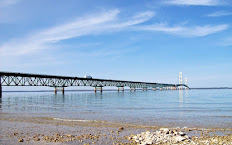
The Enbridge Line 5 Pipeline under the Straits of Mackinac. (File photo courtesy National Wildlife Federation)

LANSING -- Today, Governor Gretchen Whitmer and Department of Natural Resources (DNR) Director Dan Eichinger notified Enbridge that the 1953 easement allowing it to operate dual pipelines in the Straits of Mackinac to transport petroleum and other products is being revoked and terminated. 

They also filed a lawsuit asking the Ingham County Circuit Court to recognize the validity of this action. The state is revoking the easement for violation of the public trust doctrine, given the unreasonable risk that continued operation of the dual pipelines poses to the Great Lakes. Moreover, the state is terminating the easement based on Enbridge’s persistent and incurable violations of the easement’s terms and conditions.

The Notice of Revocation and Termination of the 1953 Easement requires Enbridge to cease operations of the dual pipelines in the Straits by May 12, 2021, allowing for an orderly transition that protects Michigan’s energy needs over the coming months.

"Here in Michigan, the Great Lakes define our borders, but they also define who we are as people. Enbridge has routinely refused to take action to protect our Great Lakes and the millions of Americans who depend on them for clean drinking water and good jobs. They have repeatedly violated the terms of the 1953 easement by ignoring structural problems that put our Great Lakes and our families at risk," said Governor Whitmer. "Most importantly, Enbridge has imposed on the people of Michigan an unacceptable risk of a catastrophic oil spill in the Great Lakes that could devastate our economy and way of life. That’s why we’re taking action now, and why I will continue to hold accountable anyone who threatens our Great Lakes and fresh water." 

The Great Lakes are home to 21 percent of the world’s fresh surface water. They supply drinking water for 48 million people, including 5 million here in Michigan, and support 1.3 million jobs that generate $82 billion in wages annually across the US. In Michigan, the Great Lakes support over 350,000 jobs. An oil spill in the Great Lakes would put families and small businesses across the region at risk.

"After spending more than 15 months reviewing Enbridge’s record over the last 67 years, it is abundantly clear that today’s action is necessary. Enbridge’s historic failures and current non-compliance present too great a risk to our Great Lakes and the people who depend upon them," said DNR Director Dan Eichinger. "Our number one priority is protecting the Great Lakes and we will continue to work with our partners across Michigan in pursuit of that objective."

AG Nessel files lawsuit in support of State's Notice to Enbridge

Michigan Attorney General Dana Nessel’s office, on behalf of Gov. Gretchen Whitmer and the Michigan Department of Natural Resources, filed a new complaint in Ingham County Circuit Court today seeking to revoke and terminate the easement granted by the State in 1953 that allows Enbridge to operate its dual pipelines on the bottomlands of the Straits of Mackinac. The new lawsuit will bring claims in addition to Nessel’s lawsuit filed in 2019 seeking the shutdown of Line 5, which remains pending before Judge James Jamo.

"I commend Gov. Whitmer and Director Eichinger for their forceful actions today to address the grave threat posed by Enbridge’s unlawful operation of its pipelines in the Straits of Mackinac," Nessel said. "With the steps they took today, Gov. Whitmer and Director Eichinger are making another clear statement that Line 5 poses a great risk to our state, and it must be removed from our public waterways. The arguments they are making to revoke the easement based on the public trust align with those outlined in my office’s pending lawsuit in Ingham County Circuit Court which seeks to shut down Line 5 to avoid an environmental catastrophe. Because Enbridge has repeatedly violated the terms of its easement, including its duty to exercise due care for protecting public and private rights, termination of the easement is also appropriate and provides another reason to shut down Line 5. I am pleased to support the Governor and the DNR by filing a new lawsuit today that asks the Ingham County Circuit Court to uphold their actions and enforce them. Simply put, Michigan law requires that the pipelines be shut down and the Notice provides a timely and orderly process for achieving that."

The state is revoking the 1953 easement for violation of the public trust doctrine. This body of law recognizes the State of Michigan as the "trustee" of the public’s rights in the Great Lakes and lays upon the state legal obligations to protect those rights from any impairment. The state found that the 1953 easement violated the public trust doctrine from its inception because the easement does not make the necessary public trust findings. Moreover, the state also found that the continued use of the dual pipelines cannot be reconciled with the public's rights in the Great Lakes and the State's duty to protect them.

Native, environmental groups applaud State action

Andrea Pierce, member of the Little Traverse Bay Bands of Odawa Indians and chair and founder of the Michigan Anishinaabek Caucus, said Line 5 has for many, many years been a ticking time bomb putting the largest source of fresh water in danger.

"We are so happy that the Governor has kept her promise to the people of Michigan to shut down line 5!" Pierce told Keweenaw Now today. "Miigwetch Thank You to Governor Whitmer and Director Eichinger for protecting the Great Lakes and our future."

Lisa Patrell -- also a member of the Michigan Anishinaabek Caucus, and co-founder of Washtenaw 350, an environmental conservation organization -- expressed gratitude for Governor Whitmer's action against Enbridge.

"I am grateful to Governor Whitmer for making a decision that is in the best interest of Michigan," Patrell said. "Water Protectors can celebrate this milestone, but the fight to prevent the tunnel continues. The Army Corps of Engineers is hosting a Hearing on December 7.  Water Protectors will be there, too, and watching Enbridge until the May 2021 decommissioning."

Martin Reinhardt, Northern Michigan University professor of Native American Studies and citizen of the Sault Ste. Marie Tribe of Chippewa Indians, thanked the Governor and the State of Michigan for this important step. "The State of Michigan, under Governor Whitmer's leadership, took an important step today in supporting the health of the Great Lakes Region for all of us now and into the future," Reinhardt said. "Ordering the shutdown of Enbridge's Line 5 was the responsible thing to do. Short term economic gain at the cost of long term ecological harm is never the best choice. Chi-miigwech (many thanks) for protecting those whose voices are often not heard including Indigenous peoples and the animals and plants."

Regina Gasco Bentley, tribal chairperson at Little Traverse Bay Bands of Odawa Indians, said, "At a time of uncertainty tribes have led the charge by taking initiative to protect our waters. We have been an example of what communities can accomplish when we work together. A victory for water is a victory for our life. We are also incredibly grateful for Governor Whitmer -- for our relationship with her, her leadership and willingness to always do what is right."

Oil and Water Don't Mix -- a coalition of community groups, organizations and businesses concerned with the threat of Enbridge's Line 5 through the Straits of Mackinac -- expressed enthusiastic support of the State's decision.

Oil and Water Don't Mix posted this victory photo on their Web site today. (Photo courtesy oilandwaterdontmix.org) 

"Governor Whitmer’s decisive action today to shut down Line 5 fulfills her public trust duty to protect the Great Lakes," said Sean McBrearty, campaign coordinator for Oil and Water Don’t Mix. "Enbridge has played fast and loose with their duty of care for these dangerous oil pipelines, and the governor is holding them accountable for their irresponsible behavior that threatens the Great Lakes every single day. Michiganders who care about the Great Lakes and our northern Michigan economy -- and that’s certainly all of us -- welcome the governor’s strong actions that put Michigan and Great Lakes first."

McBrearty, who is also Michigan Legislative and Policy Director for Clean Water Action, a grassroots conservation group, said Clean Water Action applauds the action by Governor Whitmer.

"Today is a big day for our Great Lakes," McBrearty said on behalf of Clean Water Action. "We applaud the Governor’s actions to protect Michigan residents and our public trust resources by revoking the 1953 easement and shutting down the Line 5 pipeline. This is yet another example of Governor Whitmer putting the health and safety of Michiganders first and fulfilling the promises she made to voters in 2018. For 67 years, this pipeline has risked our most precious natural resources and has spilled a cumulative total of over 1 million gallons of oil. With the Governor's actions today, this dangerous pipeline will no longer threaten our Great Lakes, the drinking water source of millions of Americans. Thank you to Governor Whitmer for her tremendous leadership."  

Liz Kirkwood, executive director of FLOW (For Love of Water), sent an email to fellow water protectors today calling the Governor's action a victory for the Great Lakes and thanking concerned citizens, tribes and groups for their work and persistence in opposing the danger of a potential oil spill from Line 5. 

"As public trustees of our waters, the State of Michigan is affirmatively upholding the rule of law and protecting the public’s treasured Great Lakes from the clear and present danger of an oil spill catastrophe from Enbridge’s Line 5 pipeline," Kirkwood writes. "This is an historic day of state leadership by the Whitmer administration brought about by many years of dedicated action by environmental groups, Indian tribes, communities, businesses, faith communities, families, and individuals like you who gave life to this Great Lakes movement."

Kirkwood also gave special thanks to Oil and Water Don't Mix and the National Wildlife Federation for their work in calling attention to the dangers posed by Line 5.

"While this is a moment to celebrate, we must remain vigilant until the oil stops flowing for good in May 2021 because Line 5 remains exposed to uncontrollable and powerful forces, including exceptionally strong currents, lakebed scouring, new anchor and cable strikes, and corrosion. These forces dramatically increase the risk of this elevated, outdated pipeline collapsing and causing the unthinkable: a catastrophic oil spill in the heart of the Great Lakes," Kirkwood added.

Jannan Cornstalk, a citizen of the Little Traverse Bay Bands of Odawa Indians and organizer of several Pipe Out Paddle protests against Line 5 near the Mackinac Bridge as well as Water Is Life celebrations, said she is looking forward to a celebration at the Straits during these events in the coming year.

"Our water is sacred and much respect to all those who have remained vigilant, said prayers, written letters, hosted events and continued to do things in a good way," Cornstalk told Keweenaw Now. "Action and raising awareness were essential, and the support of people from all walks of life is what collectively makes our life high quality. Chii- Miigwech to the Creator of all things and to Niibi."

Michigan Tech Professor Miguel Levy, who participated in some of the Pipe Out Paddle protests against Line 5 at the Mackinac Bridge, said the Governor's action is good news.

"The movement forced the issue. But the logic of corporate profit-making will continue to threaten and harm the environment through other channels," Levy said. "Let's build the movement against fracking and the Midwestern sand mines feeding the fracking industry." 

Matthew Borke, a water protector and Flint resident, who served as a chef during the Standing Rock protests against the Dakota Access Pipeline, reacted to the news by saying, "I will only begin to dance when there are No Pipelines in the Great Lakes. Energy Transfer and Enbridge are two heads of the same Snake."

Borke recently filed a federal Civil Rights case against the owner operators and security teams of what the NoDAPL (No Dakota Access Pipeline) Movement calls "The Black Snake." 

Line 5: Unacceptable risk

Transporting millions of gallons of petroleum products each day through two 67-year old pipelines that lie exposed along the entire span of a busy shipping channel presents an extraordinary and unacceptable risk. As recent events have confirmed, this threat is very real. For example, in April 2018, the pipelines were struck and dented in three different locations by an anchor inadvertently dropped and dragged by a commercial vessel. Then, in June 2020, Enbridge disclosed that the pipelines had again been struck sometime in 2019 by anchors or cables deployed by nearby vessels, damaging pipeline coatings and severely damaging a pipeline support. Four of the five vessels potentially responsible for the impacts were operated by Enbridge’s own contractors.

This is one of a group of photos of damage to an anchor support on the east leg of the Line 5 pipelines, discovered in June 2020. The photos were sent by Enbridge to EGLE (the Michigan Department of Environment, Great Lakes and Energy) and DNR. (File photo courtesy Enbridge Energy)*

In addition, the state is terminating the 1953 easement because Enbridge has repeatedly and incurably violated its terms. The easement requires Enbridge to exercise due care in operating the pipelines, and also requires Enbridge to satisfy numerous specific conditions, such as ensuring that the pipelines are physically supported at least every 75 feet, are covered by a multi-layer coating to prevent corrosion and other physical damage, and are within certain curvature limitations. Enbridge, however, has failed for decades to meet these obligations under the easement, and these failures persist and cannot be cured. For these and other reasons, the state is revoking and terminating the 1953 easement.

Today’s action to revoke and terminate the 1953 easement is the culmination of a careful review of Enbridge’s compliance with the easement, the threats posed by the continued operation of the dual pipelines, and the state’s energy supply. On June 7, 2019, the governor issued Executive Order 2019-14, creating the UP Energy Task Force to assess the region’s energy needs and alternative sources of supply. The Task Force issued a report on April 17, 2020.** Moreover, on June 27, 2019, the governor directed the DNR to undertake a comprehensive review of Enbridge’s compliance with the 1953 easement. That review is now complete and supports this action.

The state’s action today to revoke and terminate the 1953 easement for the dual pipelines through the Straits of Mackinac does not prevent Enbridge from continuing to seek the necessary legal approvals to construct a tunnel.

To view documents relating to today’s announcement, click the links below:

State of Michigan v. Enbridge, Complaint (11.13.20).pdf

Notice of Revocation and Termination of Easement (11.13.20).pdf  

Cover letter (11.13.20).pdf

Attorney General Nessel's new lawsuit

Editor's Notes:

* See our June 25, 2020, article, "UPDATED: Judge orders Enbridge to cease Line 5 operations following recent damage."

** Click here for info on the UP Energy Task Force. For the Task Force April 17, 2020, report, click here.

Inset photos: Governor Gretchen Whitmer, DNR Director Dan Eichinger, Attorney General Dana Nessel. (Photos courtesy michigan.gov)

Tuesday, November 10, 2020

Native Americans not "Something Else" -- Native leaders call for CNN to apologize

From Michigan Anishinaabek Caucus
November 9, 2020

CNN's poll board announcing election results last week included Native Americans in a percentage labeled as "Something Else." (Photo courtesy Michigan Anishinaabek Caucus)

INDIAN COUNTRY, November 9, 2020 -- Caucuses of the Democratic National Party call for a formal apology from CNN for a dismissive poll board that discounted the impact of the Native American vote and, more importantly, dehumanized the Native community.

The Native American vote’s impact in critical states around the country are well documented by relevant organizations on the ground and leaders within the community. Battleground states like Nevada, Arizona, and Michigan have been decided by critical margins. Community engagement by Tribal leadership, organizers, and volunteers produced historic General Election results.

The Navajo Times reported on Nov. 5 that the success of turning Arizona blue is credited with the Native American vote. Michigan, which also flipped blue, has the highest population of Native Americans east of the Mississippi. Over 100,000 Native Americans were called to vote, and understood that sovereignty was on the ballot.

States across the Country (Arizona, Michigan, Nevada, etc.) have prominent Native communities and are engaging in a critical fight for support and recognition of circumstance.
Native Americans have been insulted by non-Natives on their own ancestral land for hundreds of years. Many Elders alive today were subject to the United States' first parent-child separation policy, otherwise known as Indian Boarding Schools. The Constitutional documented rights of Native Peoples have been constantly disrespected and ignored. Narratives perpetuated by the media contribute to the continued erasure of our peoples and the invisibility of our communities.*

CNN’s dismissive reference of the Native American vote as "Something Else" is not a small injury. It continues the abuse of the Native American identity. It is akin to Trump referring to the Michigan’s Governor as "that woman."

CNN is called to make a public apology and to engage in critical conversations that identify the unique experiences of Native American peoples and their contributions to the 2020 General Election. Native American cultures are something all Americans can be proud of, even though only Native Americans can claim them as their own.

Andrea Pierce, Chair, Michigan Anishinaabek Caucus of the Michigan Democratic Party

Brian Melendez, Chair, Nevada Statewide Native American Caucus of the Nevada State Democratic Party

Joseph Vital, Chair, Native Peoples Caucus of Minnesota DFL

Crystal Cavalier, Chair, North Carolina Democratic Party, Native American Caucus

Dr. Twyla Baker
Prairie Rose Seminole
Rep. Ruth Buffalo

Interim co-Chairs, North Dakota Native American Caucus - Dem-NPL

* Editor's Note: The Native American Journalists Association (NAJA), on Nov. 5, also demanded an apology from CNN. See "NAJA demands CNN apologize for using "something else" to describe Native voters."

See also: "The Power of the "Something Else" vote," by Nick Martin, published Nov. 6, 2020, in The New Republic. 

Monday, November 09, 2020

Western Upper Peninsula Health Department prioritizes case investigation for COVID-19

HANCOCK -- The Western Upper Peninsula Health Department (WUPHD) is notifying residents in Baraga, Gogebic, Houghton, Keweenaw and Ontonagon counties that over 750 cases were added within the five-county jurisdiction in the last three weeks, placing a significant strain on resources. Even with assistance from partner organizations, capacity has been reached. Individuals and their close contacts may not receive a call from the WUPHD.

Effective immediately, in order to maximize staffing resources and prevent outbreaks amongst vulnerable individuals, the WUPHD will begin prioritizing case investigation to notify these individuals:

  • Those who are Age 65 and older, especially those with chronic underlying conditions;
  • Children who are 18 years old and younger, especially those attending school in-person;
  • Individuals residing in congregate living environments, such as long-term care facilities;
  • All other individuals as capacity allows.

Residents are urged not to wait for the Health Department to call, but to take personal responsibility and action if someone becomes aware of a positive test result or potential exposure to COVID-19. 

Individuals notified that they are positive or probable COVID-19 should do the following:

  • Isolate for 10 days from the onset of symptoms or 10 days from the day a positive test sample was collected if you don’t have symptoms. After 10 days, if your symptoms have improved (note symptoms do not need to be fully resolved, but overall improvement is required), and you are fever-free without the use of medications, it is OK to return to normal activities. If you are still feeling sick, please consult with a medical professional as some people can be contagious for a longer period.
  • Please do your best to isolate away from the other members in your household to prevent them from contracting the virus.
  • Notify your employer or school that you are a COVID-19 case.
  • Notify all of your close contacts and ask that they quarantine for 14 days: a close contact includes those that you have been within 6 ft. of for more than a total of 15 minutes any day you were contagious which is two days before symptoms begin or 2 days prior to a positive test if you are asymptomatic.

If you are a Close Contact you should do the following:

  • Quarantine for 14 days from your last contact to the COVID-19 case. If you develop symptoms you should get tested and isolate away from other household members.
  • Please notify your employer or school that you are a close contact and need to quarantine.
  • If you are a close contact and considered an essential worker, please work with your employer to determine your return to work procedure.
  • Please note receiving a negative COVID-19 test as a close contact does not mean that you will not get symptoms or test positive at a future time within your quarantine period. You need to complete the full 14-day quarantine period even if you do not develop symptoms.

The Health Department will continue to conduct case investigation and contact tracing in nursing homes, schools, high-risk congregate settings and will assist businesses with COVID-19 related issues.

Letters to employers will no longer be issued; therefore if you are an employer seeking confirmation regarding employees please call the WUPHD office at (906) 482-7382 to be given verbal confirmation.

For COVID-19 testing or medical concerns please reach out to your healthcare provider or a local healthcare facility for further guidance. In case of a medical emergency call 911.

For resources on how to stay safe during the pandemic visit https://www.wupdhd.org/, https://www.michigan.gov/coronavirus, and https://www.cdc.gov/coronavirus.

Friday, November 06, 2020

Michigan Courts defend fair ballot counting, dismiss Trump Campaign's election lawsuit

LANSING -- Today, Nov. 6, 2020, Michigan Courts ruled in favor of Michigan fair ballot counting and in defense of Secretary of State Jocelyn Benson. Attorney General Dana Nessel supports the judges' rulings.

3rd Circuit Court ruling notes fair ballot counting in Michigan

Late this afternoon Timothy Kenny, chief judge of Michigan’s Third Circuit Court, denied a petition seeking preliminary injunctive relief that would have required Detroit and Wayne County to retain all ballots and poll books and would prevent the Wayne County Board of Canvassers from certifying election results.

In his decision in Stoddard, et.al. v City Election Commission of the City of Detroit, et.al., Judge Kenny said, "Plaintiffs’ allegation is mere speculation … and are unable to meet their burden for the relief sought."

Michigan Attorney General Dana Nessel’s Press Secretary Ryan Jarvi issued the following statement on this case:

"Chief Judge Kenny’s quick decision mirrors a decision yesterday by Court of Claims Judge Stephens -- specifically, that, once again, the allegations are mere speculation. The swift, clear and decisive opinion should put to rest the meritless claims that have been made in Michigan and other states around the country. We have always been committed to a fair, transparent and secure election that ensures every legal vote is counted -- and we will continue to do that."

Click here to view a copy of Judge Kenny’s opinion.

Michigan Court of Claims issues opinion denying Trump campaign's requests in election lawsuit

Michigan Court of Claims Judge Cynthia Stephens issued her

opinion today in Trump v Benson, the lawsuit filed by the Trump campaign against Michigan Secretary of State Jocelyn Benson.

Judge Stephens denied plaintiffs' requests after she held a hearing and listened to arguments Thursday, during which she ruled the Trump campaign's lawsuit was unlikely to succeed on the merits. Michigan Attorney General Dana Nessel’s Press Secretary Ryan Jarvi released the following statement:

"The Trump campaign’s lawsuit demonstrates either a failed attempt by plaintiffs to cobble together a legitimate claim, or their clear lack of understanding of Michigan’s election laws. The Court correctly described the campaign’s claims as nothing more than hearsay, and our office will ask the Court to dismiss this meritless lawsuit. The will of voters is what matters in this election, and their ballots in Michigan have been counted in a transparent, fair and accurate manner."

Click here to view a copy of Judge Stephens' opinion.

Inset photos: Attorney General Dana Nessel (above left); Secretary of State Jocelyn Benson (above right). (Photos courtesy michigan.gov)

Thursday, November 05, 2020

U.P. Energy Task Force to meet online Nov. 6

The U.P. Energy Task Force is to meet online Friday with scheduled presentations about the integrated resource planning process for electric utilities and programs in Michigan that offer financing for business and residential energy efficiency projects.

The Task Force is to meet beginning at 1 p.m. Friday, Nov. 6. Following the presentations and discussion among Task Force members, ample time has been scheduled for public comment on Upper Peninsula-related energy topics.

Those interested in joining the meeting can click on the Microsoft Teams link on the U.P. Energy Task Force webpage. Those who do not have Internet access can use a phone to participate in the meeting by dialing 248-509-0316 and entering the conference ID 425 816 987#. People who need special assistance to participate can contact Kimber Frantz at 517-284-5035 or FrantzK@Michigan.gov in advance of the meeting.

Members of the public who wish to speak at the meeting are asked to send an email to EGLE-UPEnergy@Michigan.gov with "Request for Public Comment During November Meeting" in the subject line and your name. Members of the public who attend the meeting but who did not submit their names ahead of time will be still be allowed to make a comment. Each speaker will have a three-minute time limit.

Comments regarding the work of the UP Energy Task Force can also be submitted to EGLE-UPEnergy@Michigan.gov.

State regulated utilities are required by law to file integrated resource plans with the Michigan Public Service Commission. The plans outline how a utility will provide reliable, cost effective electric service to its customers in the future while also addressing the industry’s risks and uncertainties.

The U.P. Energy Task Force must submit its report on overall U.P. energy issues and alternatives to Gov. Gretchen Whitmer by March 31, 2021. In April, the Task Force sent to the Governor its recommendations on propane availability in the U.P. 

Friday’s meeting is being held in accordance with Gov. Whitmer’s and the Michigan Department of Health and Human Services’ recommendations designed to help prevent the spread of Coronavirus Disease 2019 (COVID-19).

Sunday, November 01, 2020

UPDATED: Faith leaders, law enforcement discuss "Keeping Disagreement Civil"

By Michele Bourdieu

Panelists for the Oct. 27 webinar, "Keeping Disagreement Civil," included law enforcement and faith community leaders, who discussed ways to communicate peacefully with neighbors who express opposing views and to avoid conflicts during public events such as protest marches and voting. (Photo by Keweenaw Now)

HOUGHTON -- Communication with law enforcement, shared responsibility, and respect for people with opposing views were some of the suggestions for improving community practices discussed during the Oct. 27 local webinar, "Keeping Disagreement Civil." Hosted by Keweenaw Faiths United and Cooperative Campus Ministries, the online conversation brought together law enforcement officials, clergy, lay leaders, and -- sometimes anonymous -- members of the public who tuned in to listen or to participate by asking questions.

The panelists included these representatives from local law enforcement: Houghton County Sheriff Brian McLean, Hancock Police Chief Wayne Butler, Houghton Police Chief John Donnelly,  Michigan Tech University Police Chief Brian Cadwell, and Sergeant Matt Djerf of Michigan State Police Calumet Post. (All are pictured above except Sheriff McLean, who participated by phone.)

The clergy and lay leaders on the panel, pictured above, were the Rev. Bucky Beach, pastor of Good Shepherd Lutheran Church in Houghton; Paul Mitchell, lay minister of the Keweenaw Unitarian Universalist Fellowship (KUUF); Sarah Semmler Smith, Finlandia University campus pastor; Rick Stanitis, Canterbury House Episcopal Church Ministry; David Holden, Temple Jacob president; and the Rev. Peter Norland, pastor of Portage Lake United Church.

Sarah Semmler Smith, Finlandia University campus pastor, who has lived in the local area for only one year, related to the panel her experience with a local peaceful protest. She had wanted to bring her two daughters, ages 5 and 8, to the event but hesitated bringing them to the march. She said what she had heard about the local "gun culture" led her to wonder about community safety.

Houghton County Sheriff Brian McLean replied that marches here have always been peaceful and it is "foreign to us" to see violent protests in other areas. He noted the only disruption here might be the driver of a truck who intentionally put something in his vehicle to produce smoke as he drove past marchers, in order to harass them.

A young family, one of several with young children, participates in the June 3, 2020, Black Lives Matter march across the Portage Lift Bridge in protest against the death of George Floyd and other victims of racist violence. The Houghton police assisted in directing traffic during this peaceful march. Marchers reported most passing vehicles were supportive and only a few made negative comments. (Keweenaw Now file photo)*

Bucky Beach, one of the organizers of this webinar, asked what peaceful marchers or community members faced with disagreement in the current political climate can expect from law enforcement to keep disagreement from getting out of hand.

Houghton Police Chief John Donnelly said the first step is communication.

"We know the people in the community," Donnelly said.

He estimated that 90 percent of people in this small community are on a first-name basis with someone in law enforcement.

Michigan Tech University Police Chief Brian Cadwell added that the First Amendment requires being sure people have a right to express their opinions, even though opposing sides, especially recently, don't want to listen to each other. People need to tolerate opposing opinions.

Panelists discuss "open carry" of firearms

Semmler Smith's mention of the "gun culture" led to a discussion on Michigan's "open carry" law and the recent attempt by Secretary of State Jocelyn Benson to require that citizens not bring a firearm any closer than 100 feet to a polling place during the election. McLean referred to a court that recently found her rule unconstitutional. However, Michigan Attorney General Dana Nessel recently announced that her office is appealing that court's ruling to the Michigan Supreme Court.** See UPDATE below.***

Donnelly replied to a question from a listener, read by Bucky Beach, on the laws concerning bringing a firearm to a protest or a polling place. Donnelly noted what is legal and not legal at a polling place (open carry vs concealed carry) is not as cut and dried as you'd expect.

"I know in our area one of the things that we were told by some of our election officials is if they see someone displaying a weapon they're going to ask them not to display it there," Donnelly said, "and if they choose to continue to do that they'll probably give us a call so there'll be a level of comfort there."

Donnelly added that people who open carry a weapon to a protest are usually well versed in second amendment rights so they are careful not to cross the line to "brandishing" a weapon, which is a felony that would cause them to lose those rights.

"I know that's not very comforting to a lot of people, but we hope that is what will keep them from stepping over on that," Donnelly said.

Rev. Peter Norland, pastor of Portage Lake United Church, asked if the law is the same for open carry at a polling place as at a protest.

Sheriff McLean said the law is one and the same in both instances throughout the state.

"Legally we can't tell them they can't do it," McLain said, "and it doesn't matter if it's a pistol strapped on their hip or a rifle slung over their shoulder."

He noted there are places of worship and schools where guns are not allowed, which can be complicated if that school or place of worship is used as a polling place, especially if school is in session.

Bucky Beach asked where the line is drawn between open carry and "brandishing" a weapon.

Donnelly gave some examples of displaying the weapon in a way that makes people feel threatened. Sergeant Matt Djerf of Michigan State Police said "brandishing" is any kind of threatening gesture made when the weapon is produced. Cadwell said "brandishing" is waving the weapon about in order to induce fear.

Communication with law enforcement

Another question from a listener, read by Beach, asked about racist or other incidents in which a law enforcement officer acts in an inappropriate way and whether there are complaint channels for that.

Djerf replied that the State Police would ask people to come in and talk to them first or they can contact the internal affairs bureau in Lansing, and speak with them. An investigation would be possible.

"We have some pretty strong guidelines for us ... a code of conduct," Djerf said.

Sheriff McLean also noted citizens can call the Sheriff's office or leave a message on their Web site any time if there is a complaint about police behavior. Police are expected to be apolitical. He noted he and his officers met protesters at the beginning of the June 2020 Black Lives Matter march and greeted them in a friendly way, even those carrying signs critical of police.

During the June 3, 2020, march for Black Lives Matter, Houghton Patrolman Nathan Kinnunen, with his bicycle, watches traffic and marchers for safety at the Houghton end of the Portage Lift Bridge. Another patrolman is stationed on the opposite side of the street. (Keweenaw Now file photo)

David Holden of Temple Jacob asked about outside agitators who might be stirring up emotions at a protest or causing vandalism (which occurred at Temple Jacob recently).

McLain noted if citizens suspect outside agitators may be causing problems, they need to be good witnesses, take down license plate numbers or other information and notify police.

"Don't be afraid to call us," Donnelly added.

A question from one of the webinar listeners asked if any of the larger faith organizations were asking their ministers to counsel congregants to refrain from disruptive behavior.

Paul Mitchell, KUUF lay minister said this webinar conversation was intended to answer not only how faith leaders can establish expectations of civil behavior in their own congregations, but how they can extend those expectations into the community outside their own congregations, since laws are limited.

"If we have a community with expectations that says, 'Hey, toting guns around doesn't help the police and it doesn't help the rest of the protesters. Nobody really wants you to carry your gun around,'" Mitchell said. "We don't want our congregants to be disruptive in terms of carrying guns around."

A listener's question directed at law enforcement asked if they had coordinated a plan in case dissatisfaction with the election results should lead to violence.

Sheriff McLean said his own agency wasn't aware presently of anyone on their radar who might cause such a problem.

"I don't expect it to happen, but we're not going to close our eyes and say it couldn't happen. It certainly could," McLean said. "Once the polls close and the votes are counted, could it send somebody over the edge? Yes, it could. I just don't know. But we're aware of it."

Beach noted a question from a listener on masks and enforcement, adding he had heard of incidents of anger over masking or not masking. He asked if enforcement of a law requiring masks is up to the Health Department or law enforcement.
 
McLain said right now it's the Health Department.

"If by chance the governor and the senators and the congressmen get together and they pass a law and the governor signs it into law, then it would be on law enforcement," McLain said. "I would think each department better hire half a dozen to a dozen more officers (for enforcement)."

Recommendations for avoiding conflict

Beach then asked for recommendations from the law enforcement panelists on how ordinary citizens, who are not law enforcement, should act in the presence of conflicts.

"When do we call you? When do we just walk away? When do we engage with a conversation?" Beach asked.

Donnelly said he believed a conversation with someone who is dead set in his/her opposing opinion (such as whether or not to wear a mask) is not effective.

"I think education is the key. I think communication -- which is what we're doing tonight -- is the key," Donnelly noted. "Heavy enforcement? Oo! We're going to run into conflict there."

Cadwell added, "Anytime it escalates to a situation where it looks like somebody may become violent, give the police a call."

Peter Norland asked if police could give guidance on when to call them when people are feeling uncomfortable in a conflict situation, even though it may not be violent.

"When do we approach that line (of a need to call authorities)?" Norland asked.

Djerf referred to Sarah Semmler Smith's comments on being afraid to take her children with her to a protest, noting that police should take a look at such a situation to see if it's safe.

"One thing we all need to realize," Djerf said, "(is) we can't control somebody else's behavior. We can control our own. And as far as conflict resolution goes, that's a huge thing.

Chief Butler added, "When in doubt, call. That's the best thing to do, because there's nothing worse than being behind the power curve on any investigation."

A situation may need de-escalation because it could lead to something worse, he explained.

Cadwell said it's amazing how people are hesitant to call the police, even when there are panic buttons all over the Michigan Tech campus. They sometimes say later that they didn't want to bother the police.

"Getting bothered is our job," Cadwell added. "It's not a bother."

Beach then asked about making a distinction between de-escalation and deflection, or calming a situation by walking away from it.

"If you can walk away from a situation that's getting bad, why not do that?" Djerf suggested. "There are instances where sometimes you just can't reason with people."

Djerf noted it's important to control oneself, remain professional and calm, keep a low tone of voice, and respect feelings and opinions even if you don't agree with them.

"Having some empathy for people can go a long way. Being an active listener can be important, too," Djerf added. "Listening to them, maybe paraphrasing what they're saying and repeating it back to them. It tells them that you're listening to them."

Mc Lain noted the importance of keeping a distance from people who might seem aggressive or threatening. If it is in a public place, retreat to where other people are. Answer them with a question to get them thinking.

Beach reported a question from a listener on the vulnerability of people of color in the community and asked if police were sensitive to aggression those people might face. 

Cadwell said, especially at Michigan Tech, with its diverse community, police are sensitive to that issue.

"We spend time working and speaking with the underrepresented constituencies on campus -- whether it's the people of color or any others," Cadwell said.

He explained that campus police want to make sure those people who are subjected to any threatening words or actions reach out to police right away so they can determine who is causing the aggression and can resolve the issue.

Beach asked law enforcement panelists if they had additional advice the religious leaders could relay to their communities.

Butler noted respecting the rights of others is important.

"Be safe," he said. "Don't believe everything that you see on social networks."

Donnelly added, "Just because you disagree with somebody doesn't mean you have to be disrespectful to them."

McLean noted the closeness of the Copper Country community and how people help their neighbors, schools, churches and community groups.

"Everybody realizes we live in a very special place," McLean said. "We live in a great community and we want to keep it that way."

Paul Mitchell of KUUF told Keweenaw Now he believed the webinar with law enforcement on keeping disagreement civil was a wonderful first step in shared responsibility.

"We've begun to recognize that it's not just the job of the police to keep us safe," Mitchell said. "It's our obligation as community members to be involved in making our community safe. We need to work with the police and work with each other to make these next few weeks and the coming years safe for disagreement.

"The law enforcement leaders shared their experience in dealing with difficult situations. Their suggestions on deflecting situations -- keeping a calm physically and in your voice, listening and asking  questions and finally walking away when necessary are the beginning steps to de-escalating conflicts. I hope as a community we can work further with law enforcement and others to expand our street-smart community de-escalation IQ."

Bucky Beach of Good Shepherd Lutheran also shared with Keweenaw Now his takeaway from the webinar.

"It is always good to hear law enforcement concerns about the safety of our community," Beach said. "It is their community too. And it's always good for the general public to understand how competent and highly trained our officers are. It helps us all feel confident and I know it helps them feel confident in us, too.

"Whether a society is civil or not is not up to law enforcement officers -- it’s up to each of us. As one panelist said, 'If you want better neighbors, be a better neighbor!'

"And it's always good advice to not engage if someone is acting aggressively toward you. Some of the specifics mentioned were helpful to practice, e.g., lowering your voice, not raising it.  Stepping back rather than forward. Asking questions instead of making counter-statements."

Editor's Notes:

* See our June 6, 2020, article, "Hundreds march across Portage Lift Bridge in peaceful, youth-led protest against racist violence."

** On Oct. 29, 2020, Michigan Attorney General Dana Nessel's Press Secretary Ryan Jarvi issued the following statement in response to the Michigan Court of Appeals decision regarding the prohibition of open carry of firearms at the polls on Election Day:

"We intend to immediately appeal the decision to the Michigan Supreme Court. Just today, a poll released by the Detroit News and WDIV-TV indicated that 73 percent of Michigan voters say openly carried guns should be banned near polling places. The merits of this issue -- which impacts all Michiganders -- deserves full and expedited consideration by our State’s highest court."

*** UPDATE, Nov. 2: Two lawsuits were filed -- and later consolidated -- that challenged the Secretary of State’s directive. On Friday, the trial court granted an injunction in the case, finding that Secretary of State Benson's directive -- that the open carry of a firearm was to be prohibited in a polling place, in any hallway used by voters to enter or exit, or within 100 feet of any entrance to a building in which a polling place was located, in clerk’s offices and absent voter counting boards on Tuesday -- likely violated the Administrative Procedures Act. The decision was immediately appealed to the Michigan Court of Appeals, but that court declined to hear the appeal. An application for leave to appeal was then filed with the Michigan Supreme Court. The state requested an answer from the Supreme Court by 10 a.m. this morning (Nov. 2) considering tomorrow’s election. However, the Michigan Supreme Court has not responded which means the Court of Appeals decision will stand.

"Though I am disappointed that the Supreme Court hasn’t provided guidance in advance of Election Day, it does not change the fact that voter intimidation is still illegal in Michigan," Attorney General Nessel said. "Those who attempt to deter or interfere with someone trying to exercise the fundamental right to vote will be held accountable to the fullest extent of the law."

Benson made a similar statement:

"Voters can go to the polls tomorrow confident that safety is our top priority," Secretary Benson said. "The bottom line is that voter intimidation is illegal under state and federal law. As the Court of Appeals confirmed, anyone who intimidates a voter in Michigan by brandishing a firearm is committing a felony. The Attorney General and I are working with law enforcement to ensure the law is followed statewide."