
Article posted August 19, 2026, on The 906 Report and reprinted here with permission
Activists gather at Camp Animikiiwadiswan (Thunderbird Nest) to protect a sacred area of Michigan's Upper Peninsula.

Native Americans and their non-native allies have established an encampment just south of the proposed Copperwood mine in the western Upper Peninsula of Michigan.
Charlotte Loonsfoot (Waabanong-ikwe), an Anishinaabe Ojibwe environmental activist and executive vice-president of Protect the Porkies, is lead organizer of the camp, along with Tom Grotewohl of Protect the Porkies and Guy Reiter (Anahkwet), a Menominee community organizer.
The encampment was established along the North Country Trail in the Ottawa National Forest. It's just a few hundred yards from the site of the proposed Copperwood mine, near the Porcupine Mountains Wilderness State Park (Porkies) and north of the city of Wakefield.

Resisting the Copperwood mine
"We have come to set up a place to come together and help spread the word about the mine and the horrible things that will happen if there's a leak or anything," Loonsfoot said. "And I don't know any mine that has not leaked, especially copper and nickel."

As the name implies, the Copperwood has identified copper as its primary resource, with silver as a secondary product.
The mine facilities would occupy more than 500 acres and would impinge on lands where the Ojibwe have treaty rights to hunt, gather and fish on federal lands.
"This is our land," Loonsfoot said. "This is our our beautiful Mother Earth, and she provides for us everything that we need. Every plant on this Earth is medicine, and I work with medicines. And you know, what's going to happen if everything's polluted? All our animals and plants are going to die. Our water, all the fish, the little creatures in the water are going to die, and then we're going to die."
Mine opponents say 40 million tons of waste material, including mill tailings polluted with toxic metals, would be stored in a disposal facility and could reach Lake Superior if the containment dam ruptured. Even in normal operations, the mine would discharge up to 500,000 gallons of treated wastewater into streams every day.
"In my heart, I will die for the water," Loonsfoot said. "I will, because that's the most important thing that we need to survive. Everything needs to survive. We can't live three days without water. Why would they want to come in and pollute it?"
Mine opponents also warn that the project would bring air, noise and light pollution, heavy truck traffic and habitat fragmentation to an unspoiled corner of the Upper Peninsula, which is home to a diverse wildlife population and one of the last old-growth forests in Michigan.
In the August 14 interview by Mark Doremus of The 906 Report, Charlotte Loonsfoot of the Keweenaw Bay Indian Community (KBIC) speaks about what would be lost to the environment should the Copperwood Mine be built near the Porcupine Mountains Wilderness State Park and surroundings as well as the loss of tourism that is important to the economy. (Video by John Peiffer for Keweenaw Now)"If we don't help and have a voice for the animals and the plants and the water, then people will just keep coming in and destroying it and killing it," Loonsfoot said. "And my thing is, no more new mining. You got enough mines here. You know, leave it alone."

The encampment is also a chance for activists from around the Midwest to strategize and build personal relationships that support long-term collaborations.
"We want to make a statement and we want to show that people of all tribes, people of different backgrounds, different states are uniting to say that this mine is a terrible idea," said Tom Grotewohl of Protect the Porkies.
Grotewohl is a co-organizer of the resistance camp. An outspoken opponent of the Copperwood mine for several years, Grotewohl told Keweenaw Now about the Tribal Action Committee working with Protect the Porkies.
Collaborations between Native Americans and non-natives have strengthened campaigns to oppose mining projects in the United States because they bring different political tools and resources to the table.

"Somehow, the native people have lived here for thousands of years without poisoning the land and the water," Grotewohl said. "Meanwhile, white folk, in just a matter of a few generations, have completely trashed the place and made it so we're afraid to eat our own food. We're afraid to drink from the the streams. We're afraid to breathe the air in some cases. So it's really common sense that we should be looking towards the tribal people for leadership in setting up the encampment."
Reconnecting with the natural world
The encampment is an opportunity to educate the public about the proposed Copperwood mine, but it also has a broader purpose. It also allows participants to connect physically and spiritually with the woodlands of the Upper Peninsula.
"It's one thing to see a potential mine project on a piece of paper or on a website, but it's another to actually be on the land that it's going to potentially destroy," said Guy Reiter (Anahkwet) of the Menominee tribe. "We're building relationship again with this land. Even though we've been here for thousands of years, it is still important for us to to come out, put our feet on the ground, and get connected."

Besides visiting the camp on August 14 and 15, Reiter and others from the Menominee tribe spent time enjoying the nearby Porcupine Mountains Wilderness State Park.
Dawn Wilber, co-organizer of the annual Menominee Canoe Journey on the Menominee River in opposition to the projected Back 40 sulfide mine for gold and other metals, commented on the visit.
"I felt it was important for us to be present at the beginning of the ANIMIKIIWADISWAN (Thunderbird Nest) encampment, to stand in solidarity and show our support and collaboration with this group of Water Protectors," Wilber said. "As Water Protectors, our responsibility does not stop at the waterways that are sacred or important to our own communities. Water is precious everywhere, and when water is threatened anywhere, it affects all of us. We stand together because protecting water is something we all share a responsibility for."


Highland Copper Co., Inc., still seeks funding
Highland Copper Co., Inc., and its supporters have been pursuing a $50 million Michigan state infrastructure grant to support the Copperwood mine since early 2023. The proposal failed to gain legislative approval three times due to opposition from Protect the Porkies and other stakeholders. Highland has indicated that it still hopes for financial support from the state.
UPDATE/ ALERT:
In fact, at 9 a.m. this Tuesday, August 25, the Michigan Strategic Fund (MSF) board will again take up that proposed $50 million grant to support the Copperwood mine, according to a story in the Detroit News. The meeting will be held in-person at the principal office location of the MEDC building located at 300 North Washington Square, Lansing, MI 48913.
The meeting will also be on Zoom. Here is the Zoom link:
https://michiganbusiness.zoom.us/j/89941203531
Webinar ID: 899 4120 3531
Dial-In: (929) 205-6099
Members of the public wishing to speak virtually during the meeting must submit their registration on the MSF Public Comment Page at least three hours prior to the 9 a.m. start time.
Those who attend the meeting in person do not have to pre-register.
UPDATE: Details on the proposed grant should be available if and when meeting materials are posted online 24-48 hours before the Tuesday meeting. A request was made to MEDC (Michigan Economic Development Corporation) to post such documents before the meeting, but they have refused to make these available before the meeting.
A $50 million grant for Copperwood mine infrastructure was approved by the Michigan Strategic Fund board but failed to win final approval in the State Senate in 2024. That grant, and a later earmark request, which also failed, would have funded road improvements, power upgrades and telecommunications improvements in Wakefield Township, where the mine would be located.
Those who attend the meeting in person do not have to pre-register.
If you wish to make a comment to the MSF Board, see protecttheporkies.com or their Facebook page, for talking points and more info on the Copperwood mine.
Highland is also looking for a $250 million loan from the U.S. Export-Import Bank to help finance the $425 million cost of the Copperwood project.**
Protect the Porkies has launched a letter-writing campaign to discourage lawmakers and bureaucrats from supporting the project with those grants and loans, and to prevent renewal of a state water discharge permit for the mine.
UPDATE, August 24, 2026: You may wish to contact legislators and local "leaders" on this list of coalition members of a new group just announced today by Invest UP. They support Copperwood and the Eagle Mine, claiming "broad support." The article states the following: "A new coalition of more than 130 local leaders, labor unions, business leaders and Upper Peninsula residents today announced the launch of 'Our U.P., Our Future,' a movement dedicated to championing the creation of jobs and opportunities for the U.P. while protecting the region’s natural resources. The coalition includes all six of the state legislators representing the U.P., underscoring broad support for the effort across the region." (See: https://www.investupmi.com/our-up-our-future/)

Organizers say more than forty people showed up for the encampment over the weekend of Aug. 14-16. The camp resumed on the weekend of Aug. 21-23.
"This weekend there were approximately 30 people, from Wakefield, Bessemer, Ironwood, Houghton, Iron Mountain, Madison, Chicago, Big Rapids, Traverse City, and others," Tom Grotewohl told Keweenaw Now on Sunday evening, Aug. 23.
Charlotte Loonsfoot noted visitors this second weekend also came from Watersmeet, Mole Lake, the Sault nation and KBIC.
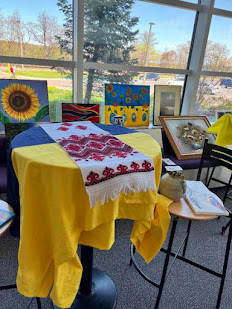
Here are some photos from Saturday, Aug. 22:


The encampment is expected to resume Friday, Aug. 28, for the weekend of Aug. 28-30.***
Charlotte Loonsfoot (Waabanong-ikwe) is an enrolled tribal member of the Keweenaw Bay Indian Community (KBIC) in Michigan's Upper Peninsula. She is an an Anishinaabe (Ojibwe) environmental activist, water protector and community organizer who plays a leading role in regional anti-mining movements.
Guy Reiter (Anahkwet) is a traditional Menominee organizer, water protector, activist and writer. He lives on the Menominee Indian Reservation in northeastern Wisconsin and serves as a prominent leader in regional environmental and Indigenous sovereignty movements.
Tom Grotewohl is an environmental activist, filmmaker and the founder and president of the grassroots coalition Protect the Porkies.
Research for this report was AI-assisted.
Editor's Notes:
* Author Mark Doremus is a journalist and videographer who writes and publishes The 906 Report, an independent media publication that covers mining projects, mining history, and local developments in Michigan's Upper Peninsula (named after the region's 906 area code).
** See Protect the Porkies.com for maps, photos, details on the Copperwood mine and ways to take action. See also their Facebook page.
*** See https://protecttheporkies.com/encampment for updates.































No comments:
Post a Comment