LANSING -- Gov. Gretchen Whitmer has ordered U.S. and Michigan flags within the State Capitol Complex and upon all public buildings and grounds across the state of Michigan to be lowered to half-staff on Saturday, July 18, 2020, to honor the life and service of Congressman John Lewis.
"Congressman John Lewis was a civil rights legend who stood firmly on the front lines of our nation’s history," said Governor Whitmer. "Congressman Lewis dedicated his life to building a more just, equitable nation for Black Americans everywhere, and his unwavering commitment to public service has set an example for leaders across the country. His work with leaders like Dr. Martin Luther King transformed our nation. John Lewis was an icon, and I know that people everywhere will feel the impact of his passing. May we honor his legacy by continuing the work to fix the systemic racism Black Americans face every day and build a country where everyone, no matter the color of their skin, can find opportunity. My heart goes out to the congressman’s family and loved ones during this time."
Michigan Lieutenant Governor Garlin Gilchrist also recognized the late Congressman John Lewis as a great civil rights leader and role model.
"America lost one of its greatest warriors in the fight for civil rights at a time when his leadership was needed the most," said Lieutenant Governor Gilchrist. "As our congressional and collective consciousness for two generations, John Lewis paved the way for so many people to make history by laying the foundation upon which I and so many others stand. This loss hits deep in the soul of every American, but we find solace in knowing that he inspired a legion of champions for change to carry forward this mission of justice, so that the next generation can be, believe, and become their greatest selves. We must recommit to righting the wrongs that John Lewis fought today and every day. To the man who caused good trouble: rest in power."
The State of Michigan recognizes the duty, honor and selfless service of Congressman John Lewis by lowering flags to half-staff. Michigan residents, businesses, and other organizations also are encouraged to display the flag at half-staff. To lower flags to half-staff, flags should be hoisted first to the peak for an instant and then lowered to the half-staff position. The process is reversed before the flag is lowered for the day.
Flags should be returned to full-staff on Sunday, July 19, 2020.
Showing posts with label Letter to Michigan Gov. Gretchen Whitmer. Show all posts
Showing posts with label Letter to Michigan Gov. Gretchen Whitmer. Show all posts
Saturday, July 18, 2020


Wednesday, April 29, 2020
LETTER: UP Energy Task Force
From Gene Champagne* to Keweenaw Now
There is a new report out from the State of Michigan that all UP residents need to pay attention to. The UP Energy Task Force (UPETF) was created by Governor Whitmer (Executive Order 2019-14) and was "directed to consider all available information and make recommendations that ensure the U.P.’s energy needs are met in a manner that is reliable, affordable, and environmentally sound."
Without going into detail, the recommendations just released concentrate on the resiliency of the UP propane market including source, transportation, and storage, weatherization, and affordability as well as alternative sources for each.**
The UPETF is comprised of 19 members, 12 of whom are UP residents. The members represent a diverse cross-section of interests. We in the UP rightfully complain that Lansing does not often listen to us here. This task force is about the UP and we need to pay attention and contribute to it. The UPETF hired Public Sector Consultants (PSC) to perform in-depth analysis of propane and alternatives to ensure resiliency for UP energy needs. PSC, based in Lansing, is recognized as a trusted, independent, and nonpartisan research and analytical firm dedicated to "good public policy… transcending partisanship -- for the benefit of all."
The resiliency, our ability to withstand the shock of a disruption, in the UP propane market does not grade out well. The propane fractionator outside Rapid River supplies 87 percent of the propane used in the UP. If this source of propane were to be cut off for any number of reasons, the 23,000 households that depend upon it for heating and cooking would be in dire straits. This facility and the oil passing through the pipeline (Line 5) to Rapid River are owned by Plains Midstream, a Canadian company. Enbridge, another Canadian company, owns the pipeline. Plains Midstream also owns a storage facility at Kincheloe where propane is railed in after being fractionated elsewhere.
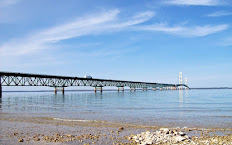
There are any number of possibilities that could cause a disruption to our propane supply. A disruption in Line 5 would be a spill either in the Straits of Mackinac or anywhere along its 290-mile route from Superior, WI, to Rapid River, of which 188 miles are in the UP. A disruption in Line 1, which runs from Edmonton to Superior (1200 miles) and feeds Line 5, would also create similar havoc. Possible disruptions could result from physical or digital sabotage perpetuated by domestic or foreign bad actors. Recently, around February 18th, a gas compression facility was held hostage in a ransomware attack and the pipeline feeding was completely shut down for two days until a ransom was paid.
Other identified disruptions to the propane supply could come from weather, as experienced during the polar vortex of 2013-14 during which prices shot through the ceiling when supply was critically hampered. Economic upheaval, such we are currently witnessing with free fall in global oil prices, will seriously affect the tar sands oil fields from where Line 1, which feeds Line 5, originates. Currently more than 90 percent of the oil that flows through Line 5 is destined for export to foreign countries, mostly in Asia. If that market were to dry up, or become affected by unprofitable price drops, there would be little incentive to supply 23,000 households in the UP with propane.***
At the UPETF meeting on September 20, 2019, in Hancock, Plains Midstream representative Luc Mageau, in my opinion, did not seem to care how the oil was moved, as Plains Midstream would be paid regardless of the transportation mode. In response to questioning from UPETF members, Mr. Mageau estimated that any increase in costs associated with rail transport would be "pennies on the dollar as opposed to dimes on the dollar" when compared to pipeline transportation. The analysis from PSC bore this out.
Michigan residents should read this report with an open mind and follow future UPETF meetings. The current report is just Part I of the task force’s continuing work. The next phase is to begin with an online meeting of UPETF on May 12, 2020. Phase II will be broader in scope and include an analysis of electricity rates and delivery in the UP. This phase will also explore alternative energy sources.
All meetings are video recorded and can be accessed -- along with links to meeting agendas, minutes, presentations, and related documents -- on UPETF's Web site. We need to ensure that all UP residents have adequate access to affordable and reliable energy.
Editor's Notes:
* Gene Champagne, author of this letter, is a longtime resident of Big Bay, MI, and owns a camp in Grand Marais, MI; both towns are heavily dependent upon propane for heating and cooking.
** See: "U.P. Energy Task Force submits propane recommendations to Gov. Whitmer." The full report, "Upper Peninsula Energy Task Force Committee Recommendations, Part I - Propane Supply," can be read here.
*** See also: "Attorney General Nessel comments on UP Energy Task Force Report on Propane, urges prompt planning to prepare for shutdown of Enbridge Line 5."
This article includes clips from a video presentation on the propane issue in Houghton by two members of the U.P. Energy Task Force.
There is a new report out from the State of Michigan that all UP residents need to pay attention to. The UP Energy Task Force (UPETF) was created by Governor Whitmer (Executive Order 2019-14) and was "directed to consider all available information and make recommendations that ensure the U.P.’s energy needs are met in a manner that is reliable, affordable, and environmentally sound."
Without going into detail, the recommendations just released concentrate on the resiliency of the UP propane market including source, transportation, and storage, weatherization, and affordability as well as alternative sources for each.**
The UPETF is comprised of 19 members, 12 of whom are UP residents. The members represent a diverse cross-section of interests. We in the UP rightfully complain that Lansing does not often listen to us here. This task force is about the UP and we need to pay attention and contribute to it. The UPETF hired Public Sector Consultants (PSC) to perform in-depth analysis of propane and alternatives to ensure resiliency for UP energy needs. PSC, based in Lansing, is recognized as a trusted, independent, and nonpartisan research and analytical firm dedicated to "good public policy… transcending partisanship -- for the benefit of all."
The resiliency, our ability to withstand the shock of a disruption, in the UP propane market does not grade out well. The propane fractionator outside Rapid River supplies 87 percent of the propane used in the UP. If this source of propane were to be cut off for any number of reasons, the 23,000 households that depend upon it for heating and cooking would be in dire straits. This facility and the oil passing through the pipeline (Line 5) to Rapid River are owned by Plains Midstream, a Canadian company. Enbridge, another Canadian company, owns the pipeline. Plains Midstream also owns a storage facility at Kincheloe where propane is railed in after being fractionated elsewhere.
There are any number of possibilities that could cause a disruption to our propane supply. A disruption in Line 5 would be a spill either in the Straits of Mackinac or anywhere along its 290-mile route from Superior, WI, to Rapid River, of which 188 miles are in the UP. A disruption in Line 1, which runs from Edmonton to Superior (1200 miles) and feeds Line 5, would also create similar havoc. Possible disruptions could result from physical or digital sabotage perpetuated by domestic or foreign bad actors. Recently, around February 18th, a gas compression facility was held hostage in a ransomware attack and the pipeline feeding was completely shut down for two days until a ransom was paid.
Other identified disruptions to the propane supply could come from weather, as experienced during the polar vortex of 2013-14 during which prices shot through the ceiling when supply was critically hampered. Economic upheaval, such we are currently witnessing with free fall in global oil prices, will seriously affect the tar sands oil fields from where Line 1, which feeds Line 5, originates. Currently more than 90 percent of the oil that flows through Line 5 is destined for export to foreign countries, mostly in Asia. If that market were to dry up, or become affected by unprofitable price drops, there would be little incentive to supply 23,000 households in the UP with propane.***
At the UPETF meeting on September 20, 2019, in Hancock, Plains Midstream representative Luc Mageau, in my opinion, did not seem to care how the oil was moved, as Plains Midstream would be paid regardless of the transportation mode. In response to questioning from UPETF members, Mr. Mageau estimated that any increase in costs associated with rail transport would be "pennies on the dollar as opposed to dimes on the dollar" when compared to pipeline transportation. The analysis from PSC bore this out.
Michigan residents should read this report with an open mind and follow future UPETF meetings. The current report is just Part I of the task force’s continuing work. The next phase is to begin with an online meeting of UPETF on May 12, 2020. Phase II will be broader in scope and include an analysis of electricity rates and delivery in the UP. This phase will also explore alternative energy sources.
All meetings are video recorded and can be accessed -- along with links to meeting agendas, minutes, presentations, and related documents -- on UPETF's Web site. We need to ensure that all UP residents have adequate access to affordable and reliable energy.
Editor's Notes:
* Gene Champagne, author of this letter, is a longtime resident of Big Bay, MI, and owns a camp in Grand Marais, MI; both towns are heavily dependent upon propane for heating and cooking.
** See: "U.P. Energy Task Force submits propane recommendations to Gov. Whitmer." The full report, "Upper Peninsula Energy Task Force Committee Recommendations, Part I - Propane Supply," can be read here.
*** See also: "Attorney General Nessel comments on UP Energy Task Force Report on Propane, urges prompt planning to prepare for shutdown of Enbridge Line 5."
This article includes clips from a video presentation on the propane issue in Houghton by two members of the U.P. Energy Task Force.
Subscribe to:
Posts (Atom)