See our right-hand column for announcements and news briefs. Scroll down the right-hand column to access the Archives -- links to articles posted in the main column since 2007. See details about our site, including a way to comment, in the yellow text above the Archives.
Showing posts with label Louis V. Galdieri. Show all posts

Thursday, June 01, 2017

Guest article: A Highland Map of Lake Superior Mining

By Louis V. Galdieri
Posted May 31 on his blog, lvgaldieri*
Reprinted with permission


UPX Minerals Map courtesy Highland Copper and Louis Galdieri. (Click on map for larger version)

It would be instructive to lay this map, published today (May 31, 2017) by Highland Copper, over the map of Mines, Mineral Exploration, and Mineral Leasing around Lake Superior published in 2013 by the Great Lakes Indian Fish and Wildlife Commission.

Having acquired all of Rio Tinto’s exploration properties in Michigan’s Upper Peninsula, Highland now dominates sulfide-mining exploration in the UP.

A multi-billion dollar mining behemoth like Rio Tinto could arguably have left these copper, zinc and gold sites idle for a rainy day. The same can’t be said about a junior like Highland. With market capitalization of $62 million, the company paid $2 million at closing, leaving its subsidiary on the hook for an additional $16 million (in the form of a non-interest bearing promissory note), to be paid in regular installments.

According to company’s own press release, "the payments…will be accelerated if Highland publicly releases a feasibility study covering any portion of the UPX properties." So once exploration begins with test drilling in 2018, we might see efforts to expedite permitting and development for these sites.

If UPX succeeds in taking even a fraction of these sulfide-mineral deposits from exploration to development, and if these new mines are developed under the pressure of an accelerated payment schedule, the risk to the Lake Superior watershed will be significantly heightened.

* Guest author Louis V. Galdieri is a writer and filmmaker based in New York City. He and fellow filmmaker Ken Ross visited Houghton, Mich., in October 2013 and screened their documentary 1913 Massacre, about the Italian Hall tragedy. Click here for his blog.

Editor's Note: See our May 12, 2017, article, "DEQ cites Highland Copper's wetlands, soil erosion violations from mining exploration in Porkies, along CR 519."

Sunday, November 20, 2016

Guest article: Après moi le déluge

By Louis V. Galdieri*
Posted Nov. 14, 2016, on Louis V. Galdieri's blog
Reprinted here with permission

There are many things at work in Trump’s reckless plan to withdraw from the Paris Agreement: it’s a sop thrown to big coal and voters in destitute coal-mining districts; it signals a retreat from twenty-first century global engagements and plays to the reactionary America First crowd; it’s a petulant thumbing of the nose at President Obama -- the list could go on. The point I would make is simply this: the threat to withdraw from Paris demonstrates that the man about to assume the presidency has no understanding of agreements.

When I talk about his lack of understanding I’m not simply saying that this man, who reads from the teleprompter like a struggling fifth grader, doesn’t intellectually grasp what agreements are or how they work. He might well not; but the real issue, I fear, is that he has no inclination to learn. Time and again, the president-elect has shown us and told us that he does not respect agreements or appreciate the power they have. He will break them at will, because cooperative agreements and -- perhaps more to the point -- cooperation don’t appear to have a place in his moral outlook, his idea of power, or his general view of the world.

He is a purely transactional man. He doesn’t build cooperative agreements; he strikes deals that work to his advantage. This is a point I’ve noted before, when Martin Wolf wrote about Trump’s "transactional approach to partnerships" in the FT (Financial Times) before the election. The foreign policy community is especially alert to (and rightly alarmed by) what this approach might mean in terms of existing alliances like NATO. As Ian Bremmer recently put it: "Trump views alliances transactionally, the way he views his businesses and marriages. Values don’t enter the equation."

The nihilism -- I think that might be the right word for what Bremmer is identifying -- of the transactional man counts as both a moral deficiency and a political handicap. In the moral sense, others have no standing: there are no second persons; there is no plurality, only a first person singular. He and I have nothing between us, because (I am again quoting Bremmer) "common values don’t matter" and there is no enduring "we." With no obligations to me, others or any who might come after, he is out to score. And should others refuse his terms, resist or demand recognition, he is likely to compensate for his lack of political prowess in the only way he can: by exerting hard power.

Après moi le déluge is pretty good shorthand for this attitude, especially as it relates to global climate risk.

Postscript: During a press conference this afternoon [Nov. 14], President Obama himself offered a more hopeful view. He noted a "tradition" of carrying international agreements "forward across administrations" and stressed what he called "the good news" about Paris: the agreement formalizes practices already embedded in our economy, and we have already demonstrated that it’s possible to grow the economy and meet its goals. Paul Bledsoe took a different tack this morning on the BBC Newshour, when asked if Trump could simply undo Paris: "investments in the United States and around the world are being made by businesses who know that carbon constraints are inevitable." Trump, he says, is "on the wrong side of history."

* Editor's Note: Guest author Louis V. Galdieri is a filmmaker based in New York City. He and fellow filmmaker Ken Ross visited Houghton, Mich., in October 2013 and screened their documentary 1913 Massacre, about the Italian Hall tragedy. Click here for his blog.
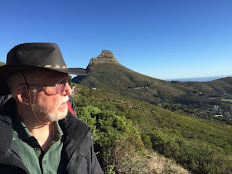
Inset photo: Louis V. Galdieri. (Photo courtesy Louis V. Galdieri)

Tuesday, February 16, 2016

Guest article: A Postscript on the Political Project of MCRC v. EPA

By Louis V. Galdieri
Posted on his blog Feb. 15, 2016*
Reprinted with permission


A ProPublica investigation of dark money organizations lends context and additional color to some of what I had to say a a short while ago about the Marquette County Road Commission’s (MCRC) lawsuit against the EPA.

Sponsored by State Senator Tom Casperson, the Republican representing Michigan’s 38th district, the MCRC lawsuit is being funded by a non-profit organization called Stand UP. Stand UP is exactly the kind of dark money organization profiled by ProPublica: it’s a special kind of non-profit, a 501c4 "social welfare" organization that is not required by law to disclose the names of donors. It does not have to confine its fundraising and expenditures to the MCRC lawsuit or any other specific purpose. It is a trough of dark money that can serve any number of political efforts.

So, as I tried to suggest in a series of posts on the MCRC complaint (here, here, here and here), while the lawsuit is nominally over a haul road that will serve both mining and timber companies, it also appears to be part of a larger, coordinated effort to sideline federal regulators, stifle local environmental watchdogs, and arrogate the authority and power to direct economic development in the Upper Peninsula to a set of undisclosed actors and moneyed interests.

Now, as Robert Faturechi reports, with efforts in 38 states to make non-profit organizations like Stand UP more accountable and transparent gaining ground, powerful conservative groups are "coaching" allies on how to fight back against any new legislation requiring the disclosure of dark money sources. The tactics they recommend should sound familiar:

Get the debate to focus on an "average Joe," not a wealthy person. Find examples of "inconsequential donation amounts." Point out that naming donors would be a threat to "innocents," including their children, families and co-workers.
And never call it dark money. "Private giving" sounds better.

They urge dark money groups to claim the victim’s mantle and to see conservatives as "a persecuted class," according to one January 2016 memo Faturechi uncovered. It’s "all part of a plan to choke off our air supply of funding," they warn.

The documents presented by Faturechi were distributed at a conference held in Grand Rapids by The State Policy Network. The Network "calls pro-regulation activists 'enemies of debate,'" and generally takes the line that regulation quashes freedom and criminalizes belief -- a refrain often heard from climate change denialists -- and that transparency will only threaten privacy.

The State Policy Network brings together conservative and tea-party organizations from around the country dedicated to "advancing freedom and making a difference," so it’s well positioned to coordinate local efforts like the MCRC lawsuit against the EPA with other state, regional and national causes. In Michigan, the Network’s member organization is the Mackinac Center for Public Policy. Just last week, they ran a widely shared update (303 "likes" and counting) on the MCRC lawsuit in which Casperson crows about the progress they’ve made in the discovery phase of the suit and wails about prejudicial treatment at the EPA.

* Click here to visit Louis V. Galdieri's blog.

Inset photo: Guest author Louis V. Galdieri. (File photo courtesy Save the Wild U.P.)

Wednesday, August 05, 2015

Guest article: The Political Project of MCRC v. EPA, Part 3: Sunlight and Skullduggery

By Louis V. Galdieri
Posted on Louis V. Galdieri's blog on Aug. 3, 2015
Third in a Series


When it comes to parceling out the land, water and future of the Lake Superior region to the highest bidders, few have matched the auctionary zeal demonstrated a couple of years ago by David Dill, a member of Minnesota’s House of Representatives. In the debate over the proposed Boundary Waters Land Exchange, Dill was among those urging that the state should exchange School Trust Lands in the Boundary Waters area for 30,000 acres of Superior National Forest.* Since by law Minnesota would be bound "to secure maximum long-term economic return" from lands thus acquired, Dill proclaimed, "we should mine, log, and lease the hell out of that land."**

Dill understood this much: if there is hell to be found in Superior National Forest, there is probably no better way to bring it out.

The unanswered question in Minnesota and throughout the Lake Superior region is not, however, theological: it’s whether extractive industries and the developments they bring will actually deliver "long-term" economic benefit for the region, and not just a short-term spurt or boom, or another period of destructive plunder followed by long-term decline. That is not just a question up for debate by economists and other experts; it is, at root, a political question.

As I’ve suggested in my first two posts in this series, the complaint filed by the Marquette County Road Commission against the EPA is part and parcel of an effort to shut this question down, or exclude it from public consideration.*** This complaint is only incidentally about a haul road. It’s part of a political offensive that aims to stifle debate and hand the future of the region over to unseen powers. Those powers lurk under legal cover of the dark 501c4 "public welfare" organization funding the MCRC’s lawsuit against the EPA. ... Click here to read the rest of this article on Louis V. Galdieri's blog.

Inset photo: Louis V. Galdieri. (Keweenaw Now file photo)

Author's Notes:
* See School Trust Land Exchange. See also Mar. 7, 2012, MPR News article, "Disagreement threatens to derail plan to swap school trust lands."
** Read about this law here.
*** See: "The Political Project of MCRC v. EPA, Part 1" and "The Political Project of MCRC v. EPA, Part 2."

Editor's Note:
Guest author Louis V. Galdieri is a filmmaker based in New York City. He and fellow filmmaker Ken Ross visited Houghton, Mich., in October 2013 and screened their documentary 1913 Massacre, about the Italian Hall tragedy. Since then he has posted several articles on his blog about present-day mining issues in the Upper Peninsula. This is an excerpt from the third in a series of articles Galdieri is writing on the Marquette County Road Commission (MCRC) lawsuit against the Environmental Protection Agency (EPA) concerning County Road 595.