See our right-hand column for announcements and news briefs. Scroll down the right-hand column to access the Archives -- links to articles posted in the main column since 2007. See details about our site, including a way to comment, in the yellow text above the Archives.
Showing posts with label Michigan Supreme Court. Show all posts

Friday, September 11, 2026

Governor Whitmer, EGLE Director Roos: State must consider impact of Michigan Supreme Court decision; Tribes challenge tunnel permits

From: Office of Michigan Governor Gretchen Whitmer
Posted September 9, 2026

Michigan Governor Gretchen Whitmer (Photo courtesy michigan.gov)

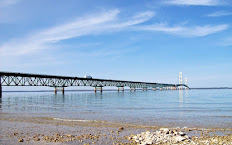
LANSING, Mich. --  On Wednesday, Sept. 9, 2026, Governor Gretchen Whitmer and Michigan Department of Environment, Great Lakes, and Energy (EGLE) Director Phil Roos announced that the state must consider the impact of a recent Michigan Supreme Court decision on the EGLE permits issued this past July for the proposed Great Lakes Tunnel Project.

"I’ve been clear from day one that we must get the existing dual Line 5 pipelines out of the Straits of Mackinac as quickly and safely as possible. These 73-year-old underwater pipelines are a ticking time bomb, and I am taking every action I can to shut them down and protect the Great Lakes and the jobs and communities that depend on them," said Governor Whitmer. "The Michigan Supreme Court has made clear that the state must more thoroughly scrutinize the environmental consequences of the proposed tunnel and the alternatives to it. At the same time, Enbridge needs to stop asking Michigan to wait for a tunnel that could be a decade or longer away and start pursuing alternatives now that can get oil out of the Straits within months. Michigan has waited long enough. We cannot put the Great Lakes at risk for another decade while waiting for a solution that may never come."

EGLE announced its permit decision on July 15. Sixteen days later, the Michigan Supreme Court issued its July 31 decision. Reviewing a permit previously issued by the Michigan Public Service Commission (MPSC), the Court explained how the State must assess the potential environmental harms from this project and compare alternatives. 

The proposed tunnel is an extraordinarily large and consequential infrastructure project in the heart of the Great Lakes. Given the Court’s decision addressing the MPSC permit for this very project, the State is considering what impact that decision has on the July 15 EGLE permits.

EGLE Director Roos said, "Before issuing the resource permit in July, EGLE reviewed the cultural and environmental impacts within our statutory scope as well as an analysis of alternatives. With the Michigan Supreme Court invalidating the MPSC’s permit because its analysis was too narrow, we understand that EGLE’s permit may need further review through the legal process."

Roos added, "Until all those legal questions are resolved, conditions in EGLE’s permit prevent construction of the tunnel entrance from moving forward."

Governor Whitmer also sent a letter on Sept. 9 to Enbridge CEO Gregory Ebel calling on the company to stop treating the tunnel as the only alternative to the existing dual pipelines. In light of the tunnel’s growing uncertainty and delay, she urged Enbridge to pursue a planned, orderly alternative that can get oil out of the Straits far sooner. 

For the full letter, click here.

Michigan Tribes ask Judge to toss Line 5 Tunnel Permits

From: Earthjustice, posted Sept. 10, 2026

The Three Fires Confederacy Bridge Walk For Water in Mackinaw City, Michigan, on Monday, September 7, 2026. (Photo by Sarah Rice for Earthjustice)
 

LANSING, Mich. -- Four Tribal Nations in Michigan have petitioned state regulators for a contested case to challenge a pair of permits that authorize Canadian company Enbridge to build its proposed Line 5 oil tunnel below the Straits of Mackinac in the Great Lakes. The Tribes seek to overturn the wetlands and bottomlands permits that Michigan’s Department of Environment, Great Lakes, and Energy (EGLE) approved for Enbridge in July. Those permits face new uncertainty after the Michigan Supreme Court’s decision overturning a different permit for the tunnel, which raises questions about whether EGLE’s decision also failed to comply with the law.

Bay Mills Indian Community President Whitney Gravelle said, "The proposed tunnel is a trap designed to keep Line 5 operating throughout Michigan for generations to come. Tribal Nations have treaty-reserved rights and a sovereign responsibility to protect the Great Lakes, and those rights cannot be ignored to preserve the interests of a foreign oil company. There are safer alternatives that do not require Line 5. It is time for Michigan to right this wrong by honoring its commitments to Tribal Nations and choosing a future that protects our waters rather than locking us into future generations of risk."

The new challenge was filed on the heels of the annual Mackinac Bridge Walk. On Monday, around 1,000 people from all 12 Anishinaabe Tribal Nations in Michigan walked across the bridge to demonstrate opposition to the Line 5 tunnel in response to a unified call to action by the ancestral Three Fires Confederacy.*

Earthjustice Managing Attorney Debbie Chizewer said, "Over the past year, tens of thousands of Michiganders have raised their voices and called on Governor Whitmer’s administration to reject the tunnel. The permits were granted anyway. Now, it’s up to all of us to protect this country’s greatest freshwater resource before it’s too late. Whether it sits in open water or in a tunnel, the Line 5 pipeline has no place in the Great Lakes."

Native American Rights Fund (NARF) Managing Attorney David Gover commented on the importance of cultural resources.

"The Line 5 tunnel project, if allowed to proceed, will irreversibly destroy tribal cultural resources including burials, tribal lifeways, and the Straits of Mackinac, a sacred space for the Anishinaabe," Gover noted. "To be sure, there is no way to properly mitigate these impacts. Only permanent destruction will occur. We look forward to judicial review of this legally deficient permit, especially in light of the Michigan Supreme Court’s recent decision clarifying the Michigan Environmental Protection Act and its application to these types of projects."

The Bay Mills Indian Community, Sault Ste. Marie Tribe of Chippewa Indians, and Little Traverse Bay Bands of Odawa Indians are represented by Earthjustice and the Native American Rights Fund (NARF). The Grand Traverse Band of Ottawa and Chippewa Indians is represented by Kanji and Katzen, PLLC.

* Editor's Note: CLICK HERE for some videos and photos of water protectors during the Three Fires Confederacy Bridge Walk on the Mackinac Bridge on Labor Day, Sept. 7, posted by the Great Lakes Water Protector Network.

Monday, October 05, 2020

Governor Whitmer releases Video urging masks, social distancing to keep schools, businesses open and protect workers; Western UP Health Dept. urges same COVID-19 mitigation strategies

LANSING -- Today, Monday, Oct. 5, Governor Gretchen Whitmer released a video on social media urging Michiganders, the legislature, the president, and Congress to do their part to protect families, frontline workers, and small businesses from the COVID-19 pandemic. Also today, the Western UP Health Department issued a statement in response to the recent Michigan Supreme Court ruling against the Governor's executive orders, urging residents to be consistent in keeping core COVID-19 mitigation strategies in place while guidance that is more specific is developed.

"For the past seven months, I’ve been making the tough decisions that took us from the state with the 3rd highest cases of COVID-19 per million in March and April, to the 33rd highest in September. We have one of the best economic recoveries in the nation too. Studies concluded we saved thousands of lives," said Governor Whitmer. "But after the Republican Legislature sued to take away my executive authority, this past Friday the Michigan Supreme Court struck down the statute under which I issued executive orders to save lives and protect Michigan families, frontline workers, and small businesses.  

"As a result of the Court and the legislature’s action, our COVID-19 cases will very likely go up. There will be uncertainty, disruption, and possibly greater risk to our economy, more people quarantined, and more deaths.  

"The ruling does not mean that the orders I issued violated the law. Although I disagree with the conclusion, the Court held the law is unconstitutional, meaning the legislature did not have power to pass the law in 1945. In fact, the Court made clear that I interpreted the 1945 law correctly. And the ruling does not mean all of the protections we have put in place will go away. I have additional powers that I will use to protect our families from the spread of this virus."

Today, Michigan Department of Health and Human Services Director Robert Gordon issued an Emergency Order under MCL 333.2253 restricting gathering sizes and requiring face coverings in public spaces. Under MCL 333.2253, if the MDHHS director determines that control of an epidemic is necessary to protect the public health, the director by emergency order may prohibit the gathering of people for any purpose and may establish procedures to be followed during the epidemic to insure continuation of essential public health services and enforcement of health laws.

"The CDC and public health experts agree that wearing masks and practicing safe physical distancing are crucial to slow the spread of the virus, protect our frontline workers, and keep our schools and small businesses open," said Governor Whitmer. "Michiganders, here’s what we need you to do: please take this virus seriously by wearing a mask when you go out, washing hands, and maintaining six feet of physical distance. Get a flu shot. Taking this action is essential to keeping our small businesses and schools open. COVID 19 didn’t stop being a threat because the court ruling, or because we’ve tired of it, or because the legislature left town.

"Let us not squander the sacrifice we have made to get to this point. We all have to do our part. You can protect the brave men and women on the front lines who are working every day to keep us safe. The health care workers and first responders, grocery store employees, child care workers, and all of the people who have been putting their lives on the line since day one."

Western UP Health Department responds to Supreme Court ruling 

The Western Upper Peninsula Health Department (WUPHD) has received a number of questions as to how the Court decision will affect any local organization or community plans and protocols. At this time, the WUPHD stresses the importance of consistency and keeping core COVID-19 mitigation strategies in place while guidance that is more specific is developed. At a minimum, these strategies include proper mask use, social distancing, frequent handwashing, and staying home if you are sick. The WUPHD will continue to provide updated information as it becomes available.

"COVID-19 is currently hitting communities hard here in the Western Upper Peninsula," said Kate Beer, Health Officer at WUPHD. "These outbreaks are affecting our elderly, our most vulnerable, and our educational and healthcare systems. WUPHD remains confident that our community will continue to practice basic public health protocols and help keep each other safe."

Monday, May 21, 2012

Michigan LCV: Green Gavels and Great Lakes

From Michigan League of Conservation Voters
Posted May 21, 2012

The Michigan Supreme Court just couldn't wait to test out the new Green Gavels accountability tool we launched last week, as they have already issued a brand new ruling that will ripple across Michigan's rivers and lakes. Hundreds of other Michigan voters couldn't wait to test it out, either, though they did so without wearing funny black robes. Well, most of them, at least.

Meanwhile, new bills introduced in the House and Senate could weaken the protections we have for our iconic sand dunes, joining existing legislation to weaken shoreline wetland protections. The Assault on Pure Michigan continues.

Click here to read more on this week's Michigan LCV Political Week in Review.

Tuesday, April 17, 2012

Michigan LCV: What the U.P. Mining Boom Means for Michigan

Rio Tinto / Kennecott Eagle Mine near Big Bay, Mich. At right is Eagle Rock, a sacred Ojibwe site, under which the mining company is blasting an entry to the mine. (Photo © Jeremiah Eagle Eye and courtesy standfortheland.com. Reprinted with permission.)

By Michigan League of Conservation Voters
Posted April 16, 2012 on Michigan LCV "Political Week in Review"

The Great Lakes Echo had an article today on the resurgence of mining in the Upper Peninsula, detailing both the economic factors driving it and the environmental concerns over it. The Kennecott Eagle Rock mine is especially troublesome, creating numerous environmental concerns over its development. First, it will create a heavily-trafficked new road through "previously untouched forest and wetland areas," rather than using existing road. Second, it will be dug out right beneath the headwaters of the Salmon Trout River, the spawning grounds for the rare coaster brook trout. Finally, and perhaps most astonishing in its disregard to local tradition, the tunnel opening was literally blown out of a sacred Ojibwe spiritual site.*

As has happened before with sulfide mines across the country, the greatest fear is that sulfide waste may leak into the watershed or that the mine's roof could collapse underneath the river's headwaters.

Four groups are suing to stop the mine: the National Wildlife Federation, the Huron Mountain Club, the Yellow Dog Watershed Preserve, and the Keweenaw Bay Indian Community. Their case was dismissed in November, but they appealed to the Court of Appeals in December. How courts interpret and apply Michigan environmental laws are central to how cases like these are decided. For that reason, we'll launch our new Green Gavels accountability tool in the next few weeks so that ordinary citizens can understand the impact that the Michigan Supreme Court -- whose decisions bind all other Michigan courts -- has on the ability of citizens to prevent environmental harm to our state.**

Holding our elected officials accountable on how well they protect our environment is what Michigan LCV does. For those who aren't as aware of the important work we do, though, please check out our cool new video. If you enjoy it as much as we do, please forward it to five friends. Share it on Facebook, Twitter, and Google. The more people that pitch in to let policy makers know they are being held accountable, the better we can all protect the places in Michigan that we all love. (Incidentally, the first fifteen seconds are on that very subject).***

* Read this article, "More U.P. mining in Michigan’s U.P. worries enviros," on the Great Lakes Echo.

** Read about Michigan LCV's Green Gavels.

*** Click here to see the Michigan LCV's new video on YouTube.

Click here to read more articles on the Michigan LCV's latest "Political Week in Review."

Editor's Note: Thanks to Michigan LCV's Ryan Werder for sharing these articles with Keweenaw Now.