See our right-hand column for announcements and news briefs. Scroll down the right-hand column to access the Archives -- links to articles posted in the main column since 2007. See details about our site, including a way to comment, in the yellow text above the Archives.

Monday, December 06, 2010

Mining expert Jack Parker says Eagle Mine likely to collapse

By Michele Bourdieu

TOIVOLA, Mich. -- Addressing the structural stability of Rio Tinto-Kennecott's Eagle Mine is a matter of life and death.

"Of course it is," says mining expert Jack Parker, semi-retired mining engineer/geologist, well respected for his practical experience in more than 500 mines around the world. Parker -- who has degrees in mining engineering, geological engineering and geology from Michigan Technological University -- specializes in practical rock mechanics, which he defines as "an understanding of the properties and behavior of rocks and rock structures -– and what to do about it."
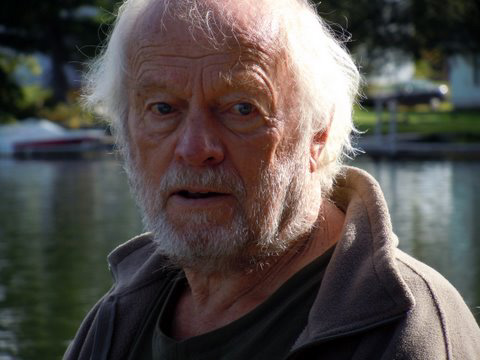
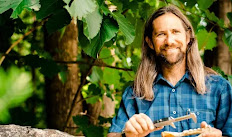
Jack Parker of Toivola, semi-retired mining engineer / geologist, specializes in practical rock mechanics. He recently published two reports on the instability of Rio Tinto-Kennecott's Eagle Mine. (Photo courtesy Jack Parker)

Parker has written numerous technical papers on this practical approach and, since 1971, has independently given advice to miners and engineers to help them resolve problems in mine design and operation.

Most recently, Parker published two reports on the Eagle Mine, pointing out reasons why it is likely to collapse if mined as planned in Kennecott's mining permit application, which was approved by the former Michigan Department of Environmental Quality (MDEQ), now part of the Michigan Department of Natural Resources and Environment (MDNRE). The permit has been challenged in a contested case, in which the MDEQ's Administrative Law Judge Richard Patterson ruled in favor of both Kennecott Eagle Minerals Co. (KEMC) and the company's apparent partner in the case, the MDEQ.*

Catherine Parker of Marquette, daughter of Jack Parker, reads an excerpt from Jack Parker's August 2010 report on the Eagle Mine at the Sept. 28, 2010, Marquette County Commissioners Sept. 28, 2010, Meeting of the Committee of the Whole Meeting. Catherine Parker gave commissioners copies of the report. (Photo by Keweenaw Now)

This case is now being appealed by the groups challenging the permit: National Wildlife Federation, Huron Mountain Club, Keweenaw Bay Indian Community and Yellow Dog Watershed Preserve. Parker was one of several experts testifying in the contested case held in the spring of 2008. He testified that the Eagle mine, as designed in Kennecott’s permit application, was likely to collapse. Later he published the reports to call attention again to the stability issue.

Jack Parker’s April 2009 report on the Eagle Project

In his first report -- dated April 2009 and titled "KEMC Eagle Project: A Fraudulent Mining Permit Application?" -- Parker said he had studied Kennecott's permit application for three years and concluded that the mine and its crown pillar (the rock above the mine) would not be stable. He called the application "misleading, deceitful and potentially dangerous." The report questions Kennecott's use of computer modeling as an approach to mine design. Parker also illustrates the report with photos of drill cores, showing weakness in the rock and pointing out missing numbers in Rock Mass Ratings that betray an effort to hide the poor core, thus misrepresenting the strength of the crown pillar. Samples of drawings also show how Kennecott concealed weak areas of rock in their use of color in the designs -- which would have deceived and misled the hired mine planners.

Parker says in this first report that he agrees with David Sainsbury, a rock mechanics expert hired by the MDEQ, who, in his 2006 Technical Review of the geotechnical portion of the application drafted by Kennecott's mine design consultants, Golder and Associates, was highly critical of the design.

Parker quotes Sainsbury as saying, "'The analysis techniques used to assess the Eagle crown pillar stability do not reflect industry best practice. In addition, the hydrologic stability of the crown pillar has not been considered. Therefore the conclusions made within the Eagle Project Mining Permit Application regarding crown pillar subsidence are not considered to be defensible.'"

"That was Sainsbury’s polite way of saying they were not supported by fact," Parker says.

As Parker points out, Sainsbury was asked more than once to rewrite his report and omit certain details, but still came to the same conclusion about the instability of the crown pillar.

"They hid those reports but hired a second expert, Wilson Blake, Ph D, also respected in the industry," Parker writes. "In a hasty response he gave KEMC/MDEQ some support but added that although he used to use their methods (numerical modeling), he gave up on them years ago, preferring instead to go look at the problem situations."

Although Blake testified for the MDEQ in the contested case, the Petitioners' Brief in support of their appeal of the contested case decision refers to Blake's respect for Parker's expertise: "According to the MDEQ's own expert, Parker's study of the geologic stresses in Michigan's Upper Peninsula, and the significance of those stresses for mine construction, remains the seminal work on the subject. MDEQ's expert voluntarily identified Mr. Parker as an 'icon' in his field. Parker testified unequivocally that the risk of collapse at the proposed Eagle Mine is 'likely.'"

Parker's practical approach is evident in the examples he gives of questionable sampling (choosing only the best rock samples to represent a rock mass and basing calculations, analyses and designs on these samples) and questionable testing (for example, using dry samples in a lab to test rock strength, thus assuring more optimistic results since wet rocks lose much of their strength).

During an interview with Keweenaw Now, mining expert Jack Parker explains photos of rock core samples in his April 2009 report on the Eagle Mine. (Photo by Keweenaw Now)

Noting that the MDEQ told their expert Sainsbury to leave case histories out of his reports, Parker says a geologist or person planning a mine should always look at similar mines in similar conditions in order to anticipate problems. Their second expert, Blake, said the same thing. Parker describes the 1987 collapse of the Ropes Mine near Ishpeming and the 1932 collapse of the Athens Mine south of Negaunee. In the latter case, the crown pillar was 1800 feet thick and described as "jaspilite," an extremely strong rock.

"Remember that KEMC/Golder first said that a crown pillar about 100 ft. thick would be stable," Parker writes. "After questioning they doubled it to 200 ft, and eventually, tripled it, to 300 ft. No confidence in their calculations and predictions? Strange that their hi-tech calculations would add an even 100 ft each time they were challenged. At the Athens mine the crown pillar, 1800-1900 feet thick, was 'Not relevant!' they say."

Parker adds, "It was 1800-1900 feet thick, but it did fail."

Parker concludes his 2009 report with an explanation of the importance of horizontal stress on the crown pillar.

A major problem with Kennecott's design, Parker says, is this: "NOBODY KNOWS EITHER THE ORIENTATION OR THE MAGNITUDE OF THE STRESSES IN THE CROWN PILLAR. IT FOLLOWS THAT NOBODY CAN PREDICT THE DEGREE OF STABILITY OF THE CROWN WITH CERTAINTY. NOBODY!" (Emphasis is Parker’s.)**

Jack Parker's second report, August 2010

In August 2010, Parker published a second report on the Kennecott Eagle Project. This one, only 16 pages long, is titled "THE KENNECOTT EAGLE MINE PLANNED FOR UPPER MICHIGAN IS PREDICTED TO BE UNSTABLE." Parker said he wrote this second report because it seemed no one had paid attention to the first one, perhaps because he had presented so many details on the errors in Kennecott's application.

"The reports begin to resemble encyclopedias, full of facts, perhaps, but nobody reads encyclopedias from beginning to end," Parker writes in his Introduction to the August 2010 report. "This time I confine my observations to the most significant errors -- those concerning health and safety, primarily the stability of the mine and the crown pillar in particular."

The crown pillar, says Parker, is all the rock between the top of the mine and the top of the bedrock.

In their permit application, Parker explains, "Kennecott includes everything above the top of the mine, including the weathered and fractured rock."

Parker considers that a grave error.

Parker's second report includes a page of color photos of 50 ft. of core samples (all dry) from the crown pillar of the Eagle Mine. His comment on these is as follows:

"Stability depends more on rock structure than on laboratory measurements of strength of small, select, intact samples."

This is one of the core samples Parker includes in his August 2010 report. "Would you care to work under this roofrock?" Parker asks. (Photo courtesy Jack Parker)

In just a few pages, Parker shows how Kennecott and their consultants, Golder Associates, used a computer modeling approach and arrived at designs based on numbers that are arbitrary -- or even missing, as in the example of the missing Rock Mass Ratings (RMRs) for 87 feet of the weaker rock types in the crown pillar -- which hid the potential instability of the rock.

"The rocks don't lie but the numbers do," Parker writes.

He also points out, as he did in his first report, that RMRs from dry samples have to be adjusted (lowered) since the actual rocks are wet.

"THE CORRECTED RMRs, APPLIED TO K/G (Kennecott/Golder) METHODOLOGY, PREDICT THAT THE MINE AND THE CROWN PILLAR WILL BE UNSTABLE," Parker notes with emphasis. ***

Two other nationally recognized experts on mining engineering and geological issues -- Dr. Marcia Bjornerud of Lawrence University, Appleton, Wis., and Dr. Stanley Vitton of Michigan Technological University -- testified for the Petitioners in the contested case. The Petitioners note that, along with Parker, Bjornerud and Vitton provided days of detailed testimony, corroborating, explaining and supporting the criticisms of the application made by Drs. Sainsbury and Blake, as well as the prediction of likely mine collapse.

According to the Petitioners' Brief, "Bjornerud studied extensive photographs of the core samples which showed the quality of rock in and around the intended crown pillar and, using generally accepted formulas, determined that the rock was of very low quality (rubble) and that the crown pillar itself could fail through crumbling or longer-term deterioration."

(The Petitioners' Brief also explains that Kennecott refused to produce the actual core samples so these Petitioners' experts had to conduct their analysis from photographs obtained through FOIA requests. The Administrative Law Judge in the contested case refused to order the actual samples and then, ironically, dismissed these experts' testimony based on the photographs because they didn't have access to the core samples!)

In their Brief, Petitioners question Administrative Law Judge Patterson's reliance on "experimental backfill procedures" to prevent crown pillar failure: "Even before blasting occurs in the secondary stopes, right up against the backfill in the primary stopes, the strength of that backfill is only a tiny fraction of that of the ore it is replacing (20,000 psi vs. 218 psi).

They note that Vitton's calculations show the blasting against the backfill combined with acidic action would lead to a prediction of 12 or more feet of settling beneath the Salmon Trout River. Respondents in the case did not contradict this conclusion.

Vitton recently told Keweenaw Now that, while the 12 foot of settlement would be in the backfill material, not necessarily the total settlement of the crown pillar, it would be close to that if the crown pillar failed.

View of the Salmon Trout River. Kennecott's ore body is under this trout stream. The river is at great risk if the mine underneath it should collapse. (Photo by Keweenaw Now)

The Petitioners' Brief refers to the testimonies of Parker and, Bjornerud and Vitton as "Unrebutted."

On the other hand, the Administrative Law Judge's Proposal for Decision (PFD), for reasons unknown, concludes that the mine will not collapse.

According to the Petitioners' Brief, "The way the PFD reaches a 'conclusion' that this mine will not collapse, against all of the testimony and calculations of the five geologic and mine engineering experts which indicate that it will likely collapse, was by either omitting (with respect to Sainsbury and Blake) or dismissing out of hand (with respect to Parker, Bjornerud and Vitton) all of the testimony indicating the likely catastrophic collapse of this mine."

Faced with all the expert criticism warning of the instability of the crown pillar, Kennecott proposed that the whole application "would be subject to future revisions during the course of excavation and mining, this time without any public review whatsoever," the Petitioners add.

Parker's main point in both of his reports is that safety was intentionally compromised by omission and guesswork, resulting in violation of Part 632, Michigan's Nonferrous Metallic Mining Regulations.

Parker includes in his August 2010 Report an excerpt from Section 324.63223 of Part 632, concerning violations and penalties. These include making a false statement in a permit application under Part 632 (a felony, punishable by a maximum of two years in prison and fines of $2500 to $25,000 per day for each violation or, in the case of a second conviction for this same violation, fines of $25,000 to $50,000 per day). If the court finds evidence of substantially endangering the public health, safety or welfare, that is punishable by five years in prison and fines of at least $ 1 million). ****

Recently, Parker told Keweenaw Now he sees compromise as the only solution to the dilemma of Kennecott breaking the Part 632 law but being allowed to proceed by the DNRE.

"Four and a half years of study still uphold the early findings that Kennecott doctored the technical data in their application to assure issue of permits," Parker says. "And they still maintain that they 'have a good plan and will stick with it' despite the fact that when corrected data are inserted into their design approach the results show that the mine will be unstable -- thus endangering life, limb, property and environment."

Parker notes Kennecott continues to work on mine construction, ignoring the requirements of the law and reinterpreting the law when necessary.

"MDEQ (now MDNRE) allows them to do so," he says.

Construction at the Kennecott mine site (shown in this Nov. 9, 2010, aerial photo) is ongoing, despite litigation still claiming the company is ignoring Part 632, Michigan's Nonferrous Metallic Mining Regulations. Click on photo for larger version. (Photo © 2010 and courtesy Jeremiah Eagle Eye)

Despite this, as Parker sees it, the dilemma is that the ore bodies are very valuable, the State needs money and many local people need jobs.

"A fair number of them are already enjoying their work at the mine site and their paychecks and they ought not to be punished," Parker adds. "Put yourself in their
place."

Parker says he believes all of the existing plans could be improved upon immensely -- the access, the mining, the duration of mining, the ore processing, the transportation, the marketing and the sharing of proceeds.

"I would expect Kennecott to make such changes piecemeal, by subterfuge, by rewriting the law," he notes.

Editor’s Notes:
* "The consolidated contested case hearing began on April 28, 2008. There were 40 days of testimony, concluding on July 16, 2008, followed by a site visit. During the hearing, 59 persons testified, many of them expert witnesses. In addition, the de bene esse deposition of Dr. Sainsbury was admitted, as were numerous detailed technical exhibits. All parties' closing arguments and proposed findings of fact were filed by October 15, 2008." (Appellants’ / Petitioners' Brief, pp. 15-16) Click here for the Appellants’ Brief.

** Click here to read Jack Parker’s April 2009 report on the Eagle Project.

*** Click here to read Jack Parker’s August 2010 report, predicting the Eagle Mine to be unstable.

**** See Michigan's Nonferrous Metallic Mining Regulations: Part 632 of the Natural Resources and Environmental Protection Act, Act No. 451 of the Public Acts of 1994.
Parker’s excerpt is taken from p. 14.

Saturday, December 04, 2010

Carol Rose offers Ramblin' Rose Art Center, Studio for sale

Carol Rose, Keweenaw Krayons interim director, transformed this property in Mohawk, Mich., into the Ramblin' Rose Art Center and studio. Now planning to retire, Rose is offering both house and studio for sale. Click on photo for larger version. (See ad in right-hand column.) (Photo courtesy Carol Rose)

By Carol Rose

MOHAWK -- It will be 14 years on the 16th of December, 2010, that I moved to the Keweenaw. I walked into my rental house and saw the Christmas tree my daughter-in-law, Sue, had put in the kitchen -- decorated by her and my three grandkids -- then 5, 5 and 6 years of age -- yes, there are twins.

I was in process of divorce -- the end of a 36-year marriage. I chose the Keweenaw and my Keweenaw family of Tom, Sue, Steph, Mike and Steve to be the place to begin again -- start over afresh -- but I didn’t know what "afresh" meant.

I hoped to be able to curl up and heal -- God had other plans! Heal I did. Curling up was not even a small part of that process.

A few months after I moved into the rental, the divorce now final, I found myself looking for property to purchase. I knew I wanted to be close to my Mohawk family. I looked at a few different places and made an offer on what is now the Ramblin' Rose Art Center. I will be writing a book (really and truly) on this process so won’t go into detail here, but this is where it all began -- "it"??? Well Keweenaw Krayons of course. The non-profit love of my life!

In 2005, Keweenaw Krayons Graphic Arts and Marketing teens, from left, Stephanie Fouts, Andrea Laurie and Ashley Bracco, work with Carol Rose in designing flyers for Keweenaw Krayons' Mardi Gras Dinner, an annual event. (Keweenaw Now file photo)*

O.K. fast forward. Keweenaw Krayons is now located in the old Mohawk School -- sharing the building with Horizons Alternative High School. Because of a wonderful Strong Organization/Strong Youth (SOSY) Award, Keweenaw Krayons is on quite firm footing. Firm enough for me to be able to leave. While it does not yet have an executive director, it does have a strong volunteer base, very active Board of Directors and Executive Committee of that Board.

I have an apartment waiting for me in Grand Marais, Michigan; but in order to go there full-time (it’s been waiting for two years) I need to sell this wonderful, holy, magical, fun corner -- the corner where Keweenaw Krayons began some 13 years ago.

I am 68 years of age, and it is time to move on to yet another part of my life. There are words in my soul calling to be put on paper; photographs waiting to be edited; skiis, snowshoes, kayaks, and canoes are calling my name.

Keweenaw Krayons remains special in my heart and because of the SOSY award, I will be able to serve as Consultant and Historian -- working from afar. Life is good!

I put the house and shop on the market a couple years ago -- but not very seriously. It feels now like I was trying out the "retirement waters." And then a few months ago I became quite serious but still did not give the marketing process enough energy. My original price was $40,000 each for either the shop or the house or $54,000 for both, and I posted a few flyers here and there. Now I have an ad on this wonderful website and I’m ready to do a real blitz with many flyers. And I’ve LOWERED THE PRICE! New price -- only $45,000 for both! I’m offering an automatic $500 off that price if the sale closes before the end of 2010! Even in this economy, that is a really good deal!

I will consider options such as land contract, rent to own or just rent!

Anyone interested in pursing this opportunity is invited to email me at carolrose.u.p@gmail.com or call me at 906-369-4314.

*Editor's Note: Read more about Carol Rose, her plan to retire at her birthday celebration in 2004 and the history of Keweenaw Krayons. See the February 2005 Keweenawnow.com article, "Keweenaw Krayons former director retires -- but not!" by Jonathan Soper.

Friday, December 03, 2010

Khana Khazana Indian cuisine served to 400 at Michigan Tech

By Michele Bourdieu

Sahil Thakkar, right, and Komal Tayal, Khana Khazana chefs, serve their Indian specialties to Michigan Tech alumnus and visitor Chuck Brumleve during the Khana Khazana lunchtime meal today, Dec. 3, in the Michigan Tech Memorial Union Food Court. In the background is another student chef, Rochelle Prescott. Click on photos for larger versions. (Photos by Keweenaw Now)*

HOUGHTON -- Today's Khana Khazana (Hindi for Food Treasure) lunch, featuring Indian cuisine prepared by Indian students Sahil Thakkar and Komal Tayal, was a great success.

"We served about 400 people," Thakkar said.

Today's menu included a hot and spicy vegetarian dish, Pav Bhaji, by Sahil Thakkar; Phada Lapsi, a delicious sweet dish made with cracked wheat, by Sahil Thakkar; a spiced Chai Tea, by Sahil Thakkar; and Chicken Tandoori, a classic Indian chicken dish, by Komal Tayal.

Indian chefs Sahil Thakkar and Komal Tayal, serving, foreground, are assisted by student chefs, back row from left, Rochelle Prescott, USA; Chun Zheng, China; Nassim Sabanfar, Iran; Rui Pan, China; and Sara Fernandez, Spain.

Thakkar, a Michigan Tech student in electrical engineering technology, is the co-founder, along with Safayat Alam of Bangladesh, of the Khana Khazana program of international cuisine served on Fridays at lunchtime in the Memorial Union Food Court on the Michigan Tech University campus. The program began in the spring semester of 2010.

The weekly series of international lunches kicked off this semester on Sept. 17 with Pakistani cuisine. Half the proceeds of that meal went to benefit flood victims in Pakistan. Last spring two Haitian benefit lunches cooked by international students raised $1,024 for Haitian earthquake victims' relief. One half of the lunch proceeds were donated to the Bush-Clinton Relief Fund.

Khana Khazana is a collaboration of Michigan Tech International Students and Michigan Tech Dining Services. The lunches are very reasonably priced and open to the public.

* Editor's Note: Setting it straight: We regret the error in stating this was the last Khana Khazana lunch of the semester. Another Khana Khazana lunch -- with Indian and Thai cuisine -- will be served on Friday, Dec. 10. These international lunches will resume in the Spring semester in January, 2011.

From Headwaters: Activist-Turned-Miner touts Orvana Project’s virtues and failures in environmental law

By Gabriel Caplett
Posted Dec. 3, 2010, on Headwaters News


MARQUETTE -- Dave Anderson is the first to point out the possible disconnect between a life’s work protecting the environment and his new position as Orvana Minerals' project coordinator for its planned Copperwood mine, north of Wakefield.

"I was on the Rainbow Warrior Greenpeace vessel when we parked in front of Stone Container and I was on the tracks in Bad River when we stopped eleven billion gallons of acid from coming into the UP, and I was in Crandon for ten years," explained Anderson, referencing some of the more controversial regional environmental battles of the past two decades. "This project that I’m working on now is very different."

Anderson told the roughly twenty attendees of a public forum, held at the Ford Center in Alberta Thursday and hosted by the Upper Peninsula Environmental Coalition, of his decades-long work as an activist and scientist. Anderson worked with national environmental groups, Native American tribes and local citizen groups to fight controversial mining and paper mill proposals in the region. It was only after years of failing to find enough work as an environmental consultant that he landed the Orvana job. ... Click here to read the rest of this article.

Finlandia to celebrate Finnish Independence Day Dec. 5

HANCOCK -- Finlandia University will present a Finnish Independence Day program at 2 p.m. this Sunday, Dec. 5, 2010, at the Finnish American Heritage Center, Hancock.

The 93rd annual celebration of Finnish independence at Finlandia University features a special musical program with local musicians and performers Libby Meyer, Oren Tikkanen, Pasi Lautala, Dave Bezotte, the Kivajat Dancers, Kay Seppala, the Keweenaw Symphony Orchestra, and others.

The celebration also includes the Finnish Christmas tradition tiernapojat, or Star Boys, a singing procession and folk drama which has its roots in a medieval play based on the "Three Magi" Christmas story in the Book of Matthew (2, 1-28). The procession, led by Michigan Tech Finnish graduate student Hanna Nummila, includes the voices of three additional Finnish nationals living in the Keweenaw.

This year’s City of Hancock "Hankooki Heikki" -- who will preside over the Heikinpäivä mid-winter festival set for Jan. 29, 2011 -- will also be announced during the program.

Homemade Finnish refreshments will be available by donation to benefit FinnFest 2013. For additional information, please call the Finnish American Heritage Center at 906-487-7549.

Daniell Heights Residents to hold Christmas Craft Bazaar Dec. 5 at SDC

HOUGHTON -- The Daniell Heights Residents Council (DHRC) will host its 40th annual Christmas Craft Bazaar, featuring locally made items, from 1 p.m. to 5 p.m., Sunday, Dec. 5, at the SDC Wood Gym.

A variety of vendors will sell such things as Christmas decorations, homemade soaps, paintings, organic lotions, jewelry and chain saw carvings. The family-friendly event will include a coloring table for youngsters to keep busy while you shop. Santa will visit from 3 p.m. to 4 p.m.

There will also be a raffle, and the concession stand will be open.

For more information, contact Sarah Anderton, president of DHRC, at 281-6014 or at smandert@mtu.edu .

Thursday, December 02, 2010

Khana Khazana lunch Dec. 3 to feature Indian cuisine

HOUGHTON -- The Khana Khazana (Food Treasure) lunch for Friday, Dec. 3, will feature Indian cuisine by Sahil Thakkar and Komal Tayal.

"It's the biggest lunch of the year," said Chef Thakkar. "We generally serve food from 11 a.m. to 1 p.m. , but this time we are serving till 2 p.m."

The meal will be served in the Memorial Union Food Court on the Michigan Tech campus. (An entrance is near the large visitors' parking lot just off U.S. 41.)

Prices are $6 for a full meal or $2 à la carte.

The menu will feature Pav Bhaji (Hot and Spicy -- most popular veggie dish from India by Sahil Thakkar), Phada Lapsi (delicious sweet dish made with cracked wheat by Sahil Thakkar), Chai Tea (India's famous spiced tea by Sahil Thakkar) and Chicken Tandoori (classic chicken dish from India by Komal Tayal).

Khana Khazana is a collaboration of Michigan Tech International Students and Michigan Tech Dining Services. The Khana Khazana chefs are prepared to serve more than 350 people tomorrow, so don't miss it!

Wednesday, December 01, 2010

Celebrate with First Friday events in Calumet

CALUMET -- First Friday events in Calumet for this Friday, Dec. 3, include art gallery exhibits, a Christmas Tree Lighting Ceremony, a dance performance at the Calumet Theatre and a Christmas sale of gift items handmade by Santa's elves!

Vertin Gallery to host "Weathering the Storm" exhibit Dec. 3, 2010 - Jan. 5, 2011

Ice Dance II, watercolor by Peg Sandin, one of the Vertin Gallery artists whose work will be featured in the exhibit "Weathering the Storm." (Photo courtesy Vertin Gallery)

The Vertin Gallery is pleased to present this winter’s juried exhibit, "Weathering the Storm," featuring work by artists from Michigan’s Upper Peninsula as well as the Midwest.

The exhibit will feature new art from Vertin Gallery Artists, each with his or her own unique interpretation as to how to "weather the storm" of winter here in the Midwest. The show will feature a variety of artistic mediums from painting and drawing to ceramic and glass. "Weathering the Storm" is part of the Vertin Gallery’s December tradition of group shows designed to feature and honor the many artists represented by the gallery. Please join the Vertin in recognizing these talented individuals whose efforts help keep culture alive here in the Upper Peninsula: Kanak Nanavati, Eric Munch, Bernard Park, Susan Hooker, Dave Walli, Stephanie Trevino, John Lundeen, Bill Wiard, Edith Wiard, Len Novak, Tom Rudd, Carol Phillips, Donica Dravilles, Margo McCafferty, Joyce Koskenmaki, Linda Powless, Jessica Speer, Ellen Torola, Kayo Miwa, Terry Daulton, Kerri Corser, Peg Sandin, Alysa Diebolt, Bob Dawson, George DeSort, Andrea Puzakulich, April Lehman, Ed Schuck, and Kathleen Carlton Johnson.

"Weathering the Storm" will be on display from Dec. 3, 2010, through Jan. 5, 2011. A public reception will be held from 7 p.m. to 9 p.m. on Friday, Dec. 3. Refreshments will be served.

Located in the heart of downtown Calumet, the Vertin Gallery is one of the Upper Peninsula’s premiere galleries, featuring art across all mediums -- including painting, copper, jewelry, sculpture and fine woodworking. The work in the gallery changes frequently and, each month, premiers a new exhibit to feature fresh new artists of the highest quality. For more information on the gallery and upcoming events, please visit www.vertingallery.com or call (906) 337-2200.

Ed Gray Gallery: Exhibit, Open House

The Ed Gray Gallery will host a "Christmas Show," from Dec. 3 to Dec. 31. This is a juried, all media, open show. An opening reception will be held from 6:30 p.m. to 9 p.m. on Friday, Dec. 3 in the gallery. Refreshments will be served.

On Saturday, Dec. 4, and Sunday, Dec. 5, the Ed Gray Gallery will welcome the public to "CALUMET CELEBRATING THE ARTS" -- an Open House from 10 a.m. to 5 p.m. on both days.

The Miskwabik Ed Gray Studio-Gallery is at 109 Fifth Street in Calumet. Visit www.edgraygallery.com for more information.

Calumet Art Center holiday events

Don't miss the Christmas Tree Lighting Ceremony at 6 p.m. on Friday, Dec. 3, at the Calumet Art Center . Warm refreshments will be served beginning at 6:30 p.m.

Next week plan to attend the Christmas Concert at the Calumet Art Center at 7 p.m. Friday, Dec. 10. The concert will feature vocalists Monica Rovano and Courtney Clisch, guitarist Cathy Isaacson, violinist Libby Meyer, and organist Kathleen Alatalo-Arten. The concert is a fundraiser to benefit the Art Center. A $5 donation is requested.

The Calumet Art Center is located at 57055 Fifth Street, behind the Keweenaw Heritage Center in the white building with the spire. Visit the Art Center's Web site for more information.

"A Christmas Carol" ballet at Calumet Theatre Dec. 3, 4

The Superior School of Dance will present a ballet/dance performance of "A Christmas Carol," based on the story by Charles Dickens and featuring a cast of many Michigan Tech University students, at the Calumet Theatre at 7 p.m., Friday, Dec. 3, and at 7 p.m., Saturday, Dec. 4.

Donna Armistead, of Michigan Tech's International Programs and Services, is the choreographer.

Students who will perform are Paige Borel, Allison Strome, Jared Berryman, Josh Stuempges, Joseph Massoglia and Cassi Warsinski. Scrooge will be played by John Griebel, Michigan Tech graduate, '09. In addition, the dance will feature children of faculty and staff and community members.

General seating tickets are $12 adults, $6 students and seniors.

Santa's Workshop at Copper Country Associated Artists

Santa's elves have been working their fingers to the bone to bring you a large selection of surprises for the holidays. Visit their workshop, the CCAA Gallery, 112 Fifth St. Calumet, starting at 6:30 p.m. on Friday, Dec. 3, and meet with Santa's helpers in person! They may be still working!

Excellent homemade bakery and coffee will be served.

This sale will be run from 11 a.m. to 4 p.m. each Thursday, Friday, and Saturday during the month of December until Christmas Eve.

After the holidays, CCAA winter gallery hours will be reduced to Thursdays, First Fridays, Special Events and workshops.

Tuesday, November 30, 2010

Stupak applauds Senate passage of Food Safety bill, urges swift House action

WASHINGTON -- U.S. Congressman Bart Stupak (D-Menominee), chairman of the House Energy and Commerce Committee’s Subcommittee on Oversight and Investigations, applauded the Senate’s passage today of S. 510, the FDA Food Safety Modernization Act.

"I am pleased that after more than a year of delay the Senate has finally passed comprehensive food safety legislation," Stupak said. "The food safety bill, which is similar to the House bill I introduced with Congressmen Dingell, Pallone and Chairman Waxman, provides the FDA with some of the resources and authorities it needs to effectively monitor our nation’s food supply and prevent outbreaks of food-borne illnesses."

As chairman of the Subcommittee on Oversight and Investigations, Stupak has held 13 food safety hearings over the past four years, examining the failures of the Food and Drug Administration (FDA) and the food industry to protect the nation’s food supply. The subcommittee examined failures in the food safety system highlighted by E. coli in meat and fresh greens, as well as salmonella-contaminated peanut butter, jalapeno peppers and, most recently, eggs.

Findings of the investigations and related hearings led Stupak and fellow Energy and Commerce Committee members John Dingell (D-MI), Frank Pallone (D-NJ) and Henry Waxman (D-CA) to craft H.R. 2749, the Food Safety and Enhancement Act of 2009. Among the improvements to the nation’s food safety laws, the bill would establish a national food tracing system, making it easier for the FDA to prevent and respond to outbreaks of food-borne illness, and would provide the FDA mandatory recall authority to remove contaminated food from shelves as soon as a problem is identified.

"With little time left for legislative action, I strongly urge Speaker Pelosi and Majority Leader Hoyer to schedule a House vote on S. 510 this week so the 111th Congress can complete its work on this important issue and send this critical legislation to President Obama before the end of the year," Stupak said.

In answer to a question from Keweenaw Now as to whether this legislation would affect small farmers who sell their own produce, e.g., at farmers markets, Stupak's office sent this reply: "The bill passed by the Senate exempts small farmers who garner less than $500,000 in annual sales and those who sell directly to the consumer. This includes small farmers who sell directly to farmers markets and those who produce organic and natural food."

Editor's Note: Click here to see the New York Times report on how the Senate voted. Click here for versions of the bill text.

Tori Market holiday craft show to be held indoors Dec. 1 in Studio's Orpheum Theater

HANCOCK -- The Hancock Tori Market sellers will hold a holiday craft show from 1 p.m. to 6 p.m. on Wednesday, Dec. 1, at the Orpheum Theater, inside the Studio Pizza and Gallery on Quincy Street (across from the old high school).

"I'm just trying to help our across-the-street neighbors keep their customers happy more of the year!" said Michael Shupe, photographer and owner of the Studio Pizza and Gallery.

Visitors will have an opportunity to see the newly restored old Pic Theater, now known as the Orpheum Theater.

All items for sale must be made in the local four-county area. They will include crafts, widgets, pottery, bakery and more...

Finlandia Gallery to host exhibit by New York artist Dina Kantor

HANCOCK -- The Finlandia University Gallery’s 20th annual Contemporary Finnish American Artist Series features an exhibit of photographs by New York artist Dina Kantor. The exhibit, "Finnish and Jewish," is featured Dec. 2, 2010, to Jan. 14, 2011.

The artist Dina Kantor. (Photos courtesy Finlandia University)

An opening reception will take place at the gallery from 7 p.m. to 8:30 p.m. Thursday, Dec. 2. Kantor will speak at 7:15 p.m. The reception is free and open to the public. Refreshments will be served.

How does Judaism survive in a country where there are only two synagogues? In a nation of 5.3 million people, how do 1,500 Jews maintain their cultural identity? Kantor explores these questions in a series of photographs documenting the lives, work, and religious traditions of the small Jewish community in Finland.

Kantor’s photographs investigate the construction of identity and community in today’s complex and multicultural world.

This project developed as Kantor began thinking about how her Jewish and Finnish heritage affected her identity and sense of belonging. Kantor’s mother, born in Finland, moved to Minnesota as a child in 1947. Her mother converted to Judaism when she married Kantor’s father thirty years later.

"I spent a period of time looking into my mother’s history," Kantor explains. "I photographed all the houses she had lived in over the years and sifted through her old family photographs. I scanned images of her playing on stilts in front of one house and the passport photo that she had taken when she arrived at Ellis Island."

Heli, Helsinki, Finnish and Jewish series, Digital C- Print, 2007, 25.75" x 30," by Dina Kantor.

"As I struggled with those images, I began to think of how my siblings and I were a combination of my parents, and I sought out other families that were the same," Kantor continues. "I was able to find one other family with a Jewish father and Finnish mother in Minneapolis and one family in New York. Then I got stuck. So I decided to move on to the community in Finland."

In 2006 Kantor travelled to Finland and began her "Finnish and Jewish" project by writing a letter to a Jewish community leader in Helsinki. The letter was published in a Jewish community newsletter; and, as people learned of Kantor’s project, her opportunities to photograph people increased. To date she has photographed approximately 300 Jewish people in Finland.

"One of the things that interests me about making this work is that I straddle the line between being an insider and an outsider," Kantor notes. "I didn’t know anyone in the community before I began photographing. But because we share common cultural characteristics, we were able to talk as if we had known each other for a long time, and it felt like I was part of the community."

Influenced by Dutch photographer Rineke Dijkstra, Kantor’s first approach was to photograph people against a neutral backdrop.

She soon discovered, however, that she was missing the personal details and cultural signifiers that she believes are important to reading a photograph.

Andre, Helsinki, Finnish and Jewish series, Digital C- Print, 2007, 25.75" x 30," by Dina Kantor.

"I think the images that I make are as much about the environment as they are about the individual," Kantor says. "Finnish design is very striking. I’m drawn to colors, pattern and light -- and to personal objects like snapshots and artwork. I’m interested in the similarities and differences in the homes throughout the community."

Kantor will work with Finlandia University International School of Art and Design students Dec. 2 to 4. Her advice to students is to create art that they feel passionate about.

"Use your camera to explore things that truly interest you," she advises. "Don’t worry about the technical things or the art market. All of that will work itself out in time. Enjoy yourself and the act of looking. I think it is evident in people’s work when they love what they are doing, so be selfish. If you make something that you genuinely love making, it will be much more compelling than if you make something that you think other people want you to make."

Kantor received a bachelor of arts in journalism and mass communication at the University of Minnesota and a master of fine arts at the School of Visual Arts, New York City. She was finalist for a Honickman Book Prize, and her work has been supported by Finlandia Foundation and Finnish Cultural Foundation grants.

The Finlandia University Gallery is in the Finnish American Heritage Center, 435 Quincy Street, Hancock. Gallery hours are Monday to Friday, 8 a.m. to 4:30 p.m.; Thursday, 8 a.m. to 7 p.m.; Saturday, noon to 4 p.m.; or by appointment. Please call 906-487-7500 for more information.

Monday, November 29, 2010

Portage Library to host dog sledding program

HOUGHTON -- The Portage Lake District Library invites everyone to think snow for a dog sledding program at 6:30 p.m. on Wednesday, Dec. 1, with longtime musher Tom Bauer.

In "Mushing in the U.P.: A Family Experience," Bauer will describe the history of dog sledding and introduce members of his immediate mushing family, including a couple of their dogs. He will present a slide show that portrays a year in the somewhat unusual lifestyle of a musher, and he will show several mushing-related websites.

Participants will learn about local sled dog races and events including Beargrease, the UP 200, and Copper Dog as well as the Iditarod. They will also have an opportunity to handle dog sledding equipment and racing gear. If there is enough snow, Bauer will give dog sled rides or demonstrate skijoring or boardjoring.

Bauer has been training and racing dogs for over 20 years and participates in numerous races. He placed in the top 10 of the first UP 200 race in 1990 and is planning to run the Iditarod in 2012. He owns Otter River Sled Dog Training Center and Wilderness Adventures and offers rides, tours, group events, and year round wilderness camping with sled dogs. He is a strong supporter of youth who want to learn mushing skills and participate in sled dog races and events.

All library programs are free and everyone is welcome. For more information, please call the library at 482-4570 or visit www.pldl.org.

To see photos of Bauer's dogs, visit his Web site.

Paintings by Constance Stockwell Johnson at Reflection Gallery Dec. 1 to Jan. 6

HANCOCK -- The Finlandia University Reflection Gallery will host an exhibit of paintings by Constance Stockwell Johnson Dec. 1, 2010, to Jan. 6, 2011. An opening reception will take place at the gallery from 12:30 p.m. to 1:30 p.m. on Thursday, Dec. 2.

Painting by Constance Stockwell Johnson. (Image courtesy Finlandia University)

Johnson’s exhibition features abstract pairs of figures in dreamlike environments that represent human connectedness and address issues of wholeness and healing for our society. She uses watercolor, ink, and acrylic with bold shading techniques, complemented by a diverse color palette. Her vivid brushstrokes and style variety will intrigue any viewer and spark the imagination.

"Some of the art in this show is about what we can offer when we choose a connection with the Earth rather than a societal focus on corporate globalization, consumerism, and exploitation," Johnson says, "while other works bear a more quiet relationship to these ideas."

Johnson’s collection winds many themes together. She says she is inspired by the space around her. Its influence weaves its way into her work, and her pieces depict reflective and contemplative spaces. Throughout her life, Johnson says, her connection to her surroundings has been a constant source of fascination and reverence; in her art she senses her own connection to the Earth.

As a painter, Johnson wants to portray the hope that people can act together to sustain, vitalize, and joyously celebrate our shared humanity. She hopes that her art provides viewers with the opportunity to honor their senses of place and to walk among their brothers and sisters on this planet.

Johnson, a 14-year resident of the Copper Country, has shown her work at many area galleries. She has also worked as a scene painter at the Calumet Theatre and instructed in the Art for Elders program.

The Reflection Gallery is on the second level of Finlandia’s Jutila Center campus. For information, contact Yueh-mei Cheng at 906-487-7375 or email FinlandiaReflectionGallery@gmail.com.

Poor Artists Sale to benefit Community Arts Center Dec. 4

Kevin and DeeDee Maki with their rustic furniture at last year’s Poor Artists Sale held at the CLK Gymnasium. (Photo courtesy Community Arts Center)

CALUMET -- The Copper Country Community Arts Council celebrates its 34th annual Poor Artists Sale from 11 a.m. to 4 p.m. on Saturday, Dec. 4, at the CLK Gymnasium in Calumet. This year’s sale offers the work of over 60 artists including 12 that are new to the event along with the return of many long-standing favorites.

Shoppers will find handmade jewelry, pottery, wreaths, ornaments, baskets, functional and decorative wood art, blown glass, stained glass, metal sculpture, rustic furniture, rugs, art clothing and accessories, fiber art, candles, soaps, paintings, photography, gift baskets, and much more.

Artist Diane Zurcher, left, and Cynthia Coté, Copper Country Community Arts Center director, at the 2009 Poor Artists Sale in Calumet. (File photo by Keweenaw Now)

This year’s artists include the following: Mark Bukovich, Colleen Carroll, Colleen Carlyle, Debra Charlesworth, Connie Cogger, Ryan Dalman, Yana Dee, Tom Doman, Charlie Eshbach, Josh Frazier, Janet Ford Hietala, Michael Gage, Gordon Gearhart, Randall Geda, Linda and Mike Greene, Kathleen Harter, Todd Gemelli, Susan Hooker, Sue Hubbard, Georgiana Hurst, Wendy Johnson, MoJo Staley, Ronda Jones, Jess Kane, Mark Klemp, Barbara Knapp, Rowan Leithauser, Cynthia Lynn, Anthony Maier, Kevin Maki, Les McBean, Kristi Mills, Ted and Carole Noonan, Lee and Jan Perry, Miriam Pickens, Christine Protzel, Andrea Puzakulich, Chip Ransom, Robin Rastello, Jodi Rauvala, Marsha Rosenburg, Rebecca Rudaski, Mark and Dave Sarazin, Brian Larsen, Serenity Schoonover, Rick Shapero, Diane Simonson, Dennis snd Leslie Sotala, Caitlin Spera, Derik Spoon, Sue Stephens, Nancy Stoneman, Robert Sturos, Stephanie Trevino, Becky Weeks, Bill and Edith Wiard, Charles Young, Cyle Zablocki, and Diane Zurcher.

Miriam Pickens exhibits her pottery at the 2009 Poor Artist Sale. (File photo by Keweenaw Now)

Shop and visit with friends in a festive atmosphere and enjoy homemade baked goods at the hospitality table.

"Keweenaw Krayons will be staffing the hospitality table and have our own table right next to the table with all the goodies and coffee," says Carol Rose, Keweenaw Krayons interim director. "It’s great to network and partner with the Copper Country Community Arts Council!"

Copper Country Suzuki students will perform at 1 p.m. Renew your Arts Council membership or join for the first time.

The Poor Artists Sale is a program of the Copper Country Community Arts Council and is a benefit for the Community Arts Center located at 126 Quincy Street in Hancock. For more information call (906) 482-2333 or visit the website: www.coppercountryarts.com.

Saturday, November 27, 2010

Carnegie Museum invites public to create Gingerbread Village display

HOUGHTON -- Coincidental to the first big snowfall of the 2010 holiday season, the Carnegie Museum staff have unpacked their Edible Playhouse for the Fourth Annual Gingerbread Village display.

Edible gingerbread building at the Carnegie Museum. (Photo courtesy Elise Nelson, Carnegie Museum director)

"We invite the public to create gingerbread buildings to add to our display," says Elise Nelson, Carnegie Museum director. "This year, all new creations will be awarded a prize in one of many different categories including 'most accurate reproduction of a local landmark building,' 'most different types of candy used,' 'most colorful house,' 'tallest building,' etc."

Also, to complement the museum's current Bridge Exhibit, they will have special prize categories for bridges, Nelson adds.

Can you build a swing bridge out of pretzels and gumdrops?? Don’t want to work alone? Come to one of the Gingerbread Building Workshops: Saturday, Nov. 27, noon to 4 p.m.; Tuesday, Nov. 30, 3:30 p.m. - 7 p.m.; and Thursday, Dec. 2, noon to 5 p.m. You can also help with the annual repair and maintenance of the playhouse. Or bring a kit to work on in the company of others.

"We will have some frosting 'glue' and bits of candy and pretzels, etc." Nelson notes. "All abilities and ages are encouraged!! (But children must be accompanied by an adult!)"

As part of the Downtown Houghton Christmas festivities, Santa will visit the Museum Saturday, Dec. 4.

Carnegie Museum Open House Dec. 16

The Carnegie Museum's Annual Holiday Open House will be held from 3:30 p.m. to 6 p.m. Thursday, Dec. 16. The public is invited to enjoy snacks, hot chocolate, and the completed gingerbread houses on display, including the walk-through playhouse. At 4 p.m. Chris Alquist, Portage Lake District librarian, will read stories; and at 5 p.m. members of the Copper Country Suzuki Association will perform a small concert.

So, put on an apron and start baking, or whip up a batch of frosting!! Prize judging will be during the Holiday Open House, Dec. 16, so all entries must be brought to the museum by 7 p.m., Tuesday, Dec. 14. Donations of candy, cookies, pretzels, etc., to cover the gingerbread playhouse or to share with others are always welcomed. Please drop them off during any of the open hours: Tuesday noon - 7 p.m., Thursday, noon - 5 p.m. and Saturday noon - 4 p.m. (The museum will be closed Saturday, Dec. 25, and Saturday, Jan. 1.)

For more information, including a good recipe for the "glue," please contact history@cityofhoughton.com or call 482-7140.

Even if you are unable to make a "house" for the museum this year, please stop by to view the exhibit -- perhaps you will be inspired for next year!

The Carnegie Museum is located on the corner of Huron and Montezuma streets in Houghton (former old Portage Library).

Other exhibits currently showing are "Senter of the Copper Country -- The Story of the Atlas Powder Company" and "The Golden Anniversary of the Portage Lift Bridge."*

*Editor's Note: Read more about the Carnegie Museum in our Sept. 8, 2010, article "Carnegie Museum celebrates Centennial with historic, educational displays," by Chad Girard.

Friday, November 26, 2010

Back Room Boys to return to Copper Island Beach Club Nov. 27

HANCOCK -- The Copper Island Beach Club, at the bottom of Tezcuco St. on the Hancock Waterfront, is bringing in the Back Room Boys again from 8 p.m. to 11 p.m. tomorrow, Saturday, Nov 27.

"Come on out and dance away the extra calories from all those pumpkin and pecan pies," says Oren Tikkanen. "The BRB play swing, old-time jazz, blues, perhaps a polka and a waltz, and sometimes a tango -- all with a good-time, 'Big Easy' attitude. Loud enough for dancing and listening, but soft enough that conversation is possible."

The Back Room Boys are Bob Norden -- trombone and vocals; John Munson -- piano, sax, and clarinet; and Oren Tikkanen -- six-string banjo, guitar, and vocals.

Put the Mardi Gras spirit into your Thanksgiving weekend. It sure is fun to dance on a nice wooden floor.

Visit Home for the Holidays Gift Market in Rozsa Lobby Nov. 27

HOUGHTON -- The 13th annual Home for the Holidays Gift Market will be held from 10 a.m. to 4 p.m. on Saturday, Nov. 27, in the Michigan Tech Rozsa Center Lobby.

More than 30 local and regional artists and fine art crafters will tempt you with handmade wreaths and seasonal decor, jewelry, basketry, pottery, fiber art, photography, paintings, candles, woodenware, folk art, rustic furnishings, children's books, jams, jellies, honey, chocolate goodies and much more.

Thursday, November 25, 2010

MDNRE to hold public meeting on Kennecott mining permit amendment request Dec. 7

LANSING -- The Michigan Department of Natural Resources and Environment (MDNRE), Office of Geological Survey (OGS), will conduct a public meeting from 7 p.m. to 9 p.m. on Tuesday, Dec. 7, 2010, at the Westwood High School Auditorium, 300 Westwood Drive, Ishpeming, on a request for an amendment to extend electric power from County Road AAA to the power house located in the mining area of Kennecott Eagle Minerals Company (KEMC) Mining Permit MP 01 2007.

Part 632, Nonferrous Metallic Mineral Mining, of the Natural Resources and Environmental Protection Act, 1994 PA 451, as amended, Section 63207(6) requires a permittee to request an amendment for anticipated changes in the mining operation including, if applicable, amendments to the environmental impact assessment and to the mining, reclamation, and environmental protection plan.

The purpose of the meeting is to provide an opportunity for interested parties to obtain information and provide comments on the amendment request.

In their letter to the MDNRE requesting the permit amendment, Kennecott claims diesel generators were the best power option available to them at the time of the permit application; but, now that electric power infrastructure is in place, they can connect to it for their mining operations and eliminate the diesel fuel.

The letter from KEMC states, "KEMC is committed to the reduction of greenhouse gas emissions both locally and globally. Eliminating the continuous operation of the three permitted diesel generators will result in an estimated reduction of greenhouse gas emissions from the facility by over 80%. The net savings in CO2 emissions by using off-site power from Alger Delta will exceed an estimated 3000 tonnes per year."*

The DNRE is required by law to make a determination on or before Dec. 15, 2010, as to whether the amendment request constitutes a significant change from the conditions of the Mining Permit. Written and verbal comments may be submitted to the DNRE at the public meeting. Written comments may also be submitted by email by 5 p.m. Dec. 8, 2010, or by mail postmarked not later than Dec. 6, 2010, to the following address:
Email: wilsons15@michigan.gov
Mail: Steven E. Wilson
Office of Geological Survey
Environmental Resource Management Division, DNRE
P.O. Box 30256
Lansing, MI 48909

From the Yellow Dog Watershed Preserve, posted Nov. 23, 2010:

BIG BAY -- As stated in the original permit, the company planned to use diesel generations to power the operation. Since then, KEMC changed course, working with Alger Delta Electric Cooperative to run an underground cable through a previously unpowered area. The new line, which is in the process of being built, branches from County Road 550, up County Road 510, then up County Road AAA.

This October 2010 photo shows power lines being run along the AAA Road leading to the Eagle Mine before Kennecott Eagle Minerals Co. (KEMC) requested an amendment to their mining permit. (Photo by Keweenaw Now)

Groups such as the Yellow Dog Watershed Preserve have expressed disappointment in the fact that a mining permit amendment was deemed unneccessary for running the underground cable before now, even though KEMC is paying for the cable and will be the only user. These activities were considered "outside" of the mining operation by the Michigan Department of Natural Resources and Environment. According to them, a permit amendment is required, however, to finishing running the underground cable from the AAA road to the compound, a distance of perhaps 200 feet or less.

*To view the letter requesting the amendment, click here.
To view the MDNRE response, click here.
Click here to view the Power Map.

Editor's Note: See also the Sept. 21, 2010, article, "Michigan Regulators Unsure How To Enforce Changes to Rio Tinto’s Eagle Mine," by Gabriel Caplett, in Headwaters News.

Keweenaw Krayons to hold Black Friday Art Sale Nov. 26

MOHAWK -- Keweenaw Krayons and the Ramblin' Rose Art Center invite the public to their Black Friday Art Sale from 10 a.m. to 5 p.m. on Friday, Nov. 26, at the Ramblin' Rose Studio (next door to the Mohawk Superette) on Rt. 41 in Mohawk. Keweenaw Krayons art, works by local artists and greeting cards will be for sale to support the non-profit Art Center and local artists.

For more information call 906-369-4314 or email staff@keweenawkrayons.com.

Editor's Note: See our Nov. 16 story and photos about Keweenaw Krayons classes and artists.

Wednesday, November 24, 2010

From Save the Wild UP: The Facts in the Case: How Kennecott and the MDEQ are overriding Michigan’s mining laws

By Lillian Marks Heldreth

If anyone is wondering why people continue to protest Kennecott’s Eagle Mine Project, or why litigation is ongoing despite the fact that we are repeatedly told it’s a "done deal," the reason is simple: the Michigan Department of Environmental Quality (MDEQ) and Kennecott have together managed to circumvent and ignore Michigan’s mining and environmental protection laws as well as applicable federal statutes.

Both Kennecott and the state claim that we are protected by these laws, but because they have chosen not to obey them, the miners, the environment, and our citizens are without any protection whatsoever from what promises to be a disaster, the scope of which ranges from "very bad" to "the BP of the Great Lakes."

Because to our knowledge the full scope of these violations has never been published in one place in any of the public media, we consider it our civic duty to reveal them here, as clearly and as simply as we can. ... Read the rest of this article, posted Nov. 12, 2010, on savethewildup.org.

Tuesday, November 23, 2010

Community Arts Center hosts Shaft exhibit through Nov. 30; members plan for future 

This mixed media work by artist Sue Hamilton, part of the 17th Annual Shaft exhibit at the Community Arts Center, is titled "The Fabric of Calumet, MI." Click on photos for larger versions. (Photos by Keweenaw Now)

By Eric Rosenberg*


HANCOCK -- Wednesday, Nov. 10, found the Copper Country Community Arts Center (CCCAC) in Hancock playing host to two important events -- the opening of the 17th Annual Shaft exhibit in the Kerredge Gallery and the annual CCCAC members’ meeting.

Artist Vanessa Lipson visits the Shaft exhibit in the Kerredge Gallery after the Community Arts Center annual meeting Nov. 10.

The Shaft exhibit includes 34 pieces by 21 local artists who were invited to create works inspired by mining in the Copper Country -- the physical signs of its presence or the effect it has had on the area and its people. The pieces cover a diverse range of subjects, ranging from the actual physical mine shafts to the workers who mined in them, in a variety of mediums.

Community Arts Center members and visitors chat at the opening of the Shaft exhibit in the Kerredge Gallery on Nov. 10. A closing reception for the exhibit will be held this Friday, Nov. 26.

A closing reception will be held for the Shaft exhibit from 6 p.m. to 8 p.m. on Friday, Nov. 26, at the Arts Center. The reception is free and open to the public, and refreshments will be served. For this exhibit, viewers have been invited to cast their vote for public choice. Cash awards will be presented at the close of the exhibit, which continues through Nov. 30.


More entries in the Shaft exhibit. Visitors can vote for their favorite.

In the Junior Shaft category, Jared Butala, Maggie Gaunt, and Stuart Rosemurgy -- whose work is included in the Kerredge Gallery exhibit -- will receive awards graciously provided by the Quincy Mine Hoist Association.

This piece, by Cynthia Coté, is titled "They Didn't Think There Was Any Cause for Concern," commemorating the 30 people who died in the Osceola #3 fire. It is made of folded paper and hand colored photocopies of Copper Country people tied together with copper wire.

Annual CCCAC members’ meeting: present needs, future plans

The annual CCCAC members’ meeting was largely centered on the current affairs of the Arts Center and its plans for the near future.

Cynthia Coté, Copper Country Community Arts Center executive director, welcomes members and visitors to the annual meeting on Nov. 10.

One major focus for the future is the proposed redesign of the Community Arts Center building. The Copper Country Community Arts Center is planning to renovate the building to meet with Leadership in Energy and Environmental Design (LEED) certification. LEED certification entails meeting certain guidelines and goals in order to have a "green" building.**

While the renovations themselves haven’t yet begun, the plans for the renovations have nearly been completed. Kiko de Melo e Silva, a CCCAC board member, presented a series of mock-up photos illustrating some of the proposed changes to the building. The current plan suggests removing the rear third of the building, leaving that as an outdoor area, opening up the floor halls with a more modular feel, and installing numerous windows to allow for more natural light.


During the annual meeting, CCCAC Board Member Kiko de Melo e Silva presents proposed changes to the Arts Center building. The goal is to renovate the building to meet "green building" certification.

Unfortunately, the meeting wasn’t entirely good news. The financial report, given by treasurer Terry Monson, was considerably grim. This situation is due, in large part, to the current economic climate. While their sales have remained roughly the same as in previous years, available grant money has dropped off significantly.

Nevertheless, the year isn’t over yet. CCCAC board members remain hopeful.

"I’m proud of the arts center," said Phyllis Fredendall, board vice president.

Fredendall added she was optimistic that the board and members could work through the issues raised.

Cynthia Coté, the Center’s executive director, agreed.

"I thought the meeting was encouraging," Coté said. "It was some tough news, but hopefully it will help us to reshape our focus to better meet the community’s needs."

Community Arts Center members and visitors enjoy refreshments and take in the displays set up in the art classroom for the meeting.

The meeting concluded with a report on how the CCCAC is responding to the new arts environment. When the Center was established 18 years ago, there weren’t any other art venues or art education opportunities in the area. While the CCCAC has been introducing new opportunities, other organizations have opened up as well. The board of directors has since been re-evaluating the Center’s mission goal and how they can adapt it to the new Keweenaw arts landscape.

For more information on the Copper Country Community Arts Center, visit their newly designed Web site at http://www.coppercountryarts.com/.

Editor's Notes:
*
Guest reporter Eric Rosenberg is a student at Michigan Tech University. Last summer, while a student in David Clanaugh's journalism class, Rosenberg wrote three articles (one of which was our first audio podcast) published on Keweenaw Now.

** Read our articles on the public meetings held last year to begin the discussion of the potential Community Arts Center green building project. See "Arts Center Green Building presentation / forum sparks community discussion" and "Glass Center visitors inspire Community Arts Center green building supporters."

Sunday, November 21, 2010

Updated: Cynthia Pryor: Update on sulfide mining debate

By Cynthia Pryor, Sulfide Mining Campaign Director, Yellow Dog Watershed Preserve

BIG BAY, Mich. -- A quick update for those interested in Michigan's metallic sulfide mining debate and the changes to our political landscape based on the recent elections:

Governor elect Republican Rick Snyder has announced key positions to his new staff:

Bill Rustem, CEO of Public Sector Consultants will be Snyder's Strategy Chief. Bill Rustem is also Kennecott 's consultant and was Nestle's Ice Mountain consultant during that citizen battle for their water rights.*

Dennis Muchmore, husband to Kennecott's public relations consultant and spokesperson Deborah Muchmore,** will be Snyder's Chief of Staff.*** Dennis Muchmore is the "Of Council" of a lobbiest firm in Lansing and a recent Executive Director of Michigan United Conservation Clubs.****

Rebecca Humphries has resigned as the Director of the Department of Natural Resources and Environment (DNRE) and will be leaving that post in January to take the position of Director of Ducks Unlimited. There has been no announcement of who Snyder will appoint to this key regulatory position.

Judge Donald Shelton from Washtenaw County District Court has denied the petitioners NWF (National Wildlife Federation), KBIC (Keweenaw Bay Indian Community), HMC (Huron Mountain Club) and YDWP (Yellow Dog Watershed Preserve) Contested Case appeal for hearing the case in Washtenaw County based on "judicial economy." While recognizing that the venue request of Ann Arbor was appropriate, Judge Shelton also recognized that Judge Manderfield of Ingham County had heard the bulk of testimony; and, therefore, Judge Shelton moved the appeal back to Ingham County and Judge Manderfield. Judge Manderfield has ruled once in our favor and three times for the State of Michigan/Kennecott on this matter.

Update 2/ Correction: The oral argument by the Petitioners mentioned above concerning their appeal of the Department of Natural Resources (former DNR, now part of DNRE) decision to grant a lease on state lands to Kennecott for the Eagle Mine will be heard at 10 a.m. Tuesday, Dec. 7, 2010, in Lansing before a panel of three judges on the Michigan Court of Appeals. The Petitioners appealed the DNR decision once before in front of Ingham County Circuit Court Judge Paula Manderfield, who ruled in favor of the DNR. This appeal of her decision is not part of the Contested Case mentioned above. (See below)

The Marquette County Road Commission has approved the development of a new county road "somewhere in a corridor two miles on either side" of Kennecott's failed Woodland Road attempt. Kennecott, as the developer, asked Marquette County to build the road as a county road for the good of the people of the County -- based on economic growth, tax base expansion and tourist/recreation expansion opportunities. Kennecott would be paying road commission staff in their work to develop the new road, paying for the road work itself including design, engineering and permitting costs. The County Road Commission has not yet presented their plan for where the road will go, and many citizens are actively attending meetings and giving public comment in opposition to this new county road that would run from Kennecott's Humboldt Mill to the Eagle Mine on the Yellow Dog Plains.

While Rio Tinto has lost the bid for a joint venture with BHP that would infuse capital to meet Rio Tinto's debt, recent news indicated that Rio Tinto had a 2B debt sale (debt sale is an increasingly popular strategy for organizations wanting to improve cashflow and reduce balance sheet liabilities).*****

China, the biggest consumer of copper, today ordered banks to set aside larger reserves for the fifth time this year, draining cash from the financial system to limit inflation and asset-bubble risks in the world’s fastest-growing major economy. The reserve ratio will increase 50 basis points starting Nov. 29, the central bank said. Rio Tinto dropped 1 percent to 4,141 pence and BHP Billiton Ltd. lost 0.9 percent to 2,343.5 pence. Rio's profits are still heavily tied to China's growth and important to the outcome of this venture, and we continue to watch this closely.

Kennecott continues to develop the Eagle Mine with work commencing on the Waste Water Treatment Plant, Waste Rock facilities, the Treated Water Infiltration System, running electric to the mine and industrial expansion/support projects in the area (gravel pits/rock crushing/fuel/road development/housing facilities). The Yellow Dog Watershed Preserve continues to monitor these activities by frequent on-the-ground oversight/documentation, frequent in-the-air oversight/documentation, water quality studies and expansion of a monitoring program involving several partners in the region. YDWP has documented this work for several years and continues to keep regulatory bodies apprised.

Coalition meetings, strategy meetings and other forums are still being held and planned. We have not given up and there is still a huge silent majority that wants the outcome of this mine on the Yellow Dog Plains to be different. We will continue to work any angle presented to us as best as we are able.

Thanks to all for your continued attention and support. A special THANK YOU! to the team downstate that continues to fund and put up billboards: SULFIDE MINING KILLS RIVERS. Your billboards are effective, eyecatching and send a succinct message that resides in people's minds whether they realize it or not. Good work!

My best to you all,

Cynthia Pryor

*Click here to read about Bill Rustem.

** Click here for info about Deborah Muchmore.

*** Read the Detroit Free Press article on Dennis Muchmore's appointment.

**** Click here to read about Dennis Muchmore.

***** Click here to read the Bloomberg article.

Editor's Note: This article is reprinted with permission from a recent email Cynthia Pryor sent to concerned citizens.

Update: Pryor is quoted in the Nov. 22, 2010, Michigan Messenger article, "Enviros wary of corporate connections in Snyder cabinet," by Eartha Jane Melzer. The article gives further details on Rustem, the Muchmores, etc.

Update 2 from the Editor: We were in error previously in stating this Dec. 7 appeal was part of the Contested Case. Thanks to NWF Attorney Michelle Halley for clearing this up.

From DC Bureau: Midwest mining rush threatens water, Part IV: Challenging the mine permitting process

By Tiffany Danitz Pache

Several groups have banded together to file a lawsuit that finds fault with the Michigan Department of Environmental Quality’s permitting process. The National Wildlife Federation, Huron Mountain Club, Keweenaw Bay Indian Community and the Yellow Dog Watershed Preserve argue that the permitting process did not adhere to the state’s 2004 non-ferrous mining law and claims that decision making was driven by politics rather than science. There was no independent Environmental Impact Statement (EIS) and no one -- not even Kennecott -- provided a hydrological study for a mine that will be dug 1,000 feet beneath the Salmon Trout River -- which is mostly fed by groundwater and is just a handful of miles from Lake Superior. So there is no baseline on which to hold the company accountable. In addition, there were numerous procedural violations, including Michigan Department of Environmental Quality (MDEQ) official, Joe Maki, who led the Mine Review Team that recommended the permit. He admitted in sworn testimony that he did not adhere to the law, and, in fact, he did not completely understand it when he issued the permit to Kennecott. ... Read the rest of this Nov. 15, 2010, article on dcbureau.org.

From DC Bureau: Midwest mining rush threatens water, Part III: A river runs through it

By Tiffany Danitz Pache

On a span of Michigan’s storied Upper Peninsula that includes the largest ancient forest east of the Mississippi River, a sacred Native American site called Eagle Rock, the Salmon Trout River and the shores of Lake Superior, the London-based Rio Tinto has gained the rights to mine sulfide ore and extract nickel and copper in exchange for a handful of local jobs. It is dubbed the Eagle Project.

Rio Tinto’s subsidiary, Kennecott, owns the mineral rights to 245,000 acres in Marquette County, Michigan, and has leased 5,500 acres of public land and 4,000 acres of mineral rights on privately held lands. With the Eagle Project, the company plans to invest $489 million to build the nickel and copper mine making it the primary nickel mine in the United States when construction is completed and production begins in 2013. ... Read the rest of this Nov. 9, 2010 article from dcbureau.org.

Editor's Note: Also, read the comments below the article, especially those posted by Jessica Koski of the Keweenaw Bay Indian Community (KBIC) and Jack Parker, veteran mining expert, who has challenged the Kennecott mining application for the potential instability in their design.