See our right-hand column for announcements and news briefs. Scroll down the right-hand column to access the Archives -- links to articles posted in the main column since 2007. See details about our site, including a way to comment, in the yellow text above the Archives.
Showing posts with label Michigan Gov. Gretchen Whitmer. Show all posts
Showing posts with label Michigan Gov. Gretchen Whitmer. Show all posts
LANSING -- Governor Gretchen Whitmer, in accordance with a proclamation issued by President Biden, has ordered U.S. and Michigan flags within the State Capitol Complex and upon all public buildings and grounds across the State of Michigan to be lowered to half-staff from Tuesday, May 24, through Saturday, May 28, to honor and remember the victims of the shooting at Robb Elementary School in Uvalde, Texas.
"My heart breaks for the students, teachers, staff, and families of Robb Elementary School," said Governor Whitmer on Tuesday. "The death of multiple students and the shooting of many others is horrific. Our state is in mourning alongside the parents who had their children taken from them today and the entire community in Uvalde, Texas."
On Tuesday, fourteen students and one teacher were killed in a shooting at Robb Elementary School in Uvalde, Texas. The suspected shooter was fatally wounded by responding law enforcement.
The State of Michigan remembers the victims and stands in solidarity with the community of Uvalde, Texas, by lowering flags to half-staff. Michigan residents, businesses, schools, local governments and other organizations also are encouraged to display the flag at half-staff.
To lower flags to half-staff, flags should be hoisted first to the peak for an instant and then lowered to the half-staff position. The process is reversed before the flag is lowered for the day.
Flags should be returned to full staff on Sunday, May 29, 2022.
LANSING -- Governor Gretchen Whitmer today announced the Michigan Department of Health and Human Services (MDHHS) is updating the Gatherings and Mask Order to align with the U.S. Centers for Disease Control and Prevention’s latest guidance on face coverings. The new order will go into effect at 9 a.m. on Saturday, May 15. Fully vaccinated Michiganders will no longer be required to wear a mask or face covering indoors or outdoors, except in certain cases.
"For more than a year, we’ve been following the best data and science to slow the spread of COVID-19 and save lives," said Governor Gretchen Whitmer. "The vast majority of us have trusted the scientists and experts to keep us safe during the pandemic, and it has worked. With millions of Michiganders fully vaccinated, we can now safely and confidently take the next step to get back to normal. The message is clear: vaccines work to protect you and your loved ones. If you have not yet received your vaccine, now is the time to sign up. This pandemic has been one of the toughest challenges of our lifetimes, but we came together as a state to persevere. We have all been working incredibly hard toward getting back to some sense of normalcy, and today's news makes all of that work worthwhile."
On Thursday, the CDC released updated guidance recommending "fully vaccinated people no longer need to wear a mask or physically distance in any setting, except where required by federal, state, local, tribal, or territorial laws, rules, and regulations, including local business and workplace guidance."
"It’s critical that eligible Michigan residents who have not yet been vaccinated schedule their appointments as soon as they can," said Dr. Joneigh Khaldun, chief medical executive and MDHHS chief deputy director for health. "Getting shots in arms is the best way to end the pandemic. If you have not yet been vaccinated, it is important to continue to mask up to protect yourself and others from COVID-19."
Under the updated MDHHS Gatherings and Mask Order, Michiganders who are outdoors will no longer need to wear a mask regardless of vaccination status. While indoors, fully vaccinated Michiganders will no longer need to wear a mask, but residents who are not vaccinated, or have not completed their vaccinations, must continue to wear a mask or face covering to protect themselves and others. After July 1, the broad indoor mask mandate will expire.
"The safe and effective COVID-19 vaccine and all the hard work that Michiganders have done allows us to take a big step in returning to normal," said MDHHS Director Elizabeth Hertel. "This updated order keeps Michigan in alignment with CDC guidance that is based on the knowledge of health experts. I urge our residents to continue to be respectful of each other as we move forward."
Today's news was welcomed with bipartisan support:
"The new guidance from the CDC and the state’s loosening of the mask mandate in a safe way is very welcome to our communities -- we are excited to get back to normal," Mayor Don Gerrie (R - Sault Ste Marie) said. "We appreciate the partnership efforts throughout our state and in our local communities in following the covid-safe guidelines and making sure vaccinations are readily accessible to residents in a fast and efficient manner. I am thankful every day for the amazing health care and public safety professionals we have in Michigan."
To date, Michigan has administered 7,875,785 vaccines. According to CDC data, 55.6 percent of Michiganders ages 16 and older have received at least one dose, with more than 43 percent of Michiganders ages 16 and older being fully vaccinated. The state has also administered the vaccine to 927 Michiganders between the ages of 12 and 15.
Editor's Note:Click here to see Gov. Whitmer's short video on this latest order concerning vaccinated Michiganders, posted today on her Facebook page.
Governor Gretchen Whitmer and Dr. Joneigh Khaldun, chief medical executive and chief deputy for health, give a COVID-19 Update on April 14, 2021, during a press conference. (Photo courtesy Michigan Executive Office of the Governor)
LANSING -- Governor Gretchen Whitmer and the Michigan Department of Health and Human Services announced on April 14 that the state is working to expand the use of a medical intervention designed to significantly reduce hospitalizations and deaths due to COVID-19. This involves additional doses of monoclonal antibodies being made available to providers and requests to providers to expand the number of infusion sites in the state.
"We are using every mitigation strategy, every medication, and every treatment option to fight the virus here in Michigan," said Governor Gretchen Whitmer. "These antibody treatments could keep you out of the hospital and save your life, and my administration and I will continue working with the federal government to make sure we are using all the tools in our toolbox to keep you and your family safe and get back to normal sooner."
Monoclonal antibodies (mAb) are laboratory-produced molecules that can restore, enhance or mimic the immune system's attack on cells. mAb targets different parts of the virus and prevents the virus from bonding with cells in the body, effectively neutralizing it. Clinical trials have shown promising data that this therapy works for the treatment of COVID-19 in patients who are at high risk for progressing to severe symptoms and/or hospitalization, including older Michiganders. To date, preliminary data suggests more than 6,600 Michiganders have received this treatment with 65 percent reporting feeling better with two days of treatment and less than 5 percent of them requiring hospitalization following treatment.
Gov. Whitmer joined Dr. Joneigh Khaldun, chief medical executive and chief deputy for health, and Dr. Adnan Munkarah, executive vice president and chief clinical officer, Henry Ford Health System, in a press conference on COVID-19 updates Wednesday, Apr. 14.*
"When administered to non-hospitalized patients within 10 days of symptom onset, monoclonal antibodies may reduce symptoms and the risk of hospitalizations and emergency room visits associated with the virus," Dr. Khaldun said. "Michiganders who contract COVID-19 should ask their health care providers about receiving this treatment, and I urge providers to assess if their patients qualify. We have seen successful use of this therapy in long-term care facilities and even in home use by EMS providers. This therapy can help save the lives of more Michigan residents as we work to vaccinate 70 percent of Michiganders age 16 and older with the safe and effective COVID-19 vaccine as quickly as possible."
This slide from the Governor's April 14 COVID-19 Update illustrates what people should do if they test positive for COVID-19 (at left) and, if not, the importance of getting vaccinated and continuing to mask up and social distance for prevention. (Photo courtesy Michigan Executive Office of the Governor)
Dr. Munkarah noted success in treating patients with monoclonal antibodies over the last five months.
"This treatment has the potential not only to help patients who are suffering from the severe effects of COVID-19, but also to ease the burden on our hospitals and caregivers," Dr. Munkara reported. "At the same time, we must stay vigilant by getting vaccinated and following the safety measures we have in place."
The therapy has been used successfully to help address COVID-19 outbreaks in Michigan long-term care facilities and to treat patients at home. In seven long-term care facility outbreaks, 120 vulnerable patients with high mortality rates were treated with mAb. Only three of those patients needed to be hospitalized, with one death.
Michigan was also one of the first states in the nation to issue an EMS protocol to allow paramedics to administer this medication to further increase access. In St. Clair County, Tri-Hospital EMS treated 50 patients at home over a nine-day period. The state is also using EMS to provide paratransit or ambulance transport to infusion clinics for patients who don’t have access to transportation.
The therapy is administered through an intravenous infusion and is designed for people who have tested positive for COVID-19 and have mild to moderate symptoms. It is not intended for hospitalized patients. These treatments are allowed by the U.S. Food and Drug Administration (FDA) under an Emergency Use Authorization. According to the FDA, mAb therapy is effective against the B.1.1.7 (UK) variant, the predominant form of COVID currently seen in Michigan.
The National Institutes of Health recently recommended that patients with mild to moderate COVID-19 who are at high risk of worsening disease should be treated with combination therapy -- either Lilly or Regeneron.
Michigan continues to monitor and track patients within 14 days of COVID-19 antibody treatment administration to assess the impact of COVID-19 antibody treatments on the state’s COVID-19 hospitalization rate. Additionally, the state is now conducting follow-up phone interviews conducted by volunteer medical and pharmacy students to more effectively assess patient response to mAb.
During the Apr. 14 press conference some reporters questioned Gov. Whitmer on why she has not added new restrictions on travel, restaurants, etc., since the state now has a very high rate of COVID-19 positivity -- recently called the highest in the U.S.
Gov. Whitmer replied that people are tired and are abandoning protocols of protective behavior, dropping their guard, while new variants of the virus are easier to catch. This necessitates prioritizing vaccinations. She said the state is now emphasizing three things: 1) vaccinations, 2) masking up, hand washing and social distancing, and 3) monoclonal antibody therapies available to those who test positive and are at high risk. The Governor stressed there are still public health laws in place to mitigate the spread of COVID including a mask mandate, capacity limits on indoor gatherings, and mandatory testing for sports.
"Don't eat inside of a restaurant," the Governor added.
She advised getting take-out or eating outside if possible. That was one recommendation she made last Friday, Apr. 9 -- along with urging high schools to shift to remote learning and recommending youth sports suspend in-person activities for the next two weeks.**
Additional information on monoclonal antibody therapy can be found at the U.S. Department of Health and Human Services' Combating COVID website and Michigan.gov/COVIDTherapy.
Courtney Karttunen, public health nurse, receives the vaccine from WUPHD Director of Public Health Nursing Cari Digiorgio. (Photo courtesy Western Upper Peninsula Health Department)
HANCOCK -- The Western Upper Peninsula Health Department (WUPHD) began vaccinating priority groups today, Dec. 29, with recently received Moderna COVID-19 Vaccine. As limited supplies of the COVID-19 vaccine have started to arrive in the area, residents are asking, "When will COVID-19 vaccine be available to me?"
WUPHD expects vaccine administration to roll out over a series of months and is working with area hospitals, physicians, and outpatient clinics to distribute available vaccines according to a phased approach that has been adopted by the Michigan Department of Health and Human Services (MDHHS) and the Centers for Disease Control and Prevention (CDC).
The phased vaccination approach allows for continued functioning of the health care system and essential services in the community, while protecting people at increased risk for severe COVID-19 illness. These prioritizations may change as more information on vaccine effectiveness and additional vaccine products become available.
The current prioritized phases and estimated time lines are as follows:
PHASE 1A -- DECEMBER AND JANUARY
Priority 1: Critical health care Priority 2: Long-term care staff and residents Priority 3: Necessary health care
PHASE 1B -- MID JANUARY
Frontline essential workers who keep critical infrastructure functioning, and people age 75 years and older.
PHASE 1C -- MID FEBRUARY
Individuals at risk of severe illness (people age 65-74 years, and people age 16-74 years with high risk medical conditions) and some other essential workers whose work must be performed on site.
PHASE 2 -- END OF MARCH/EARLY APRIL
All other individuals age 16 years or older.
The state and region are currently working through the Phase 1A priorities. Additional media announcements will be made as new phases are reached.
There is no out-of-pocket cost to individuals for the vaccine; however, healthcare providers may bill insurance for administration costs. The Moderna COVID-19 vaccine requires two doses separated by 28 days, while the Pfizer COVID-19 vaccine requires two doses separated by 21 days. Individuals should receive both doses in order to be considered fully vaccinated.
The COVID-19 vaccine is critical in slowing the spread and helping communities recover from the pandemic. Stopping the pandemic will take ALL our tools: handwashing, masks, social distancing and vaccines. Together, these tools offer the best chance of getting our communities, schools, and work sites back to normal. WUPHD reminds residents to continue using prevention strategies as vaccines become more widely distributed and for some time after.
Gov. Whitmer: Wearing masks saves lives
LANSING -- In her latest COVID-19 Update today, Dec. 29, Michigan Governor Whitmer said, "Studies have shown that if we all wear masks until the vaccine is widely distributed we will save hundreds of thousands of lives in the United States."
Governor Whitmer also noted she is urging the Michigan Legislature to pass legislation that would require wearing masks in public -- a policy that has bipartisan support and would help stop the spread of COVID-19.
Gov. Whitmer signs $106 Million bipartisan relief bill, bills extending unemployment benefits to 26 weeks
Gov. Whitmer signs relief bills on Dec. 29, 2020. (Photo courtesy Michigan Executive Office of the Governor)
Today, Governor Gretchen Whitmer signed the bipartisan relief bill that the Michigan legislature passed after she urged them to provide support for Michigan families, frontline workers, and small businesses. The relief bill includes $55 million to help small businesses impacted by COVID-19. Grants of up to $20,000 will be made available to small businesses across the state that need support this winter. The relief bill also includes $3.5 million for grants of up to $40,000 each for live music and entertainment venues, and includes $45 million in direct payments to workers who have been laid off or furloughed as a result of the virus.
"I proposed this stimulus plan to the legislature in November because I know how much our families, frontline workers, and small businesses need relief. This bipartisan bill will provide families and businesses the support they need to stay afloat as we continue working to distribute the safe and effective vaccine and eliminate COVID-19 once and for all," said Governor Whitmer. "There is still more work to do to eliminate this virus and grow our economy. All Michiganders have a personal responsibility to do their part and mask up, practice safe social distancing, and avoid indoor gatherings where the virus can easily spread from person to person. We will beat this virus together."
The governor also signed bipartisan Senate Bill 604 extending unemployment benefits for Michiganders who have lost work as a result of the COVID-19 pandemic from 20 to 26 weeks until the end of March 2021. Senate Bill 604 was sponsored by Senator Curtis Hertel.
"No Michigander should have to worry about how to put food on the table or pay their bills, especially during a global pandemic," said Governor Whitmer. "These bipartisan bills are an important step in providing immediate relief for working families, but there is more work to do. I urge the legislature to take further action to make this permanent. 40 states, including all of our neighbors, automatically provide at least 26 weeks of unemployment relief. Michiganders deserve better than a short-term extension that expires in March. It’s time to work together on a bipartisan, long-term solution for working families."
From the beginning of the COVID-19 pandemic, Governor Whitmer and her administration have worked around the clock to ensure benefits for Michiganders who have lost work because of the virus. Since March 15, Governor Whitmer’s administration has paid nearly $27 billion in benefits to nearly 2.3 million workers.
Click here to see a video of Gov. Whitmer's Dec. 29 press conference.
Pointing to graphs showing the progress in slowing the spread of COVID-19 in Michigan, Governor Gretchen Whitmer gives a COVID-19 Update during a Dec. 18 press conference. (Photo courtesy Michigan Executive Office of the Governor)*
LANSING -- The Michigan Department of Health and Human Services (MDHHS) updated its epidemic order today to allow indoor activities where Michiganders can remain masked, as this has been scientifically shown to slow the virus. This includes in-person learning at high schools and indoor entertainment venues. Casinos, bowling centers and movie theatres will be allowed to reopen with total capacity capped at 100; food and drink concessions closed; and social distancing requirements in place. The new order is effective Monday, Dec. 21 and will last until Friday, Jan. 15.
"These past few weeks, Michiganders across the state stepped up and did their part to slow the spread of COVID-19, and because of our collective hard work, we are now able to begin the steps to carefully lift some of the protocols we have in place," said Gov. Gretchen Whitmer. "I am encouraged by the progress we have made since early November, and will continue to monitor the data closely during and after the holidays. One of the most important things Michiganders can do right now is make a plan to get the safe and effective vaccine as soon as it’s available to you. And as always: mask up, practice safe social distancing, and avoid indoor gatherings where COVID-19 can easily spread from person to person. We will eradicate this virus together."
The map on this slide from MDHHS and Gov. Whitmer's Power Point presentation shows how Michigan compares to nearby states. Click on image for larger verson. (Image courtesy Michigan Executive Office of the Governor)
Dr. Joneigh Khaldun, chief medical executive and chief deputy for health at MDHHS, also spoke of progress and the beginning of vaccine distribution.
"We have made some progress in our fight against this pandemic, and this was a historical week as we started to distribute life-saving vaccines," said Dr. Khaldun. "It is important that everyone continues to do their part. Start planning for when you will get a vaccine when it is available to you, and let’s avoid a surge in cases after the holidays by avoiding gatherings, wearing our masks, and continuing to socially distance."
Dr. Khaldun receives the first dose of the COVID-19 vaccine on Dec. 17, the day before the press conference, at Henry Ford Hospital, where she works as an emergency medicine physician. (Photo courtesy Michigan Executive Office of the Governor)
Previously, MDHHS had identified stabilization or declines in three metrics as critical for relaxing protocols. Michigan saw improvements across all three following the "pause" implemented in mid-November:
Hospital capacity dedicated to COVID-19 patients: 13-day decline; current capacity is at 17.3 percent for beds with COVID-19 patients. Peaked at 20.1 percent on Tuesday, Dec. 1.
Overall case rates: 27-day decline; currently at 439 cases per million. Peaked at 739 cases per million on Saturday, Nov. 14.
Positivity rate: 11-day decline; currently at 10.6 percent positive tests. Recently peaked at 14.3 percent on Friday, Dec. 4.
"Michiganders should be proud: we have made incredible progress over the last month. But we could easily lose that progress and endanger our hospitals again over the next two weeks," said MDHHS Director Robert Gordon. "At Thanksgiving, most Michiganders sacrificed and avoided family get-togethers. We need to do the same thing this holiday season. Then we can re-engage more activities sooner and more safely."
The Dec. 18 Order from MDHHS includes the above Gathering Guidelines. Click on image for larger version. (Image courtesy Michigan Department of Health and Human Services.)
Indoor residential gatherings remain limited to 10 people and two households. MDHHS continues to urge families to avoid indoor gatherings or to pick a single other household to interact with consistent with guidance already released by the department. Families are encouraged to stay home this holiday season to maintain the positive momentum that has developed and to protect loved ones. Families are also encouraged to Mask Up, Mask Right, using new guidance for what masks to wear and how to wear them.**
Notes:
* Click here to see the Dec. 18 Power Point presentation.
MDHHS Director Robert Gordon speaks at a Dec. 7, 2020, press conference on COVID-19 in Michigan. Gov. Gretchen Whitmer, pictured in background, and MDHHS Chief Medical Executive Dr. Joneigh Khaldun also spoke. (Photo courtesy Michigan Executive Office of the Governor)
LANSING -- The Michigan Department of Health and Human Services (MDHHS) has extended by 12 days the epidemic order that restricts indoor social gatherings and other group activities. The additional 12 days will allow the department to determine the full impact of the Thanksgiving holiday on the spread of COVID-19 across Michigan.
Under the Dec. 7 order, MDHHS continues to urge families to avoid indoor gatherings; and only two households may gather inside, with strict protocols recommended. Individuals should wear masks consistently whenever they are inside with individuals not in their household, and are recommended to pick only a small group to see regularly. Bars and restaurants must remain closed for dine-in service, but can remain open for outdoor dining, carry-out and delivery. Gyms are open for individual exercise with mandatory masking and additional strict safety measures. Casinos, movie theaters and group exercise classes remain closed. Professional and college sports meeting extraordinary standards for risk mitigation may continue without spectators. Colleges, universities and high schools will continue with remote learning, with no in-person classes.
"Hope is on the horizon, but we need an additional 12 days to determine the full impact of the Thanksgiving holiday on our efforts to mitigate the spread of the virus," said Gov. Gretchen Whitmer. "This is all about protecting our families and frontline workers until we eradicate this virus once and for all. With recent daily case counts averaging well above 6,000, the daily death toll at alarming levels and the risk of hospitals becoming overwhelmed, we must work together as Michiganders and listen to our health experts. This may be the most difficult time yet in our struggle with COVID-19, but there is light at the end of the tunnel."
The order will keep existing measures in place through Dec. 20 and does not include a blanket stay-home action. Employees who work in jobs that cannot be performed from home can continue to go to work, including those in manufacturing, construction and health occupations. Outdoor gatherings, outdoor dining and parks remain open. Individualized activities with distancing and face masks are still allowed: retail shopping; public transit; restaurant takeout; personal-care services such as haircuts, by appointment; and individualized exercise at a gym, with extra spacing between machines.
"We each have a personal responsibility to wear a mask consistently and minimize indoor gatherings, so we can protect our frontline heroes and loved ones," said MDHHS Director Robert Gordon. "If we don’t, the disease will continue to spread and people will continue to get sick and die."
Click here for the Dec. 7 COVID-19 UPDATE Power Point presentation.
A video of the Dec. 7 press conference is available on Governor Whitmer's Facebook page here.
LANSING -- On Friday, October 2, 2020, the Michigan Supreme Court conservative majority ruled 4-3 that Governor Gretchen Whitmer's executive orders in response to the COVID-19 pandemic are illegal without consent from the Legislature.* The Governor's orders remain in effect for at least 21 days; thereafter, many public health and other rules will continue under alternative authorities. This is the Governor's response to the ruling:
"Since the beginning of this crisis, I have done everything in my power to protect our seniors, small businesses, and first responders from the worst public health emergency in over a century. Thanks to the hard work of millions of Michiganders who sacrificed and did the right thing, we have saved thousands of lives and laid the foundation for a strong economic recovery. But COVID-19 still poses a clear and present danger to the people of Michigan, our economy, and our way of life.
"This virus has now killed more Michiganders than World War I. It is a novel virus for which there is no cure, and which has infected the President of the United States, members of the United States Congress, and Legislators across our state. This virus continues to take the lives of Americans every single day, and without a cure or approved vaccine, that will continue for the foreseeable future.
"Today’s [Oct. 2] Supreme Court ruling, handed down by a narrow majority of Republican justices, is deeply disappointing, and I vehemently disagree with the court’s interpretation of the Michigan Constitution. Right now, every state and the federal government have some form of declared emergency. With this decision, Michigan will become the sole outlier at a time when the Upper Peninsula is experiencing rates of COVID infection not seen in our state since April.
"It is important to note that this ruling does not take effect for at least 21 days, and until then, my emergency declaration and orders retain the force of law. Furthermore, after 21 days, many of the responsive measures I have put in place to control the spread of the virus will continue under alternative sources of authority that were not at issue in today’s ruling.
"I know this is hard. We all want this crisis to be over, and we all want life to return to as soon as possible. But the only way we will get through this is by pulling together as Americans and working as one nation to defeat this virus. That means wearing a mask, washing your hands frequently, and maintaining six feet of physical distancing. Michiganders have grit, and there is no challenge we can’t meet.
"I want the people of Michigan to know that no matter what happens, I will never stop fighting to keep you and your families safe from this deadly virus."
Ruth Bader Ginsburg, Associate Justice of the Supreme Court of the United States. (Photo courtesy Wikimedia Commons)
LANSING -- Governor Gretchen Whitmer ordered U.S. and Michigan flags within the State Capitol Complex and upon all public buildings and grounds across the State of Michigan to be lowered to half-staff immediately on Friday, September 18, 2020, until interment, to honor the life and service of Supreme Court Justice Ruth Bader Ginsburg, who passed away Friday.
"I am truly heartbroken at the news of Justice Ginsburg’s passing," Whitmer said. "Her intellect, her razor sharp wit, and her lifetime of service to our nation made her an inspiration to millions of Americans.
"I know there are a lot of women who are feeling worried right now about what this means for the future of our country. One thing I learned watching Justice Ginsburg’s fearless battles with cancer and injustice is that you never give up, and you never stop fighting for the values we hold dear as Americans. The best way to honor Justice Ginsburg’s memory is by making our voices heard at the ballot box this November. Register to vote, request an absentee ballot, and return it quickly. Let us turn our grief into action, let us choose hope over fear, and let us find the strength to build a stronger America for everyone."
Ruth Bader Ginsburg was born in Brooklyn, New York, on March 15, 1933. She graduated from Cornell University before attending both Harvard Law School and Columbia Law School, where she ultimately completed her legal education.
Before she was appointed to the bench, Ginsburg pioneered women’s rights working with the American Civil Liberties Union as founding counsel of the Women’s Rights Project. Her work with the ACLU led to the first U.S. Supreme Court decision in which a gender-based statute was struck down based on equal protection grounds.
In 1980, President Jimmy Carter appointed Ginsburg to the United States Court of Appeals for the District of Columbia.
In 1993, Ginsburg was appointed by President Bill Clinton, becoming the second woman to serve on the Supreme Court. While on the Supreme Court, Ginsburg was known for her active role in oral arguments and her powerful dissents.
Justice Ginsburg passed away on Friday, Sept. 18, at the age of 87 years old after battling metastatic pancreatic cancer.
The State of Michigan recognizes the duty, honor and selfless service of Supreme Court Justice Ruth Bader Ginsburg by lowering flags to half-staff. Michigan residents, businesses, schools, local governments and other organizations also are encouraged to display the flag at half-staff.
To lower flags to half-staff, flags should be hoisted first to the peak for an instant and then lowered to the half-staff position. The process is reversed before the flag is lowered for the day. Flags should remain lowered until interment.
Senator Debbie Stabenow: Statement on the passing of Supreme Court Justice Ruth Bader Ginsburg
WASHINGTON, D.C. -- On Friday night, U.S. Senator Debbie Stabenow released the following statement on the passing of Supreme Court Justice Ruth Bader Ginsberg:
"Tonight we have lost an incredible voice for justice. As a lawyer and professor, Justice Ginsburg broke barriers for women. As a Justice of the Supreme Court, she helped build a better nation for all Americans. Justice Ginsburg spent her lifetime working to protect our people and our democracy. We must honor her legacy by continuing her fight.
"My heart goes out to Justice Ginsburg’s family and friends. She truly was a national treasure."
Gov. Gretchen Whitmer begins her press conference on Aug. 19, 2020. At left is a sign language interpreter. Gov. Whitmer gives an update on the state of COVID-19 in Michigan and announces new funding for schools. (Photo courtesy Michigan Office of the Governor and Michigan State Police Facebook page)
LANSING -- During a press conference today, Aug. 19, 2020, Governor Gretchen Whitmer announced that she will allocate nearly $65 million in federal Coronavirus Aid, Relief, and Economic Security (CARES) Act dollars to Michigan school districts, higher education institutions, and other education-related entities that have been most significantly impacted by the COVID-19 pandemic. This includes schools in Michigan’s economically disadvantaged districts and will help address the digital divide that has served as a barrier to remote learning for students and educators across the state. The funding comes from the Governor’s Education Emergency Relief (GEER) Fund.
The governor was joined by Chief Medical Executive and MDHHS Chief Deputy for Health Dr. Joneigh Khaldun, Sen. Winnie Brinks, Rep. Sheryl Kennedy, and Grand Rapids Superintendent Dr. Leadriane Roby.
"As we continue to navigate the COVID-19 pandemic and approach the start of the new school year, we must continue doing everything we can to protect our students, educators, and support staff. This funding will help us do just that, and ensure crucial support for our schools, whether it’s helping schools access PPE and cleaning supplies or helping students mitigate the impacts of learning loss in districts that need it most," said Governor Whitmer. "This is a good start, but we still need the federal government to work together on a bipartisan recovery package to support all Michigan students and educators, as well as state governments, families, and small businesses."
The COVID-19 pandemic has had an unprecedented impact on Michigan’s students, educators, and support staff, especially those in low-income communities. GEER funds are meant for districts that are determined to be most significantly impacted by COVID-19. To ensure these districts are targeted, the framework distributes $60 million to school districts based on the number of students in high-need student groups. Districts will receive funding based on their numbers of economically disadvantaged students, special education students, and English language learners. To be eligible for funding, the school district’s concentration of economically disadvantaged pupils, compared to total district enrollment, must exceed 50 percent.
Recipient districts will be required to use GEER funds for any of the following goals:
Connectivity: Devices, internet access, access to remote services, or other similar purposes.
Student Mental Health: Funding would enhance access to remote and in-person student mental health services.
Addressing Learning Loss: Funding could be used by districts to offer supplementary content and intervention services to mitigate the impacts of learning loss.
Out-of-School-Time Learning: Funds could be used to support out-of-school-time learning. These expenditures would ensure students have safe spaces to participate in remote education.
Remote Learning Materials and Training (digital and non-digital): Funds could address both digital and non-digital content where remote learning continues as an instructional delivery model.
Teacher Training and Curriculum: Funding could be used to provide additional professional development and curriculum modifications that allow districts to effectively facilitate distance learning while expanding their knowledge of the science of teaching.
Other health, safety, and wellness needs identified, required, or recommended in the MI Return to School Roadmap.
$5.4 million will be distributed to other education related entities, and will be distributed for statewide mental health services, public television learning resources, implementation of teacher professional learning practices, and the Early On program to help reach more infants and toddlers through remote early intervention.
To view video of the governor's press conference, click here.
To view the PowerPoint presentation the governor used, click here.
At her June 5 press conference, Michigan Governor Gretchen Whitmer announces new Executive Orders reopening more regions and economic sectors. She is pictured here with MDHHS Chief Deputy for Health and Chief Medical Executive Dr. Joneigh Khaldun. (Photo courtesy Michigan Executive Office of the Governor)
LANSING -- Governor Gretchen Whitmer today, June 5, signed Executive Orders 2020-114 and 2020-115 to reopen more regions and economic sectors under the MI Safe Start Plan.
Starting on June 10, Regions 6 and 8 -- which include much of northern Michigan and all of the Upper Peninsula -- will advance to Phase 5 of the governor’s MI Safe Start Plan. Phase 5 allows the reopening of salons, movie theaters, and gyms, subject to safety protocols and procedures designed to minimize the spread of COVID-19.
On June 15, personal services including hair, massages, and nails will reopen statewide. Though the remaining regions, 1 through 5 and 7, will remain in Phase 4 under today’s executive orders, the governor has said she expects the entire state will advance to Phase 5 in the coming weeks.
"Today marks another milestone in the safe reopening of Michigan’s economy," Governor Whitmer said. "As we continue to slowly reopen different parts of our state, it’s critical that we listen to the experts and follow the medical science to avoid a second wave of infections. The good news is that we are headed in the right direction, and if the current trajectory continues, I anticipate we'll be able to announce more sectors reopening in the coming weeks. We owe it to our front line workers to keep doing our part."
MDHHS Chief Deputy for Health and Chief Medical Executive Dr. Joneigh Khaldun noted general rates of decline in cases and deaths, with some regional differences.*
"While we must continue to monitor the data, because of these positive trends we are able to move forward, on a regional basis, with the next phases of the MI Safe Start Plan," Dr. Khaldun said. "Although the risk levels are going down, it does not mean it has gone away. Please remain vigilant, wear your mask, practice social distancing, and remain patient as we continue to fight COVID-19 together."
Under Phase 5, indoor social gatherings and organized events of up to 50 people are permissible. Outdoor social gatherings and organized events are also allowed if people maintain six feet of distance from one another and the gathering consists of no more than 250 people. In addition, outdoor performance and sporting venues will be open with a larger capacity limit of 500, which will allow for some outdoor graduation ceremonies.
In addition, Governor Whitmer has issued an updated rule laying out new workplace safeguards for gyms, in-home services, hair salons, and entertainment venues. Following these safeguards will ensure that workers and patrons alike remain protected as the state moves to reopen.
View the Governor's June 5 Power Point presentation here.
* Editor's Note: One new positive COVID-19 case in Houghton County was reported by Copper Country Strong on June 3, 2020. Click here for the June 3 testing report on the Western UP Health Department's 5-county area.
Michigan Department of Health and Human Services (MDHHS) Chief Deputy for Health and Chief Medical Executive Dr. Joneigh Khaldun, right, joins Gov. Gretchen Whitmer during a press conference today, June 1. Following Gov. Whitmer's announcement of Executive Order 2020-110, Dr. Khaldun spoke of the connection between racism and public health, urged businesses that reopen to do so in the safest way possible and advised people to continue social distancing and wearing masks. (Photo courtesy Michigan Executive Office of the Governor)
LANSING -- Today, June 1, Governor Gretchen Whitmer signed Executive Order 2020-110, rescinding her Safer at Home order and moving the entire state to phase four of the MI Safe Start Plan.
The governor’s order will allow retailers to reopen on June 4 and restaurants to reopen on June 8, both subject to capacity limits and social distancing. Day camps for children will likewise be permitted to open on June 8. Effective immediately, groups of 100 or less will be allowed gather outdoors with social distancing. Office work that is not capable of being performed remotely can resume. And in-home services, including housecleaning services, can resume operations.
Subject to local regulation, gyms and fitness centers may conduct outdoor classes, practices, training sessions, or games, provided that coaches, spectators, and participants maintain six feet of distance from one another during these activities. Outdoor pools can also reopen, with restricted capacity. Businesses and activities that necessarily involve close contact and shared surfaces, including gyms, hair salons, indoor theaters, tattoo parlors, casinos, and similar establishments, will remain closed for the time being.
Joining Gov. Whitmer during her press conference today, MDHHS Chief Deputy for Health and Chief Medical Executive Dr. Joneigh Khaldun announced a new MI Symptoms Web Application, which allows Michigan employers and employees to enter information daily to help identify symptoms that might be caused by the virus and to make decisions about when to seek appropriate medical care. Local and state public health will also use the collective data to help identify the potential for new outbreaks of the disease.
"The governor and I, along with a team of
experts, have determined that our state is ready to move into the next
phase of the MI Safe Start Plan. Hospitalization numbers are down, our
frontline workers have PPE to last them several weeks, and the number of
positive cases and deaths are declining," said Dr. Khaldun. "We will continue to monitor the data and work closely with local
health departments to ensure Michiganders practice safe social
distancing. On behalf of our health care professionals and first
responders on the front lines, we must all be smart and be safe."
Lt. Governor Garlin Gilchrist II also joined the Gov. Whitmer during the press conference.
Lt. Governor Garlin Gilchrist II speaks during Governor Whitmer's press conference today, June 1. (Photo courtesy Michigan Executive Office of the Governor)
Lt. Gov. Gilchrist stressed the importance of peaceful action during this time of a double threat to Black communities: COVID-19 and police brutality.
"The scab covering the wounds of oppression has once again been ripped off," he said. "Please remain vigilant, please practice social distancing and wear your mask if you do choose to demonstrate." Click here for the Power Point Presentation Gov. Whitmer used today.
LANSING -- Today, May 30, Michigan Governor Gretchen Whitmer and Lt. Governor Garlin Gilchrist II issued the following statement encouraging communities across Michigan to designate areas for peaceful demonstrations:
"As Americans, this is one of the most
challenging periods in our lifetimes. People in communities of color across the nation and right here in Michigan are feeling a sense of exhaustion and desperation. Communities are hurting, having felt that calls for equity, justice, safety, and opportunity have gone unheard for too long. We stand in solidarity with those who are seeking equitable justice for everyone in our state. We can’t live in a society and a country where our rights and our dignity are not equal for all. The First Amendment right to protest has never been more important, and in this moment when we are still battling a killer virus, it is crucial that those who choose to demonstrate do so peacefully, and in a way that follows social distancing guidelines to protect public health. Our administration is working closely with local elected officials, public safety, and faith, and youth leaders to encourage communities across the state to designate areas for peaceful demonstrations where people can make their voices heard. There will no doubt be more tough days ahead, but we must pull together and treat our fellow Michiganders with dignity, compassion, and humanity."
Inset photos: Michigan Gov. Gretchen Whitmer and Lt. Gov. Garlin Gilchrist II. (Photos courtesy michigan.gov)
LANSING -- On Friday, May 1, at a press conference with leaders in health care, business, and labor, Governor Gretchen Whitmer signed Executive Order 2020-70 as part of her MI Safe Start plan. The executive order will allow the May 7 resumption of some types of work that present a very low risk of infection, including construction, real-estate activities, and work that is traditionally and primarily performed outdoors. The Stay Home, Stay Safe order is still in effect until May 15, 2020.
"The vast majority of Michiganders are still doing their part to protect themselves and their families from COVID-19. That’s good, but we must keep it up," said Governor Whitmer. "As part of our MI Safe Start Plan, we are bringing business and labor leaders together to ensure that while we lift some restrictions on the previous Stay Home, Stay Safe order, we are also protecting workers and their families from the spread of this virus. I want to be clear: we must all continue to stay home and stay safe as much as possible. If we all keep doing our part, we can reduce the risk of a second wave and re-engage our economy safely and responsibly."
The governor’s Stay Home, Stay Safe order remains in effect until May 15, 2020. Under this order, Michiganders still must not leave their homes except to run critical errands, to engage in safe outdoor activities, or to go to specified jobs. Executive Order 2020-70 also requires businesses to adopt measures to protect their workers against the spread of COVID-19.
"The data shows that we’re ready to lift some of these restrictions while also encouraging Michiganders to continue doing their part under the governor’s Stay Home, Stay Safe order," said Michigan Department of Health and Human Services Chief Deputy for Health and Chief Medical Executive Dr. Joneigh Khaldun. "The steps the governor is taking today will help ensure protections for workers and their families from COVID-19 while allowing for work in lower-risk fields to resume. We will keep monitoring the data closely and work with our partners across state government to mitigate the spread of COVID-19."
Pat Devlin, Secretary Treasurer of the Michigan Building and Construction Trades Council, expressed gratitude for the governor's recent decision.
"Our dedicated building tradesmen and women are ready to get back to work, and we’re glad the governor has taken steps today to help ensure their safety," Devlin said. "We are excited to continue working with Governor Whitmer as she continues to take action on behalf of working families."
Under the order, construction sites must adopt a set of best practices to protect their workers from infection. Those practices include the following:
Designating a site supervisor to enforce COVID-19 control strategies.
Conducting daily health screenings for workers.
Creating dedicated entry points, if possible, or issuing stickers or other indicators to assure that all workers are screened every day.
Identifying choke points and high-risk areas (like hallways, hoists and elevators, break areas, water stations, and buses) and controlling them to enable social distancing.
Ensuring sufficient hand-washing or hand-sanitizing stations at the worksite.
"With an eye towards Michigan’s economic recovery, leadership representing the full spectrum of the construction industry have been working diligently and cooperatively to outline processes and practices that will allow us to safely get back to work," said Ryan Maibach, President and CEO of Barton Malow and member of the Michigan Economic Recovery Council. "The construction industry is entrenched in a culture of safety, and as we return to work, we are developing and implementing new best practices that further emphasize the well-being of our workers and Michigan’s citizens."
Last week, the governor signed Executive Order 2020-59 to require people to wear homemade face coverings when they enter enclosed public spaces. This requirement is still in effect under Executive Order 2020-70.
Michigan Governor Whitmer directs all non-critical businesses to temporarily close, all Michiganders to stay home or six feet away from others during COVID-19 crisis
LANSING -- Today, March 23, 2020, Governor Gretchen Whitmer signed the "Stay Home, Stay Safe" Executive Order (EO 2020-21), directing all Michigan businesses and operations to temporarily suspend in-person operations that are not necessary to sustain or protect life. The order also directs Michiganders to stay in their homes unless they’re a part of that critical infrastructure workforce, engaged in an outdoor activity, or performing tasks necessary to the health and safety of themselves or their family, like going to the hospital or grocery store.
Effective at 12:01 a.m. on Tuesday, March 24, 2020, for at least the next three weeks, individuals may only leave their home or place of residence under very limited circumstances, and they must adhere to social distancing measures recommended by the Centers for Disease Control and Prevention when they do so, including remaining at least six feet from people from outside the individual’s household to the extent feasible under the circumstances.
"In just 13 days, we’ve gone from 0 to over 1,000 COVID-19 cases," said Governor Whitmer. "This is an unprecedented crisis that requires all of us working together to protect our families and our communities. The most effective way we can slow down the virus is to stay home. I know this will be hard, but it will be temporary. If we all come together, get serious, and do our part by staying home, we can stay safe and save lives."
"Taking aggressive action to protect our communities is the most important thing we can do to mitigate further spread of COVID-19," said Michigan Department of Health and Human Services Chief Deputy for Health and Chief Medical Executive Dr. Joneigh Khaldun. "If we do this now, we can make sure our hospitals and healthcare workers are prepared to take care of the sickest people. It is crucial that people do the right thing by staying home and staying safe."
Executive Order 2020-21 prohibits all businesses and operations from requiring workers to leave their homes, unless those workers are necessary to sustain or protect life or to conduct minimum basic operations. Businesses and operations are to designate the workers that meet those criteria, and must adopt social distancing practices and other mitigation measures to protect workers and patrons in the performance of that necessary in-person work.
Workers that are necessary to sustain or protect life include those in health care and public health, law enforcement and public safety, grocery store workers, and more. For a full list of these critical infrastructure workers, click the link to Executive Order 2020-21 at the bottom of this page.*
Additionally, under Executive Order 2020-21, all public and private gatherings of any number of people occurring among persons outside a single household are temporarily prohibited. People may leave the house to perform for limited, necessary purposes, and may engage in outdoor activities like walking, hiking, running, cycling, or any other recreational activity, consistent with remaining at least six feet from people from outside a person’s household and with other restrictions imposed by prior executive orders.
Michigan is currently in the top five states in the nation in number of confirmed COVID-19 cases. Several governors across the country have taken similar steps to protect their communities from the spread of COVID-19, including governors Mike DeWine (R-OH), Andrew Cuomo (D-NY), J.B. Pritzker (D-IL), Tom Wolf (D-PA), Gavin Newsom (D-CA), John Bel Edwards (D-LA), Phil Murphy (D-NJ), and Ned Lamont (D-CT).
Patients with confirmed infection have reportedly had mild to severe respiratory illness with these symptoms: Fever, Cough, Shortness of breath.
The best prevention for viruses, such as influenza, the common cold or COVID-19 is the following:
If you think you have symptoms of COVID-19, call your health care provider. If you do not have a health care provider, call the nearest hospital.
Wash your hands often with soap and warm water for 20 seconds. If not available, use hand sanitizer.
Avoid touching your eyes, nose, or mouth with unwashed hands.
Cover your mouth and nose with a tissue or upper sleeve when coughing or sneezing.
Avoid contact with people who are sick.
If you are sick, stay home, and avoid contact with others.
Stay at least 6 feet away from others when in a public setting.
For those who have questions about the state’s actions to mitigate the spread of coronavirus, please call the COVID-19 Hotline at 1-888-535-6136 between 8 a.m. and 5 p.m. daily.
Michiganders can apply for unemployment benefits if they have left work or taken a leave of absence because of self-isolation or self-quarantine in response to elevated risk from COVID-19 due to being immunocompromised, displaying the symptoms of COVID-19, having contact in the last 14 days with someone with a confirmed diagnosis of COVID-19, the need to care for someone with a confirmed diagnosis of COVID-19, or a family care responsibility as a result of a government directive. Those temporarily laid off from work should apply for unemployment benefits online at www.michigan.gov/UIA or 1-866-500-0017.
Governor Whitmer is working to ensure that children who rely on the food provided by schools will have the resources they need. The Michigan Department of Education (MDE) has developed an online map for families to find meals. Families can access the map at: https://www.mcgi.state.mi.us/schoolnutrition/.
On March 19, the U.S. Small Business Administration (SBA) approved the governor’s request for a statewide Economic Injury Disaster Loan (EIDL) declaration, opening the opportunity to small businesses to access low-interest loans from the SBA. The application for disaster loan assistance is available at https://disasterloan.sba.gov/ela/ For businesses looking for more information on how to apply for an SBA EIDL loan or whether it is something they should consider, visit michiganbusiness.org/covid19.
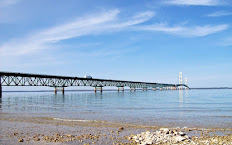
Mackinac Bridge. Michigan Attorney General Dana Nessel opposes Enbridge's plan to build a tunnel under the Straits of Mackinac to house the company's Line 5 pipeline. (Keweenaw Now file photo)
LANSING -- With a brief filed on Thursday, Jan. 16, in the Michigan Court of Appeals, Michigan Attorney General Dana Nessel continues to challenge the constitutionality of the law which provided for the 2018 agreement between former Gov. Rick Snyder’s administration and Enbridge Energy to build a tunnel beneath the Straits of Mackinac to house the energy company’s Line 5 pipeline.
Public Act 359 of 2018 was rushed through the Legislature to amend Public Act 214 of 1952, which allowed for the construction of the Mackinac Bridge. Nessel's brief filed Thursday argues that the 2018 act violates Article 4, Sec. 24, of the Michigan Constitution, referred to the Title-Object Clause, which provides that "No law shall embrace more than one object, which shall be expressed in its title."
In response to questions raised by Gov. Gretchen Whitmer, Nessel issued a formal opinion in March 2019 that concluded Act 359 was unconstitutional and the agreements based upon it made between the Snyder administration and Enbridge should likely be considered void.*
In June 2019, Enbridge Energy countered by suing the State in the Michigan Court of Claims seeking a declaration that the Act is constitutional, thereby making the December 2018 tunnel agreement valid. The Court of Claims agreed with Enbridge and ruled in the energy company’s favor on Oct. 31, 2019. The brief filed Thursday by the Michigan Department of Attorney General asks the Court of Appeals to reverse the Court of Claims decision because Act 359 violates the Title-Object Clause by not providing fair notice of the content of the law, and embraces two unrelated objects -- a utility tunnel to carry oil beneath the Straits and the Mackinac Bridge to carry motor vehicles above.
Separately, on Jan. 16, a panel of the Court of Appeals denied, by a 2-1 vote, the State’s motion for stay pending appeal. Had it been granted, the stay would have delayed the effect of the Court of Claims decision until the Court of Appeals reached its decision on the constitutionality of Act 359. Instead, Act 359 currently remains in effect during the appeal. The State is reviewing the order.
This case is separate from and not related to the Attorney General’s lawsuit that seeks to shutdown Enbridge’s existing 66-year-old pipelines in the Straits.**
[BREAKING NEWS: According to a Facebook post by the Anishinaabek Caucus of the Democratic Party on Friday, Oct.11, 2019, Michigan Governor Gretchen Whitmer has proclaimed Oct. 14, 2019, Indigenous Peoples' Day!
Click here to read the full proclamation on Michigan.gov.
Governor Whitmer's Proclamation follows recently proposed legislation by State Sen. Jeff Irwin (SB 568), State Sen. Mallory McMorrow (SB 569) and State Rep. Yousef Rabhi (HB 5112) to replace Columbus Day with Indigenous Peoples' Day in Michigan, as well as an executive order earlier this week by Wisconsin Gov. Tony Evers declaring the second Monday in October Indigenous Peoples' Day in Wisconsin.]*
HOUGHTON -- This year Indigenous Peoples' Day is commemorated beginning on Monday, Oct. 14, with a series of events at Michigan Tech -- including lectures, films and discussions on Native American culture from Monday through Wednesday and library exhibits of Indigenous Learning Resources at both the Van Pelt and Opie Library on campus and the Portage Lake District Library in Houghton through Oct. 28.
While not directly part of the Indigenous Peoples' Day program, the People of the Heart Water Walk will be led by Anishinaabekwe from the Keweenaw Bay Indian Community (KBIC) on Saturday, Sunday and Monday, Oct. 19-21, along the shores of Lake Superior. People of all colors, faiths, and philosophies are invited to join the Water Walk in unity to bring awareness to life’s most precious resource, Nibi (water). The Water Walk is conducted through Anishinaabe ceremonial protocol and ways of understanding the natural environment.
People of the Heart Water Walk poster. Click on poster for larger image. (Poster courtesy People of the Heart Water Walk Facebook page)
Water Walkers will begin at 6 a.m. on Saturday, Oct. 19, at Astor Shipwreck Park (where Fannie Hoe Creek flows into Lake Superior across from Fort Wilkins Park) and will proceed to Mohawk this first day. On Sunday, day two, water walkers will cross Portage Canal into Houghton. Water walkers will end their journey the third day, Monday, Oct. 21, at Keweenaw Bay's Sandpoint Lighthouse.
"In this work for the water, the women lead the ceremony, carrying a copper vessel filled with Nibi from Copper Harbor Lighthouse to Sandpoint Lighthouse located in Baraga, MI.," writes Kathleen Smith, habitat specialist in the KBIC Natural Resources Department. "The water continually moves through the 1842 Ceded Territory throughout the day starting at sunrise and into the afternoon. The men support the women by carrying an eagle staff beside them as their protectors," Smith explains.
Walkers will lodge in personal homes and community centers each night. Food and drinking water will be provided to eliminate the use of plastic water bottles. All are welcomed to participate in bringing awareness to Nibi. You can join in and walk at any point on the journey for as long as you can and feel called to do so.
Michigan Tech Indigenous Peoples' Day events
Monday, Oct. 14: 12 - 12:30 p.m. -- Michigan Tech Husky Statue. The Woodland Singers: Honoring Land, Place, and People
6 p.m. - 8 p.m. -- Fisher Hall 138. Documentary and Dialogue: American Indian identity in contemporary media
Tuesday, Oct. 15: 12 - 1 p.m. -- Noblet 144, School of Forest Resources and Environmental Science. Brown Bag Lecture with Kalvin Hartwig (Sault Ste. Marie Tribe of Chippewa)
4 p.m. - 5:30 p.m. -- Hamar House. Reception for Kalvin Hartwig and Katy Bresette (Red Cliff Band of Ojibwe)
6 p.m. - 8 p.m. -- Fisher Hall 138. Short Films: Waadookodaading and This Is Who I Am, with special guests Katy Bresette and Kalvin Hartwig
Wednesday, Oct. 16: UPDATED TIME: 3 p.m. - 4:30 p.m. (EDT) -- Noblet, Forestry Building 144. Anishinaabemowin Distance Learning Session with Dr. Margaret Noodin. The first 40 participants will receive a free copy of Bizhiw Miinawaa Miinan- Lynx and the Blueberries by Cecelia LaPointe (Waub Ajijaak Press) [Note: This was originally posted as 2 p.m. - 3:30 p.m. Central Time.]
6 p.m. - 8 p.m. -- Fisher Hall 138. Feature film: Atanarjuat: The Fast Runner (2001)
Indigenous Peoples' Day Campaign
The Indigenous Peoples' Day Campaign at Michigan Tech began with a group of faculty, students and concerned community members meeting several times a semester and inviting / sponsoring guest speakers of indigenous origins -- including Native Americans, a Peruvian filmmaker, and an Israeli writer concerned about rights of Palestinians -- as well as films, activities and discussions on topics related to indigenous peoples' rights around the world.
At the same time, the group interested Michigan Tech students in the effort to have the university officially adopt Indigenous Peoples' Day, especially since Michigan Tech is located within Ojibwa (Chippewa) homelands and treaty-territory established by the Treaty of 1842 -- the territory of Native American nations in Gakiiwe’onaning (Keweenaw Bay), Gete-gitgaaning (Lac Vieux Desert), Mashkii-ziibing (Bad River), Odaawaa-zaaga’iganing (Lac Courte Oreilles), Waaswaaganing (Lac Du Flambeau), Miskwaabikong (Red Cliff), Wezaawaagami-ziibiing (St. Croix), and Zaka’aaganing (Sokaogon Mole Lake).
Treaty map showing dates of treaties and tribal groups located in ceded territories. Click on map for larger version. (Map courtesy Great Lakes Indian Fish and Wildlife Commission [GLIFWC])
Michigan Tech's Undergraduate Student Government (USG) presented a Resolution to Commemorate and Actively Support Indigenous Peoples at Michigan Technological University on Feb. 15, 2017. It was adopted on March 1, 2017, and revised on March 15, 2017. The Resolution reads in part as follows:
"BE IT RESOLVED THAT, the Michigan Tech Undergraduate Student Government (USG) urges Michigan Technological University to commemorate Indigenous Peoples every year from this year, 2017,
"BE IT ALSO RESOLVED THAT, the Michigan Tech USG urges Michigan Technological University to actively support the recognition of Indigenous Peoples worldwide, including education and dialogue on diversity and solidarity, social justice, and indigenous decolonization.
"BE IT FURTHER RESOLVED THAT, the Michigan Tech USG urges Michigan Technological University to actively support the recognition of and education about the Ojibwe People's’ presence and contributions to Michigan Tech and the larger community in the region and forward."
Michigan Tech's Graduate Student Government (GSG) voted in favor of a similar Resolution on Feb. 13, 2017.
According to Kellie Raffaelli, assistant dean and director of Michigan Tech's Center for Diversity and Inclusion, "President Mroz approved the proposal for the University to recognize the second Monday of October as Indigneous Peoples' Day on January 24, 2017."
Editor's Update: * Contact your State Senator and State Representative in your own district and ask them to support these bills to establish Indigenous Peoples' Day in Michigan, since the Governor's Proclamation is only for this Monday, Oct.14, 2019. To find your State Representative, click here. To find your State Senator, click here.
Michigan Attorney General Dana Nessel. (Photo courtesy Michigan.gov)
LANSING -- In a one-two legal punch, Michigan Attorney General Dana Nessel not only responded to the Enbridge lawsuit filed against the state earlier this month, but simultaneously took the first step to decommission the 66-year-old dual pipelines that run through the Straits of Mackinac by filing a lawsuit in Ingham County Circuit Court.
Meanwhile Governor Gretchen Whitmer announced her responses to Enbridge's failure to negotiate on tunnel construction and her goal of decommissioning Line 5 under the Straits of Mackinac.
The Attorney General filed her lawsuit on June 27, 2019, the same day she filed a motion to dismiss Enbridge’s lawsuit filed in the Court of Claims on June 6 seeking to enforce agreements made in the last months of the Snyder administration that purported to authorize Enbridge to build a tunnel and continue operating Line 5.
"I have consistently stated that Enbridge’s pipelines in the Straits need to be shut down as soon as possible because they present an unacceptable risk to the Great Lakes," said Nessel. "Governor Whitmer tried her best to reach an agreement that would remove the pipelines from the Straits on an expedited basis, but Enbridge walked away from negotiations and instead filed a lawsuit against the state. Once that occurred, there was no need for further delay."
Nessel’s lawsuit asks the Ingham County Circuit Court to find that Enbridge’s continued operation of the Straits Pipelines under the easement granted by the State in 1953 violates the public trust doctrine, is a common law public nuisance, and violates the Michigan Environmental Protection Act because it is likely to cause pollution impairment and destruction of water and other natural resources.
The Enbridge Line 5 Pipeline under the Straits of Mackinac. (File photo courtesy National Wildlife Federation)
The Attorney General’s lawsuit identifies a potential anchor strike as the most significant risk to Line 5. In 2017, the State’s contractor, Dynamic Risk Assessment Systems, Inc., identified an anchor strike as the most "dominant threat" to Line 5.
"The location of the pipelines -- which carry millions of gallons of oil each day and lie exposed in open water at the bottom of the Straits -- combines great ecological sensitivity with exceptional vulnerability to anchor strikes," said Nessel. "This situation with Line 5 differs from other bodies of water where pipelines exist because the currents in the Straits of Mackinac are complex, variable, and remarkably fast and strong."
Nessel also noted the serious danger of anchor strikes, such as the one that occurred in 2018.*
"The continued operation of Line 5 presents an extraordinary, unreasonable threat to the public because of the very real risk of further anchor strikes, the inherent risks of pipeline operations, and the foreseeable, catastrophic effects if an oil spill occurs at the Straits," Nessel added. "We were extraordinarily lucky that we did not experience a complete rupture of Line 5 because, if we did, we would be cleaning up the Great Lakes and our shorelines for the rest of our lives, and the lives of our children as well."
In fact, an April 2018 anchor dragging incident -- which ripped through several inches-thick steel cables -- brought that threat home in a very real way. Although Line 5 was damaged -- not ruptured -- in that incident because the anchor hit a section lying directly on the bottomlands, if the anchor had dragged across the bottom of the Straits in an area where Line 5 is elevated, the likely result would have been a complete rupture of Line 5.
Nessel’s lawsuit seeks an order from the Court to shut down and decommission the Straits pipelines as soon as possible after a reasonable notice period to allow orderly adjustments by affected parties.
The Attorney General also filed a motion for summary disposition in the Court of Claims on June 27. That motion argues that PA 359 (2018), which would have created a new Straits Corridor Authority, is unconstitutional, and the agreements that purported to give Enbridge the right to build a tunnel and continue operating Line 5 in the Straits for the estimated seven to ten years it would take to build the tunnel are invalid.
This is consistent with Nessel’s first formal opinion as Attorney General determining that PA 359 -- rammed through in a chaotic lame duck session at the end of the Snyder administration -- was unconstitutional. Her office then notified all state agencies -- including the Straits Corridor Authority -- that PA 359 and any agreements relying on the statute, were unenforceable.
"The debate over Line 5 has been raging for over five years," said Nessel. "Real-world events have shown me we can’t wait another five to ten years for Enbridge to build a tunnel. We cannot prevent accidental or emergency anchor deployments in one of the busiest shipping channels in the Great Lakes. And it only takes one such incident to cause an environmental and economic catastrophe. That is a risk no one should be willing to take."
Nessel also explained these steps to decommission Line 5 in a video statement. In this statement she notes that she and Gov. Whitmer are both committed to protecting the waters of the Great Lakes from a potential disaster.
"We have dual responsibilities and we are working on parallel tracks," Nessel said in the video statement. "I'm doing everything I can on the legal front, and she's doing everything she can on the administrative front."
Nessel also mentioned in the video the governor's "Task Force to ensure the energy needs of our UP residents are met in an affordable and reliable way."**
Governor Whitmer responds to Line 5 legal filings
Tiffany Brown, press secretary for Governor Whitmer, issued a statement on June 27, commenting on the legal filings regarding Line 5.
"The governor’s primary goal has always been and remains to get the Line 5 dual pipelines out of the Straits of Mackinac as soon as possible. The risk of a catastrophic oil spill in the Great Lakes, and the harm that would follow to Michigan’s economy, tourism, and our way of life, is far too great to allow the pipelines to continue to operate indefinitely," the statement said.
The statement also explains that the governor's action follows her attempted negotiations with Enbridge:
"The governor has never viewed litigation as the best solution to this problem, and for this reason she entered negotiations with Enbridge about the possible construction of a tunnel. Her reasonable requirement has been that the dual pipelines through the Straits cease operation at a date certain, after allowing for a period of transition. Enbridge, however, has insisted that it be allowed to run oil through the Great Lakes indefinitely. Rather than negotiating, Enbridge walked away and filed a lawsuit. Today, Governor Whitmer filed her response asking the court to dismiss Enbridge’s lawsuit."
In addition, Gov. Whitmer has asked the Department of Natural Resources for a review of Enbridge's compliance with the 1953 Easement, which allowed Enbridge to operate Line 5's dual pipelines under the Great Lakes.
"Possible violations of the easement are just one of several grounds by which the state could seek to shut down the pipelines, some of which the attorney general has already invoked today," the statement concluded.
Groups laud Nessel's, Whitmer's actions to begin Line 5 shutdown
Oil and Water Don't Mix, an environmental group opposing Line 5, stated their support of the actions taken by Attorney General Nessel and Governor Whitmer.
"The Attorney General’s strong and necessary stand vigorously defends Michigan’s Constitution, our environmental laws, and is aimed at protecting the Great Lakes. Gov. Whitmer's directive to the Department of Natural Resources to examine Enbridge's compliance with the state's 1953 easement agreement for Line 5 will confirm what is already on the public record: a pattern and practice of easement violations by Enbridge," the group stated on their Web site. "The attorney general’s March legal opinion clearly established that the legislation passed in lame duck last year was unconstitutional; and her actions today (June 27) seeking a court-ordered end to Enbridge's Line 5 operations in the Straits of Mackinac have the strong support of Michigan’s environmental community, civic groups and Michigan’s tribes with Treaty Rights in the Straits of Mackinac."
Sean McBrearty, Oil and Water Don't Mix coordinator, said, "Line 5 is wrong for the Great Lakes, wrong for Michigan, wrong for the rule of law and wrong for future generations who must deal with the impact of dirty fuels on an overheating climate."***
FLOW (For Love of Water) also commended Attorney General Nessel’s and Governor Whitmer’s legal actions against Enbridge to protect public waters located in arguably the worst possible place in the Great Lakes for an oil spill to happen.
"Attorney General Nessel returns Michigan and the protection of its citizens, taxpayers, and the Great Lakes to the rule of law," said Jim Olson, president and founder of FLOW. "Governor Whitmer’s action on behalf of the state to nullify the lame-duck tunnel agreements also returns Michigan to the rule of law. They should be thanked. No, they should be applauded."****
Democratic Caucuses support of Nessel, Whitmer in opposing Line 5
The Michigan Democratic Party's Anishinaabek Caucus issued a press release on June 27, 2019, praising Attorney General Nessel for her legal filings and urging Governor Whitmer to join the Attorney General's lawsuit against Enbridge.
Andrea Pierce, chair of the Michigan Democratic Party's Anishinaabek Caucus, carries the Little Traverse Bay Bands of Odawa Indians tribal flag at Governor Whitmer's inauguration in January 2019. The photo is included with the Caucus's recent press release as a reminder that the 12 tribes of Michigan are here and are part of the decisions. (Photo courtesy Anishinaabek Caucus)
"Enbridge's continued exploratory work for the tunnel and operation of Line 5 are in violation of the Treaty rights of federally recognized tribes of Michigan," the Caucus stated, referring to their May 24, 2019, Position Statement.
In that Position Statement, the Caucus stated, "In accordance with the Tribal Treaties recognized under the United States Constitution and in solidarity with the position of the Twelve Tribes of Michigan as stewards of the land and water, the Anishinaabek Caucus of the Michigan Democratic Party enjoins the Governor and the State of Michigan to shut down Line 5 immediately to eliminate catastrophic risks to water and land, and to abandon plans for a tunnel which would perpetuate existing risks to our resources."
That Position Statement also asked Michigan officials to reverse damage from burning fossil fuels, not to create opportunities to expand their use, and to include Michigan tribes in their decision making. The Caucus noted that treaties guarantee not only fishing rights but the right to habitat for the fish, which is threatened by the operation of unsafe pipelines.
"We applaud and celebrate Dana's stand as it is what she promised during her campaign and also at the Pipe Out Paddle Up Flotilla, when she came to Mackinaw City and met tribal leadership, environmental groups and citizens that are concerned about Enbridge's Line 5," said Andrea Pierce, Anishinaabek Caucus chair.
During the 2017 Pipe Out Paddle Up Flotilla in Mackinaw City, Dana Nessel, then a candidate for Michigan Attorney General, stated why she was running for that office and why she would shut down Line 5 if elected. (File video by Keweenaw Now)
The June 27 press release from the Anishinaabek Caucus also mentions dangers cited in the "Independent Risk Analysis for the Straits Pipelines" -- a study led by Guy Meadows, director of Michigan Tech's Great Lakes Research Center, and other faculty from Michigan Tech and including researchers from other universities and other scientific experts.
The Caucus notes, "As long as Line 5 operates, Michigan's water, wildlife, and people remain at risk. The report 'Independent Risk Analysis for the Straits Pipelines' (September 15, 2018) reveals that 2.4M gallons of crude would damage 60,000 acres of unique habitat affecting businesses personal property, and municipal water supplies. Since 1968 there has been more than 1.1M gallons of crude spilled from Line 5 inland, hence acknowledgement of a Line 5 spill in the Straits is real. Degradation of supports, mussel encrustation, deformities of the pipe, and an anchor strike have been reported."
The Anishinaabek Caucus notes that in their view Line 5 is not needed for bringing propane to the Upper Peninsula. They point out that, in addition to the fact that the volume of propane provided through Line 5 is only 0.25 percent, which could be trucked to the UP, the propane argument for Line 5 ignores good union green jobs.
"Developing renewable energy in the Upper Peninsula could be Michigan's beginning in green energy independence," the Anishinaabek Caucus states.
The Michigan Democratic Party Environmental Caucus. also issued a statement in support of Nessel and Whitmer as environmental leaders, calling their June 27 announcements "the shot heard 'round the world as we move closer to decommissioning the credible threat of a Line 5 rupture in the Straits of Mackinac."
According to the Environmental Caucus, "News of Attorney General Nessel’s actions is confirmation of her dedication to to the protection of our water, the adjacent waterways and the Straits of Mackinac themselves."
Bad River Band of Lake Superior Chippewa threatened by Line 5 impacts to watershed While several Native American groups concerned about the water and treaty rights have been protesting for several years against the Line 5 pipelines under the Straits of Mackinac, less attention has been focused on the part of Line 5 that passes through the reservation of the Bad River Band of the Lake Superior Tribe of Chippewa Indians -- impacting rivers, streams and wetlands and posing a threat to an area of northwestern Wisconsin that has recently experienced severe floods.
This map shows a North American pipeline system including Line 5 (bright red line) -- which carries oil from Superior, Wis, to refineries at Sarnia, Ontario. Line 5 uses the Straits of Mackinac as a short cut, jeopardizing Great Lakes waters and nearby lands, including the Bad River reservation in northwestern Wisconsin. Click on map for larger version. (Map courtesy Oil and Water Don't Mix)
This aerial drone video by Bad River member David Joe Bates illustrates potential failure of Line 5, which crosses the Bad River only 15.5 miles from Lake Superior:
On June 20, 2019, just a week before the actions of Michigan's Attorney General and Governor, the Bad River Band held a public event with a presentation by Naomi Tillison, their Natural Resources director, outlining the impending disaster from Enbridge Line 5 at the Bad River Meander. Click here for a video of her informative presentation.*****
***** For background on the easements that allowed Line 5 to pass through the Bad River reservation, click here for the introduction to the June 20 by Mike Wiggins, Jr., Bad River tribal chair.
Book Launch at Well Read Raccoon and Curiosities in Houghton Sept. 25
Join editor Raymond Luczak and 7 poets -- Jennifer Elen Brid, Lisa Fosmo, Deborah K. Frontiera, Sonia Goltz, Jayson Iwen, Beverly Matherne and Dana Richter -- at a Book Launch Party to celebrate the new anthology of their poems, Feet in the Waves: Poems of Lake Superior at 6 p.m. Friday, Sept. 25, 2026, at the Well Read Raccoon and Curiosities book store, 314 Shelden Ave., Houghton. Refreshments served.
Back 40 Mine Update: Sept. 24
The Coalition to SAVE the Menominee Rover will host a meeting and presentations on both the Back 40 and Copperwood mining projects at 6 p.m. (CT) on Thursday, Sept. 24, in Room MN115 at Northeast Wisconsin Technical College (NWTC), 1601 University Dr., Marinette, Wisconsin 54143. Agenda: 1. Opening Prayer and Welcome 2. GORO/Goldgroup Update 3. Natalie Lashmet: Audio / Visual Presentation 4. Mark Doremus: Update on Copperwood Mine 5. Group Discussion 6. Adjourn Snacks will be provided.
Bob Hiltunen Benefit Concert livestream
If you missed the Bob Hiltunen Benefit Concert in the Calumet Theatre on Sept. 9, 2026, click on the photo above of the World's Most Dangerous Polka Band to watch the livestream video recording on YouTube. See the next article below for ways you can still donate to fundraisers for Bob's medical expenses. (Photo: Musicians pictured, from left, Oren Tikkanen, John Peiffer, Jim Enrietti, Teri Enrietti. Also performing on solo guitar was Steve Jones. Screenshot from video courtesy Calumet Theatre.)
Fundraiser concert for Bob Hiltunen at Calumet Theatre Sept.9
Bob Hiltunen, musician and beloved teacher, is now hospitalized in Ann Arbor, Michigan, fighting stage 4 cancer, facing months of procedures. Bob has always been the first to help others. To help Bob and his family with the multitude of huge expenses he will be facing, a fundraiser concert will be held at 7:30 p.m. Wednesday, September 9, at the Calumet Theatre. Music by Jim Enrietti, Accordion; Teri Enrietti, Bass; John Peiffer, Ukelele and Brass;; Oren Tikkanen, Guitar. The performance will feature tangos, Italian, Cajun, Finnish, French, Polish, Korean, Croatian, Greek, light rock, waltzes, a polka or two, and some surprises! Don't miss it! Donation checks can be made out to Bob Hiltunen Fund and sent to: Calumet Theatre Att. Jim Enrietti P.O. Box 167 340 Sixth Street Calumet, MI 49913. Bob's Go Fund Me: Whether or not you can attend the concert, you can also help Bob by contributing to his Go Fund Me goal (separate from the Bob Hiltunen Fund). Please click on photo of Bob above for more info and for a way to contribute to this Go Fund Me.
Pipe Out Paddle Up Water Weekend Schedule: Petoskey
The Pipe Out Paddle Up protest against Line 5 and the Tunnel project will include an entire Labor Day weekend in Petoskey, MI, Friday -Monday -- Sept. 4,5,6 and 7. Click on poster above for a larger version with details on this Water Weekend.
The encampment to protest the proposed Copperwood Mine on the North Country Trail next to the Porcupine Mountains, immediately adjacent to the proposed mine site, continues for the 4th weekend, Sept. 4-6. More than 60 acres of wetlands and multiple streams have already been destroyed for this mine, with active deforesting occurring on a daily basis. The encampment, named Animikiiwadiswan, meaning Thunderbird Nest, was initiated Aug. 14-16 and attended by members of the Keweenaw Bay Indian Community, Lac Vieux Desert, Menominee, Diné, Navajo, Sault Ste Marie, and dozens of allies. You can visit the camp this Friday, Saturday or Sunday, (beginning at 3 p.m. Central Time). Non-Tribal people are welcome to join respectfully in solidarity (see below). Bring as much drinking water as you can for yourself, and fresh food and produce for the community are always appreciated. No need for supplies in bulky plastic containers. Click on poster above or go to http:// protectheporkies.com/camp for more information and updates.
Invitation from Charlotte Loonsfoot of KBIC
"Starting on August 14th at 3 p,m. ET, we will set up Animikiiwadiswan (Thunderbird Nest) on Ottawa National Forest land right next to the proposed Copperwood mine site. We will camp just west of the North Country Trail parking lot, 20 minutes north of Wakefield, MI, on County Road 519. We will perform ceremonies and provide literature to visitors to educate the world about this dangerous proposal. Members of all Tribal Nations are invited. Non-Tribal people are welcome to join in solidarity, provided they respect the leadership of organizers." No drugs or alcohol permitted. This is a remote area, so bring food and water. Children are welcome. Charlotte Loonsfoot is vice-president of Protect the Porkies. She is setting up this camp to pray for and protect this sacred area from those who would destroy it. Click on map above or go to https://protecttheporkies.com/camp for larger maps and more details.
Omega House Summer Concert: August 18, 2026
Don't miss the Omega House Summer Concert at 7 p.m. on Tuesday, Aug. 18, at Saints Peter and Paul Lutheran Church in Houghton. Enjoy this gathering of local musical artists who will offer jazz, light opera, folk and popular music to benefit Omega House hospice in Houghton. Suggested donation is only $10. Click on poster for larger version.
Ukraine march in Houghton each Wednesday, 5 p.m.
Join Yoopers for Ukraine for the weekly Ukraine march each Wednesday. Meet at 5 p.m. on the Houghton side of the Portage Lift Bridge. These peaceful marches make a huge difference in creating hope and encouragement both in the US and in Ukraine. Flags and signs provided.
Comments needed at online Public Hearing July 8 for Proposed NPDES permit for Copperwood Mine
The Michigan Department of Environment, Great Lakes, and Energy (EGLE) will hold a virtual public hearing on Wednesday, July 8, to provide an opportunity for the public to provide comments on the proposed reissuance of the NPDES surface water permit for Copperwood Mine, located at 1108 County Road 519, Wakefield, Gogebic County, Michigan. (NPDES Permit No. MI0058969). Protect the Porkies asks that you take action to protect Lake Superior and the Porcupine Mountains Wilderness State Park by attending the hearing online and making comments. Go to https://protecttheporkies.com/take-action for reasons to challenge the Wastewater Permit. Click on image above to register for the public hearing.
Notice on scams: Be vigilant
Keweenaw residents have been reporting scams by criminals frightening them with false stories on the phone. Be vigilant and do not believe these unless you trust the source. Scams can also occur via the Internet. Be careful especially if asked to call a number flashing on the screen. Do not call it. Senior citizens are often targeted by scammers asking for money.
Help local Homelessness Prevention with Hancock Salvation Army
Several local groups, including AWAVE (Advocates for those Without A Voice Everywhere) and Keweenaw Indivisible, are encouraging local residents to contribute to Copper Country Housing Assistance through a special Homelessness Prevention Fund through the Hancock Salvation Army. If you can donate any amount, click on the QR code above or click on the poster for the link to the Donation page. Be sure to write Housing Assistance in the Comments so your donation will go to the Homelessness Prevention Fund. Or you can mail a check for any amount made out to The Salvation Army and mail it to The Salvation Army, 408 Ravine Street, Hancock, MI 49930. Be sure to Write Housing Assistance or Homelessness Prevention on the memo line and mail it or drop it off at the Hancock Salvation Army office, above address.
R.I.P. Michael Lahti
Keweenaw Now wishes to express our deepest sympathy to the family of Michael Lahti, lifelong resident of Hancock, MI, and active community member and leader, who passed away on December 29, 2025. Mike served first as a Hancock school board member, a Suomi College/Finlandia University board member, and later as Chair of the Houghton County Board of Commissioners. In 2006, Mike successfully ran for and was elected to the Michigan House of Representatives representing the 110th District, where he served two terms. See our 2008 interview with Mike in which he speaks about issues important for him at that time and why he ran for that re-election to the Michigan House: https://keweenawnow.blogspot.com/2008/06/state-rep-mike-lahti-outlines-issues.html To read the Obituary for Mike, click on photo above. (Photo courtesy O'Neill-Dennis Funeral Home)
ICE OUT FOR GOOD Silent Vigil in Houghton Saturday, Jan. 10
Keweenaw Indivisible is holding a Silent Vigil for Renee Nicole Good and other victims of ICE at 1 p.m. Saturday, January 10, on all street corners of downtown Shelden Ave., Houghton. Carry signs reading "ICE off our streets," or "Accountability Now." No chanting. Silence is the message. Dress warmly, bring your sign and a candle if you can, and join Keweenaw Indivisible and other local organizations for a "Hands Off Venezuela Rally" immediately following the vigil.
STOP HUMAN SAFARI, SAVE KHERSON: Rally with Yoopers for Ukraine Dec. 14 at Lift Bridge
Since 2024, Russians and others who pay to play have been using Kherson as a living video game targeting Ukrainians for points and pleasure and using drones to hunt them down and kill them. Even trips to the grocery store become a survival game. Unfortunately, to the dead and the mourning and those who are witnessing this horror, it is not a game. It is daily life in Kherson! These crimes and activities have been documented by brave journalists and ICC. Yoopers for Ukraine is joining the global rally to stand for human rights and dignity and true American values. This will be our march for Peace this week. We will gather at 3 p.m. Sunday, Dec. 14, for brief comments at the Houghton side of the Lift Bridge at our normal spot. We will then walk the bridge or stay at the banners for those who don’t wish to walk across. We need both! Stay for 5 minutes or the hour. Dress for weather. Please bring flags and posters if you have them. Click on image above for details.
KUUF Forum on Data Centers: Dec. 14 via Zoom
The Keweenaw Unitarian Universalist Fellowship (KUUF) will host a public forum online titled "What Are Data Centers and How Will They Impact Michigan?" from 10:30-11:30 a.m. on Sunday, December 14. Kalvin Carter, director of Up North Advocacy, based in Sault Ste. Marie, and Audrey Gerard of Michigan United, a nonprofit organization focused on environmental protection, will talk about boom-and-bust industries like crypto mining, which use up natural resources without replenishing them, and big tech operations that do little to benefit the people who live nearby. Data mining requires a lot of water to cool the operation. That’s why data mining operations have their eye on communities like ours, near the Great Lakes. After the water cools the servers, it drains into the ground, where it moves through the aquifer and back to the lake, potentially warming it. Data mining operations also consume large amounts of electricity, which can raise power prices. And they create noise. One example is a relatively small installation of cryptocurrency servers located across from Lake Superior Academy, a K-5 Montessori school in Dafter Township, Michigan, near Sault Ste. Marie. The servers generate a constant noise that the school describes as sounding "like jack hammers 24/7." The school is suing Odessa Partners, the Florida owner of those servers. Forums are approximately one hour long. The public is invited to participate. Meeting ID: 839 7576 2265; Passcode: KUUF Or visit keweenawuu.org/worship/forums/ for the zoom link.
League of Women Voters of Michigan joins lawsuit to protect voter security
GRAND RAPIDS, MI -- Last Thursday, Oct. 30, the League of Women Voters of Michigan -- represented by Campaign Legal Center, the Brennan Center for Justice at NYU Law, and the Michigan law firm Goodman Acker -- filed a motion to intervene on behalf of voters in US v. Benson, a lawsuit brought by the US Department of Justice against the state of Michigan for failing to comply with the department’s demand for the state’s complete voter file. The Department of Justice hasn’t provided sufficient justification for seeking this data, which includes sensitive information such as driver’s license numbers and partial Social Security numbers. Click on logo above for press release. We are proud to stand with voters to protect the security of voter information in our state from potential misuse. Thank you, Linda Belote and Faith Morrison, co-presidents League of Women Voters of the Copper Country
See Citizens Rally for Accountable Government (CRAG) update
Sarah Green has posted important info on national and local government issues in her Oct. 30 CRAG newsletter. She offers important news on Hunger in Michigan, FLOCK cameras (these were to be discussed at Hancock City Council meeting Nov. 5 but that meeting is cancelled), Michigan Statewide Petitions, When and Where to Speak Up and more. Click on photo for link.
KUUF Sept. 14 online Forum: "Protect the Porkies" is now online
If you missed the online forum called "Protect the Porkies," presented by Tom Grotenwohl, founder of Protect the Porkies (www.ProtectThePorkies.com) go to the KUUF Website, https://www.keweenawuu.org/sermons/forum-protect-the-porkies/ or click on photo above.
Good Trouble Lives On -- Rally in Houghton July 17
Good Trouble Lives On is a national day of nonviolent action to respond to the attacks posed on our civil and human rights by the Trump administration and to remind them that in America, the power lies with the people. On Thursday, July 17, the anniversary of Congressman John Lewis’s passing, join Keweenaw Indivisible from 4 p.m. to 6 p.m. in Veterans Park in Houghton in taking action to support Good Trouble rallies across the country, defend our democracy and carry forward Lewis's legacy of Good Trouble. From voter suppression bills like the SAVE Act to the criminalization of protest, the Trump administration is launching a full-scale attack on our civil and human rights. This is more than a protest; it’s a moral reckoning -- a continuation of the movement Lewis helped lead and a new front in the struggle for freedom. Please note: A core principle behind our Good Trouble Lives On actions is a commitment to nonviolence. All participants are expected to seek to de-escalate any potential confrontation with those who disagree with our values. In support of the Good Trouble Rally at Houghton's Veterans Park, Keweenaw Indivisible is staging a MotorMarch from 3 p.m. to 6 p.m. on July 17. Participants will decorate their private vehicles with signs or slogans drawn on side windows with "windshield markers." The display of as many American flags as possible is encouraged. Vehicles will then circulate repeatedly through downtown Houghton, blending with normal traffic flows and passing the rally site.
June 30 is deadline for comments to US Army Corps of Engineers on proposed Line 5 Tunnel
You can comment on line by 11:59 p.m. Monday, June 30. Click on photo for link. See also info on the draft Environmental Impact Statement (EIS) at https://www.line5tunneleis.com/draft-eis/Also Check out Oil and Water Don't Mix: https://www.oilandwaterdontmix.org/take_action
"No War With Iran" Livestream is at 8 p.m. ET Monday, June 23
Join the Teach-In Network, RootsAction and Defuse Nuclear War, at 8 p.m. ET TONIGHT, JUNE 23, to learn about what’s going on in Iran, the deeper history of Israel-Iran relations, and what we might expect from the coming days, weeks, and months. In a moment when consent to a destructive and foolish war on Iran is being actively manufactured, it’s essential to come together as a movement, share information, and strategize. Click on poster above to register and see names of featured speakers.
June 14: No Kings Day
On June 14, 1775, the Continental Congress created the U.S. Army to stand up against a monarch who claimed absolute power. 250 years later, President Trump wants to twist that legacy into a personal celebration of himself with a parade in Washington, DC, which is expected to cost millions of our tax dollars -- all while Republicans claim there’s no money for Social Security, SNAP, or Medicaid. No Kings Day marches and actions are planned in 50 states and in Puerto Rico, Colombia, Germany, Italy, Malawi, Portugal, United Kingdom, Canada and France today, June 14, 2025. To learn more click on logo above to see Sarah Green's CRAG (Citizens Rally for Accountable Government) recent post on No Kings Day. See also information on this at Bridgefest by visiting the tables of Keweenaw Indivisible, the Houghton County Dems and the League of Women Voters.
About the Big Bad Billionaire Bonus, Budget Busting Bill
Citizens Rally for Accountable Government (CRAG) is a newsletter by Sarah Green. Her post on May 26, 2025, offers details on the House Budget. Go to https://www.waterandstone.net/?ref=crag-newsletter to read about the "Big Bad Billionaire Bonus, Budget Busting Bill." This bill now goes to the Senate. You may want to write to Senators about it.
Walks for Ukraine will be at 5 p.m. Wednesdays starting April 9 in Houghton
Yoopers for Ukraine invites you to join the weekly Walk for Ukraine at 5 p.m. on Wednesdays, beginning April 9. Meet on Houghton side of the Lift Bridge.
UP residents address Rep. Bergman during Bergman(less) Town Hall in Houghton
If you missed the Town Hall on March 18, a video recording is available on YouTube. Click on photo for link to watch and hear residents' comments addressed to absent 1st District US Rep. Jack Bergman. The audience filled two rooms provided by the Keweenaw Unitarian Universalist Fellowship (KUUF). According to organizer Bill Fink, about 150 people attended. (Photo courtesy Barry Fink)
Reception for "Extraordinary Women of the U.P." exhibit at Carnegie Museum March 19
A Public Reception for the new exhibit -- "Extraordinary Women of the U.P.," on loan from the Beaumier U.P. Heritage Center at Northern Michigan University -- will be held at 6:30 p.m. on Wednesday, March 19, at the Carnegie Museum of the Keweenaw, 105 Huron St., Houghton. Faith Morrison invites you to her talk at the exhibit. See the exhibit and chill with neighbors beginning at 6:30 p.m. and hear her talk at 7:15 p.m. This exhibit features biographies of 70 amazing women from the Upper Peninsula's past. Learn about locals Cora Jeffers (teacher, principal, suffragist), Katherine Heideman (CCISD Superintendent, Hancock council member), Ida Bergh (sheriff), Mary Petermann (chemist, cancer researcher, professor), and Lucena Brockway (early pioneer, diarist) among many others. The exhibit continues through end of March 2025. (Poster courtesy Faith Morrison)
UPDATED: Join UPEC's Kathleen Heideman for TAKING IT PERSONALLY: U.P. Mining Threats, Part II
The Upper Peninsula Environmental Coalition (UPEC) presents "TAKING IT PERSONALLY: U.P. Mining Threats, Part II," a free livestream featuring Kathleen Heideman of UPEC's Mining Action Group. Join Kathleen for the second of a three-part overview of mining threats in Michigan’s Upper Peninsula, including maps, images, and poetry. In Session II, Kathleen discusses changes at Eagle Mine, and the Revex "battery metals" facility proposed for Marquette County. An environmentalist working in Michigan’s Upper Peninsula, Kathleen has completed residencies with the National Park Service, watersheds, research stations, foundations, and the National Science Foundation's Antarctic Artists and Writers Program and serves on UPEC's board. She is the author of The Caving Grounds (forthcoming in 2025 from Modern History Press), A Brief Report on the Human Animal, and Psalms of the Early Anthropocene. If you missed this livestream on Zoom Feb. 20, click on photo of Kathleen above for the YouTube video recording. (Photo courtesy UPEC) If you missed Part I of this series, watch it on YouTube at https://www.youtube.com/watch?v=tb2msaxZAZo
Remember hero Martin Luther King Jr. today, Jan. 20
Thanks to Heather Cox Richardson for reminding us of heroes and of the last speech of hero Martin Luther King Jr. -- just a day before he was assassinated in Memphis in 1968. Click on photo above for his 'I've been to the mountaintop' speech. (Photo: Martin Luther King Jr. at a 1964 press conference. Photo by Marion S. Trikosko courtesy Wikimedia Commons)
President Biden declares Jan. 9, 2025, National Day of Mourning
Thursday, January 9, 2025, is a National Day of Mourning to pay homage to the memory of President James Earl Carter, Jr., as declared by President Joe Biden in his Dec. 29, 2024 Proclamation Announcing the Death of James Earl Carter, Jr. Click on image above for the Proclamation. (Photo: Jimmy Carter official White House portrait by Herbert E. Abrams 1982. Photo courtesy Houghton County Democratic Party)
Jimmy Carter, America’s 39th President, passes away at age 100
The members of the Democratic Party of Houghton County (HCDP) were saddened to learn this Sunday of the passing of 39th U.S. President Jimmy Carter. The world has lost a shining example of a life lived in pursuit of the highest ideals of citizenship.President Carter served heroically in the U.S. Navy as a submariner, helping with the aftermath of the 1952 NRX nuclear reactor incident at Chalk River. He inherited his family's peanut farm in Georgia and managed it to prosperity, bringing this experience to the governorship of Georgia and then to the Presidency.As President, he established the Departments of Energy and Education, bringing national authority to bear on two issues that shape Democratic priorities to this day. He installed solar panels on the White House, taking a leading role in advancing what has become a crucial technology for clean power. He mediated the Camp David Accords, one of the most influential peace initiatives in the Middle East for a generation. ... More:CLICK ON LOGO ABOVE to read the rest of this Dec. 31, 2024, newsletter from HCDP.
The 10th Annual Benefit Concert to fund handicap accessibility for the Ontonagon Theater of Performing Arts on Oct. 5, 2024, was a successful music event in the theater. Local musicians celebrated traditional music "From the Roaring 20s to the Birth of Rock-n-Roll." Click on photo above for a video of a popular old song with audience participation. According to Wendy Peterson, producer and director of the concerts, the funds collected for the project now total more than $90,000. To donate go to ontonagontheater.org and click on ACCESSIBILITY PROJECT. (Photo and video by Keweenaw Now)
City of Hancock new garbage, recycling update
The City of Hancock has a new schedule for garbage and recycling pickups with all pickups beginning at 6 a.m. Garbage/trash pickups for east and west Hancock are still on Monday and Wednesday respectively except for certain holidays including Labor Day (Monday's pickup will be Tuesday, Sept. 3). Trash bags still need stickers attached. Recycling for all will be on Thursdays. No glass. Click on logo above for details.
Pipe Out Paddle UP picnic, Water is Life Festival Aug. 31: Call to Shut Down Line 5
The Pipe Out Paddle Up (POPU) family picnic to Shut Down Line 5 is getting ready to make a splash! Dozens of donated kayaks will be launching from Kiwanis Beach in St. Ignace from 9 a.m. to noon on Saturday, August 31! If you have your own kayak or floating device please bring it! A water station will be set up and lots of yummy free food. Please bring a refillable water bottle and food bundle (plate, bowl, fork and spoon) with you. You can make a donation today at bit.ly/popu24 and check out the website at https://www.anishinaabekcaucus.org/our-work/popu or click on poster above. Special thanks to Mackinac Straits Watersports and Black to the Land Coalition for the kayak and canoe donations! All donations are tax-deductible! For more info on donations email team@glwpn.org. In 2020, the State of Michigan terminated Enbridge's permit to operate Line 5 through the Great Lakes, 70 tributaries throughout Michigan, AND the SW Detroit Marathon refinery that is harming the community there every day. Enbridge line 5 pipeline must be permanently decommissioned to protect the Great Lakes! The Water is Life Festival in Petoskey follows the POPU family picnic. For details go to https://www.waterislifefestival.org/
Reception for Art by Krissy Sundstrom Aug. 28 at The Well Read Raccoon Books and Curiosities
The Well Read Raccoon Books and Curiosities book shop, 314 Shelden Avenue in Houghton, will host an opening reception for Krissy Sundstrom of Blackberry Art Studio from 5 p.m. to 7 p.m. Wednesday, Aug. 28, as she takes a break from picking ACTUAL blackberries to discuss her art work and process. Described by students recently as "restful," some of her latest work will be displayed in the Well Read Raccoon through September. Light refreshments wil be available. This is a family friendly event, but please monitor your youngunz. Photo: Art by Krissy Sundstrom. (Photo courtesy The Well Read Raccoon Books and Curiosities)
Tilden Mine Permit Application withdrawn following public and agency concerns
MARQUETTE -- Cleveland Cliffs withdrew its permit application to fill 77.9 acres of wetlands and 4,661 linear feet of streams with mine waste as of June 20, 2024. The withdrawal was recommended by Michigan’s Department of Environment, Great Lakes, and Energy (EGLE) due to unresolved concerns about tribal coordination and concerns, as well as cumulative impacts to the Escanaba River watershed. The public comment period for the wetland permit application ended March 9, but saw a significant amount of high-quality public comments due to advocacy by local environmental groups Citizens for a Safe and Clean Lake Superior (CSCLS) and the Mining Action Group of the UP Environmental Coalition (MAG-UPEC). Over 500 public comments were submitted, citing concerns about inadequate consideration of impact areas, including insufficient biological surveys to determine presence of protected species....Click on photo of wetlands above for details. (Photo courtesy Citizens for a Safe and Clean Lake Superior)
Update: UPEC July 15 Livestream, Community Solar in L'Anse, is on YouTube
What is community solar, and how can it work for communities in Michigan? If you missed UPEC's (Upper Peninsula Environmental Coalition's) Livestream on July 15, when Drs. Richelle Winkler and Chelsea Schelly, joined by Bob LaFave, shared their experiences working to support a community solar project for the Village of L'Anse municipal utility, you can view it on YouTube. Learn how communities can work toward a community solar project and how community solar can benefit residents, including low-income households. Both Dr. Winkler and Dr. Schelly were working in the Department of Social Sciences at Michigan Technological University while engaged with this project, and they share their insights and experiences as well as documents outlining the process and the outcome for L'Anse. Bob LaFave, Village Manager of L’Anse, was key to the project. Dr. Schelly is currently a professor of Sociology at Michigan Tech, and Dr. Winkler is now a Research Social Scientist at the USDA Economic Research Service. Click on photo above for YouTube livestream of this presentation.
Copper Beacon
Copper Beacon continues to cover local news with a whole new look and a board of directors. Click on logo to learn more.
UPEC Livestream on two mining issues TONIGHT, Feb. 15, via Zoom, Facebook
Two major mining operations are seeking to expand and pose devastating threats to our water -- Ishpeming's Tilden Mine and the proposed Copperwood Mine on the coast of Lake Superior on the western edge of Porcupine Mountains Wilderness State Park. Join a livestream presentation from UPEC and Protect the Porkies at 7 p.m. TONIGHT, Thursday, Feb. 15 EST, to discuss the content of both mining issues. Ishpeming's Tilden Mine is seeking a permit to expand its footprint and permanently bury almost 80 acres of wetlands, along with hundreds more acres of land, several freshwater ponds, and almost a mile of streams, under waste rock from the mine. Kathleen Heideman of UPEC's Mining Action Group will discuss the environmental impacts of the proposal and how to prepare for the online Public Hearing on February 28th. The proposed Copperwood Mine is located on the coast of Lake Superior on the western edge of Porcupine Mountains Wilderness State Park. On January 30, the Michigan Strategic Fund (MSF) almost passed a $50 million grant for the Copperwood project -- an amount that would double Copperwood's current bank balance and could trigger other large investments allowing the mine to proceed with construction. Copperwood would be the closest sulfide mine to Lake Superior in history. Thankfully, a few MSF board members expressed doubts about the grant at the last meeting, delaying the final vote to their Feb. 27 MSF Board Meeting. Tom Grotewohl of Protect the Porkies will outline steps you can take to help defeat this grant. If you missed this Livestream on Feb. 15, the video recording is available on UPEC Facebook Livestreams. Click on photo above to access it.
New book by Carol Rose: From There to Hear, A Journey Out of Silence
Carol Rose, Keweenaw resident, shares the story of her hearing loss and subsequent bilateral cochlear implants in this new book. Click on book cover to read about the book and stores where it is now available.
Petition to recognize Holodomor as Genocide
November is Holodomor Awareness Month and an important petition is collecting signatures to get President Biden’s attention. While both chambers of Congress have officially recognized the Holodomor as genocide of the Ukrainian people, never has an active president of the USA done the same. On the 90th Anniversary year this petition urges President Biden to sign a proclamation that justly calls the Holodomor what it was, a genocide. Please take a minute to sign this petition and send to someone you know. #Holodomor90
Ukraine Trust Chain helps Ukrainians affected by war
If you can't attend the Walks for Ukraine, consider making a tax-deductible donation to the Ukraine Trust Chain, an organization that funds volunteer teams in Ukraine who deliver medicine, food, generators and stoves. They winterize homes, run shelters, repair homes and schools and evacuate people out of danger, providing sustained support into the areas of greatest humanitarian need. Click on blue logo above to read their latest newsletter.
CCRI request: Complete and share Hazardous Waste Survey
Copper Country Recycling Initiative (CCRI) requests that we share their new Hazardous Waste Survey. Please click on logo above to complete the survey and share the link to the survey -- https://coppercountryrecyclereuse.com/hazardouswastesurvey -- with other Houghton County residents (email, social media etc.). CCRI would like to get as much data as possible to assist in applying for grants for collection events. This is something you can do for Earth Day in just a few minutes! For more CCRI events visit https://coppercountryrecyclereuse.com/
Copper Beacon: Environmental Safety of Keweenaw Waters Resort questioned by MDHHS
Restoring the Balance -- Wolves and Our Relationship with Nature (Video recording available)
What does a healthy relationship with the natural world look like? Are humans the only persons to inhabit Earth—or do we share the planet with uncounted nonhuman persons? For more than a quarter century biologist John Vucetich, Michigan Tech Distinguished Professor, College of Forest Resources and Environmental Science, has studied the wolves, and the moose that sustain them, of the boreal forest of Isle Royale National Park. Reading from his new book, Restoring the Balance, he tackles profound unresolved questions that will shape our future understanding of what it means to be good to life on earth. If you missed this event on Monday, Nov. 7, click on above photo for the video recording through Husky Bites, Michigan Tech College of Engineering.
Click on book cover above to order John Vucetich's new book from Amazon.com. It is also available from Johns Hopkins University Press. See: https://www.press.jhu.edu/books/title/12540/restoring-balance
Native American Voter Protection Hotline
From Michigan Anishinaabek Caucus: If you have problems at the voting booth or with the ballot, call the Native American Voter Protection Hotline!! This includes TRIBAL ID not being accepted as valid. The county clerks have been trained on this issue. TRIBAL ID IS VALID ID. Click on image for larger version.
FEATURED SPONSORS
Keweenaw Now thanks the following sponsors for their continued support.
Upper Peninsula Environmental Coalition
Click on UPEC's new logo above to access their latest livestream presentations and discussions.
The Upper Peninsula Environmental Coalition's mission is protecting and maintaining the unique environmental qualities of the Upper Peninsula of Michigan by educating the public and acting as a watchdog to industry and government.
Anishinaabek Caucus of the Michigan Democratic Party
Click on logo above for the Facebook page. See also the Anishinaabek Caucus Web site at https://www.anishinaabekcaucus.org or email AnishinaabekCaucus@gmail.com for more info.
Yellow Dog Watershed Preserve
Click above for the Yellow Dog Watershed Preserve Web site and click on their blog for their latest news.
MORE NEWS AND ANNOUNCEMENTS:
See below for news briefs you may have missed and links to groups, organizations and books we recommend!
Copyright Policy
For our copyright policy, please click here or email us at keweenawnews@gmail.com if you wish to use any of the photos or video clips by Keweenaw Now. Photos by guest photographers are copyrighted and you must seek their permission for re-use. This policy applies to the photos in our slide shows as well. Please do not share photos taken by guest photographers without their permission.
Rozsa Center (UPDATED): New guidelines for public events
The Rozsa Center is adjusting guidelines for public events held in the James and Margaret Black Performance Hall, McArdle Theatre or Rozsa Galleries. Click on photo above for the updated policy.
UPDATE: Keweenaw Symphony Orchestra UNQUIET EARTH concert now on video livestream
If you missed the Keweenaw Symphony Orchestra Oct. 15 performance with the Michigan premiere of UNQUIET EARTH by MIT composer, Elena Ruehr, a U.P. native, in the Rozsa Center, click on image above and on View Stream for a video recording of the entire concert on YouTube.This atmospheric work explores "the elements -- Earth, Air, Fire, Water, and Ether --with a sense of both hope and concern for the planet." Also featured is William Herschel’s Symphony No. 20, an 18th century gem re-discovered and edited by Michigan Tech Physics professor, Bryan Suits. The program is bookended by the Blue Danube Waltzes and Romanian Rhapsody No. 1.
Garbage stickers to replace Hancock City garbage bags
The City of Hancock’s bag vendor has been unable to produce garbage bags on a consistent and reliable basis; therefore, Hancock has made the switch to garbage stickers instead of bags. Residents may use garbage bags of choice, with the requirement that the bags are a minimum of 1.2 mil thick and no greater than 35 gallons (bags must not exceed 30 pounds in weight). Stickers will be sold in sheets of 5 for $5 each sheet. Stickers will be available for purchase at City Hall, Holiday Gas Station, Krist Oil, Keweenaw Co-op, Pat’s IGA, Risto’s Hardware. As the current inventory of bags is depleted at the different locations, they will be replaced with stickers. City of Hancock trash stickers will need to be purchased and placed around the top of the bag where the bag ties. Please contact Hancock City Hall (906)482-2720 with any questions in regards to this change.
Oil and Water Don't Mix: Submit comments to US Army Corps on EIS for Enbridge Line 5 tunnel project
Oil and Water Don't Mix offers the opportunity to submit comments to the US Army Corps of Engineers as they prepare an Environmental Impact Statement (EIS) on Enbridge's Line 5 tunnel project. Click on photo above to sign (and edit if you wish) a letter that includes several good reasons against the tunnel, which could be a disaster for the Great Lakes. (Photo of Mackinac Bridge courtesy US Army Corps of Engineers)
Red Flags: Enbridge's proposed Great Lakes Tunnel Project under Mackinac Straits
If you want to learn more about Enbridge's Great Lakes Tunnel Project from scientific experts who have extensively reviewed Enbridge Energy’s proposed Great Lakes Tunnel Project for the Line 5 oil pipeline in the Straits of Mackinac, click on the image above. (Image courtesy Oil and Water Don't Mix)
UPEC livestream rebroadcast: Latest on Line 5 available on Facebook
UPEC (Upper Peninsula Environmental Coalition), following a rebroadcast of a July 28th livestream hosted by FLOW and Oil and Water Don’t Mix, in partnership with the Bay Mills Indian Community, has posted the event on the UPEC Facebook page. Four first-class speakers -- FLOW Executive Director Liz Kirkwood, who hosted the session, and presenters Whitney Gravelle, President, Bay Mills Indian Community; Zach Welcker, FLOW Legal Director; and Sean McBrearty, Campaign Coordinator, Oil and Water Don’t Mix -- delivered the latest on Line 5 in this livestream. Presenters answered questions from the audience and discussed recent developments in the widespread effort to shut down Enbridge’s Line 5 in the Straits of Mackinac and stop the proposed oil tunnel. The online session was supported in part by a grant award from the Mackinac Island Community Foundation’s Natural Resources and Preservation Fund. If you missed the July 28 Livestream or the Aug. 4 rebroadcast, click on poster above to view it on UPEC's Facebook page.
Michigan’s wolf management plan: What do tribes think?
The Upper Peninsula Environmental Coalition (UPEC) will present a livestream discussion with guests Nichole Biber, LTBB (Waganakising) Odawa Tribal Citizen; and Erin Johnston, Keweenaw Bay Indian Community, at 8 p.m. (ET) / 7 p.m. (CT) Thursday, July 21, on Zoom and Facebook Live. They will discuss tribal views of the DNR's proposed updated wolf management plan. Click on photo for details.
COVID case rates in 5 counties stable with low transmission as of June 28
Case rates in the past week stayed relatively stable, with all five counties served by the Western Upper Peninsula Health Department in a low level of community transmission. One person died in Baraga County with COVID-19, bringing the total deaths from the virus in the region to 275. Houghton County had 39 cases in 7 days, Keweenaw County only 3. Click on image above for details.
On June 18 CDC Director Rochelle P. Walensky, M.D., M.P.H., endorsed the Advisory Committee on Immunization Practices’ (ACIP) recommendation that all children 6 months through 5 years of age should receive a COVID-19 vaccine. This expands eligibility for vaccination to nearly 20 million additional children and means that all Americans ages 6 months and older are now eligible for vaccination. Read more at cdc.gov.
95 COVID cases, one death in 5-county area last week
Four of the five counties in the Western U.P. are in the medium or high community transmission level. In total 95 people in the region tested positive in the seven-day period and one person in Houghton County died. Houghton County had 46 cases in the 7-day period and moved from low to medium transmission level. Houghton and Baraga counties still have the lowest vaccination rates of the 5 counties. Click on image above for details.
Benefit for Ukraine: May 26 Evening of Art and Cinema
Yoopers for Ukraine hosted An Evening of Art and Cinema Thursday, May 26, at the Rozsa. If you missed the event, click on photo for a video from Nadia Packauskas.
UPEC Livestream Wednesday, May 25: "Mobilizing Grassroots to protect Menominee River"
A scenic view of the Menominee River, near the proposed Back 40 mine site. (Keweenaw Now file photo)
[UPDATE: If you missed this event, the video recording is available at https://www.facebook.com/upenvironment/videos/400593088651697] The Upper Peninsula Environmental Coalition’s Livestream Series will present “Mobilizing the Grassroots to Protect the Menominee River, at 8 p.m. (ET) 7 p.m. (CT) Wednesday, May 25, on Facebook Live and Zoom. Guest speakers are Dr. Al Gedicks, environmental sociologist and Indigenous rights activist; Anahkwet (Guy Reiter), executive Director of Menīkānaehkem, Inc.; and Dale Burie, Coalition to SAVE the Menominee River. These three activists have been fighting to save the Menominee River from the proposed Back 40 sulfide mine for gold, zinc and other metals. Learn about their struggles and get an update on the present state of their grassroot efforts to protect this beautiful river and nearby Menominee cultural resources. Facebook: https://facebook.com/upenvironment/live Zoom: https://us02web.zoom.us/j/86075269466?pwd=OFZCTk1ERHdJSEJOUlNWbW5UaTA3QT09 Meeting ID: 860 7526 9466 Passcode: 2022 Click on photo above for details.
Memorial for Bill Sewell to be May 21 in Rozsa Lobby
A memorial of William (Bill) Sewell’s life will be held at 10 a.m. Saturday, May 21, 2022, in the Rozsa Lobby at Michigan Tech. Guests are encouraged but not required to wear masks. Some masks will be available near the entrances. Attendees may sign the guest book at the south entrance (near the masks) and socialize awhile while finding a seat. A piano prelude performed by Dave Bezotte will indicate that the program is about to start. Some of Bill's friends and Michigan Tech colleagues will speak. Following the program, light snacks and non-alcoholic beverages will be served. Anyone who knew Bill and wishes to spend time with his friends is welcome to attend. Eleven members of his family members plan to be present as well. Those who wish to memorialize Bill may contact a favorite charity or the Omega House, which he helped establish. Click on the photo above to access his obituary, provided by Memorial Chapel. Photo: Bill Sewell at the tip of South Africa during the 2014 tour with Michigan Tech's choir. (Photo courtesy Ruth Robertson)
UPDATE FROM STATE OF MICHIGAN
Following the U.S. Food and Drug Administration authorization and the Centers for Disease Control and Prevention recommendation, the Michigan Department of Health and Human Services (MDHHS) announces that all Michiganders ages 50 and up and moderately or severely immunocompromised individuals over age 12 may choose to receive a second booster vaccine. Read more at Michigan.gov.
MDHHS shares FDA’s updated guidelines for J and J COVID-19 vaccine
The Michigan Department of Health and Human Services (MDHHS) is updating vaccine providers across the state about the U.S. Food and Drug Administration (FDA) limiting the authorized use on the administration of the Janssen (Johnson and Johnson) COVID-19 vaccine. Read more at Michigan.gov.
Updates from CDC and State of Michigan
CDC Recommendation for Masks and Travel:
At this time, CDC recommends that everyone aged 2 and older -- including passengers and workers -- properly wear a well-fitting mask or respirator over the nose and mouth in indoor areas of public transportation (such as airplanes, trains, etc.) and transportation hubs (such as airports, stations, etc.). When people properly wear a well-fitting mask or respirator, they protect themselves and those around them, and help keep travel and public transportation safer for everyone. Read more at cdc.gov. The Michigan Department of Health and Human Services (MDHHS) reminds Michigan residents to test, get vaccinated and boosted as COVID-19 cases are expected to rise through May. MDHHS is reminding Michiganders to participate in best practices to reduce risks of COVID-19 and prevent spread at spring gatherings including proms, graduations and other holidays and to make sure they are up-to-date on vaccines. Read more at michigan.gov.
UPDATE FROM THE FEDERAL GOVERNMENT
Data continue to show the importance of vaccination and booster doses to protect individuals both from infection and severe outcomes of COVID-19. For adults and adolescents eligible for a first booster dose, these shots are safe and provide substantial benefit. Read more at cdc.gov. COVID-19 vaccination continues to help protect adults against severe illness with COVID-19, including hospitalizations and death, according to two reports released. Read more at cdc.gov.
Open Discussion on Ukraine today, March 8, at Portage Library
If you missed this discussion see the video recording by Evan Zimmermann of UPEC. (Click on image for link)
UPEC Livestream Feb. 24: Sarah Green speaks on MTU delegation to COP26 in Glasgow
Professor Sarah Green, second from left, is pictured here with some members of Michigan Tech's COP26 Delegation: from left, Alexis Pascaris, Jessica Daignault, Shardul Tiwari and Kathleen Brosemer. (Photo courtesy Alexis Pascaris) UPDATE: If you missed this livestream, click on above photo to access the video recording, and other UPEC recordings, on Facebook. A delegation from Michigan Tech participated in the COP26 International Climate Negotiation meeting in Glasgow in November 2021. The group was part of the Youth Environmental Alliance in Higher Education (YEAH), which supported students to present several events at the Climate Summit and to observe formal and informal presentations by the U.S. delegation, meet people from around the world, and observe the negotiation process. Sarah Green, Michigan Tech professor of chemistry, who led MTU's delegation, presents "The Glasgow Climate Summit as experienced by MTU students" at 8 p.m. ET / 7 p.m. CT via livestream on Facebook and Zoom as guest of the Upper Peninsula Environmental Coalition (UPEC). Sarah Green is interested in all aspects of environmental chemistry from molecular analytical methods to global climate change, including the science policy interface. Dr. Green served as co-vice chair for the Scientific Advisory Panel on the Sixth Global Environmental Outlook, United Nations Environment Program. She was awarded a Jefferson Science Fellowship to serve in the Bureau of East Asia-Pacific Affairs in the U.S. Department of State (2013-14).
WUPHD advice on home testing for COVID
The Western Upper Peninsula Health Department (WUPHD) recommends residents take the following steps when testing positive on an at-home COVID-19 test: - Isolate for 5 days from the start of your symptoms or if no symptoms, the day you took the test. - Notify all your close contacts that they have been exposed and should quarantine as recommended. - End isolation only after symptoms are improved, you have had no fever for 24 hours, and continue to mask for an additional 5 days. "Home tests are a great tool for early detection and prevention of further spread; however, their results cannot be verified, meaning that positives are only considered to be suspect cases and are not included in total case counts," said Kate Beer, WUPHD Health Officer. "Home tests cannot be used to document cases for return to work letters; a follow up lab test is recommended if you need such
documentation. Due to resource shortages, the WUPHD is not currently asking residents to report
positive home tests to the agency. All residents should take precautions by staying home if you are not feeling well, masking in public or crowded spaces, following quarantine guidelines, and getting vaccinated or your booster dose. Vaccinations continue to be our best defense to reduce the severity of symptoms, prevent hospitalizations and death."
MDHHS updates COVID-19 guidance for K-12 schools
On Jan. 10, the Michigan Department of Health and Human Services (MDHHS) updated its K-12 school quarantine and isolation guidance to reflect recent updates made by the Centers for Disease Control and Prevention (CDC). The guidance modifies or shortens the quarantine and isolation periods to as short as five days in some circumstances. Click on image above for details.
5 Things you need to know about Line 5
Gov. Whitmer has ordered Enbridge to shut down Line 5 by May 12. Why? Click above for a short video and details from Oil and Water Don't Mix.
Houghton County Democratic Party
City of Hancock
Visit the City of Hancock Web site by clicking on above logo to see their news, announcements and more ...
Parade of Nations 2021 Photo Gallery from Late Edition
Click on image above to learn about Copper Country Audubon and their many birding projects, as well as local webcams for viewing birds in action.
Gratiot Lake Conservancy
Governor Whitmer accelerates "MI Vacc to Normal" plan
Photo courtesy michigan.gov.
On May 20 Governor Gretchen Whitmer announced an updated "Vacc to Normal" plan, which outlines steps Michiganders can take to emerge from this pandemic. As of June 1, capacity limits will lift for outdoor events. Additionally, indoor capacity limits will increase to 50 percent, allowing indoor social gatherings such as weddings and funerals to move closer to normalcy. As of July 1, the state will no longer limit capacity at indoor or outdoor gatherings. "As Michiganders have stepped up to get vaccinated and the CDC has released new guidance on masks, we are adapting the MI Vacc to Normal challenge to keep up," said Governor Gretchen Whitmer. Click here for details.
Health Department returns to 10-Day Quarantine for Covid-19
Effective May 7, the Western Upper Peninsula Health Department (WUPHD) is recommending a return to a 10-day active monitoring or quarantine period for close contacts. The decision to reduce the quarantine period is in line with state and federal guidelines and will offer consistency across the Upper Peninsula. Close contacts can return to normal activities after the 10-day period, however, they should continue to monitor symptoms up to 14 days from their last contact with an infected person. The new recommendation will apply retroactively to people currently in quarantine. People who are two weeks past their completed Covid-19 vaccination series do not need to quarantine. For additional information please visit wuphd.org.
Gov. Whitmer introduces "MI Vacc to Normal" challenge
Image courtesy Michigan Dept. of Health and Human Services (MDHHS).
On April 29, 2021, Governor Gretchen Whitmer unveiled the "MI Vacc to Normal" plan as the state continues to push toward its goal of vaccinating 70 percent of Michiganders ages 16 years or older. To facilitate this goal, the Michigan Department of Health and Human Services (MDHHS) will base future epidemic order actions on four vaccination-based milestones that, once achieved, will enable Michigan to take a step toward normalcy. Click here to read more from the Small Business Association of Michigan.
League of Women Voters, Portage Library to co-host Town Hall on "Re-Districting in Michigan" Apr. 20
The League of Women Voters and Portage Lake District Library will co-host a Town Hall presentation on "Re-Districting in Michigan" from 6:30 p.m. to 8:30 p.m. EDT on Tuesday, Apr. 20, via Zoom. Register in advance for this meeting HERE. After registering, you will receive a confirmation email containing information about joining the meeting.
If you missed the Apr. 17 League of Women Voters of the Copper Country 61st Recorded Annual Meeting held at 1 p.m. on April 17, 2021, with speaker Pat Gotschalk on "The Legal Process: Thoughts on the Transition from Ruth Bader Ginsberg to Amy Coney Barrett," the recording of the meeting is available HERE.
VACCINE UPDATE: Pause in Johnson and Johnson vaccine administration locally
Because of the pause in the use of the Johnson and Johnson COVID-19 vaccine, called for by federal health agencies, the Western UP Health Department (WUPHD) reports some changes in scheduling vaccine clinics that were announced in this column. The community vaccination clinic scheduled for Thursday, Apr. 15, at Michigan Tech's Student Development Complex (SDC) will still take place from 9 a.m. to 3 p.m., but the Moderna vaccine will be given, by appointment, instead of Johnson and Johnson. To make an appointment, sign up for the WUPHD COVID Vaccine Waitlist here.
We have removed other announcements about Johnson and Johnson vaccine clinics until further notice. Anyone over the age of 16 is now eligible to receive a vaccine in Michigan. Click here for more details.
Vaccine availability
Copper Country Strong has updates on vaccine availability at Walgreens in Houghton and Ironwood and Snyders in Calumet. See the full list of places you can get a vaccine by visiting coppercountrystrong.com/vaccine
UPEC Apr. 9 livestream discussion on propane and electricity still on Facebook
UPDATE: The Upper Peninsula Environmental Coalition (UPEC) hosted a discussion, "Propane and Electricity: Keeping the Heat on and Powering Up Our Grid," with Jenn Hill -- a board member of the Citizens Utility Board of Michigan, a Marquette City Council member, and a member of the UP Energy Task Force -- on April 9. You can still access this livestream event on Facebook at https://www.facebook.com/upenvironment/videos/3803910703027349
Propane in the UP has become another battleground in the fight to close Line 5. Enbridge, the owner of the pipeline, has been waging a propaganda campaign with its allies that is meant to create fear, alarm, and confusion about what would happen to propane supplies if the line is shut down. Hill explains how the recommendations crafted by the task force on alternative sources for propane became a political football. She also discusses work done by the task force this past year on our electrical generation capacity. Will solar and wind projects become the norm? What’s in store for consumers with our widely varying utility bills? Is electrification of transportation feasible in the UP? And more ...
COVID-19 Variant B.1.1.7 identified in Houghton County
The Michigan Department of Health and Human Services (MDHHS) notified the Western Upper Peninsula Health Department (WUPHD) that the MDHHS Bureau of Laboratories identified the COVID-19 variant B.1.1.7 in five Houghton County cases.
The SARS-CoV-2 B.1.1.7 variant, thought to have emerged in the United Kingdom, has since been detected in many countries and states. Compared to the original virus, the B.1.1.7 variant is approximately 50 percent more transmissible, leading to faster spread and potentially increasing the numbers of cases, hospitalizations, and deaths.
"When a variant is identified or suspected, additional measures take place, such as a strict 14-day quarantine," said Kate Beer, WUPHD health officer. "A new variant in our community is concerning since it can be related to higher transmission rates. Residents across the jurisdiction are reminded to continue practicing mitigation strategies including mask wearing, social distancing, hand washing and getting a vaccine as soon as it is available to you. These actions help slow the spread of the virus."
With the high transmission rate of the B.1.1.7 variant, vaccination is more important than ever. Vaccination is currently open to anyone 16 and older. Vaccinations can be scheduled with local providers by calling 2-1-1 or by visiting www.coppercountrystrong.com/vaccine. For more info visit www.wupdhd.org or www.michigan.gov/coronavirus.
COVID-19 Vaccines and fetal cells
At michigan.gov/covidvaccine you can find a ton of data related to the vaccines that are available to Michigan residents. One datasheet available on the website includes information on COVID-19 Vaccines and Fetal Cells. The page includes facts about fetal cell usage in the vaccine development and deployment. In addition there are links to how various faith organizations have addressed this. Click here to view COVID-19 Vaccine and Fetal Cells Data Sheet.
Beginning Monday, March 22, Michigan is expanding access to safe, effective COVID-19 Vaccine to include all Michiganders 50 and older and to include Michiganders ages 16 and older with disabilities or medical conditions that put them at high risk of negative COVID-19 outcome. Beginning Monday, April 5, all Michiganders age 16 and up who were not previously eligible will be eligible to receive a vaccine. Learn how to put yourself on your local waiting list at coppercountrystrong.com/vaccineor by calling 2-1-1.
Will getting a COVID-19 vaccine protect against new variants?
All three variants of concern are thought to have a higher rate of transmission than the SARS-CoV2 that has been circulating across the U.S. for months. This is concerning because more cases of COVID-19 would increase the number of people who need clinical care. Vaccination remains an important tool in stopping the spread of COVID-19, in addition to other protective actions like mask wearing, hand washing, and social distancing. Studies about the effectiveness of vaccines against new variants are ongoing. Read more ...
Community Art Show: "The Art of Valuing Water"
Grinnell. Acrylics on canvas, by Emily Gemignani.
World Water Day 2021 is about what water means to people and other creatures, and how we can better protect this vital resource. The Michigan Tech World Water Day Art Show is an opportunity for local artists and community members of all ages to share what water means to them through creativity and creation! Click here to view the Gallery.
UP Health System-Portage vaccine update
At this time the UP Health System-Portage, invites those interested in receiving the COVID-19 vaccine to call their vaccine voicemail line at (906) 483-1775 and leave a message with name and call back number. For info on other vaccine providers click here and scroll down to HOW DO YOU GET THE VACCINE?
Vaccination scheduling help available
If you are a Michigan resident within the current prioritization category and you do not have access to the internet or need further assistance finding information on vaccination or scheduling an appointment, if available, contact the COVID-19 Hotline (888-535-6136) to speak to a 2-1-1 specialist. People in Michigan can dial 2-1-1 from any phone for help in getting information about the COVID-19 vaccine, and, if in an eligible group, can be placed on a local waiting list to receive a vaccine. Click above on Copper Country Strong for more details.
New book by Michigan Tech's Joshua Pearce
Joshua Pearce -- Michigan Tech Richard Witte Professor of Materials Science and Engineering, Professor of Electrical and Computer Engineering, and Director of Michigan Tech's Open Sustainability Technology (MOST) Lab -- has published this new book, available in printed and digital versions.
Designed for beginners, Professor Joshua Pearce's Create, Share, and Save Money Using Open-Source Projects is filled with ways to save money by making use of free and open-source technologies on a wide range of products. The book covers the potential of DIY manufacturing and recycling projects and even how to score deeply discounted big-ticket items, including housing and electricity. All of these tricks should help people in the Keweenaw since he has tested many of them here. The book is for sale at Amazon and other book sellers in hard copy and digital copy. Click above on the book cover to see a list of places to purchase it along with many free resources from the book.
WUPHD: First and second doses of COVID-19 vaccine must be same brand
The Western UP Health Department (WUPHD) reminds people that your second dose of COVID-19 vaccine must be the same brand as your first dose. Second doses of the Pfizer vaccine are given 21 days after the first dose and Moderna is given 28 days after the first dose. Current guidance from the Centers for Disease Control recommends that the second dose not be delayed more than 6 weeks (42 days) from the first dose for either vaccine.
WUPHD was allocated the Moderna brand and does not expect to receive a Pfizer allocation from the State of Michigan. If your first dose was the Pfizer brand, the WUPHD is unable to provide your second dose. You will need to wait until your first dose provider has enough Pfizer vaccine on hand to schedule a second dose clinic. The State is working on allocating additional Pfizer vaccine to our area within the next few weeks.
WUPHD extends appreciation for continued patience from the community as local healthcare partners work through this process with the extreme limited availability of vaccine.
Click here for more info on COVID-19 vaccine and scheduling an appointment with WUPHD.
Updated MDHHS Order allows contact sports to resume with risk reduction measures Feb. 8
The Michigan Department of Health and Human Services (MDHHS)hasupdated its current epidemic order to allow contact sports to resume as of Monday, Feb. 8, provided masks are worn during practices and competition. If masks cannot be worn, participants must be regularly tested for COVID-19 consistent with guidelines issued by MDHHS. Safety protocols like wearing masks and testing will help keep kids, coaches and families safe and allow our schools to remain open for in-person instruction. The order remains in effect through Monday, March 29. Read more...
Assistance available for businesses seeking new state and federal loans and grants
Western U.P. organizations and local governments are offering assistance for businesses to apply for new state and local grant and loan funding programs. The federal relief act signed into law in December 2020 will provide another round of forgivable Paycheck Protection Program (PPP) loans through the Small Business Administration (SBA), which are offered under similar terms as those in the original CARES Act.
In Michigan, the Small Business Survival Grant Program will support businesses and industries that have been affected by the "gatherings and face mask order" and currently need working capital to support operations after experiencing a decline in revenue.
Zero Visitor Protocol implemented for inpatients a UP Health System - Portage
For the safety of patients, employees, and medical staff, UP Health System - Portage is implementing certain visitor restrictions. Effective Tuesday, January 19, 2021, visitors will not be permitted into their inpatient unit. The previous limited visitation hours for inpatients of 10 a.m. - 8 p.m. will be suspended until further notice. Learn more about this at portagehealth.org/covid-19-information.
Health Department asks for patience with vaccine scheduling; supply is limited
The Western Upper Peninsula Health Department (WUPHD) asks the public to be patient with the process of vaccinating all who wish to receive the COVID-19 vaccination. Due to the lack of a sufficient supply of vaccine, clinics are by appointment only. Appointments for this week have been filled. WUPHD will add more appointments as additional vaccine becomes available. Residents are asked to periodically check the WUPHD website for available clinics. Those who have booked appointments are asked to make every effort to keep the appointment and to cancel the appointment via the scheduling email if they cannot make it. Missed appointments could result in spoiled vaccine. Click here for more info.
UPDATE: MDHHS confirms new MI COVID Alert text message outreach
Monday, Dec. 21, the Michigan Department of Health and Human Services (MDHHS) confirmed the launch of a statewide text outreach aimed at increasing residents’ awareness of the state’s new exposure notification mobile app, MI COVID Alert. Click here to learn about this free app for your mobile phone. It will help us to notify each other and slow the spread of coronavirus (COVID-19) in Michigan. Click here to read more from MDHHS.
Keweenaw Now begins the New Year by joining the 295 community members who signed this letter to our Western UP Health Department, health workers and frontline workers:
Thank you to the staff of the Western UP Health department for working tirelessly to keep our community safe and informed. Thank you to our local healthcare workers who daily put their lives on the line to protect others. Thank you to the cashiers, servers, and frontline workers who go the extra mile day in and day out to keep everyone safe. Thank you to teachers for working so hard for our children. Thank you to all members of our community who are making sacrifices in their personal lives, in their jobs, and in their businesses to help stop the spread of COVID-19. We appreciate the care that you show for your fellow Yoopers, and we appreciate your sisu.*
*Editor's Note: This letter is reprinted with permission. We regret that we lack the space to list all the names of those who signed.
Great Lakes MMIW Billboard Campaign seeks support
This campaign is now in the Great Lakes region to create awareness of violence against Indigenous Native women and girls. Click on photo for details. (Screenshot photo courtesy Great Lakes MMIW Billboard Campaign)
The Native Justice Coalition (NJC) officially launched their Missing and Murdered Indigenous Women, Girls, and Two-Spirit People (MMIWG2S) Program in August 2019. The movement has been growing across Canada for several years and now the Global Indigenous Council has started this billboard campaign, which has been supported by Native American Congresswomen including Deb Haaland (D-NM) and Sharice Davids (D-KS). The campaign is now active in the Great Lakes region. The goal is to locate these billboards in rural and remote Native communities to create awareness of the ongoing violence and continued genocide that affects Native women, girls, and Two-Spirits across the US and Canada. Support is needed to pay for the billboards. Click here to learn more and to contribute if you can.
WUPHD announces preliminary plans for COVID Vaccine Roll Out
The Western Upper Peninsula Health Department (WUPHD) announces that initial allotments of COVID-19 vaccine are beginning to arrive across the state, with vaccinations expected to begin next week throughout the Upper Peninsula. The vaccination process is anticipated to be a large undertaking with multiple community partners involved including local hospitals, physicians, and federally qualified health centers. Pfizer-BioNTech COVID-19 will the first vaccine to arrive this week, followed shortly by Moderna’s COVID-19 vaccine. Vaccine is currently approved for individuals over 16 years of age and initial allotments will be designated for those in the highest priority group as defined by the Centers for Disease Control and Prevention (CDC) to include Healthcare personnel, Emergency Medical Services (EMS), Skilled nursing facility staff and residents. Read more...
UPDATE: Virtual tour of Sisu exhibit with artist Karen Stewart now available on YouTube
Sisu, by Karen Stewart, is at the Finlandia University Gallery until Jan. 5, 2021. (Photo courtesy Finlandia University)
If you missed the Nov. 19 Zoom reception and artist talk by Karen Stewart, on her exhibit, Sisu, featured as the 30th Annual Contemporary Finnish American Artist Series Exhibition at the Finlandia University Gallery, you can now view on YouTube a video tour of the exhibit with Stewart explaining some of her paintings. The exhibit continues until January 5, 2021. Appointments for a private viewing of the exhibit can be made with Gallery Director Carrie Flaspohler at (906) 487-7500 or by email at gallery@finlandia.edu.
Karen Stewart’s realistic portraiture seeks to embody her subject’s sisu, a Finnish concept described as stoic determination, tenacity of purpose, grit, bravery, resilience, and hardiness in the face of adversity. Combining art historical references with the personal stories of her subjects, Stewart’s portraits of women chronicle the struggles as well as the joys inherent in life. Read more HERE. Take the virtual tour HERE.
Liquor licenses, permits suspended for businesses for violations of MDHHS Emergency Order
The Michigan Liquor Control Commission (MLCC) has issued emergency suspensions of the liquor licenses and permits held by three Michigan businesses in Lakeview, Houghton and St. Joseph. Licensees’ multiple violations of the current Michigan Department of Health and Human Services (MDHHS) Emergency Order include: allowing non-residential, in-person gatherings; providing in-person dining; failure to require face coverings for staff and patrons; and failure to prohibit patrons from congregating. The Houghton business is KMPD, Inc. d/b/a Rock House/Mine Shaft located at 915 Razorback, Houghton. The Commission issued an emergency suspension order of the Class C and SDM liquor licenses with a Specific Purpose Permits (Food and Bowling), Outdoor Service Area Permit, Sunday Sales (P.M.) Permit, Extended Hours Permit, Additional Bar and Dance-Entertainment Permits, on November 25, 2020. Allowing this activity to continue could create additional outbreaks of COVID-19. Click here for details.
If you have any questions about what went into effect Nov. 18, read these frequently asked questions for the Nov. 18 Face Masks and Gatherings Order.
Undaunted by Sunday's very cold winds in Houghton, a group of concerned voters gathered at the Houghton County Courthouse for the "Every Vote Counts" Vigil. Michigan Tech student Zachary Olson spoke about the need to "stay calm and stay committed" during the upcoming election and to oppose interference in voting or voting results. Barry Fink, president of the League of Women Voters of the Copper Country, offered a brief historical background on voting rights and voter suppression, noting that voting rights are still under attack today in the U.S. The Rev. Bucky Beach, pastor at Good Shepherd Lutheran Church, spoke of the need for a welcoming environment for voting -- free from intimidation. He led the group in singing a line from a song inspired by Wendell Berry: "What we need is here." Click on photo above for a video of the event.
Michigan Healthcare Systems issue Joint Statement on COVID-19 Policies
The following statement, posted Oct. 22, 2020, is made on behalf of Chief Medical Officers and Chief Clinical Officers of Michigan Healthcare Systems and Hospitals:
"As the physician leaders of hospitals and healthcare systems throughout the state of Michigan, representing 110 of Michigan’s 137 hospitals, we have an important safety message regarding COVID-19:
"We want to make it clear that regardless of state law, executive orders, or local public health directives, hospitals and healthcare systems across the state are standing as a united front in our policies and interventions in order to fight the spread of COVID-19. It is imperative that every Michigan resident join us in taking the necessary steps to prevent the spread of this deadly disease.
"Our hospitals and healthcare facilities will continue requiring staff, patients, and visitors to follow public safety protocols, including mask-wearing, screenings upon entry to our facilities, and limitation of visitors. We ask that everyone do the public version of these precautions: wear a mask, stay at least 6 feet apart, avoid crowds, and wash your hands frequently. We do this to keep our patients, visitors and healthcare workers safe...." Click here to read the full statement.
Michigan Dept. of Health and Human Services rules
Due to the recent Michigan Supreme Court ruling, the issuing of new orders from the Michigan Department of Health and Human Services (MDHHS), and the quickly changing information, there have been many questions about what the current rules are, who is enforcing them, and what everyone should be doing. Shortly after the Michigan Supreme Court ruling against the Governor's Executive Orders, the Michigan Department of Health and Human Services (MDHHS) issued rules under a separate law. These rules are currently valid and replaced (almost) all of the previous Executive Orders issued by the Governor, including masking requirements (the new rules are actually MORE stringent than the Governor’s Executive Orders were). More details on the orders are available here: https://www.michigan.gov/coronavirus/0,9753,7-406-98158-541979--,00.html. Also, click above on Copper Country Strong for additional updates, including recently released new rules and guidance from the Michigan Occupational Safety and Health Administration (MIOSHA).
Following the recent significant increase in the number of COVID-19 cases in Houghton County, the Houghton County Board of Commissioners, on Sept. 29, issued a Resolution for the Promotion of COVID-19 Safety Measures. Here is an excerpt:
"...WHEREAS, the simple, cheap, and effective methods to slow the spread of COVID-19 are readily known and available, such as wearing a mask, practicing social distancing, frequent hand washing, and limiting gathering sizes indoors and outdoors; WHEREAS, some members of the Community have practiced good prevention methods, while a small minority of people continue to refuse, despite the risk to themselves and others; WHEREAS, efforts to trace the contacts of people who have tested POSITIVE for COVID-19 are being hampered by some Residents’ refusals to disclose who they may have spread the virus to, causing FURTHER SPREAD of the virus; WHEREAS, the impact to the local economy due to COVID-19 so far will PALE IN COMPARISON to a second wave of shutdowns by the State of Michigan, should the caseload in Houghton County not be brought under control by its OWN RESIDENTS ...." Click here for the complete Resolution.
Michigan Tech COVID tracking forms required for employees, visitors
A reminder that no one is permitted to come to the Michigan Tech campus with symptoms consistent with COVID-19. All employees are required to monitor their symptoms daily before coming to campus. The Daily Symptom Tracking Form is a short form that will help you determine if you have COVID-19 symptoms. In addition, all visitors must fill out the Visitor Symptom Tracking Form each day before coming on campus.
UPDATE from Michigan Department of Health and Human Services
On Monday, Oct. 5, Michigan Department of Health and Human Services (MDHHS) Director Robert Gordon issued an Emergency Order under MCL 333.2253restricting gathering sizes, requiring face coverings in public spaces and placing limitations on bars and other venues. The order follows the Michigan Supreme Court decision on Friday, Oct 2, that invalidated COVID-19 related executive orders. Today’s order relies on authorities that were first enacted after the Spanish Flu of 1918, and that were not at issue in the Michigan Supreme Court’s decision.
Under MCL 333.2253, if the MDHHS director determines that control of an epidemic is necessary to protect the public health, the director by emergency order may prohibit the gathering of people for any purpose and may establish procedures to be followed during the epidemic to insure continuation of essential public health services and enforcement of health laws. Gordon shares more about the reasoning behind the order in a recent column.
Violations of this order are punishable by a misdemeanor punishable by imprisonment for not more than six months or a fine of not more than $200, or both. Violations of this order are also punishable by a civil fine of up to $1,000. This order is effective immediately and remains in effect through Friday, Oct. 30. Individuals with suggestions and concerns are invited to submit comments via email to COVID19@michigan.gov. Details can be seen by clicking on Copper Country Strong above.
Houghton County is at a critical time. Please follow the guidelines for masking, social distancing, and personal hygiene. The recent cases in Houghton County are spreading rapidly throughout the community. These are not exaggerated numbers. The only path through this pandemic is for everyone to take personal responsibility for slowing the spread of the virus. Each individual -- young, old, student, employee, everyone -- must contribute to the cause or the spread will continue as we have seen recently. Yes, it is inconvenient, yes, you may miss out on something, yes, your plans may have to alter. But, only together with everyone’s help, can we move forward towards a return to normal. Follow these guidelines:
1. Wear a mask (MHDDS orders require masks in all businesses, workplaces, and schools) 2. Avoid public gatherings (MDHHS orders limit indoors (10 people maximum) and outdoors (100 people maximum)) 3. Keep at least 6 feet away from others indoors or outdoors 4. Wash your hands frequently 5. Stay home if you are sick 6. Cooperate with contact tracing.
"Seven Generation River" -- Sustainability Film Series discussion online May 21
Image courtesy greatlakesnow.org
UPDATE: UPEC May 12 virtual discussion on Line 5, tunnel regulation now online
This Enbridge photo shows a company diver inspecting the Line 5 pipeline under the Straits of Mackinac. (Photo courtesy Upper Peninsula Environmental Coalition)
The Upper Peninsula Environmental Coalition (UPEC) presented "Line 5: What’s the fuss? A virtual discussion" Tuesday, May 12. The online presentation, by Jeff Towner, U.S. Army Corps of Engineers retired wildlife biologist, and Mike Ripley of the Chippewa Ottawa Resource Authority (CORA) is now available on UPEC's YouTube channel. Towner and Ripley discuss the controversy over re-permitting Enbridge’s Line 5 oil pipeline, which now passes through the Upper Peninsula and crosses the Straits of Mackinac, to be moved to a proposed tunnel under the Straits. Towner explains the regulatory path Enbridge has to go through for the Line 5 tunnel approval. Ripley discusses tribal efforts to shut down Line 5 because of the dangers a spill would pose to their fisheries, which they operate under rights afforded them by the Treaty of 1836. Jeff Towner has extensive experience with the U.S. Army Corps of Engineers and U.S. Fish and Wildlife Service throughout the U.S., as well as in wildlife work in Africa. Mike Ripley is an Environmental Coordinator for the Chippewa Ottawa Resource Authority (CORA), a position he’s held since 1996. CORA represents five tribes in Michigan with regard to the tribes’ commercial and subsistence fisheries in the 1836 treaty-ceded waters of Lakes Huron, Michigan and Superior.
Update: Michigan Tech's Guy Meadows on Michigan's lake levels; Apr. webinar now online
Engineer Guy Meadows, Michigan Tech University Robbins professor of Sustainable Marine Engineering and the founding director of the Great Lakes Research Center, discussed Michigan’s lake levels from 1938 to present to inform coastal communities, property owners and community planners at Michigan’s High Water Summit held April 28 -- a webinar town hall focusing on shoreline erosion and permitting.That webinar is now available here on YouTube.
Celebrate the U.P.! with UPEC on line Apr. 25
Celebrate the U.P.! virtually.
Celebrate the U.P.! 2020 (Virtually) with the Upper Peninsula Environmental Coalition (UPEC). The April 25 event is now available on YouTube here. Guest speakers are as follows:
--Keynote speaker Monica Lewis-Patrick, President and CEO of We the People of Detroit: "Water as a Human Right."
--Sarah Green, Michigan Tech Professor of Chemistry who recently took a group of students to the COP25 climate conference in Madrid: "International Climate Action."
--Angie Carter, Michigan Tech Assistant Professor of Social Sciences: "Cultivating Connection: Strengthening Our Regional Food System."
--UPEC Annual Membership Meeting. Updates from Board Members.
--Short videos: "Homespun Responses in an Extraordinary Time." Local people show how they turned Michigan's pandemic stay-at-home order into a positive experience.
It's 1900. Beneath the gorgeous new Red Jacket Opera House -- Calumet Theatre -- copper miners work night and day. Finnish miner's daughter Lilly is at the center of these two plays, "Calumet 1900" and "Sarah Bernhardt 1911," and an interim act taking place in the social hall for Finnish immigrants. Click here or on book cover above for more info on the latest plays from Mary Jane Williams. Available at North Wind Books in Hancock for $25. UPDATE:A black and white edition is available on Amazon.com for $10.99.
Saving Copper Country birds at Portage Library
New films on Portage Lake District Library windows save birds. (Photo courtesy Portage Library)
Birds hitting windows is one of the leading causes of their death. Birds see a reflection of the outdoors in a window so they try to fly right through. The Portage Lake District Library has had many bird strikes, especially on the bridge side near trees. A Copper Country Audubon member who worked at the library requested help to prevent these bird strikes. Stencils of hawks and other things can be put on windows to help prevent bird strikes, but none are as effective as a new product that birds see but humans can't: Bird’s Eye View® window films -- six-inch plastic films that look like frosted glass. They are clean, easy to install and non-adhesive -- so they remove easily. The films work by reflecting ultraviolet light that birds can see as a bright blue glow across the window surface. Having the films on large windows reduces window strikes by up to 80 percent. Copper Country Audubon members donated 30 films to the Portage Lake District Library to help prevent bird strikes. They have a decorative design so they do not obstruct the beautiful views from the library windows. Window films were also put on some of the worst windows at Michigan Tech. For more information about Copper Country Audubon contact Dana Richter, 482-3361 or dlrichte@mtu.edu.
Finlandia University
Portage Lake District Library
Buffalo Reef Task Force to hold public meeting July 31 on saving fish habitat from stamp sands
The Buffalo Reef Task Force will hold a public meeting to discuss three alternatives tentatively selected for further analysis in the fight to save Buffalo Reef -- an important natural reef near Gay, Mich., where historic copper mine tailings (stamp sands) are threatening to destroy spawning habitat and recruitment areas important to Lake Superior whitefish and lake trout. The meeting will begin at 6 p.m. (EDT) TONIGHT, Wednesday, July 31, at the Lake Linden-Hubbell High School, 601 Calumet Avenue, Lake Linden. In February, the task force issued an alternatives analysis which briefly described 13 strategies for managing historic copper mine tailings threatening to destroy spawning habitat and recruitment areas important to Lake Superior whitefish and lake trout in and around Buffalo Reef. Maintenance dredging has been ongoing this summer in the harbor and the trough area to buy time to develop a long-term solution to the stamp sands issue. Click here for details.
Jack Parker: 1930-2019
Keweenaw Now file photo courtesy Jack Parker.
Keweenaw Now wishes to extend our deepest condolences to the family of Jack Parker of Twin Lakes and Baltic, who passed away on April 20, 2019, at the age of 88. Born in England, Jack was a miner of great expertise, who loved the outdoors and cared about the environment. Click here to read our Dec. 6, 2010, article about Jack.Keweenaw Now also published several letters to the editor from him. Click here to read his Obituary.
Dance Zone Marquette
Click on logo above for info on dances and schedules of events.
Bipartisan climate legislation has been introduced in Congress -- H.R. 7173, the Energy Innovation and Carbon Dividend Act, a revenue-neutral carbon fee and dividend approach that -- if passed -- would help us make significant progress toward our big goal: keeping warming to 2ºC. The bill will put a price on carbon, a key step to quickly reducing our greenhouse gas emissions. It also will protect about 2/3 of our UP households, including most lower income households, from rising energy costs. CCL will be sharing more about how to support this bill, will be contacting Rep. Bergman urging him to sign on as co-sponsor, and will be writing letters to the editor. Bergman needs to hear from as many of his constituents as possible, so he knows how much this issues matters to us. You can read about the bill at energyinnovationact.org and then call Congressman Bergman and ask him to co-sponsor H.R. 7173.
Gustavo Bourdieu , 74, a resident of Hancock, passed away suddenly on Monday, September 17, 2018. Gustavo was born in Buenos Aires, Arge...
From Michele Bourdieu, Editor:
Many thanks to all who attended our Memorial for Gustavo on Sunday, Oct. 21. Thanks also to all who have sent lovely cards, email and Facebook messages of condolence and more. In addition to taking photos for Keweenaw Now, Gustavo kept computers running and technology up-to-date for Keweenaw Now's postings. We miss him very much for so many reasons.
Copper Country Recycling
Click on logo above for info on Copper Country Recycling. (Logo courtesy Copper Country Recycling Initiative)
The Copper Country Recycling Initiative (CCRI), a group of local citizens working together to promote recycling in the Copper Country, urges residents of the Keweenaw to save natural resources and energy and to help extend the life of the landfill by integrating the three "Rs" into their daily life: Reducing, Reusing, and Recycling. CCRI has worked to implement cardboard recycling at the Houghton County Transfer Station and Chassell and curbside recycling in Hancock and Houghton, as well as E(lectronic) Waste collection; and, in the near future, there are plans for household hazardous waste and tire recycling. The CCRI brochure, (available on the CCRI website here) lists what is recyclable along with what to do with batteries, bedding, books, cellphones, clothing, construction material, Electronic waste, glasses, medication, motor oil, packing material, printer cartridges, and more. There is also a sign-up for their mailing list.
Copper Country GoFundMe campaigns continue
The Foss home and garage next to Ripley Falls. (Photo courtesy Houghton County Commissioner Tom Tikkanen. Reprinted with permission.)
Fundraiser to help Ripley family: home damaged by flood, waterfall
Click on photo above to learn how you can help.
Brockit.com
See photos of volunteers working to help families impacted by the June 17 flood on the Facebook page for brockit inc. Thanks to Adam Johnson of brockit for sharing photos and his aerial video.
Slide Show: Keweenaw March for Our Lives
In solidarity with the March for Our Lives in Washington, D.C., on March 24, 2018, more than 200 participants marched across the Portage Lift Bridge from Houghton to Hancock, Michigan, and back. Click on photo and follow arrows for the slide show.
See KNSC updates on trail conditions and photos on the Maasto Hiihto blog.
Kids, parents enjoy 2018 Barneløpet ski race at Maasto Hiihto
Skiers of all ages take off for the 11th annual non-competitive Barneløpet ski race on Feb. 11. (Photo courtesy Arlyn Aronson)
Kids and parents braved a chilly, windy Sunday, Feb.11, for the 11th annual Barneløpet children's ski race at Maasto Hiihto -- hosted by the Keweenaw Nordic Ski Club, Sons of Norway, and the City of Hancock and sponsored by Portage Health Auxiliary. Click on photo above for more photos of the event taken by Maasto groomer Arlyn Aronson.
Slide Show: Sister March: Jan. 21, 2018
Click on above photo to access our new slide show of the Sister March. Click on this lead bridge photo in the slide show. Click info icons for captions. Follow arrows to the right to follow the march.
Slide Show: Art, Culture, Oct.-Nov. 2017
From arts and crafts to film and dance, Keweenaw Now's SLIDE SHOW: Art, Culture Oct. - Nov. 2017 presents photo highlights of art and cultural events we attended in the Copper Country during the fall of 2017. Click on the above photo of Ginger and Mike at the opening of their SewCranky shop in Hancock and follow the right arrows to see all the photos. Info icon gives you the captions.
New book by Nancy Langston
Click on book cover above to learn about Nancy Langston's latest book. (Book cover image courtesy Nancy Langston)
New book by Cyndi Perkins
Book cover courtesy Cyndi Perkins and Beating Windward Press.
New Novel by Kristin Neva
"Copper Country" is the second novel in Kristin Neva's Copper Island Series. Click on book cover to go to the Amazon.com page for the book. (Book cover courtesy Kristin Neva)
Copper Country, by Keweenaw author Kristin Neva, is the second novel in her Copper Island Series, following Snow Country (see ad below). Two main characters, Aimee and Russ, appear in both novels. Neva continues to describe life in the Keweenaw, including the influence of Finnish names and culture. Click on book cover image above to learn more or purchase the book on Amazon.com.
"Snow Country" -- A Copper Island Novel
Set on the Keweenaw Peninsula, this inspirational novel features contemporary Finnish-American and Yooper culture while exploring themes of love, loss and faith.
Calumet Art Center
Click on logo above to learn about the Calumet Art Center's many activities and classes.
Midnight in the Pawn Shop
Deborah Frontiera, author of "Living on Sisu," has recently published this short novel for mature readers. Click on book cover above for more info. (Photo courtesy Deborah Frontiera)
Offer from Houghton Keweenaw County Genealogical Society
Book cover designed by Avis L. West of Houghton Keweenaw County Genealogical Society. Photograph courtesy Michigan Technological University Archives.
This publication by the Houghton Keweenaw County Genealogical Society (HKCGS) can be yours for free with a minimum $50 donation to the Italian Hall Memorial Fund. The book tells about the families of Italian Hall victims and includes historic photos. If you wish to donate and receive a copy of the book, please click on book cover above for the HKCGS order form, complete the form, print it and mail it to the address on the form. See story about the memorial and other ways to donate here.
Houghton Keweenaw Conservation District announcements
UPDATED: Attention Hancock Residents: Waste Management Garbage and Recycling
Waste Management Garbage and Recycling new schedule for Hancockstarted on Sept. 12, 2016. - All items need to be out by 7 a.m. -Weekly same day pick up for garbage and recycling (using a new dual garbage truck) -Pick Up Day Change affects some neighborhoods: -East of Elevation Street will be on Monday. -West of Elevation Street will be on Wednesday. *Pick up for residents living on Elevation, S. Elevation and N. Elevation Streets will be on WEDNESDAY. -Any container will work for recycling. Some people are painting or taping (recycling) on the bins they now use or you can purchase a new recycling bin from McGann’s or Risto’s. -Single stream will continue for all items including glass and clean pizza boxes! -Service is also available to small commercial. -The City still has a recycling drop off at the DPW Garage (1601 Tomasi Drive) QUESTIONS: Call Bill Marlor, DPW, 482-1480 or Glenn Anderson, City Manager, 482-1121. Click here for Waste Management's new list of acceptable and unacceptable items for recycling. Thank you for your participation.
Slide Show: Christmas in Calumet 2016
Click on the photo above to see our slide show of Calumet on Dec. 3: the Poor Artists Sale, Santa, and art gallery exhibits. Click on any photo and follow the arrows. To read captions, click on the info icon.
Slide Shows: Family fun with science, more ...
Our recent slide shows highlight the Keweenaw Science and Engineering Festival (KSEF) and Great Lakes Research Center (GLRC) community events held Aug. 4 - 6, 2016; the 2016 Keweenaw Science Fair winners honored by Carnegie Museum; and the Lake Superior Celebration at GLRC in April 2016.
The new slide shows can be accessed as follows: Click here or on the photo above for the slide show of the Aug. 5, 2016, Keweenaw Water Festival at Michigan Tech's Great Lakes Research Center (GLRC). Click here for the Aug. 4 and Aug. 6 Keweenaw Science and Engineering (KSEF) family events held in Houghton's Kestner Waterfront Park, and click here for photos of some 2016 Science Fair winners and highlights of the April 26, 2016, Lake Superior Celebration sponsored by the Lake Superior Stewardship Initiative, Michigan STEM Partnership, the Copper Country Recycling Initiative and more. For each slide show, click on the first photo in the album and click the info icon in the top right corner for the caption. Then click on forward arrows to view the photos as a slide show.
Eagle Rock, 2010: Slide show
In May 2010, concerned Native and non-Native citizens camped, prayed and planted a garden at Eagle Rock, an Ojibwa sacred site, which was blasted for the portal to the Rio-Tinto-Kennecott Eagle Mine. The mine, now in operation, was sold to Lundin Mining Corporation of Toronto. Click on photo above to access a photo album on Eagle Rock protests in May 2010. Click on the first photo in the album and then on the info icon to view captions if they are not visible on the right. To view the photos as a slide show, click on the forward arrows.
Click here for the latest news on Save the Water's Edge.
A Rascal's Craft
The poetic musings of Eelu Kiviranta, a Finnish immigrant and self-proclaimed rascal. Side-by-side Finnish with English translation by Lillian Lehto. Introduction by Steve Lehto. Includes "The Copper Country Strike of 1913." Available from Amazon or the translator, 1419 Yosemite, Birmingham, MI 48009, $19.95. Click on cover to see Youtube video.
Distant Drum
Original clothing and wall pieces custom designed and sewn by Andrea Puzakulich in the Keweenaw for 25 years. Distant Drum is located in Hancock's Historic E.L.Wright Bldg. Open most weekday afternoons. Call ahead.
New edition of book by Steve Lehto
Click on book cover to access Steve's Facebook page on the Italian Hall disaster.
Click here to see Steve Lehto's YouTube video about Italian Hall.
Keweenaw Adventure Company
Red Circle Consulting
Mike Lahti at State Farm
Copper Country Community Arts Center
Click here to visit the Community Arts Center on Facebook.
Keweenaw BEST!
Michigan League of Conservation Voters
What Is Sustainable
Author Richard Adrian Reese recounts how his life took a new direction after 9 years of simple living in the Keweenaw -- and offers a new worldview for a sustainable future.
Welcome to our Keweenaw Now blog. This site, the sequel to the Web site www.keweenawnow.com, officially began on September 1, 2007. The Blogger format allows you, our readers, to comment on any post. Read our articles here and send us your comments and suggestions! Comments are reviewed by the editor. They must be related to the article and not contain advertising links or objectionable text. If you click on the headline of an article, it will go to the article's own (archive) page, where comments appear and where you can reply to them. Click on the comment link below the article to send us a comment. Sometimes the number of comments is indicated on that link on the home page. It may take some time for comments to appear.
In addition, Keweenaw Now offers editing -- including editing of scholarly papers in various fields -- and some translation services. We can also help you write or edit the text on your Web site.
Email Keweenaw Now Editor Michele Bourdieu, Ph.D., at keweenawnews@gmail.com with your suggestions and requests.
Yoopers for Ukraine to hold Vigils marking 2 years of Ukrainian resistance
Saturday, Feb. 24, marks two years of Ukraine's defensive war against Russian aggression. Yoopers for Ukraine is joining with 180 cities across the Globe to promote the "Believe in Ukraine" campaign. Supporters of Ukraine are invited to participate in the following events this weekend: Candlelight Vigils to be held at 6:30 p.m. Friday, Feb. 23, and Saturday, Feb. 24, at Veterans Park in Houghton and a sunrise community prayer service at 7 a.m. at the Peace Pole in Houghton. All are invited to the Pier in Houghton (near Portage Lake District Library) at Noon on Saturday, Feb. 24, for "73 minutes for 730 days of Resilience." This event is part of Klych, a movement working on building strong relationships with activists and organizations aiding Ukraine, as well as organizing long-term projects.
Blog Archive: Click on arrows for links to articles published that week.