See our right-hand column for announcements and news briefs. Scroll down the right-hand column to access the Archives -- links to articles posted in the main column since 2007. See details about our site, including a way to comment, in the yellow text above the Archives.
Showing posts with label Proposed Tunnel for Line 5 Pipeline. Show all posts
Showing posts with label Proposed Tunnel for Line 5 Pipeline. Show all posts
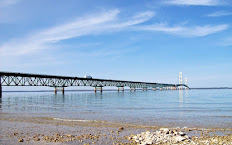
Mackinac Bridge. Michigan Attorney General Dana Nessel opposes Enbridge's plan to build a tunnel under the Straits of Mackinac to house the company's Line 5 pipeline. (Keweenaw Now file photo)
LANSING -- With a brief filed on Thursday, Jan. 16, in the Michigan Court of Appeals, Michigan Attorney General Dana Nessel continues to challenge the constitutionality of the law which provided for the 2018 agreement between former Gov. Rick Snyder’s administration and Enbridge Energy to build a tunnel beneath the Straits of Mackinac to house the energy company’s Line 5 pipeline.
Public Act 359 of 2018 was rushed through the Legislature to amend Public Act 214 of 1952, which allowed for the construction of the Mackinac Bridge. Nessel's brief filed Thursday argues that the 2018 act violates Article 4, Sec. 24, of the Michigan Constitution, referred to the Title-Object Clause, which provides that "No law shall embrace more than one object, which shall be expressed in its title."
In response to questions raised by Gov. Gretchen Whitmer, Nessel issued a formal opinion in March 2019 that concluded Act 359 was unconstitutional and the agreements based upon it made between the Snyder administration and Enbridge should likely be considered void.*
In June 2019, Enbridge Energy countered by suing the State in the Michigan Court of Claims seeking a declaration that the Act is constitutional, thereby making the December 2018 tunnel agreement valid. The Court of Claims agreed with Enbridge and ruled in the energy company’s favor on Oct. 31, 2019. The brief filed Thursday by the Michigan Department of Attorney General asks the Court of Appeals to reverse the Court of Claims decision because Act 359 violates the Title-Object Clause by not providing fair notice of the content of the law, and embraces two unrelated objects -- a utility tunnel to carry oil beneath the Straits and the Mackinac Bridge to carry motor vehicles above.
Separately, on Jan. 16, a panel of the Court of Appeals denied, by a 2-1 vote, the State’s motion for stay pending appeal. Had it been granted, the stay would have delayed the effect of the Court of Claims decision until the Court of Appeals reached its decision on the constitutionality of Act 359. Instead, Act 359 currently remains in effect during the appeal. The State is reviewing the order.
This case is separate from and not related to the Attorney General’s lawsuit that seeks to shutdown Enbridge’s existing 66-year-old pipelines in the Straits.**
Michigan Attorney General Dana Nessel. (Photo courtesy Michigan.gov)
LANSING -- On Aug. 15, 2019, the State of Michigan filed its reply brief to Enbridge’s Aug. 1 brief in Enbridge Energy, et.al. v State of Michigan, et.al. (No. 19-000090-MZ). The Office of Michigan Attorney General Dana Nessel noted Enbridge "repeatedly mischaracterizes the State Defendants' arguments" and Enbridge's legal arguments "improperly attempt to re-write the title of Act 359, inventing a new, broader object -- providing for 'infrastructure' connecting the peninsulas ...."
The case, originally filed in Court of Claims by Enbridge June 6, 2019, involves the constitutionality of 2018 PA 359 and the creation of the Mackinac Straits Corridor Authority. The State argues, as Attorney General Opinion No. 7309 concluded, that the statute creating the Authority is unconstitutional because it violated the Title-Object Clause. The crux of the dispute is that the title of Act 359 -- which was pushed through the Legislature in lame duck at the end of 2018 -- violated that provision of the Michigan Constitution in two ways. First, the title did not provide fair notice to legislators and the public of substance of the bill. Second, it improperly combined two unrelated purposes: the Mackinac Bridge and a proposed "utility tunnel" meant to house a new Enbridge oil pipeline.
The court will determine if it wants to hear oral argument before issuing a decision.
A copy of the State of Michigan’s Reply Brief can be found here.
Please note: Briefing will begin on September 16 in the Attorney General’s separate lawsuit in the Ingham County Circuit Court against Enbridge. That lawsuit seeks a determination that the Line 5 pipelines in the Straits should be decommissioned due to the significant risk of a catastrophic spill from an anchor strike or operational failure.*
Michigan Attorney General Dana Nessel. (Photo courtesy Michigan.gov)
LANSING -- In a one-two legal punch, Michigan Attorney General Dana Nessel not only responded to the Enbridge lawsuit filed against the state earlier this month, but simultaneously took the first step to decommission the 66-year-old dual pipelines that run through the Straits of Mackinac by filing a lawsuit in Ingham County Circuit Court.
Meanwhile Governor Gretchen Whitmer announced her responses to Enbridge's failure to negotiate on tunnel construction and her goal of decommissioning Line 5 under the Straits of Mackinac.
The Attorney General filed her lawsuit on June 27, 2019, the same day she filed a motion to dismiss Enbridge’s lawsuit filed in the Court of Claims on June 6 seeking to enforce agreements made in the last months of the Snyder administration that purported to authorize Enbridge to build a tunnel and continue operating Line 5.
"I have consistently stated that Enbridge’s pipelines in the Straits need to be shut down as soon as possible because they present an unacceptable risk to the Great Lakes," said Nessel. "Governor Whitmer tried her best to reach an agreement that would remove the pipelines from the Straits on an expedited basis, but Enbridge walked away from negotiations and instead filed a lawsuit against the state. Once that occurred, there was no need for further delay."
Nessel’s lawsuit asks the Ingham County Circuit Court to find that Enbridge’s continued operation of the Straits Pipelines under the easement granted by the State in 1953 violates the public trust doctrine, is a common law public nuisance, and violates the Michigan Environmental Protection Act because it is likely to cause pollution impairment and destruction of water and other natural resources.
The Enbridge Line 5 Pipeline under the Straits of Mackinac. (File photo courtesy National Wildlife Federation)
The Attorney General’s lawsuit identifies a potential anchor strike as the most significant risk to Line 5. In 2017, the State’s contractor, Dynamic Risk Assessment Systems, Inc., identified an anchor strike as the most "dominant threat" to Line 5.
"The location of the pipelines -- which carry millions of gallons of oil each day and lie exposed in open water at the bottom of the Straits -- combines great ecological sensitivity with exceptional vulnerability to anchor strikes," said Nessel. "This situation with Line 5 differs from other bodies of water where pipelines exist because the currents in the Straits of Mackinac are complex, variable, and remarkably fast and strong."
Nessel also noted the serious danger of anchor strikes, such as the one that occurred in 2018.*
"The continued operation of Line 5 presents an extraordinary, unreasonable threat to the public because of the very real risk of further anchor strikes, the inherent risks of pipeline operations, and the foreseeable, catastrophic effects if an oil spill occurs at the Straits," Nessel added. "We were extraordinarily lucky that we did not experience a complete rupture of Line 5 because, if we did, we would be cleaning up the Great Lakes and our shorelines for the rest of our lives, and the lives of our children as well."
In fact, an April 2018 anchor dragging incident -- which ripped through several inches-thick steel cables -- brought that threat home in a very real way. Although Line 5 was damaged -- not ruptured -- in that incident because the anchor hit a section lying directly on the bottomlands, if the anchor had dragged across the bottom of the Straits in an area where Line 5 is elevated, the likely result would have been a complete rupture of Line 5.
Nessel’s lawsuit seeks an order from the Court to shut down and decommission the Straits pipelines as soon as possible after a reasonable notice period to allow orderly adjustments by affected parties.
The Attorney General also filed a motion for summary disposition in the Court of Claims on June 27. That motion argues that PA 359 (2018), which would have created a new Straits Corridor Authority, is unconstitutional, and the agreements that purported to give Enbridge the right to build a tunnel and continue operating Line 5 in the Straits for the estimated seven to ten years it would take to build the tunnel are invalid.
This is consistent with Nessel’s first formal opinion as Attorney General determining that PA 359 -- rammed through in a chaotic lame duck session at the end of the Snyder administration -- was unconstitutional. Her office then notified all state agencies -- including the Straits Corridor Authority -- that PA 359 and any agreements relying on the statute, were unenforceable.
"The debate over Line 5 has been raging for over five years," said Nessel. "Real-world events have shown me we can’t wait another five to ten years for Enbridge to build a tunnel. We cannot prevent accidental or emergency anchor deployments in one of the busiest shipping channels in the Great Lakes. And it only takes one such incident to cause an environmental and economic catastrophe. That is a risk no one should be willing to take."
Nessel also explained these steps to decommission Line 5 in a video statement. In this statement she notes that she and Gov. Whitmer are both committed to protecting the waters of the Great Lakes from a potential disaster.
"We have dual responsibilities and we are working on parallel tracks," Nessel said in the video statement. "I'm doing everything I can on the legal front, and she's doing everything she can on the administrative front."
Nessel also mentioned in the video the governor's "Task Force to ensure the energy needs of our UP residents are met in an affordable and reliable way."**
Governor Whitmer responds to Line 5 legal filings
Tiffany Brown, press secretary for Governor Whitmer, issued a statement on June 27, commenting on the legal filings regarding Line 5.
"The governor’s primary goal has always been and remains to get the Line 5 dual pipelines out of the Straits of Mackinac as soon as possible. The risk of a catastrophic oil spill in the Great Lakes, and the harm that would follow to Michigan’s economy, tourism, and our way of life, is far too great to allow the pipelines to continue to operate indefinitely," the statement said.
The statement also explains that the governor's action follows her attempted negotiations with Enbridge:
"The governor has never viewed litigation as the best solution to this problem, and for this reason she entered negotiations with Enbridge about the possible construction of a tunnel. Her reasonable requirement has been that the dual pipelines through the Straits cease operation at a date certain, after allowing for a period of transition. Enbridge, however, has insisted that it be allowed to run oil through the Great Lakes indefinitely. Rather than negotiating, Enbridge walked away and filed a lawsuit. Today, Governor Whitmer filed her response asking the court to dismiss Enbridge’s lawsuit."
In addition, Gov. Whitmer has asked the Department of Natural Resources for a review of Enbridge's compliance with the 1953 Easement, which allowed Enbridge to operate Line 5's dual pipelines under the Great Lakes.
"Possible violations of the easement are just one of several grounds by which the state could seek to shut down the pipelines, some of which the attorney general has already invoked today," the statement concluded.
Groups laud Nessel's, Whitmer's actions to begin Line 5 shutdown
Oil and Water Don't Mix, an environmental group opposing Line 5, stated their support of the actions taken by Attorney General Nessel and Governor Whitmer.
"The Attorney General’s strong and necessary stand vigorously defends Michigan’s Constitution, our environmental laws, and is aimed at protecting the Great Lakes. Gov. Whitmer's directive to the Department of Natural Resources to examine Enbridge's compliance with the state's 1953 easement agreement for Line 5 will confirm what is already on the public record: a pattern and practice of easement violations by Enbridge," the group stated on their Web site. "The attorney general’s March legal opinion clearly established that the legislation passed in lame duck last year was unconstitutional; and her actions today (June 27) seeking a court-ordered end to Enbridge's Line 5 operations in the Straits of Mackinac have the strong support of Michigan’s environmental community, civic groups and Michigan’s tribes with Treaty Rights in the Straits of Mackinac."
Sean McBrearty, Oil and Water Don't Mix coordinator, said, "Line 5 is wrong for the Great Lakes, wrong for Michigan, wrong for the rule of law and wrong for future generations who must deal with the impact of dirty fuels on an overheating climate."***
FLOW (For Love of Water) also commended Attorney General Nessel’s and Governor Whitmer’s legal actions against Enbridge to protect public waters located in arguably the worst possible place in the Great Lakes for an oil spill to happen.
"Attorney General Nessel returns Michigan and the protection of its citizens, taxpayers, and the Great Lakes to the rule of law," said Jim Olson, president and founder of FLOW. "Governor Whitmer’s action on behalf of the state to nullify the lame-duck tunnel agreements also returns Michigan to the rule of law. They should be thanked. No, they should be applauded."****
Democratic Caucuses support of Nessel, Whitmer in opposing Line 5
The Michigan Democratic Party's Anishinaabek Caucus issued a press release on June 27, 2019, praising Attorney General Nessel for her legal filings and urging Governor Whitmer to join the Attorney General's lawsuit against Enbridge.
Andrea Pierce, chair of the Michigan Democratic Party's Anishinaabek Caucus, carries the Little Traverse Bay Bands of Odawa Indians tribal flag at Governor Whitmer's inauguration in January 2019. The photo is included with the Caucus's recent press release as a reminder that the 12 tribes of Michigan are here and are part of the decisions. (Photo courtesy Anishinaabek Caucus)
"Enbridge's continued exploratory work for the tunnel and operation of Line 5 are in violation of the Treaty rights of federally recognized tribes of Michigan," the Caucus stated, referring to their May 24, 2019, Position Statement.
In that Position Statement, the Caucus stated, "In accordance with the Tribal Treaties recognized under the United States Constitution and in solidarity with the position of the Twelve Tribes of Michigan as stewards of the land and water, the Anishinaabek Caucus of the Michigan Democratic Party enjoins the Governor and the State of Michigan to shut down Line 5 immediately to eliminate catastrophic risks to water and land, and to abandon plans for a tunnel which would perpetuate existing risks to our resources."
That Position Statement also asked Michigan officials to reverse damage from burning fossil fuels, not to create opportunities to expand their use, and to include Michigan tribes in their decision making. The Caucus noted that treaties guarantee not only fishing rights but the right to habitat for the fish, which is threatened by the operation of unsafe pipelines.
"We applaud and celebrate Dana's stand as it is what she promised during her campaign and also at the Pipe Out Paddle Up Flotilla, when she came to Mackinaw City and met tribal leadership, environmental groups and citizens that are concerned about Enbridge's Line 5," said Andrea Pierce, Anishinaabek Caucus chair.
During the 2017 Pipe Out Paddle Up Flotilla in Mackinaw City, Dana Nessel, then a candidate for Michigan Attorney General, stated why she was running for that office and why she would shut down Line 5 if elected. (File video by Keweenaw Now)
The June 27 press release from the Anishinaabek Caucus also mentions dangers cited in the "Independent Risk Analysis for the Straits Pipelines" -- a study led by Guy Meadows, director of Michigan Tech's Great Lakes Research Center, and other faculty from Michigan Tech and including researchers from other universities and other scientific experts.
The Caucus notes, "As long as Line 5 operates, Michigan's water, wildlife, and people remain at risk. The report 'Independent Risk Analysis for the Straits Pipelines' (September 15, 2018) reveals that 2.4M gallons of crude would damage 60,000 acres of unique habitat affecting businesses personal property, and municipal water supplies. Since 1968 there has been more than 1.1M gallons of crude spilled from Line 5 inland, hence acknowledgement of a Line 5 spill in the Straits is real. Degradation of supports, mussel encrustation, deformities of the pipe, and an anchor strike have been reported."
The Anishinaabek Caucus notes that in their view Line 5 is not needed for bringing propane to the Upper Peninsula. They point out that, in addition to the fact that the volume of propane provided through Line 5 is only 0.25 percent, which could be trucked to the UP, the propane argument for Line 5 ignores good union green jobs.
"Developing renewable energy in the Upper Peninsula could be Michigan's beginning in green energy independence," the Anishinaabek Caucus states.
The Michigan Democratic Party Environmental Caucus. also issued a statement in support of Nessel and Whitmer as environmental leaders, calling their June 27 announcements "the shot heard 'round the world as we move closer to decommissioning the credible threat of a Line 5 rupture in the Straits of Mackinac."
According to the Environmental Caucus, "News of Attorney General Nessel’s actions is confirmation of her dedication to to the protection of our water, the adjacent waterways and the Straits of Mackinac themselves."
Bad River Band of Lake Superior Chippewa threatened by Line 5 impacts to watershed While several Native American groups concerned about the water and treaty rights have been protesting for several years against the Line 5 pipelines under the Straits of Mackinac, less attention has been focused on the part of Line 5 that passes through the reservation of the Bad River Band of the Lake Superior Tribe of Chippewa Indians -- impacting rivers, streams and wetlands and posing a threat to an area of northwestern Wisconsin that has recently experienced severe floods.
This map shows a North American pipeline system including Line 5 (bright red line) -- which carries oil from Superior, Wis, to refineries at Sarnia, Ontario. Line 5 uses the Straits of Mackinac as a short cut, jeopardizing Great Lakes waters and nearby lands, including the Bad River reservation in northwestern Wisconsin. Click on map for larger version. (Map courtesy Oil and Water Don't Mix)
This aerial drone video by Bad River member David Joe Bates illustrates potential failure of Line 5, which crosses the Bad River only 15.5 miles from Lake Superior:
On June 20, 2019, just a week before the actions of Michigan's Attorney General and Governor, the Bad River Band held a public event with a presentation by Naomi Tillison, their Natural Resources director, outlining the impending disaster from Enbridge Line 5 at the Bad River Meander. Click here for a video of her informative presentation.*****
***** For background on the easements that allowed Line 5 to pass through the Bad River reservation, click here for the introduction to the June 20 by Mike Wiggins, Jr., Bad River tribal chair.
A view of the Mackinac Bridge, crossing the Straits of Mackinac. Enbridge's 65-year-old Line 5 pipeline, which lies under the Straits, is destined to be replaced by a multi-use utility tunnel, according to a Dec. 19, 2018, agreement between the State of Michigan and Enbridge. (Keweenaw Now file photo)
From: Michigan Department of Natural Resources (DNR) Bulletin
ST. IGNACE, Mich. -- The Mackinac Straits Corridor Authority (MSCA) approved on Dec. 19, 2018, an agreement with Enbridge Energy Limited Partnership to build a multi-use utility tunnel beneath the Straits of Mackinac. The tunnel will house a replacement segment for the Line 5 pipeline that sits on the bottom of the Straits and other utilities.
In addition, the authority, which held its inaugural meeting in St. Ignace, approved the transfer of a property right that will allow Enbridge to construct the tunnel in bedrock beneath the Straits.
Gov. Rick Snyder and leaders of the departments of Natural Resources and Environmental Quality signed a separate agreement with Enbridge on Dec. 19. This Third Agreement carries forward provisions of two previous agreements with the company -- one in November 2017 and one in October 2018. The Third Agreement requires Enbridge to undertake an enhanced inspection and stewardship regimen. The agreement also includes interpretations of the 1953 easement for the dual pipelines on the bottom of the Straits, as well as ongoing financial assurance requirements for the pipelines.
The Line 5 pipelines would be removed from the bottom of the Straits once the tunnel is complete. The construction could take 7-10 years.
Today, Tuesday, Dec. 18, is the last day to submit comments (during a 5-day comment period) on proposed agreements related to a planned utility tunnel in the Straits of Mackinac. Construction of the tunnel could take 10 years while the aging Line 5 pipelines would remain under the Straits. Email or call in your comments as indicated above. (Photo courtesy Anishinaabek Camp - Shutdown Line 5 Facebook page)
LANSING, HOUGHTON -- On Thursday, Dec. 13, the State of Michigan released for public review and comment proposed agreements related to a planned multi-use utility tunnel in the Straits of Mackinac and the remaining life of Line 5 in the Straits. The documents are posted to the mipetroleumpipelines.com website. Public comment is being accepted through Tuesday, Dec. 18, and supplied to Gov. Rick Snyder, state departments and the Mackinac Straits Corridor Authority (MSCA) for consideration.*
Environmental groups are speaking out against this comment period of a mere 5 days following the legislature's hasty passing (during their lame-duck session) of outgoing Michigan Senator Tom Casperson's bill, SB 1197, for constructing a tunnel under the Straits of Mackinac to "protect" the aging Line 5 pipeline.
Last week that bill was passed on Dec. 11, and on Dec. 12 outgoing Governor Snyder signed it into Public Act 359. This law directs the MSCA to enter into an agreement with Enbridge Energy Corporation -- the company that owns and operates Line 5 -- for construction of the utility tunnel, provided the agreement meets certain conditions. Under the proposed agreement, Enbridge would pay for all design, construction, operation and maintenance costs for the tunnel. The law establishes a separate Straits Protection Fund to pay for the work of the MSCA, including independent experts to ensure proper construction and operation of the tunnel.
On Dec. 12, immediately after Gov. Snyder's signing PA 359, the Michigan League of Conservation Voters (Michigan LCV) issued this statement:
"After widespread opposition from Michigan citizens, businesses, experts and more, a backroom deal brokered by special interest groups to keep oil flowing through our Great Lakes was hastily jammed through the Legislature in the 11th hour," said Lisa Wozniak, executive director at Michigan LCV. "We are deeply disappointed Gov. Snyder approved legislation that will keep oil pumping through the damaged Line 5 Pipeline for another decade or more."
Wozniak added, "On Nov. 6, the people of Michigan made their position clear by electing candidates who pledged to keep oil pipelines out of our Great Lakes and protect our drinking water. We will continue to advocate, communicate and fight to protect our water and oppose oil pipelines in the Great Lakes as the new administration takes office."
On Dec. 15, the Upper Peninsula Environmental Coalition (UPEC) addressed comments on the Proposed Tunnel Agreement between MSCA and Enbridge Energy to the Michigan Department of Natural Resources (DNR) and the Pipeline Safety Advisory Board.
"The public notice for the Proposed Agreement was posted at 3:03 p.m. on December 13, 2018, with the public period ending on December 18, 2018, for a period of just over five days, including a weekend," UPEC states. "Such a limited public comment period for a proposal of this magnitude, presented in a legally dense document, with such significant potential impacts to the population of the State and beyond is an egregious abuse of power, and an obvious attempt to limit public review and input. The State should extend the public comment period for 60 days to allow adequate time for public review and comment. The manner in which this Proposed Agreement is being pushed through also ties the hands of the incoming Governor, and is an affront to Michigan voters and the democratic process."
UPEC also points out that a federal permit should be required for a project such as this tunnel under the Great Lakes.
"The U.S. Army Corps of Engineers has jurisdiction to require a permit for the proposed tunnel under the Straits, a federally designated navigable water, pursuant to Section 10 of the Rivers and Harbors Act of 1899," UPEC says. "The Agreement should explicitly reference that authority and the fact that a federal permit would need to be obtained for the construction and operation of the proposed tunnel. That federal permit review process would involve an opportunity for agency, private group, and public review and comment, as well as analysis under the National Environmental Policy Act, to potentially include preparation of an Environmental Impact Statement."
UPEC also challenges Article 11 on Indemnification, which states, "Enbridge will defend, indemnify, protect and hold harmless the Authority and the State of Michigan, and all of its officers, officials, agents, and employees, each in their capacities as such (Indemnitee) from and against (a) any Claim or Liability arising out of or in connection with the work done by Enbridge or its contractors under this Agreement, including without limitation, the design, construction, operation and maintenance of the Tunnel or the Line 5 Straits Replacement Segment, and (b) any Claim or Liability relating to the Tunnel arising out of or in connection with the condition of state-owned lands beneath the Straits of Mackinac."
UPEC notes that "if the Authority, and by extension, the State is the lease holder and/or permittee or co-permittee of the Tunnel, an indemnity agreement cannot shield the State against an enforcement action of a federal permitting authority due to a catastrophic failure of Line 5, including a major spill of liquid hydrocarbon product into the Straits or other portions of the Great Lakes and its shorelines."
UPEC concludes, "The manner in which this Agreement and accompanying documents is being rushed through at the end of the Snyder Administration gives the undeniable impression that there is not a sincere desire to provide the public with a reasonable opportunity to be informed of the State’s and Enbridge’s intentions with respect to the Tunnel, nor to allow for a deliberative process that considers the potential impacts to the incomparable natural resources of the Straits of Mackinac and the Great Lakes ecosystem. This is especially true in consideration of Enbridge’s dismal track record of major pipeline spills, including in Michigan. This Agreement and the entire subject of the construction of a Tunnel under the Straits of Mackinac should be left to the incoming Whitmer Administration, in accordance with the clear expression of the voters of Michigan."**
Another environmental group, which has been calling for decommissioning Line 5 because of the danger of such a major oil spill, is Oil and Water Don't Mix.
Mary Pelton Cooper of Marquette, left, is pictured here with June Thaden of Traverse City at the 2017 Pipe Out Paddle protest against Line 5 in Mackinaw City. Both support the activist organization Oil and Water Don't Mix, which has been calling for the shutdown of Line 5 since 2013. (Keweenaw Now file photo)
Oil and Water Don't Mix has asked concerned citizens to sign, on their Web site, a new petition against the construction of this tunnel, saying, "There is no light at the end of Gov. Snyder’s proposed Line 5 oil pipeline tunnel under the Straits of Mackinac. Michigan doesn’t need Enbridge’s Line 5 or the oil it sends to southern Ontario. We don’t need to keep the Great Lakes at risk of a catastrophic oil pipeline rupture in the Straits while state officials spend years and taxpayer resources keeping an old oil pipeline running so a Canadian oil transport company can get a new pipeline built in Michigan to transport heavy tar sands oil. What we do need is a clear timetable to close Line 5 under the Straits of Mackinac and keep oil pipelines out of the Great Lakes!"
Their petition lists several objections to the tunnel (cited here in part):
-- Exposing Great Lakes to tar sands oil. "Line 5 does not currently transport heavy tar sands oil thanks to the State of Michigan’s 2015 ban. However, a new Canadian tunnel in the Straits is an invitation for Enbridge to seek to lift this ban and transport tar sands in Line 5."
-- Continuing to use the 65-year-old Line 5. "Since 1968, Line 5 has ruptured at least 29 times on land, spilling over 1.1 million gallons of oil into Michigan’s pristine lands and waters. Line 5 traverses 245 other water crossings, including ones that are tributaries of Lakes Michigan, Superior, and Huron. One Line 5 spill in the Upper Peninsula near Lake Michigan contaminated 825 tons of soil in the Hiawatha National Forest and exposed groundwater to potential contamination."
-- Ignoring the law and alternatives. "A Canadian tunnel under the Straits is not permissible under Michigan’s Great Lakes Submerged Lands Act (GLSLA), common law public trust doctrine, and would risk violating the 1836 Treaty and consent decree with Michigan Tribes protecting the Straits fishing grounds."
-- Opposing the public’s will, Michigan's 2002 directional oil and gas drilling ban. "Strongly supported by the public, the 2002 drilling ban was designed to prevent the very risk a Line 5 tunnel for Canada would present. In addition, May 2018 public polling results found 54 percent of Michigan voters want the Line 5 oil pipeline in the Straits of Mackinac to be shut down, and 87 percent of voters said they are concerned that the 65-year-old pipeline could have an oil spill in Northern Michigan, while 64 percent said they are 'very concerned.'"
-- Harming the Michigan economy, from tourism to fishing, during tunnel construction.
-- Promoting climate change by continued investment in fossil fuel infrastructure.***
Tribal Groups: Tunnel plan ignores treaty fishing rights
According to Nov. 2, 2018, article in Michigan's Bridge magazine, tribal groups complain that the Line 5 Tunnel ignores fishing rights guaranteed to them by an 1836 Treaty.
"While the Snyder administration formally met with tribes three times over the past year under a State-Tribal Accord, tribal leaders say these consultations were little more than an 'airing of grievances' for them," the article notes.
"The last meeting between tribes and Gov. Rick Snyder was Sept. 27, less
than a week before the state announced an agreement with Enbridge to
pursue a $500 million tunnel for the company’s Line 5 pipeline. In other
meetings, officials have been unwilling to share information from
Enbridge or modify any agreements, tribes say."****
Jannan J. Cornstalk, citizen of the Little Traverse Bay Bands (LTBB) of Odawa Indians and organizer of the September 2016 Pipe Out Paddle Protest against Line 5, commented to Keweenaw Now this week on the importance of protecting the water.
"Our water is in a state of emergency on so many levels," she said. "From PFAs (per- and polyfluoroalkyl substances) to Flint and other areas around the world. We need water to live and I wish people would live their lives as if this knowledge were true. Water is sacred. As Anishinaabek we choose to co-exist with it and hope to have clean healthy water for generations. Shut down Line 5 before it's too late!"
During the 2016 Pipe
Out Paddle protest, organizer Jannan Cornstalk, right, is pictured here with her
daughter, Jannan Cotto, near the Mackinac Bridge. Both are from Petoskey, Mich., and citizens of
the Little Traverse Bay Bands of Odawa Indians (LTBB). Cotto is also LTBB education director. (Keweenaw Now file photo)
Professor Martin Reinhardt of the Center for Native American Studies at Northern Michigan University also organized and participated in the protests against Line 5 at the Mackinac Bridge and offered these comments to Keweenaw Now:
"I have serious concerns about how Line 5 has impacted our responsibility, as Anishinaabe people, to protect our Mother earth and our fellow inhabitants. The United States has a legal and political obligation to protect our Aboriginal rights, and to uphold our treaty rights which guarantee our continued ability to hunt, fish, and gather as well as the other usual privileges of occupancy. I am also a citizen of the United States, and a US Army veteran. I believe that the US has great potential to help save our planet from the very serious threat of global warming, if we and other nations work together with traditional Indigenous knowledge holders to begin reversing the damage that we have inflicted through our continued reliance on petroleum products. Lastly, the people of the State of Michigan have a duty to stand up and stop this madness. We literally have a foreign company telling the Governor of our State to leave a dangerous oil pipeline in waters that are in desperate need of protection. So much for Pure Michigan! Shame on Governor Snyder and his cronies for jeopardizing the health of future generations."
Professor Martin Reinhardt of Northern Michigan University, second from right seated and drumming, joins drummers and singers during the 2017 Pipe Out Paddle protest against Line 5 near the Mackinac Bridge. (Keweenaw Now file photo)
The Anishinaabek have set up a camp for all Water Protectors -- a place to gather in unity and solidarity with all Anishinaabek, to live in balance and harmony, to build a positive place to rest. They are opposed to the Line 5 attack on the Great Lakes and offer cultural classes. The camp is located at 2716 Reed Rd., Levering, MI 49755.****
Michigan Tech and Enbridge
Meanwhile, Michigan Technological University researchers, faculty and students have contributed their technological expertise to assist Enbridge by monitoring the lake environment in the Straits with one of their scientific buoys; directing a team of 41 experts to produce a worst-case-scenario, independent risk analysis on Line 5; and offering to both government and industry a preliminary, student-created design for the tunnel.
In August 2015 Michigan Tech's environmental monitoring buoy for the Straits of Mackinac was successfully deployed west of the Mackinac Bridge. The buoy uses sonar to measure the flow of the water beneath the buoy. It also measures wind direction and speed, wind gust speed, air temperature, relative humidity, barometric pressure, solar radiation, water temperature, wave height and direction.*****
Michigan Tech's monitoring buoy near the Mackinac Bridge. (File photo courtesy Guy Meadows, Great Lakes Research Center director)
During the past year, Michigan Tech's Guy Meadows, director of the Great Lakes Research Center (GLRC) led a team of 41 researchers -- 21 from Michigan Tech and 20 from other organizations and universities -- who conducted an independent risk analysis of the two aging Line 5 pipelines under the Straits in order to determine the potential environmental and economic impacts of a potential oil spill in the Straits. The draft report was submitted last July, and the final report, the "Independent Risk Analysis for the Straits Pipelines," was published on Sept. 15, 2018.
This Figure ES4 from the Executive Summary of the "Independent Risk Analysis for the Straits Pipelines," based on modeling, shows the Maximum Extent of Shoreline Oiling predicted for the Straits of Mackinac and Lake Michigan and Huron Regions as Associated with the Meteorological, Ice Cover and Water Current Conditions Observed for January. Results depicted above represent a total oiled shoreline distance of 1146 km following an oil release date and time of 01/17/2016 at 1800 hrs from the northern pipeline release point and a total dispersal simulation time of 60 days. The red particles represent dispersed oil.******
On Friday, Dec. 14, the Michigan Tech Board of Trustees heard a presentation on a senior design project for an underwater utility corridor spanning the Straits of Mackinac. Michael Prast, Michigan Tech graduate student in civil engineering, who had presented the project to Michigan legislators and policymakers in Lansing last May, described the project to the Michigan Tech trustees. Here he talks about three of the four teams of students contributing to the projeect:
Michigan Tech graduate student Michael Prast describes, to the Michigan Tech Board of Trustees, several aspects of the senior design project for designing a tunnel under the Straits of Mackinac. Click on YouTube icon to watch video with larger screen. (Videos by Keweenaw Now)
This slide from the student presentation displays the students' design concept of the potential tunnel under the Straits. Click here and then on Mackinac Straits Tunnel Presentation to view the slides of the Power Point presentation. (Photo by Keweenaw Now)
Here Prast recounts his experiences presenting the project to officials in Lansing:
Prast updates the trustees on recent proposals (for the tunnel plans) by Gov. Snyder and Enbridge and describes reactions to the students'
presentations in Lansing. Click on YouTube icon for larger screen.
Prast concludes his presentation and welcomes questions. Click on YouTube icon for larger screen.
Horst Schmidt, UPEC president, who attended the student presentation at
the Board of Trustees meeting, said he thought Michael Prast's
presentation was well done.
"However, the magnitude of the project is not just one of engineering," Schmidt added. "That he (Prast) admitted there are no recent studies of the geology of the Straits is disturbing. The law itself ignores many state and federal regulations. That Enbridge is given the authority to build the line with its poor record of compliance is unbelievable. Even the outgoing DEQ (Department of Environmental Quality) director has commented in the past upon not being able to trust the company. And as has happened in other recent legislation, the governor is hastily approving these laws before he leaves office."
Guy Meadows, GLRC director, who attended the presentation at the Board of Trustees meeting, had a positive reaction to the student project.
"They did a wonderful job," he said. "It's great to see how creative they were in their thinking and to have such a positive response from the State and Enbridge."
Meadows said the tunnel is not covered in his final "worst-case-scenario" risk analysis report (mentioned above).
"We received a positive response to the report from the general public and the State," he noted.
As for the tunnel, he said, "I think it's certainly a step forward."
Now that the risk analysis report is complete, Meadows said Michigan Tech is working on setting up High Frequency Radar (HFR) to monitor surface currents throughout the Straits all year round and 24/7. This will provide more monitoring since the environmental buoys are taken out of the water in the winter.
"This will be the first operational HFR in the State," he noted.
Notes:
* On Wednesday, Dec. 19, 2018, the new Mackinac Straits Corridor Authority will hold its inaugural meeting from 1 p.m. to 3 p.m. at the Little Bear Arena, 275 Marquette St., St. Ignace. The three-member authority is charged with overseeing construction and operation of a proposed multi-use utility tunnel beneath the Straits of Mackinac. The tunnel will house a replacement segment for the dual Line 5 petroleum pipeline in the Straits, and reportedly will be built to accommodate other utilities.
** Learn more about UPEC by visiting their Web site. UPDATE: Click here for their Dec. 15, 2018, proposed letter on the tunnel agreement.
*** Click here to read the entire petition and sign it.
On August 10th from 6 p.m.-8 p.m., KATO (Keweenaw Against the Oligarchy) will be co-sponsoring an online event hosted by the Northern Michigan Alliance for Responsible Development (NMARD). For this event, the following speakers from across the first congressional district will discuss the lessons learned from fighting against data center development: Dr. Lucy Miller -- Professor, Northern Michigan University Charlie Berens -- Comedian, Author, Journalist Susie Schlehuber -- Head of School, Lake Superior Academy Emma Goodman -- Western UP hub of NMARD member, Michigan Tech student, Saline Township resident Northern Michigan Local Government Panelists: Brian Irizarry -- Houghton City Councilman Kelli VanGinhoven -- Delta County Commissioner Randy Yelle -- Sands Township Zoning Administrator In-person watch parties for this event will be held in Hancock, Marquette, Sault Ste. Marie, and Traverse City. If you are not able to make it to any of these watch party locations, you can watch this event virtually. If you are interested in attending this event, click on poster above for more details and please take one minute to RSVP at https://actionnetwork.org/event_campaigns/northern-michigan-alliance-for-responsible-development.
Invitation from Charlotte Loonsfoot of KBIC
"Starting on August 14th at 3 p,m. ET, we will set up Animikiiwadiswan (Thunderbird Nest) on Ottawa National Forest land right next to the proposed Copperwood mine site. We will camp just west of the North Country Trail parking lot, 20 minutes north of Wakefield, MI, on County Road 519. We will perform ceremonies and provide literature to visitors to educate the world about this dangerous proposal. Members of all Tribal Nations are invited. Non-Tribal people are welcome to join in solidarity, provided they respect the leadership of organizers." No drugs or alcohol permitted. This is a remote area, so bring food and water. Children are welcome. Charlotte Loonsfoot is vice-president of Protect the Porkies. She is setting up this camp to pray for and protect this sacred area from those who would destroy it. Click on map above or go to https://protecttheporkies.com/camp for larger maps and more details.
Kyle Blomquist, primary candidate for US Congress, 1st District, to hold Town Hall in Marquette
Kyle Blomquist, Democratic primary candidate for the U.S. 1st Congressional District, will hold a Town Hall from 6 p.m. to 8 p.m. Tuesday, July 28, in Marquette at the Northern Center Ballroom, 1401 Presque Isle Ave. The event will begin at 6 p.m. Doors open at 5:30 p.m. Please join to hear Kyle speak and ask him questions. No script, no filter.
Community Love for Bob’s Health Battle
Bob Hiltunen needs our help right now. For those who may not know him, Bob is one of those special people who leaves a lasting impression on everyone he meets. He is well known throughout our community for his incredible musical talent and his love of sharing it with others -- especially the students at Barkell Elementary. Beyond his gift for music, Bob is simply an amazing person whose kindness, warmth, and positive spirit brighten the lives of so many. Bob has had health struggles in the past and now he is facing another unexpected battle. Please click on photo of Bob above for more info and how you can help Bob reach his Go Fund Me goal.
Omega House Summer Concert: August 18, 2026
Don't miss the Omega House Summer Concert at 7 p.m. on Tuesday, Aug. 18, at Saints Peter and Paul Lutheran Church in Houghton. Enjoy this gathering of local musical artists who will offer jazz, light opera, folk and popular music to benefit Omega House hospice in Houghton. Suggested donation is only $10. Click on poster for larger version.
Candidate Forum on Environmental Issues July 19 at Orpheum
UP North Advocacy presents a nonpartisan Forum on Environmental Issues featuring 1st District congressional candidates at 7 p.m. Sunday, July 19, at the Orpheum Theater in Hancock. Candidates who attend will join via live video. Free refreshments. Join in person or on line. Click on poster above for larger image and details.
Ukraine march postponed to Sunday, July 19
Because of air quality from smoke, the Ukraine march in Houghton has been postponed to 5 p.m. Sunday, July 19. Meet at Houghton end of Lift Bridge.
Comments needed at online Public Hearing July 8 for Proposed NPDES permit for Copperwood Mine
The Michigan Department of Environment, Great Lakes, and Energy (EGLE) will hold a virtual public hearing on Wednesday, July 8, to provide an opportunity for the public to provide comments on the proposed reissuance of the NPDES surface water permit for Copperwood Mine, located at 1108 County Road 519, Wakefield, Gogebic County, Michigan. (NPDES Permit No. MI0058969). Protect the Porkies asks that you take action to protect Lake Superior and the Porcupine Mountains Wilderness State Park by attending the hearing online and making comments. Go to https://protecttheporkies.com/take-action for reasons to challenge the Wastewater Permit. Click on image above to register for the public hearing.
Notice on scams: Be vigilant
Keweenaw residents have been reporting scams by criminals frightening them with false stories on the phone. Be vigilant and do not believe these unless you trust the source. Scams can also occur via the Internet. Be careful especially if asked to call a number flashing on the screen. Do not call it. Senior citizens are often targeted by scammers asking for money.
Help local Homelessness Prevention with Hancock Salvation Army
Several local groups, including AWAVE (Advocates for those Without A Voice Everywhere) and Keweenaw Indivisible, are encouraging local residents to contribute to Copper Country Housing Assistance through a special Homelessness Prevention Fund through the Hancock Salvation Army. If you can donate any amount, click on the QR code above or click on the poster for the link to the Donation page. Be sure to write Housing Assistance in the Comments so your donation will go to the Homelessness Prevention Fund. Or you can mail a check for any amount made out to The Salvation Army and mail it to The Salvation Army, 408 Ravine Street, Hancock, MI 49930. Be sure to Write Housing Assistance or Homelessness Prevention on the memo line and mail it or drop it off at the Hancock Salvation Army office, above address.
R.I.P. Michael Lahti
Keweenaw Now wishes to express our deepest sympathy to the family of Michael Lahti, lifelong resident of Hancock, MI, and active community member and leader, who passed away on December 29, 2025. Mike served first as a Hancock school board member, a Suomi College/Finlandia University board member, and later as Chair of the Houghton County Board of Commissioners. In 2006, Mike successfully ran for and was elected to the Michigan House of Representatives representing the 110th District, where he served two terms. See our 2008 interview with Mike in which he speaks about issues important for him at that time and why he ran for that re-election to the Michigan House: https://keweenawnow.blogspot.com/2008/06/state-rep-mike-lahti-outlines-issues.html To read the Obituary for Mike, click on photo above. (Photo courtesy O'Neill-Dennis Funeral Home)
ICE OUT FOR GOOD Silent Vigil in Houghton Saturday, Jan. 10
Keweenaw Indivisible is holding a Silent Vigil for Renee Nicole Good and other victims of ICE at 1 p.m. Saturday, January 10, on all street corners of downtown Shelden Ave., Houghton. Carry signs reading "ICE off our streets," or "Accountability Now." No chanting. Silence is the message. Dress warmly, bring your sign and a candle if you can, and join Keweenaw Indivisible and other local organizations for a "Hands Off Venezuela Rally" immediately following the vigil.
STOP HUMAN SAFARI, SAVE KHERSON: Rally with Yoopers for Ukraine Dec. 14 at Lift Bridge
Since 2024, Russians and others who pay to play have been using Kherson as a living video game targeting Ukrainians for points and pleasure and using drones to hunt them down and kill them. Even trips to the grocery store become a survival game. Unfortunately, to the dead and the mourning and those who are witnessing this horror, it is not a game. It is daily life in Kherson! These crimes and activities have been documented by brave journalists and ICC. Yoopers for Ukraine is joining the global rally to stand for human rights and dignity and true American values. This will be our march for Peace this week. We will gather at 3 p.m. Sunday, Dec. 14, for brief comments at the Houghton side of the Lift Bridge at our normal spot. We will then walk the bridge or stay at the banners for those who don’t wish to walk across. We need both! Stay for 5 minutes or the hour. Dress for weather. Please bring flags and posters if you have them. Click on image above for details.
KUUF Forum on Data Centers: Dec. 14 via Zoom
The Keweenaw Unitarian Universalist Fellowship (KUUF) will host a public forum online titled "What Are Data Centers and How Will They Impact Michigan?" from 10:30-11:30 a.m. on Sunday, December 14. Kalvin Carter, director of Up North Advocacy, based in Sault Ste. Marie, and Audrey Gerard of Michigan United, a nonprofit organization focused on environmental protection, will talk about boom-and-bust industries like crypto mining, which use up natural resources without replenishing them, and big tech operations that do little to benefit the people who live nearby. Data mining requires a lot of water to cool the operation. That’s why data mining operations have their eye on communities like ours, near the Great Lakes. After the water cools the servers, it drains into the ground, where it moves through the aquifer and back to the lake, potentially warming it. Data mining operations also consume large amounts of electricity, which can raise power prices. And they create noise. One example is a relatively small installation of cryptocurrency servers located across from Lake Superior Academy, a K-5 Montessori school in Dafter Township, Michigan, near Sault Ste. Marie. The servers generate a constant noise that the school describes as sounding "like jack hammers 24/7." The school is suing Odessa Partners, the Florida owner of those servers. Forums are approximately one hour long. The public is invited to participate. Meeting ID: 839 7576 2265; Passcode: KUUF Or visit keweenawuu.org/worship/forums/ for the zoom link.
League of Women Voters of Michigan joins lawsuit to protect voter security
GRAND RAPIDS, MI -- Last Thursday, Oct. 30, the League of Women Voters of Michigan -- represented by Campaign Legal Center, the Brennan Center for Justice at NYU Law, and the Michigan law firm Goodman Acker -- filed a motion to intervene on behalf of voters in US v. Benson, a lawsuit brought by the US Department of Justice against the state of Michigan for failing to comply with the department’s demand for the state’s complete voter file. The Department of Justice hasn’t provided sufficient justification for seeking this data, which includes sensitive information such as driver’s license numbers and partial Social Security numbers. Click on logo above for press release. We are proud to stand with voters to protect the security of voter information in our state from potential misuse. Thank you, Linda Belote and Faith Morrison, co-presidents League of Women Voters of the Copper Country
See Citizens Rally for Accountable Government (CRAG) update
Sarah Green has posted important info on national and local government issues in her Oct. 30 CRAG newsletter. She offers important news on Hunger in Michigan, FLOCK cameras (these were to be discussed at Hancock City Council meeting Nov. 5 but that meeting is cancelled), Michigan Statewide Petitions, When and Where to Speak Up and more. Click on photo for link.
KUUF Sept. 14 online Forum: "Protect the Porkies" is now online
If you missed the online forum called "Protect the Porkies," presented by Tom Grotenwohl, founder of Protect the Porkies (www.ProtectThePorkies.com) go to the KUUF Website, https://www.keweenawuu.org/sermons/forum-protect-the-porkies/ or click on photo above.
Good Trouble Lives On -- Rally in Houghton July 17
Good Trouble Lives On is a national day of nonviolent action to respond to the attacks posed on our civil and human rights by the Trump administration and to remind them that in America, the power lies with the people. On Thursday, July 17, the anniversary of Congressman John Lewis’s passing, join Keweenaw Indivisible from 4 p.m. to 6 p.m. in Veterans Park in Houghton in taking action to support Good Trouble rallies across the country, defend our democracy and carry forward Lewis's legacy of Good Trouble. From voter suppression bills like the SAVE Act to the criminalization of protest, the Trump administration is launching a full-scale attack on our civil and human rights. This is more than a protest; it’s a moral reckoning -- a continuation of the movement Lewis helped lead and a new front in the struggle for freedom. Please note: A core principle behind our Good Trouble Lives On actions is a commitment to nonviolence. All participants are expected to seek to de-escalate any potential confrontation with those who disagree with our values. In support of the Good Trouble Rally at Houghton's Veterans Park, Keweenaw Indivisible is staging a MotorMarch from 3 p.m. to 6 p.m. on July 17. Participants will decorate their private vehicles with signs or slogans drawn on side windows with "windshield markers." The display of as many American flags as possible is encouraged. Vehicles will then circulate repeatedly through downtown Houghton, blending with normal traffic flows and passing the rally site.
June 30 is deadline for comments to US Army Corps of Engineers on proposed Line 5 Tunnel
You can comment on line by 11:59 p.m. Monday, June 30. Click on photo for link. See also info on the draft Environmental Impact Statement (EIS) at https://www.line5tunneleis.com/draft-eis/Also Check out Oil and Water Don't Mix: https://www.oilandwaterdontmix.org/take_action
"No War With Iran" Livestream is at 8 p.m. ET Monday, June 23
Join the Teach-In Network, RootsAction and Defuse Nuclear War, at 8 p.m. ET TONIGHT, JUNE 23, to learn about what’s going on in Iran, the deeper history of Israel-Iran relations, and what we might expect from the coming days, weeks, and months. In a moment when consent to a destructive and foolish war on Iran is being actively manufactured, it’s essential to come together as a movement, share information, and strategize. Click on poster above to register and see names of featured speakers.
June 14: No Kings Day
On June 14, 1775, the Continental Congress created the U.S. Army to stand up against a monarch who claimed absolute power. 250 years later, President Trump wants to twist that legacy into a personal celebration of himself with a parade in Washington, DC, which is expected to cost millions of our tax dollars -- all while Republicans claim there’s no money for Social Security, SNAP, or Medicaid. No Kings Day marches and actions are planned in 50 states and in Puerto Rico, Colombia, Germany, Italy, Malawi, Portugal, United Kingdom, Canada and France today, June 14, 2025. To learn more click on logo above to see Sarah Green's CRAG (Citizens Rally for Accountable Government) recent post on No Kings Day. See also information on this at Bridgefest by visiting the tables of Keweenaw Indivisible, the Houghton County Dems and the League of Women Voters.
About the Big Bad Billionaire Bonus, Budget Busting Bill
Citizens Rally for Accountable Government (CRAG) is a newsletter by Sarah Green. Her post on May 26, 2025, offers details on the House Budget. Go to https://www.waterandstone.net/?ref=crag-newsletter to read about the "Big Bad Billionaire Bonus, Budget Busting Bill." This bill now goes to the Senate. You may want to write to Senators about it.
Walks for Ukraine will be at 5 p.m. Wednesdays starting April 9 in Houghton
Yoopers for Ukraine invites you to join the weekly Walk for Ukraine at 5 p.m. on Wednesdays, beginning April 9. Meet on Houghton side of the Lift Bridge.
UP residents address Rep. Bergman during Bergman(less) Town Hall in Houghton
If you missed the Town Hall on March 18, a video recording is available on YouTube. Click on photo for link to watch and hear residents' comments addressed to absent 1st District US Rep. Jack Bergman. The audience filled two rooms provided by the Keweenaw Unitarian Universalist Fellowship (KUUF). According to organizer Bill Fink, about 150 people attended. (Photo courtesy Barry Fink)
Reception for "Extraordinary Women of the U.P." exhibit at Carnegie Museum March 19
A Public Reception for the new exhibit -- "Extraordinary Women of the U.P.," on loan from the Beaumier U.P. Heritage Center at Northern Michigan University -- will be held at 6:30 p.m. on Wednesday, March 19, at the Carnegie Museum of the Keweenaw, 105 Huron St., Houghton. Faith Morrison invites you to her talk at the exhibit. See the exhibit and chill with neighbors beginning at 6:30 p.m. and hear her talk at 7:15 p.m. This exhibit features biographies of 70 amazing women from the Upper Peninsula's past. Learn about locals Cora Jeffers (teacher, principal, suffragist), Katherine Heideman (CCISD Superintendent, Hancock council member), Ida Bergh (sheriff), Mary Petermann (chemist, cancer researcher, professor), and Lucena Brockway (early pioneer, diarist) among many others. The exhibit continues through end of March 2025. (Poster courtesy Faith Morrison)
UPDATED: Join UPEC's Kathleen Heideman for TAKING IT PERSONALLY: U.P. Mining Threats, Part II
The Upper Peninsula Environmental Coalition (UPEC) presents "TAKING IT PERSONALLY: U.P. Mining Threats, Part II," a free livestream featuring Kathleen Heideman of UPEC's Mining Action Group. Join Kathleen for the second of a three-part overview of mining threats in Michigan’s Upper Peninsula, including maps, images, and poetry. In Session II, Kathleen discusses changes at Eagle Mine, and the Revex "battery metals" facility proposed for Marquette County. An environmentalist working in Michigan’s Upper Peninsula, Kathleen has completed residencies with the National Park Service, watersheds, research stations, foundations, and the National Science Foundation's Antarctic Artists and Writers Program and serves on UPEC's board. She is the author of The Caving Grounds (forthcoming in 2025 from Modern History Press), A Brief Report on the Human Animal, and Psalms of the Early Anthropocene. If you missed this livestream on Zoom Feb. 20, click on photo of Kathleen above for the YouTube video recording. (Photo courtesy UPEC) If you missed Part I of this series, watch it on YouTube at https://www.youtube.com/watch?v=tb2msaxZAZo
Remember hero Martin Luther King Jr. today, Jan. 20
Thanks to Heather Cox Richardson for reminding us of heroes and of the last speech of hero Martin Luther King Jr. -- just a day before he was assassinated in Memphis in 1968. Click on photo above for his 'I've been to the mountaintop' speech. (Photo: Martin Luther King Jr. at a 1964 press conference. Photo by Marion S. Trikosko courtesy Wikimedia Commons)
President Biden declares Jan. 9, 2025, National Day of Mourning
Thursday, January 9, 2025, is a National Day of Mourning to pay homage to the memory of President James Earl Carter, Jr., as declared by President Joe Biden in his Dec. 29, 2024 Proclamation Announcing the Death of James Earl Carter, Jr. Click on image above for the Proclamation. (Photo: Jimmy Carter official White House portrait by Herbert E. Abrams 1982. Photo courtesy Houghton County Democratic Party)
Jimmy Carter, America’s 39th President, passes away at age 100
The members of the Democratic Party of Houghton County (HCDP) were saddened to learn this Sunday of the passing of 39th U.S. President Jimmy Carter. The world has lost a shining example of a life lived in pursuit of the highest ideals of citizenship.President Carter served heroically in the U.S. Navy as a submariner, helping with the aftermath of the 1952 NRX nuclear reactor incident at Chalk River. He inherited his family's peanut farm in Georgia and managed it to prosperity, bringing this experience to the governorship of Georgia and then to the Presidency.As President, he established the Departments of Energy and Education, bringing national authority to bear on two issues that shape Democratic priorities to this day. He installed solar panels on the White House, taking a leading role in advancing what has become a crucial technology for clean power. He mediated the Camp David Accords, one of the most influential peace initiatives in the Middle East for a generation. ... More:CLICK ON LOGO ABOVE to read the rest of this Dec. 31, 2024, newsletter from HCDP.
The 10th Annual Benefit Concert to fund handicap accessibility for the Ontonagon Theater of Performing Arts on Oct. 5, 2024, was a successful music event in the theater. Local musicians celebrated traditional music "From the Roaring 20s to the Birth of Rock-n-Roll." Click on photo above for a video of a popular old song with audience participation. According to Wendy Peterson, producer and director of the concerts, the funds collected for the project now total more than $90,000. To donate go to ontonagontheater.org and click on ACCESSIBILITY PROJECT. (Photo and video by Keweenaw Now)
City of Hancock new garbage, recycling update
The City of Hancock has a new schedule for garbage and recycling pickups with all pickups beginning at 6 a.m. Garbage/trash pickups for east and west Hancock are still on Monday and Wednesday respectively except for certain holidays including Labor Day (Monday's pickup will be Tuesday, Sept. 3). Trash bags still need stickers attached. Recycling for all will be on Thursdays. No glass. Click on logo above for details.
Pipe Out Paddle UP picnic, Water is Life Festival Aug. 31: Call to Shut Down Line 5
The Pipe Out Paddle Up (POPU) family picnic to Shut Down Line 5 is getting ready to make a splash! Dozens of donated kayaks will be launching from Kiwanis Beach in St. Ignace from 9 a.m. to noon on Saturday, August 31! If you have your own kayak or floating device please bring it! A water station will be set up and lots of yummy free food. Please bring a refillable water bottle and food bundle (plate, bowl, fork and spoon) with you. You can make a donation today at bit.ly/popu24 and check out the website at https://www.anishinaabekcaucus.org/our-work/popu or click on poster above. Special thanks to Mackinac Straits Watersports and Black to the Land Coalition for the kayak and canoe donations! All donations are tax-deductible! For more info on donations email team@glwpn.org. In 2020, the State of Michigan terminated Enbridge's permit to operate Line 5 through the Great Lakes, 70 tributaries throughout Michigan, AND the SW Detroit Marathon refinery that is harming the community there every day. Enbridge line 5 pipeline must be permanently decommissioned to protect the Great Lakes! The Water is Life Festival in Petoskey follows the POPU family picnic. For details go to https://www.waterislifefestival.org/
Reception for Art by Krissy Sundstrom Aug. 28 at The Well Read Raccoon Books and Curiosities
The Well Read Raccoon Books and Curiosities book shop, 314 Shelden Avenue in Houghton, will host an opening reception for Krissy Sundstrom of Blackberry Art Studio from 5 p.m. to 7 p.m. Wednesday, Aug. 28, as she takes a break from picking ACTUAL blackberries to discuss her art work and process. Described by students recently as "restful," some of her latest work will be displayed in the Well Read Raccoon through September. Light refreshments wil be available. This is a family friendly event, but please monitor your youngunz. Photo: Art by Krissy Sundstrom. (Photo courtesy The Well Read Raccoon Books and Curiosities)
Tilden Mine Permit Application withdrawn following public and agency concerns
MARQUETTE -- Cleveland Cliffs withdrew its permit application to fill 77.9 acres of wetlands and 4,661 linear feet of streams with mine waste as of June 20, 2024. The withdrawal was recommended by Michigan’s Department of Environment, Great Lakes, and Energy (EGLE) due to unresolved concerns about tribal coordination and concerns, as well as cumulative impacts to the Escanaba River watershed. The public comment period for the wetland permit application ended March 9, but saw a significant amount of high-quality public comments due to advocacy by local environmental groups Citizens for a Safe and Clean Lake Superior (CSCLS) and the Mining Action Group of the UP Environmental Coalition (MAG-UPEC). Over 500 public comments were submitted, citing concerns about inadequate consideration of impact areas, including insufficient biological surveys to determine presence of protected species....Click on photo of wetlands above for details. (Photo courtesy Citizens for a Safe and Clean Lake Superior)
Update: UPEC July 15 Livestream, Community Solar in L'Anse, is on YouTube
What is community solar, and how can it work for communities in Michigan? If you missed UPEC's (Upper Peninsula Environmental Coalition's) Livestream on July 15, when Drs. Richelle Winkler and Chelsea Schelly, joined by Bob LaFave, shared their experiences working to support a community solar project for the Village of L'Anse municipal utility, you can view it on YouTube. Learn how communities can work toward a community solar project and how community solar can benefit residents, including low-income households. Both Dr. Winkler and Dr. Schelly were working in the Department of Social Sciences at Michigan Technological University while engaged with this project, and they share their insights and experiences as well as documents outlining the process and the outcome for L'Anse. Bob LaFave, Village Manager of L’Anse, was key to the project. Dr. Schelly is currently a professor of Sociology at Michigan Tech, and Dr. Winkler is now a Research Social Scientist at the USDA Economic Research Service. Click on photo above for YouTube livestream of this presentation.
Copper Beacon
Copper Beacon continues to cover local news with a whole new look and a board of directors. Click on logo to learn more.
UPEC Livestream on two mining issues TONIGHT, Feb. 15, via Zoom, Facebook
Two major mining operations are seeking to expand and pose devastating threats to our water -- Ishpeming's Tilden Mine and the proposed Copperwood Mine on the coast of Lake Superior on the western edge of Porcupine Mountains Wilderness State Park. Join a livestream presentation from UPEC and Protect the Porkies at 7 p.m. TONIGHT, Thursday, Feb. 15 EST, to discuss the content of both mining issues. Ishpeming's Tilden Mine is seeking a permit to expand its footprint and permanently bury almost 80 acres of wetlands, along with hundreds more acres of land, several freshwater ponds, and almost a mile of streams, under waste rock from the mine. Kathleen Heideman of UPEC's Mining Action Group will discuss the environmental impacts of the proposal and how to prepare for the online Public Hearing on February 28th. The proposed Copperwood Mine is located on the coast of Lake Superior on the western edge of Porcupine Mountains Wilderness State Park. On January 30, the Michigan Strategic Fund (MSF) almost passed a $50 million grant for the Copperwood project -- an amount that would double Copperwood's current bank balance and could trigger other large investments allowing the mine to proceed with construction. Copperwood would be the closest sulfide mine to Lake Superior in history. Thankfully, a few MSF board members expressed doubts about the grant at the last meeting, delaying the final vote to their Feb. 27 MSF Board Meeting. Tom Grotewohl of Protect the Porkies will outline steps you can take to help defeat this grant. If you missed this Livestream on Feb. 15, the video recording is available on UPEC Facebook Livestreams. Click on photo above to access it.
New book by Carol Rose: From There to Hear, A Journey Out of Silence
Carol Rose, Keweenaw resident, shares the story of her hearing loss and subsequent bilateral cochlear implants in this new book. Click on book cover to read about the book and stores where it is now available.
Petition to recognize Holodomor as Genocide
November is Holodomor Awareness Month and an important petition is collecting signatures to get President Biden’s attention. While both chambers of Congress have officially recognized the Holodomor as genocide of the Ukrainian people, never has an active president of the USA done the same. On the 90th Anniversary year this petition urges President Biden to sign a proclamation that justly calls the Holodomor what it was, a genocide. Please take a minute to sign this petition and send to someone you know. #Holodomor90
Ukraine Trust Chain helps Ukrainians affected by war
If you can't attend the Walks for Ukraine, consider making a tax-deductible donation to the Ukraine Trust Chain, an organization that funds volunteer teams in Ukraine who deliver medicine, food, generators and stoves. They winterize homes, run shelters, repair homes and schools and evacuate people out of danger, providing sustained support into the areas of greatest humanitarian need. Click on blue logo above to read their latest newsletter.
CCRI request: Complete and share Hazardous Waste Survey
Copper Country Recycling Initiative (CCRI) requests that we share their new Hazardous Waste Survey. Please click on logo above to complete the survey and share the link to the survey -- https://coppercountryrecyclereuse.com/hazardouswastesurvey -- with other Houghton County residents (email, social media etc.). CCRI would like to get as much data as possible to assist in applying for grants for collection events. This is something you can do for Earth Day in just a few minutes! For more CCRI events visit https://coppercountryrecyclereuse.com/
Copper Beacon: Environmental Safety of Keweenaw Waters Resort questioned by MDHHS
Restoring the Balance -- Wolves and Our Relationship with Nature (Video recording available)
What does a healthy relationship with the natural world look like? Are humans the only persons to inhabit Earth—or do we share the planet with uncounted nonhuman persons? For more than a quarter century biologist John Vucetich, Michigan Tech Distinguished Professor, College of Forest Resources and Environmental Science, has studied the wolves, and the moose that sustain them, of the boreal forest of Isle Royale National Park. Reading from his new book, Restoring the Balance, he tackles profound unresolved questions that will shape our future understanding of what it means to be good to life on earth. If you missed this event on Monday, Nov. 7, click on above photo for the video recording through Husky Bites, Michigan Tech College of Engineering.
Click on book cover above to order John Vucetich's new book from Amazon.com. It is also available from Johns Hopkins University Press. See: https://www.press.jhu.edu/books/title/12540/restoring-balance
Native American Voter Protection Hotline
From Michigan Anishinaabek Caucus: If you have problems at the voting booth or with the ballot, call the Native American Voter Protection Hotline!! This includes TRIBAL ID not being accepted as valid. The county clerks have been trained on this issue. TRIBAL ID IS VALID ID. Click on image for larger version.
FEATURED SPONSORS
Keweenaw Now thanks the following sponsors for their continued support.
Upper Peninsula Environmental Coalition
Click on UPEC's new logo above to access their latest livestream presentations and discussions.
The Upper Peninsula Environmental Coalition's mission is protecting and maintaining the unique environmental qualities of the Upper Peninsula of Michigan by educating the public and acting as a watchdog to industry and government.
Anishinaabek Caucus of the Michigan Democratic Party
Click on logo above for the Facebook page. See also the Anishinaabek Caucus Web site at https://www.anishinaabekcaucus.org or email AnishinaabekCaucus@gmail.com for more info.
Yellow Dog Watershed Preserve
Click above for the Yellow Dog Watershed Preserve Web site and click on their blog for their latest news.
MORE NEWS AND ANNOUNCEMENTS:
See below for news briefs you may have missed and links to groups, organizations and books we recommend!
Copyright Policy
For our copyright policy, please click here or email us at keweenawnews@gmail.com if you wish to use any of the photos or video clips by Keweenaw Now. Photos by guest photographers are copyrighted and you must seek their permission for re-use. This policy applies to the photos in our slide shows as well. Please do not share photos taken by guest photographers without their permission.
Rozsa Center (UPDATED): New guidelines for public events
The Rozsa Center is adjusting guidelines for public events held in the James and Margaret Black Performance Hall, McArdle Theatre or Rozsa Galleries. Click on photo above for the updated policy.
UPDATE: Keweenaw Symphony Orchestra UNQUIET EARTH concert now on video livestream
If you missed the Keweenaw Symphony Orchestra Oct. 15 performance with the Michigan premiere of UNQUIET EARTH by MIT composer, Elena Ruehr, a U.P. native, in the Rozsa Center, click on image above and on View Stream for a video recording of the entire concert on YouTube.This atmospheric work explores "the elements -- Earth, Air, Fire, Water, and Ether --with a sense of both hope and concern for the planet." Also featured is William Herschel’s Symphony No. 20, an 18th century gem re-discovered and edited by Michigan Tech Physics professor, Bryan Suits. The program is bookended by the Blue Danube Waltzes and Romanian Rhapsody No. 1.
Garbage stickers to replace Hancock City garbage bags
The City of Hancock’s bag vendor has been unable to produce garbage bags on a consistent and reliable basis; therefore, Hancock has made the switch to garbage stickers instead of bags. Residents may use garbage bags of choice, with the requirement that the bags are a minimum of 1.2 mil thick and no greater than 35 gallons (bags must not exceed 30 pounds in weight). Stickers will be sold in sheets of 5 for $5 each sheet. Stickers will be available for purchase at City Hall, Holiday Gas Station, Krist Oil, Keweenaw Co-op, Pat’s IGA, Risto’s Hardware. As the current inventory of bags is depleted at the different locations, they will be replaced with stickers. City of Hancock trash stickers will need to be purchased and placed around the top of the bag where the bag ties. Please contact Hancock City Hall (906)482-2720 with any questions in regards to this change.
Oil and Water Don't Mix: Submit comments to US Army Corps on EIS for Enbridge Line 5 tunnel project
Oil and Water Don't Mix offers the opportunity to submit comments to the US Army Corps of Engineers as they prepare an Environmental Impact Statement (EIS) on Enbridge's Line 5 tunnel project. Click on photo above to sign (and edit if you wish) a letter that includes several good reasons against the tunnel, which could be a disaster for the Great Lakes. (Photo of Mackinac Bridge courtesy US Army Corps of Engineers)
Red Flags: Enbridge's proposed Great Lakes Tunnel Project under Mackinac Straits
If you want to learn more about Enbridge's Great Lakes Tunnel Project from scientific experts who have extensively reviewed Enbridge Energy’s proposed Great Lakes Tunnel Project for the Line 5 oil pipeline in the Straits of Mackinac, click on the image above. (Image courtesy Oil and Water Don't Mix)
UPEC livestream rebroadcast: Latest on Line 5 available on Facebook
UPEC (Upper Peninsula Environmental Coalition), following a rebroadcast of a July 28th livestream hosted by FLOW and Oil and Water Don’t Mix, in partnership with the Bay Mills Indian Community, has posted the event on the UPEC Facebook page. Four first-class speakers -- FLOW Executive Director Liz Kirkwood, who hosted the session, and presenters Whitney Gravelle, President, Bay Mills Indian Community; Zach Welcker, FLOW Legal Director; and Sean McBrearty, Campaign Coordinator, Oil and Water Don’t Mix -- delivered the latest on Line 5 in this livestream. Presenters answered questions from the audience and discussed recent developments in the widespread effort to shut down Enbridge’s Line 5 in the Straits of Mackinac and stop the proposed oil tunnel. The online session was supported in part by a grant award from the Mackinac Island Community Foundation’s Natural Resources and Preservation Fund. If you missed the July 28 Livestream or the Aug. 4 rebroadcast, click on poster above to view it on UPEC's Facebook page.
Michigan’s wolf management plan: What do tribes think?
The Upper Peninsula Environmental Coalition (UPEC) will present a livestream discussion with guests Nichole Biber, LTBB (Waganakising) Odawa Tribal Citizen; and Erin Johnston, Keweenaw Bay Indian Community, at 8 p.m. (ET) / 7 p.m. (CT) Thursday, July 21, on Zoom and Facebook Live. They will discuss tribal views of the DNR's proposed updated wolf management plan. Click on photo for details.
COVID case rates in 5 counties stable with low transmission as of June 28
Case rates in the past week stayed relatively stable, with all five counties served by the Western Upper Peninsula Health Department in a low level of community transmission. One person died in Baraga County with COVID-19, bringing the total deaths from the virus in the region to 275. Houghton County had 39 cases in 7 days, Keweenaw County only 3. Click on image above for details.
On June 18 CDC Director Rochelle P. Walensky, M.D., M.P.H., endorsed the Advisory Committee on Immunization Practices’ (ACIP) recommendation that all children 6 months through 5 years of age should receive a COVID-19 vaccine. This expands eligibility for vaccination to nearly 20 million additional children and means that all Americans ages 6 months and older are now eligible for vaccination. Read more at cdc.gov.
95 COVID cases, one death in 5-county area last week
Four of the five counties in the Western U.P. are in the medium or high community transmission level. In total 95 people in the region tested positive in the seven-day period and one person in Houghton County died. Houghton County had 46 cases in the 7-day period and moved from low to medium transmission level. Houghton and Baraga counties still have the lowest vaccination rates of the 5 counties. Click on image above for details.
Benefit for Ukraine: May 26 Evening of Art and Cinema
Yoopers for Ukraine hosted An Evening of Art and Cinema Thursday, May 26, at the Rozsa. If you missed the event, click on photo for a video from Nadia Packauskas.
UPEC Livestream Wednesday, May 25: "Mobilizing Grassroots to protect Menominee River"
A scenic view of the Menominee River, near the proposed Back 40 mine site. (Keweenaw Now file photo)
[UPDATE: If you missed this event, the video recording is available at https://www.facebook.com/upenvironment/videos/400593088651697] The Upper Peninsula Environmental Coalition’s Livestream Series will present “Mobilizing the Grassroots to Protect the Menominee River, at 8 p.m. (ET) 7 p.m. (CT) Wednesday, May 25, on Facebook Live and Zoom. Guest speakers are Dr. Al Gedicks, environmental sociologist and Indigenous rights activist; Anahkwet (Guy Reiter), executive Director of Menīkānaehkem, Inc.; and Dale Burie, Coalition to SAVE the Menominee River. These three activists have been fighting to save the Menominee River from the proposed Back 40 sulfide mine for gold, zinc and other metals. Learn about their struggles and get an update on the present state of their grassroot efforts to protect this beautiful river and nearby Menominee cultural resources. Facebook: https://facebook.com/upenvironment/live Zoom: https://us02web.zoom.us/j/86075269466?pwd=OFZCTk1ERHdJSEJOUlNWbW5UaTA3QT09 Meeting ID: 860 7526 9466 Passcode: 2022 Click on photo above for details.
Memorial for Bill Sewell to be May 21 in Rozsa Lobby
A memorial of William (Bill) Sewell’s life will be held at 10 a.m. Saturday, May 21, 2022, in the Rozsa Lobby at Michigan Tech. Guests are encouraged but not required to wear masks. Some masks will be available near the entrances. Attendees may sign the guest book at the south entrance (near the masks) and socialize awhile while finding a seat. A piano prelude performed by Dave Bezotte will indicate that the program is about to start. Some of Bill's friends and Michigan Tech colleagues will speak. Following the program, light snacks and non-alcoholic beverages will be served. Anyone who knew Bill and wishes to spend time with his friends is welcome to attend. Eleven members of his family members plan to be present as well. Those who wish to memorialize Bill may contact a favorite charity or the Omega House, which he helped establish. Click on the photo above to access his obituary, provided by Memorial Chapel. Photo: Bill Sewell at the tip of South Africa during the 2014 tour with Michigan Tech's choir. (Photo courtesy Ruth Robertson)
UPDATE FROM STATE OF MICHIGAN
Following the U.S. Food and Drug Administration authorization and the Centers for Disease Control and Prevention recommendation, the Michigan Department of Health and Human Services (MDHHS) announces that all Michiganders ages 50 and up and moderately or severely immunocompromised individuals over age 12 may choose to receive a second booster vaccine. Read more at Michigan.gov.
MDHHS shares FDA’s updated guidelines for J and J COVID-19 vaccine
The Michigan Department of Health and Human Services (MDHHS) is updating vaccine providers across the state about the U.S. Food and Drug Administration (FDA) limiting the authorized use on the administration of the Janssen (Johnson and Johnson) COVID-19 vaccine. Read more at Michigan.gov.
Updates from CDC and State of Michigan
CDC Recommendation for Masks and Travel:
At this time, CDC recommends that everyone aged 2 and older -- including passengers and workers -- properly wear a well-fitting mask or respirator over the nose and mouth in indoor areas of public transportation (such as airplanes, trains, etc.) and transportation hubs (such as airports, stations, etc.). When people properly wear a well-fitting mask or respirator, they protect themselves and those around them, and help keep travel and public transportation safer for everyone. Read more at cdc.gov. The Michigan Department of Health and Human Services (MDHHS) reminds Michigan residents to test, get vaccinated and boosted as COVID-19 cases are expected to rise through May. MDHHS is reminding Michiganders to participate in best practices to reduce risks of COVID-19 and prevent spread at spring gatherings including proms, graduations and other holidays and to make sure they are up-to-date on vaccines. Read more at michigan.gov.
UPDATE FROM THE FEDERAL GOVERNMENT
Data continue to show the importance of vaccination and booster doses to protect individuals both from infection and severe outcomes of COVID-19. For adults and adolescents eligible for a first booster dose, these shots are safe and provide substantial benefit. Read more at cdc.gov. COVID-19 vaccination continues to help protect adults against severe illness with COVID-19, including hospitalizations and death, according to two reports released. Read more at cdc.gov.
Open Discussion on Ukraine today, March 8, at Portage Library
If you missed this discussion see the video recording by Evan Zimmermann of UPEC. (Click on image for link)
UPEC Livestream Feb. 24: Sarah Green speaks on MTU delegation to COP26 in Glasgow
Professor Sarah Green, second from left, is pictured here with some members of Michigan Tech's COP26 Delegation: from left, Alexis Pascaris, Jessica Daignault, Shardul Tiwari and Kathleen Brosemer. (Photo courtesy Alexis Pascaris) UPDATE: If you missed this livestream, click on above photo to access the video recording, and other UPEC recordings, on Facebook. A delegation from Michigan Tech participated in the COP26 International Climate Negotiation meeting in Glasgow in November 2021. The group was part of the Youth Environmental Alliance in Higher Education (YEAH), which supported students to present several events at the Climate Summit and to observe formal and informal presentations by the U.S. delegation, meet people from around the world, and observe the negotiation process. Sarah Green, Michigan Tech professor of chemistry, who led MTU's delegation, presents "The Glasgow Climate Summit as experienced by MTU students" at 8 p.m. ET / 7 p.m. CT via livestream on Facebook and Zoom as guest of the Upper Peninsula Environmental Coalition (UPEC). Sarah Green is interested in all aspects of environmental chemistry from molecular analytical methods to global climate change, including the science policy interface. Dr. Green served as co-vice chair for the Scientific Advisory Panel on the Sixth Global Environmental Outlook, United Nations Environment Program. She was awarded a Jefferson Science Fellowship to serve in the Bureau of East Asia-Pacific Affairs in the U.S. Department of State (2013-14).
WUPHD advice on home testing for COVID
The Western Upper Peninsula Health Department (WUPHD) recommends residents take the following steps when testing positive on an at-home COVID-19 test: - Isolate for 5 days from the start of your symptoms or if no symptoms, the day you took the test. - Notify all your close contacts that they have been exposed and should quarantine as recommended. - End isolation only after symptoms are improved, you have had no fever for 24 hours, and continue to mask for an additional 5 days. "Home tests are a great tool for early detection and prevention of further spread; however, their results cannot be verified, meaning that positives are only considered to be suspect cases and are not included in total case counts," said Kate Beer, WUPHD Health Officer. "Home tests cannot be used to document cases for return to work letters; a follow up lab test is recommended if you need such
documentation. Due to resource shortages, the WUPHD is not currently asking residents to report
positive home tests to the agency. All residents should take precautions by staying home if you are not feeling well, masking in public or crowded spaces, following quarantine guidelines, and getting vaccinated or your booster dose. Vaccinations continue to be our best defense to reduce the severity of symptoms, prevent hospitalizations and death."
MDHHS updates COVID-19 guidance for K-12 schools
On Jan. 10, the Michigan Department of Health and Human Services (MDHHS) updated its K-12 school quarantine and isolation guidance to reflect recent updates made by the Centers for Disease Control and Prevention (CDC). The guidance modifies or shortens the quarantine and isolation periods to as short as five days in some circumstances. Click on image above for details.
5 Things you need to know about Line 5
Gov. Whitmer has ordered Enbridge to shut down Line 5 by May 12. Why? Click above for a short video and details from Oil and Water Don't Mix.
Houghton County Democratic Party
City of Hancock
Visit the City of Hancock Web site by clicking on above logo to see their news, announcements and more ...
Parade of Nations 2021 Photo Gallery from Late Edition
Click on image above to learn about Copper Country Audubon and their many birding projects, as well as local webcams for viewing birds in action.
Gratiot Lake Conservancy
Governor Whitmer accelerates "MI Vacc to Normal" plan
Photo courtesy michigan.gov.
On May 20 Governor Gretchen Whitmer announced an updated "Vacc to Normal" plan, which outlines steps Michiganders can take to emerge from this pandemic. As of June 1, capacity limits will lift for outdoor events. Additionally, indoor capacity limits will increase to 50 percent, allowing indoor social gatherings such as weddings and funerals to move closer to normalcy. As of July 1, the state will no longer limit capacity at indoor or outdoor gatherings. "As Michiganders have stepped up to get vaccinated and the CDC has released new guidance on masks, we are adapting the MI Vacc to Normal challenge to keep up," said Governor Gretchen Whitmer. Click here for details.
Health Department returns to 10-Day Quarantine for Covid-19
Effective May 7, the Western Upper Peninsula Health Department (WUPHD) is recommending a return to a 10-day active monitoring or quarantine period for close contacts. The decision to reduce the quarantine period is in line with state and federal guidelines and will offer consistency across the Upper Peninsula. Close contacts can return to normal activities after the 10-day period, however, they should continue to monitor symptoms up to 14 days from their last contact with an infected person. The new recommendation will apply retroactively to people currently in quarantine. People who are two weeks past their completed Covid-19 vaccination series do not need to quarantine. For additional information please visit wuphd.org.
Gov. Whitmer introduces "MI Vacc to Normal" challenge
Image courtesy Michigan Dept. of Health and Human Services (MDHHS).
On April 29, 2021, Governor Gretchen Whitmer unveiled the "MI Vacc to Normal" plan as the state continues to push toward its goal of vaccinating 70 percent of Michiganders ages 16 years or older. To facilitate this goal, the Michigan Department of Health and Human Services (MDHHS) will base future epidemic order actions on four vaccination-based milestones that, once achieved, will enable Michigan to take a step toward normalcy. Click here to read more from the Small Business Association of Michigan.
League of Women Voters, Portage Library to co-host Town Hall on "Re-Districting in Michigan" Apr. 20
The League of Women Voters and Portage Lake District Library will co-host a Town Hall presentation on "Re-Districting in Michigan" from 6:30 p.m. to 8:30 p.m. EDT on Tuesday, Apr. 20, via Zoom. Register in advance for this meeting HERE. After registering, you will receive a confirmation email containing information about joining the meeting.
If you missed the Apr. 17 League of Women Voters of the Copper Country 61st Recorded Annual Meeting held at 1 p.m. on April 17, 2021, with speaker Pat Gotschalk on "The Legal Process: Thoughts on the Transition from Ruth Bader Ginsberg to Amy Coney Barrett," the recording of the meeting is available HERE.
VACCINE UPDATE: Pause in Johnson and Johnson vaccine administration locally
Because of the pause in the use of the Johnson and Johnson COVID-19 vaccine, called for by federal health agencies, the Western UP Health Department (WUPHD) reports some changes in scheduling vaccine clinics that were announced in this column. The community vaccination clinic scheduled for Thursday, Apr. 15, at Michigan Tech's Student Development Complex (SDC) will still take place from 9 a.m. to 3 p.m., but the Moderna vaccine will be given, by appointment, instead of Johnson and Johnson. To make an appointment, sign up for the WUPHD COVID Vaccine Waitlist here.
We have removed other announcements about Johnson and Johnson vaccine clinics until further notice. Anyone over the age of 16 is now eligible to receive a vaccine in Michigan. Click here for more details.
Vaccine availability
Copper Country Strong has updates on vaccine availability at Walgreens in Houghton and Ironwood and Snyders in Calumet. See the full list of places you can get a vaccine by visiting coppercountrystrong.com/vaccine
UPEC Apr. 9 livestream discussion on propane and electricity still on Facebook
UPDATE: The Upper Peninsula Environmental Coalition (UPEC) hosted a discussion, "Propane and Electricity: Keeping the Heat on and Powering Up Our Grid," with Jenn Hill -- a board member of the Citizens Utility Board of Michigan, a Marquette City Council member, and a member of the UP Energy Task Force -- on April 9. You can still access this livestream event on Facebook at https://www.facebook.com/upenvironment/videos/3803910703027349
Propane in the UP has become another battleground in the fight to close Line 5. Enbridge, the owner of the pipeline, has been waging a propaganda campaign with its allies that is meant to create fear, alarm, and confusion about what would happen to propane supplies if the line is shut down. Hill explains how the recommendations crafted by the task force on alternative sources for propane became a political football. She also discusses work done by the task force this past year on our electrical generation capacity. Will solar and wind projects become the norm? What’s in store for consumers with our widely varying utility bills? Is electrification of transportation feasible in the UP? And more ...
COVID-19 Variant B.1.1.7 identified in Houghton County
The Michigan Department of Health and Human Services (MDHHS) notified the Western Upper Peninsula Health Department (WUPHD) that the MDHHS Bureau of Laboratories identified the COVID-19 variant B.1.1.7 in five Houghton County cases.
The SARS-CoV-2 B.1.1.7 variant, thought to have emerged in the United Kingdom, has since been detected in many countries and states. Compared to the original virus, the B.1.1.7 variant is approximately 50 percent more transmissible, leading to faster spread and potentially increasing the numbers of cases, hospitalizations, and deaths.
"When a variant is identified or suspected, additional measures take place, such as a strict 14-day quarantine," said Kate Beer, WUPHD health officer. "A new variant in our community is concerning since it can be related to higher transmission rates. Residents across the jurisdiction are reminded to continue practicing mitigation strategies including mask wearing, social distancing, hand washing and getting a vaccine as soon as it is available to you. These actions help slow the spread of the virus."
With the high transmission rate of the B.1.1.7 variant, vaccination is more important than ever. Vaccination is currently open to anyone 16 and older. Vaccinations can be scheduled with local providers by calling 2-1-1 or by visiting www.coppercountrystrong.com/vaccine. For more info visit www.wupdhd.org or www.michigan.gov/coronavirus.
COVID-19 Vaccines and fetal cells
At michigan.gov/covidvaccine you can find a ton of data related to the vaccines that are available to Michigan residents. One datasheet available on the website includes information on COVID-19 Vaccines and Fetal Cells. The page includes facts about fetal cell usage in the vaccine development and deployment. In addition there are links to how various faith organizations have addressed this. Click here to view COVID-19 Vaccine and Fetal Cells Data Sheet.
Beginning Monday, March 22, Michigan is expanding access to safe, effective COVID-19 Vaccine to include all Michiganders 50 and older and to include Michiganders ages 16 and older with disabilities or medical conditions that put them at high risk of negative COVID-19 outcome. Beginning Monday, April 5, all Michiganders age 16 and up who were not previously eligible will be eligible to receive a vaccine. Learn how to put yourself on your local waiting list at coppercountrystrong.com/vaccineor by calling 2-1-1.
Will getting a COVID-19 vaccine protect against new variants?
All three variants of concern are thought to have a higher rate of transmission than the SARS-CoV2 that has been circulating across the U.S. for months. This is concerning because more cases of COVID-19 would increase the number of people who need clinical care. Vaccination remains an important tool in stopping the spread of COVID-19, in addition to other protective actions like mask wearing, hand washing, and social distancing. Studies about the effectiveness of vaccines against new variants are ongoing. Read more ...
Community Art Show: "The Art of Valuing Water"
Grinnell. Acrylics on canvas, by Emily Gemignani.
World Water Day 2021 is about what water means to people and other creatures, and how we can better protect this vital resource. The Michigan Tech World Water Day Art Show is an opportunity for local artists and community members of all ages to share what water means to them through creativity and creation! Click here to view the Gallery.
UP Health System-Portage vaccine update
At this time the UP Health System-Portage, invites those interested in receiving the COVID-19 vaccine to call their vaccine voicemail line at (906) 483-1775 and leave a message with name and call back number. For info on other vaccine providers click here and scroll down to HOW DO YOU GET THE VACCINE?
Vaccination scheduling help available
If you are a Michigan resident within the current prioritization category and you do not have access to the internet or need further assistance finding information on vaccination or scheduling an appointment, if available, contact the COVID-19 Hotline (888-535-6136) to speak to a 2-1-1 specialist. People in Michigan can dial 2-1-1 from any phone for help in getting information about the COVID-19 vaccine, and, if in an eligible group, can be placed on a local waiting list to receive a vaccine. Click above on Copper Country Strong for more details.
New book by Michigan Tech's Joshua Pearce
Joshua Pearce -- Michigan Tech Richard Witte Professor of Materials Science and Engineering, Professor of Electrical and Computer Engineering, and Director of Michigan Tech's Open Sustainability Technology (MOST) Lab -- has published this new book, available in printed and digital versions.
Designed for beginners, Professor Joshua Pearce's Create, Share, and Save Money Using Open-Source Projects is filled with ways to save money by making use of free and open-source technologies on a wide range of products. The book covers the potential of DIY manufacturing and recycling projects and even how to score deeply discounted big-ticket items, including housing and electricity. All of these tricks should help people in the Keweenaw since he has tested many of them here. The book is for sale at Amazon and other book sellers in hard copy and digital copy. Click above on the book cover to see a list of places to purchase it along with many free resources from the book.
WUPHD: First and second doses of COVID-19 vaccine must be same brand
The Western UP Health Department (WUPHD) reminds people that your second dose of COVID-19 vaccine must be the same brand as your first dose. Second doses of the Pfizer vaccine are given 21 days after the first dose and Moderna is given 28 days after the first dose. Current guidance from the Centers for Disease Control recommends that the second dose not be delayed more than 6 weeks (42 days) from the first dose for either vaccine.
WUPHD was allocated the Moderna brand and does not expect to receive a Pfizer allocation from the State of Michigan. If your first dose was the Pfizer brand, the WUPHD is unable to provide your second dose. You will need to wait until your first dose provider has enough Pfizer vaccine on hand to schedule a second dose clinic. The State is working on allocating additional Pfizer vaccine to our area within the next few weeks.
WUPHD extends appreciation for continued patience from the community as local healthcare partners work through this process with the extreme limited availability of vaccine.
Click here for more info on COVID-19 vaccine and scheduling an appointment with WUPHD.
Updated MDHHS Order allows contact sports to resume with risk reduction measures Feb. 8
The Michigan Department of Health and Human Services (MDHHS)hasupdated its current epidemic order to allow contact sports to resume as of Monday, Feb. 8, provided masks are worn during practices and competition. If masks cannot be worn, participants must be regularly tested for COVID-19 consistent with guidelines issued by MDHHS. Safety protocols like wearing masks and testing will help keep kids, coaches and families safe and allow our schools to remain open for in-person instruction. The order remains in effect through Monday, March 29. Read more...
Assistance available for businesses seeking new state and federal loans and grants
Western U.P. organizations and local governments are offering assistance for businesses to apply for new state and local grant and loan funding programs. The federal relief act signed into law in December 2020 will provide another round of forgivable Paycheck Protection Program (PPP) loans through the Small Business Administration (SBA), which are offered under similar terms as those in the original CARES Act.
In Michigan, the Small Business Survival Grant Program will support businesses and industries that have been affected by the "gatherings and face mask order" and currently need working capital to support operations after experiencing a decline in revenue.
Zero Visitor Protocol implemented for inpatients a UP Health System - Portage
For the safety of patients, employees, and medical staff, UP Health System - Portage is implementing certain visitor restrictions. Effective Tuesday, January 19, 2021, visitors will not be permitted into their inpatient unit. The previous limited visitation hours for inpatients of 10 a.m. - 8 p.m. will be suspended until further notice. Learn more about this at portagehealth.org/covid-19-information.
Health Department asks for patience with vaccine scheduling; supply is limited
The Western Upper Peninsula Health Department (WUPHD) asks the public to be patient with the process of vaccinating all who wish to receive the COVID-19 vaccination. Due to the lack of a sufficient supply of vaccine, clinics are by appointment only. Appointments for this week have been filled. WUPHD will add more appointments as additional vaccine becomes available. Residents are asked to periodically check the WUPHD website for available clinics. Those who have booked appointments are asked to make every effort to keep the appointment and to cancel the appointment via the scheduling email if they cannot make it. Missed appointments could result in spoiled vaccine. Click here for more info.
UPDATE: MDHHS confirms new MI COVID Alert text message outreach
Monday, Dec. 21, the Michigan Department of Health and Human Services (MDHHS) confirmed the launch of a statewide text outreach aimed at increasing residents’ awareness of the state’s new exposure notification mobile app, MI COVID Alert. Click here to learn about this free app for your mobile phone. It will help us to notify each other and slow the spread of coronavirus (COVID-19) in Michigan. Click here to read more from MDHHS.
Keweenaw Now begins the New Year by joining the 295 community members who signed this letter to our Western UP Health Department, health workers and frontline workers:
Thank you to the staff of the Western UP Health department for working tirelessly to keep our community safe and informed. Thank you to our local healthcare workers who daily put their lives on the line to protect others. Thank you to the cashiers, servers, and frontline workers who go the extra mile day in and day out to keep everyone safe. Thank you to teachers for working so hard for our children. Thank you to all members of our community who are making sacrifices in their personal lives, in their jobs, and in their businesses to help stop the spread of COVID-19. We appreciate the care that you show for your fellow Yoopers, and we appreciate your sisu.*
*Editor's Note: This letter is reprinted with permission. We regret that we lack the space to list all the names of those who signed.
Great Lakes MMIW Billboard Campaign seeks support
This campaign is now in the Great Lakes region to create awareness of violence against Indigenous Native women and girls. Click on photo for details. (Screenshot photo courtesy Great Lakes MMIW Billboard Campaign)
The Native Justice Coalition (NJC) officially launched their Missing and Murdered Indigenous Women, Girls, and Two-Spirit People (MMIWG2S) Program in August 2019. The movement has been growing across Canada for several years and now the Global Indigenous Council has started this billboard campaign, which has been supported by Native American Congresswomen including Deb Haaland (D-NM) and Sharice Davids (D-KS). The campaign is now active in the Great Lakes region. The goal is to locate these billboards in rural and remote Native communities to create awareness of the ongoing violence and continued genocide that affects Native women, girls, and Two-Spirits across the US and Canada. Support is needed to pay for the billboards. Click here to learn more and to contribute if you can.
WUPHD announces preliminary plans for COVID Vaccine Roll Out
The Western Upper Peninsula Health Department (WUPHD) announces that initial allotments of COVID-19 vaccine are beginning to arrive across the state, with vaccinations expected to begin next week throughout the Upper Peninsula. The vaccination process is anticipated to be a large undertaking with multiple community partners involved including local hospitals, physicians, and federally qualified health centers. Pfizer-BioNTech COVID-19 will the first vaccine to arrive this week, followed shortly by Moderna’s COVID-19 vaccine. Vaccine is currently approved for individuals over 16 years of age and initial allotments will be designated for those in the highest priority group as defined by the Centers for Disease Control and Prevention (CDC) to include Healthcare personnel, Emergency Medical Services (EMS), Skilled nursing facility staff and residents. Read more...
UPDATE: Virtual tour of Sisu exhibit with artist Karen Stewart now available on YouTube
Sisu, by Karen Stewart, is at the Finlandia University Gallery until Jan. 5, 2021. (Photo courtesy Finlandia University)
If you missed the Nov. 19 Zoom reception and artist talk by Karen Stewart, on her exhibit, Sisu, featured as the 30th Annual Contemporary Finnish American Artist Series Exhibition at the Finlandia University Gallery, you can now view on YouTube a video tour of the exhibit with Stewart explaining some of her paintings. The exhibit continues until January 5, 2021. Appointments for a private viewing of the exhibit can be made with Gallery Director Carrie Flaspohler at (906) 487-7500 or by email at gallery@finlandia.edu.
Karen Stewart’s realistic portraiture seeks to embody her subject’s sisu, a Finnish concept described as stoic determination, tenacity of purpose, grit, bravery, resilience, and hardiness in the face of adversity. Combining art historical references with the personal stories of her subjects, Stewart’s portraits of women chronicle the struggles as well as the joys inherent in life. Read more HERE. Take the virtual tour HERE.
Liquor licenses, permits suspended for businesses for violations of MDHHS Emergency Order
The Michigan Liquor Control Commission (MLCC) has issued emergency suspensions of the liquor licenses and permits held by three Michigan businesses in Lakeview, Houghton and St. Joseph. Licensees’ multiple violations of the current Michigan Department of Health and Human Services (MDHHS) Emergency Order include: allowing non-residential, in-person gatherings; providing in-person dining; failure to require face coverings for staff and patrons; and failure to prohibit patrons from congregating. The Houghton business is KMPD, Inc. d/b/a Rock House/Mine Shaft located at 915 Razorback, Houghton. The Commission issued an emergency suspension order of the Class C and SDM liquor licenses with a Specific Purpose Permits (Food and Bowling), Outdoor Service Area Permit, Sunday Sales (P.M.) Permit, Extended Hours Permit, Additional Bar and Dance-Entertainment Permits, on November 25, 2020. Allowing this activity to continue could create additional outbreaks of COVID-19. Click here for details.
If you have any questions about what went into effect Nov. 18, read these frequently asked questions for the Nov. 18 Face Masks and Gatherings Order.
Undaunted by Sunday's very cold winds in Houghton, a group of concerned voters gathered at the Houghton County Courthouse for the "Every Vote Counts" Vigil. Michigan Tech student Zachary Olson spoke about the need to "stay calm and stay committed" during the upcoming election and to oppose interference in voting or voting results. Barry Fink, president of the League of Women Voters of the Copper Country, offered a brief historical background on voting rights and voter suppression, noting that voting rights are still under attack today in the U.S. The Rev. Bucky Beach, pastor at Good Shepherd Lutheran Church, spoke of the need for a welcoming environment for voting -- free from intimidation. He led the group in singing a line from a song inspired by Wendell Berry: "What we need is here." Click on photo above for a video of the event.
Michigan Healthcare Systems issue Joint Statement on COVID-19 Policies
The following statement, posted Oct. 22, 2020, is made on behalf of Chief Medical Officers and Chief Clinical Officers of Michigan Healthcare Systems and Hospitals:
"As the physician leaders of hospitals and healthcare systems throughout the state of Michigan, representing 110 of Michigan’s 137 hospitals, we have an important safety message regarding COVID-19:
"We want to make it clear that regardless of state law, executive orders, or local public health directives, hospitals and healthcare systems across the state are standing as a united front in our policies and interventions in order to fight the spread of COVID-19. It is imperative that every Michigan resident join us in taking the necessary steps to prevent the spread of this deadly disease.
"Our hospitals and healthcare facilities will continue requiring staff, patients, and visitors to follow public safety protocols, including mask-wearing, screenings upon entry to our facilities, and limitation of visitors. We ask that everyone do the public version of these precautions: wear a mask, stay at least 6 feet apart, avoid crowds, and wash your hands frequently. We do this to keep our patients, visitors and healthcare workers safe...." Click here to read the full statement.
Michigan Dept. of Health and Human Services rules
Due to the recent Michigan Supreme Court ruling, the issuing of new orders from the Michigan Department of Health and Human Services (MDHHS), and the quickly changing information, there have been many questions about what the current rules are, who is enforcing them, and what everyone should be doing. Shortly after the Michigan Supreme Court ruling against the Governor's Executive Orders, the Michigan Department of Health and Human Services (MDHHS) issued rules under a separate law. These rules are currently valid and replaced (almost) all of the previous Executive Orders issued by the Governor, including masking requirements (the new rules are actually MORE stringent than the Governor’s Executive Orders were). More details on the orders are available here: https://www.michigan.gov/coronavirus/0,9753,7-406-98158-541979--,00.html. Also, click above on Copper Country Strong for additional updates, including recently released new rules and guidance from the Michigan Occupational Safety and Health Administration (MIOSHA).
Following the recent significant increase in the number of COVID-19 cases in Houghton County, the Houghton County Board of Commissioners, on Sept. 29, issued a Resolution for the Promotion of COVID-19 Safety Measures. Here is an excerpt:
"...WHEREAS, the simple, cheap, and effective methods to slow the spread of COVID-19 are readily known and available, such as wearing a mask, practicing social distancing, frequent hand washing, and limiting gathering sizes indoors and outdoors; WHEREAS, some members of the Community have practiced good prevention methods, while a small minority of people continue to refuse, despite the risk to themselves and others; WHEREAS, efforts to trace the contacts of people who have tested POSITIVE for COVID-19 are being hampered by some Residents’ refusals to disclose who they may have spread the virus to, causing FURTHER SPREAD of the virus; WHEREAS, the impact to the local economy due to COVID-19 so far will PALE IN COMPARISON to a second wave of shutdowns by the State of Michigan, should the caseload in Houghton County not be brought under control by its OWN RESIDENTS ...." Click here for the complete Resolution.
Michigan Tech COVID tracking forms required for employees, visitors
A reminder that no one is permitted to come to the Michigan Tech campus with symptoms consistent with COVID-19. All employees are required to monitor their symptoms daily before coming to campus. The Daily Symptom Tracking Form is a short form that will help you determine if you have COVID-19 symptoms. In addition, all visitors must fill out the Visitor Symptom Tracking Form each day before coming on campus.
UPDATE from Michigan Department of Health and Human Services
On Monday, Oct. 5, Michigan Department of Health and Human Services (MDHHS) Director Robert Gordon issued an Emergency Order under MCL 333.2253restricting gathering sizes, requiring face coverings in public spaces and placing limitations on bars and other venues. The order follows the Michigan Supreme Court decision on Friday, Oct 2, that invalidated COVID-19 related executive orders. Today’s order relies on authorities that were first enacted after the Spanish Flu of 1918, and that were not at issue in the Michigan Supreme Court’s decision.
Under MCL 333.2253, if the MDHHS director determines that control of an epidemic is necessary to protect the public health, the director by emergency order may prohibit the gathering of people for any purpose and may establish procedures to be followed during the epidemic to insure continuation of essential public health services and enforcement of health laws. Gordon shares more about the reasoning behind the order in a recent column.
Violations of this order are punishable by a misdemeanor punishable by imprisonment for not more than six months or a fine of not more than $200, or both. Violations of this order are also punishable by a civil fine of up to $1,000. This order is effective immediately and remains in effect through Friday, Oct. 30. Individuals with suggestions and concerns are invited to submit comments via email to COVID19@michigan.gov. Details can be seen by clicking on Copper Country Strong above.
Houghton County is at a critical time. Please follow the guidelines for masking, social distancing, and personal hygiene. The recent cases in Houghton County are spreading rapidly throughout the community. These are not exaggerated numbers. The only path through this pandemic is for everyone to take personal responsibility for slowing the spread of the virus. Each individual -- young, old, student, employee, everyone -- must contribute to the cause or the spread will continue as we have seen recently. Yes, it is inconvenient, yes, you may miss out on something, yes, your plans may have to alter. But, only together with everyone’s help, can we move forward towards a return to normal. Follow these guidelines:
1. Wear a mask (MHDDS orders require masks in all businesses, workplaces, and schools) 2. Avoid public gatherings (MDHHS orders limit indoors (10 people maximum) and outdoors (100 people maximum)) 3. Keep at least 6 feet away from others indoors or outdoors 4. Wash your hands frequently 5. Stay home if you are sick 6. Cooperate with contact tracing.
"Seven Generation River" -- Sustainability Film Series discussion online May 21
Image courtesy greatlakesnow.org
UPDATE: UPEC May 12 virtual discussion on Line 5, tunnel regulation now online
This Enbridge photo shows a company diver inspecting the Line 5 pipeline under the Straits of Mackinac. (Photo courtesy Upper Peninsula Environmental Coalition)
The Upper Peninsula Environmental Coalition (UPEC) presented "Line 5: What’s the fuss? A virtual discussion" Tuesday, May 12. The online presentation, by Jeff Towner, U.S. Army Corps of Engineers retired wildlife biologist, and Mike Ripley of the Chippewa Ottawa Resource Authority (CORA) is now available on UPEC's YouTube channel. Towner and Ripley discuss the controversy over re-permitting Enbridge’s Line 5 oil pipeline, which now passes through the Upper Peninsula and crosses the Straits of Mackinac, to be moved to a proposed tunnel under the Straits. Towner explains the regulatory path Enbridge has to go through for the Line 5 tunnel approval. Ripley discusses tribal efforts to shut down Line 5 because of the dangers a spill would pose to their fisheries, which they operate under rights afforded them by the Treaty of 1836. Jeff Towner has extensive experience with the U.S. Army Corps of Engineers and U.S. Fish and Wildlife Service throughout the U.S., as well as in wildlife work in Africa. Mike Ripley is an Environmental Coordinator for the Chippewa Ottawa Resource Authority (CORA), a position he’s held since 1996. CORA represents five tribes in Michigan with regard to the tribes’ commercial and subsistence fisheries in the 1836 treaty-ceded waters of Lakes Huron, Michigan and Superior.
Update: Michigan Tech's Guy Meadows on Michigan's lake levels; Apr. webinar now online
Engineer Guy Meadows, Michigan Tech University Robbins professor of Sustainable Marine Engineering and the founding director of the Great Lakes Research Center, discussed Michigan’s lake levels from 1938 to present to inform coastal communities, property owners and community planners at Michigan’s High Water Summit held April 28 -- a webinar town hall focusing on shoreline erosion and permitting.That webinar is now available here on YouTube.
Celebrate the U.P.! with UPEC on line Apr. 25
Celebrate the U.P.! virtually.
Celebrate the U.P.! 2020 (Virtually) with the Upper Peninsula Environmental Coalition (UPEC). The April 25 event is now available on YouTube here. Guest speakers are as follows:
--Keynote speaker Monica Lewis-Patrick, President and CEO of We the People of Detroit: "Water as a Human Right."
--Sarah Green, Michigan Tech Professor of Chemistry who recently took a group of students to the COP25 climate conference in Madrid: "International Climate Action."
--Angie Carter, Michigan Tech Assistant Professor of Social Sciences: "Cultivating Connection: Strengthening Our Regional Food System."
--UPEC Annual Membership Meeting. Updates from Board Members.
--Short videos: "Homespun Responses in an Extraordinary Time." Local people show how they turned Michigan's pandemic stay-at-home order into a positive experience.
It's 1900. Beneath the gorgeous new Red Jacket Opera House -- Calumet Theatre -- copper miners work night and day. Finnish miner's daughter Lilly is at the center of these two plays, "Calumet 1900" and "Sarah Bernhardt 1911," and an interim act taking place in the social hall for Finnish immigrants. Click here or on book cover above for more info on the latest plays from Mary Jane Williams. Available at North Wind Books in Hancock for $25. UPDATE:A black and white edition is available on Amazon.com for $10.99.
Saving Copper Country birds at Portage Library
New films on Portage Lake District Library windows save birds. (Photo courtesy Portage Library)
Birds hitting windows is one of the leading causes of their death. Birds see a reflection of the outdoors in a window so they try to fly right through. The Portage Lake District Library has had many bird strikes, especially on the bridge side near trees. A Copper Country Audubon member who worked at the library requested help to prevent these bird strikes. Stencils of hawks and other things can be put on windows to help prevent bird strikes, but none are as effective as a new product that birds see but humans can't: Bird’s Eye View® window films -- six-inch plastic films that look like frosted glass. They are clean, easy to install and non-adhesive -- so they remove easily. The films work by reflecting ultraviolet light that birds can see as a bright blue glow across the window surface. Having the films on large windows reduces window strikes by up to 80 percent. Copper Country Audubon members donated 30 films to the Portage Lake District Library to help prevent bird strikes. They have a decorative design so they do not obstruct the beautiful views from the library windows. Window films were also put on some of the worst windows at Michigan Tech. For more information about Copper Country Audubon contact Dana Richter, 482-3361 or dlrichte@mtu.edu.
Finlandia University
Portage Lake District Library
Buffalo Reef Task Force to hold public meeting July 31 on saving fish habitat from stamp sands
The Buffalo Reef Task Force will hold a public meeting to discuss three alternatives tentatively selected for further analysis in the fight to save Buffalo Reef -- an important natural reef near Gay, Mich., where historic copper mine tailings (stamp sands) are threatening to destroy spawning habitat and recruitment areas important to Lake Superior whitefish and lake trout. The meeting will begin at 6 p.m. (EDT) TONIGHT, Wednesday, July 31, at the Lake Linden-Hubbell High School, 601 Calumet Avenue, Lake Linden. In February, the task force issued an alternatives analysis which briefly described 13 strategies for managing historic copper mine tailings threatening to destroy spawning habitat and recruitment areas important to Lake Superior whitefish and lake trout in and around Buffalo Reef. Maintenance dredging has been ongoing this summer in the harbor and the trough area to buy time to develop a long-term solution to the stamp sands issue. Click here for details.
Jack Parker: 1930-2019
Keweenaw Now file photo courtesy Jack Parker.
Keweenaw Now wishes to extend our deepest condolences to the family of Jack Parker of Twin Lakes and Baltic, who passed away on April 20, 2019, at the age of 88. Born in England, Jack was a miner of great expertise, who loved the outdoors and cared about the environment. Click here to read our Dec. 6, 2010, article about Jack.Keweenaw Now also published several letters to the editor from him. Click here to read his Obituary.
Dance Zone Marquette
Click on logo above for info on dances and schedules of events.
Bipartisan climate legislation has been introduced in Congress -- H.R. 7173, the Energy Innovation and Carbon Dividend Act, a revenue-neutral carbon fee and dividend approach that -- if passed -- would help us make significant progress toward our big goal: keeping warming to 2ºC. The bill will put a price on carbon, a key step to quickly reducing our greenhouse gas emissions. It also will protect about 2/3 of our UP households, including most lower income households, from rising energy costs. CCL will be sharing more about how to support this bill, will be contacting Rep. Bergman urging him to sign on as co-sponsor, and will be writing letters to the editor. Bergman needs to hear from as many of his constituents as possible, so he knows how much this issues matters to us. You can read about the bill at energyinnovationact.org and then call Congressman Bergman and ask him to co-sponsor H.R. 7173.
Gustavo Bourdieu , 74, a resident of Hancock, passed away suddenly on Monday, September 17, 2018. Gustavo was born in Buenos Aires, Arge...
From Michele Bourdieu, Editor:
Many thanks to all who attended our Memorial for Gustavo on Sunday, Oct. 21. Thanks also to all who have sent lovely cards, email and Facebook messages of condolence and more. In addition to taking photos for Keweenaw Now, Gustavo kept computers running and technology up-to-date for Keweenaw Now's postings. We miss him very much for so many reasons.
Copper Country Recycling
Click on logo above for info on Copper Country Recycling. (Logo courtesy Copper Country Recycling Initiative)
The Copper Country Recycling Initiative (CCRI), a group of local citizens working together to promote recycling in the Copper Country, urges residents of the Keweenaw to save natural resources and energy and to help extend the life of the landfill by integrating the three "Rs" into their daily life: Reducing, Reusing, and Recycling. CCRI has worked to implement cardboard recycling at the Houghton County Transfer Station and Chassell and curbside recycling in Hancock and Houghton, as well as E(lectronic) Waste collection; and, in the near future, there are plans for household hazardous waste and tire recycling. The CCRI brochure, (available on the CCRI website here) lists what is recyclable along with what to do with batteries, bedding, books, cellphones, clothing, construction material, Electronic waste, glasses, medication, motor oil, packing material, printer cartridges, and more. There is also a sign-up for their mailing list.
Copper Country GoFundMe campaigns continue
The Foss home and garage next to Ripley Falls. (Photo courtesy Houghton County Commissioner Tom Tikkanen. Reprinted with permission.)
Fundraiser to help Ripley family: home damaged by flood, waterfall
Click on photo above to learn how you can help.
Brockit.com
See photos of volunteers working to help families impacted by the June 17 flood on the Facebook page for brockit inc. Thanks to Adam Johnson of brockit for sharing photos and his aerial video.
Slide Show: Keweenaw March for Our Lives
In solidarity with the March for Our Lives in Washington, D.C., on March 24, 2018, more than 200 participants marched across the Portage Lift Bridge from Houghton to Hancock, Michigan, and back. Click on photo and follow arrows for the slide show.
See KNSC updates on trail conditions and photos on the Maasto Hiihto blog.
Kids, parents enjoy 2018 Barneløpet ski race at Maasto Hiihto
Skiers of all ages take off for the 11th annual non-competitive Barneløpet ski race on Feb. 11. (Photo courtesy Arlyn Aronson)
Kids and parents braved a chilly, windy Sunday, Feb.11, for the 11th annual Barneløpet children's ski race at Maasto Hiihto -- hosted by the Keweenaw Nordic Ski Club, Sons of Norway, and the City of Hancock and sponsored by Portage Health Auxiliary. Click on photo above for more photos of the event taken by Maasto groomer Arlyn Aronson.
Slide Show: Sister March: Jan. 21, 2018
Click on above photo to access our new slide show of the Sister March. Click on this lead bridge photo in the slide show. Click info icons for captions. Follow arrows to the right to follow the march.
Slide Show: Art, Culture, Oct.-Nov. 2017
From arts and crafts to film and dance, Keweenaw Now's SLIDE SHOW: Art, Culture Oct. - Nov. 2017 presents photo highlights of art and cultural events we attended in the Copper Country during the fall of 2017. Click on the above photo of Ginger and Mike at the opening of their SewCranky shop in Hancock and follow the right arrows to see all the photos. Info icon gives you the captions.
New book by Nancy Langston
Click on book cover above to learn about Nancy Langston's latest book. (Book cover image courtesy Nancy Langston)
New book by Cyndi Perkins
Book cover courtesy Cyndi Perkins and Beating Windward Press.
New Novel by Kristin Neva
"Copper Country" is the second novel in Kristin Neva's Copper Island Series. Click on book cover to go to the Amazon.com page for the book. (Book cover courtesy Kristin Neva)
Copper Country, by Keweenaw author Kristin Neva, is the second novel in her Copper Island Series, following Snow Country (see ad below). Two main characters, Aimee and Russ, appear in both novels. Neva continues to describe life in the Keweenaw, including the influence of Finnish names and culture. Click on book cover image above to learn more or purchase the book on Amazon.com.
"Snow Country" -- A Copper Island Novel
Set on the Keweenaw Peninsula, this inspirational novel features contemporary Finnish-American and Yooper culture while exploring themes of love, loss and faith.
Calumet Art Center
Click on logo above to learn about the Calumet Art Center's many activities and classes.
Midnight in the Pawn Shop
Deborah Frontiera, author of "Living on Sisu," has recently published this short novel for mature readers. Click on book cover above for more info. (Photo courtesy Deborah Frontiera)
Offer from Houghton Keweenaw County Genealogical Society
Book cover designed by Avis L. West of Houghton Keweenaw County Genealogical Society. Photograph courtesy Michigan Technological University Archives.
This publication by the Houghton Keweenaw County Genealogical Society (HKCGS) can be yours for free with a minimum $50 donation to the Italian Hall Memorial Fund. The book tells about the families of Italian Hall victims and includes historic photos. If you wish to donate and receive a copy of the book, please click on book cover above for the HKCGS order form, complete the form, print it and mail it to the address on the form. See story about the memorial and other ways to donate here.
Houghton Keweenaw Conservation District announcements
UPDATED: Attention Hancock Residents: Waste Management Garbage and Recycling
Waste Management Garbage and Recycling new schedule for Hancockstarted on Sept. 12, 2016. - All items need to be out by 7 a.m. -Weekly same day pick up for garbage and recycling (using a new dual garbage truck) -Pick Up Day Change affects some neighborhoods: -East of Elevation Street will be on Monday. -West of Elevation Street will be on Wednesday. *Pick up for residents living on Elevation, S. Elevation and N. Elevation Streets will be on WEDNESDAY. -Any container will work for recycling. Some people are painting or taping (recycling) on the bins they now use or you can purchase a new recycling bin from McGann’s or Risto’s. -Single stream will continue for all items including glass and clean pizza boxes! -Service is also available to small commercial. -The City still has a recycling drop off at the DPW Garage (1601 Tomasi Drive) QUESTIONS: Call Bill Marlor, DPW, 482-1480 or Glenn Anderson, City Manager, 482-1121. Click here for Waste Management's new list of acceptable and unacceptable items for recycling. Thank you for your participation.
Slide Show: Christmas in Calumet 2016
Click on the photo above to see our slide show of Calumet on Dec. 3: the Poor Artists Sale, Santa, and art gallery exhibits. Click on any photo and follow the arrows. To read captions, click on the info icon.
Slide Shows: Family fun with science, more ...
Our recent slide shows highlight the Keweenaw Science and Engineering Festival (KSEF) and Great Lakes Research Center (GLRC) community events held Aug. 4 - 6, 2016; the 2016 Keweenaw Science Fair winners honored by Carnegie Museum; and the Lake Superior Celebration at GLRC in April 2016.
The new slide shows can be accessed as follows: Click here or on the photo above for the slide show of the Aug. 5, 2016, Keweenaw Water Festival at Michigan Tech's Great Lakes Research Center (GLRC). Click here for the Aug. 4 and Aug. 6 Keweenaw Science and Engineering (KSEF) family events held in Houghton's Kestner Waterfront Park, and click here for photos of some 2016 Science Fair winners and highlights of the April 26, 2016, Lake Superior Celebration sponsored by the Lake Superior Stewardship Initiative, Michigan STEM Partnership, the Copper Country Recycling Initiative and more. For each slide show, click on the first photo in the album and click the info icon in the top right corner for the caption. Then click on forward arrows to view the photos as a slide show.
Eagle Rock, 2010: Slide show
In May 2010, concerned Native and non-Native citizens camped, prayed and planted a garden at Eagle Rock, an Ojibwa sacred site, which was blasted for the portal to the Rio-Tinto-Kennecott Eagle Mine. The mine, now in operation, was sold to Lundin Mining Corporation of Toronto. Click on photo above to access a photo album on Eagle Rock protests in May 2010. Click on the first photo in the album and then on the info icon to view captions if they are not visible on the right. To view the photos as a slide show, click on the forward arrows.
Click here for the latest news on Save the Water's Edge.
A Rascal's Craft
The poetic musings of Eelu Kiviranta, a Finnish immigrant and self-proclaimed rascal. Side-by-side Finnish with English translation by Lillian Lehto. Introduction by Steve Lehto. Includes "The Copper Country Strike of 1913." Available from Amazon or the translator, 1419 Yosemite, Birmingham, MI 48009, $19.95. Click on cover to see Youtube video.
Distant Drum
Original clothing and wall pieces custom designed and sewn by Andrea Puzakulich in the Keweenaw for 25 years. Distant Drum is located in Hancock's Historic E.L.Wright Bldg. Open most weekday afternoons. Call ahead.
New edition of book by Steve Lehto
Click on book cover to access Steve's Facebook page on the Italian Hall disaster.
Click here to see Steve Lehto's YouTube video about Italian Hall.
Keweenaw Adventure Company
Red Circle Consulting
Mike Lahti at State Farm
Copper Country Community Arts Center
Click here to visit the Community Arts Center on Facebook.
Keweenaw BEST!
Michigan League of Conservation Voters
What Is Sustainable
Author Richard Adrian Reese recounts how his life took a new direction after 9 years of simple living in the Keweenaw -- and offers a new worldview for a sustainable future.
Welcome to our Keweenaw Now blog. This site, the sequel to the Web site www.keweenawnow.com, officially began on September 1, 2007. The Blogger format allows you, our readers, to comment on any post. Read our articles here and send us your comments and suggestions! Comments are reviewed by the editor. They must be related to the article and not contain advertising links or objectionable text. If you click on the headline of an article, it will go to the article's own (archive) page, where comments appear and where you can reply to them. Click on the comment link below the article to send us a comment. Sometimes the number of comments is indicated on that link on the home page. It may take some time for comments to appear.
In addition, Keweenaw Now offers editing -- including editing of scholarly papers in various fields -- and some translation services. We can also help you write or edit the text on your Web site.
Email Keweenaw Now Editor Michele Bourdieu, Ph.D., at keweenawnews@gmail.com with your suggestions and requests.
Yoopers for Ukraine to hold Vigils marking 2 years of Ukrainian resistance
Saturday, Feb. 24, marks two years of Ukraine's defensive war against Russian aggression. Yoopers for Ukraine is joining with 180 cities across the Globe to promote the "Believe in Ukraine" campaign. Supporters of Ukraine are invited to participate in the following events this weekend: Candlelight Vigils to be held at 6:30 p.m. Friday, Feb. 23, and Saturday, Feb. 24, at Veterans Park in Houghton and a sunrise community prayer service at 7 a.m. at the Peace Pole in Houghton. All are invited to the Pier in Houghton (near Portage Lake District Library) at Noon on Saturday, Feb. 24, for "73 minutes for 730 days of Resilience." This event is part of Klych, a movement working on building strong relationships with activists and organizations aiding Ukraine, as well as organizing long-term projects.
Blog Archive: Click on arrows for links to articles published that week.