See our right-hand column for announcements and news briefs. Scroll down the right-hand column to access the Archives -- links to articles posted in the main column since 2007. See details about our site, including a way to comment, in the yellow text above the Archives.

Wednesday, January 10, 2018

Nancy Langston, environmental historian, to present her new book, "Sustaining Lake Superior," Jan. 14 at KUUF Forum; presentations book signings offer book preview

By Michele Bourdieu

Nancy Langston, MichiganTech University professor of environmental history, signs copies of her new book, Sustaining Lake Superior: An Extraordinary Lake in a Changing World, for two Michigan Tech colleagues -- Erik Lilleskov, left, of the School of Forest Resources and Environmental Science, and Casey Huckins of Biological Sciences -- following her presentation during the book launch event at Michigan Tech's Great Lakes Research Center on Nov. 1, 2017. (Photos by Keweenaw Now)

HOUGHTON -- Environmental historian and kayaker Nancy Langston's love for Lake Superior led her to write a book about the history of the big lake's recovery from polluting industries -- from deforestation and paper mills to invasive species, mining and chemical industries -- and the present and future environmental challenges mobilizing with climate change.

Langston, who has been at Michigan Tech since 2013 as professor of environmental history in the Department of Social Sciences, the Great Lakes Research Center, and the School of Forest Resources and Environmental Science, recently published Sustaining Lake Superior: An Extraordinary Lake in a Changing World (Yale University Press: October 2017) and has been speaking about her book, involving local community members in discussions on Lake Superior, and donating some of the proceeds from the sale of the book to educational environmental causes.

Her next presentation and book signing will be at the Keweenaw Unitarian Universalist Fellowship (KUUF) Sunday Forum at 10:30 a.m. on Sunday, Jan. 14. Langston will lead a conversation on what we can learn from the past to help sustain Lake Superior. The Forum is held at BHK Campus, 700 Park Ave., Houghton (enter on Waterworks Street).

Langston has written four books and more than 50 scientific papers on environmental change, and she has won fellowships and awards from the American Council of Learned Societies, the American Philosophical Society, the National Humanities Center, the National Science Foundation, and the American Society for Environmental Historians. During 2012-2013, Nancy was the King Carl XVI Gustaf Professor of Environmental Science at UmeƄ University in Sweden, where she was a recipient of an honorary doctorate. She served as a professor at the University of Wisconsin-Madison for 18 years with appointments in the Nelson Institute for Environmental Studies and the Department of Forest and Wildlife Ecology. Former president of the American Society for Environmental Historians and editor of Environmental History, she is now writing a book on climate change and wildlife in the north. Langston is presently active in the Keweenaw Climate Community and the local Citizens' Climate Lobby group.

Some of the facts Langston presents in Sustaining Lake Superior include the following:
  • Lake Superior is the largest lake in the world (by surface area) and contains 12 percent of the world's freshwater, a resource of enormous importance.
  • Lake Superior is big enough to contain all the other Great Lakes "with a couple of additional lake Eries tossed in." The lake is big enough to create its own storm systems.
  • The lake is so vast that a drop of water stays in the lake for an average of 191 years.
  • Lake trout, once nearly extinct, now thrive -- one of conservation's great success stories.
  • From the other side of the globe, China exerts a strong influence over the lake. Atmospheric currents bring chemicals, and pressures to mine iron ore are driven by China's steel boom. These global influences have profoundly local effects.
  • Global warming is now changing Lake Superior rapidly, remobilizing contaminants that were thought to have vanished.
The book has been praised by many knowledgeable authors for its careful research, scientific and historical detail, passion and insight, engaging writing and concern for future generations.

"Langston has written nothing less than the definitive biography of the Greatest Lake, from its birth right up to its current encounter with climate change," writes James Gustave Speth, former dean of the Yale School of Forestry and Environmental Studies. "It is a wonderful, moving story, and as she eloquently describes, a new and challenging chapter must now be written."

Langston speaks at Keweenaw Climate Community event

More than 100 local community members, educators and students attended the Oct. 5, 2017, Keweenaw Climate Community (KCC) event that preceded the official publication of Sustaining Lake Superior. Langston presented "Lake Superior Impacts" and involved the audience in a discussion on how climate change is affecting Lake Superior and what the lake could look like in the future.

Michigan Tech University Professor Nancy Langston, author of the 2017 book Sustaining Lake Superior, speaks about Lake Superior and climate change during a meeting of the Keweenaw Climate Community on Oct. 5, 2017, at the Orpheum Theater in Hancock. (Videos by Keweenaw Now)

When some members of the audience commented on recent intense weather changes, Langston noted that climate change could mean more intense wind and more intense lake effect snow events in the Keweenaw's future:

During the Oct. 5, 2017, Keweenaw Climate Community climate change discussion, Michigan Tech Professor Nancy Langston replies to audience comments on changes in snowfall and wind events in the Keweenaw because of climate change.

Asked for their opinion on Langston's KCC presentation, students had positive reactions.

Emily Prehoda, Michigan Tech Ph.D. student in environmental and energy policy, who took a course on Global Environmental History from Langston, was enthusiastic: "She's great! She's always captivating," Prehoda said.

In response to Langston's mention of the Citizens' Climate Lobby and their efforts to include lawmakers from both sides of the aisle, Will Lytle, Michigan Tech Ph.D. candidate and student leader, said, "I thought it was nice to hear about the bipartisan solutions beginning -- and local discussions and successes (such as Rep. Jack Bergman joining the House Climate Solutions Caucus)."

Emily Prehoda, left, Lydia Lytle and Will Lytle enjoy Nancy Langston's presentation and discussion at the Keweenaw Climate Community event on Oct. 5, 2017.

Lucille Zelazny of Michigan Tech's Earth, Planetary and Space Sciences Institute (EPSSI) said she could relate to some of the climate changes Langston mentioned in the discussion.

"I've lived here a long time, and I have a house on the Portage," Zelazny said. "I see changes in plants."

During one of the small-group discussions at the Oct. 5 Keweenaw Climate Community event, Lucille Zelazny, second from right, discusses climate changes with, from left, Craig Waddell, Michigan Tech professor in Humanities; Charles Kerfoot, Michigan Tech professor in Biological Sciences and director of the Lake Superior Ecosystem Research Center (and Zelazny's husband); and John Soyring, a retired senior IBM executive of Austin, Texas, who is on the PAVLIS board at Michigan Tech and is interested in climate and environmental research.

Book launch at Great Lakes Research Center

Michigan Tech's Great Lakes Research Center was the scene of a book launch and reception for Sustaining Lake Superior on Nov. 1, 2017, shortly after the official publication of the book by Yale University Press. Author Langston gave a short reading from the book and a presentation, followed by a question and answer session with the audience and a book signing.

At the Nov. 1, 2017, book launch for Sustaining Lake Superior at Michigan Tech's Great Lakes Research Center, author Nancy Langston reads some of the important facts about Lake Superior and the challenges to the lake presented by the impacts of climate change.

Questions from the audience included concerns about Lake Superior's future and what to do about the present pollution challenges.

Following her Nov. 1 reading and presentation from Sustaining Lake Superior, Nancy Langston replies to a question on citizen science from Bill Rose, Michigan Tech research professor in Geological and Mining Engineering and Sciences, and a question on monitoring pollutants from Marshall Plumer, retired Isle Royale district ranger.

Dawn Plumer, who teaches in the Houghton-Portage Township schools, said she found Langston's presentation informative.

"We need to start now (protecting Lake Superior)," Dawn said. "I don't want it to go backwards."

A question from Craig Waddell, Michigan Tech professor in Humanities, led to Langston's account of how she decided to write a book about Lake Superior.

In reply to Prof. Craig Waddell's question on how she came to write Sustaining Lake Superior, Nancy Langston speaks about her kayaking, her love of the lake -- and her experience with Wisconsin's Mining Moratorium and the Bad River Band of Anishinaabe, struggling to stop a proposed open-pit taconite mine in Wisconsin in order to protect the water and their wild rice crop.

In Chapter 6 of her book, "Mining, Toxics, and Environmental Justice for the Anishinaabe," Langston recounts struggles by the Mole Lake Sokaogon to defeat the proposed Crandon Mine that threatened to pollute their water and the Bad River Band's efforts to protect their wild rice from Gogebic Taconite's proposed open-pit mine, both in Wisconsin. As she mentioned in the above video clip, the Anishinaabe determination to protect water from mining pollution inspired her to write Sustaining Lake Superior -- a book that challenges citizens to think about the environment, as Native Americans do, in terms of future generations.

Patty Loew of the Bad River Anishinaabe expresses her appreciation of the philosophy behind Langston's book: "This insightful environmental history is a cautionary story about the true cost of the unenlightened commodification of Lake Superior. Like the Anishinaabe whose stewardship Nancy Langston chronicles, she invokes Seventh Generation thinking: make wise decisions today based on the best interests of future generations."

Langston speaks at FOLK Annual Meeting

Nancy Langston also spoke about Sustaining Lake Superior at the Nov. 9, 2017, annual meeting of FOLK (Friends of the Land of Keweenaw), a local environmental group formed in 1989 to oppose the siting of a bleach kraft pulp paper mill on the shores of Lake Superior's Keweenaw Bay. A year later after a lot of public outcry and a law suit against the State of Michigan for misappropriation of State funds, James River Corporation withdrew their proposal. FOLK’s mission is to protect and preserve the ecological integrity of the Lake Superior Watershed through education and citizen involvement. FOLK’S most current issue is monitoring the L’Anse Warden Electric Plant, located near Keweenaw Bay, to help ensure that it is properly permitted and in compliance with its permits.

Linda Rulison, FOLK president, in her report on the meeting, commented on how Langston's book is related to FOLK's mission: "[Langston's] new book explores the environmental and social history of the Lake Superior basin and what that history can teach us about why it is important to protect Lake Superior," Rulison writes. "Conventional wisdom surrounding pollution which was primarily from pulp mills in the early days was that 'dilution was the solution' to dealing with industrial waste. It was thought that Lake Superior is so large that the pollution will be mixing with the large body of water and will not hurt our drinking water or the fish. What we did not count on was the fact that pollution is not only local but also global. It knows no boundaries. Through air deposition toxins end up in the Great Lakes and that pollution often stays close to shore where it can bioaccumulate in fish. Mercury and PCB bioaccumlates in large enough quantities to be toxic to humans who eat the fish. It was noted that people around the Great Lakes eat twice as much fish as those who don’t live around the Great Lakes. Therefore, it behooves all of us to love and protect the 'greatest' of all of the Great Lakes, Lake Superior. FOLK will continue to be an advocate for Lake Superior helping to protect the health of the Lake and its people."

To learn more about Nancy Langston, her three previous books and other publications, and her present projects, visit her Web site, nancylangston.net.

Inset photo: Nancy Langston. (Photo courtesy Nancy Langston)

Tuesday, January 02, 2018

Environmental groups, Keweenaw Bay Indian Community question Lundin Mining's permit amendment request for Humboldt Mill tailings disposal

By Michele Bourdieu
 
This aerial photograph shows the Humboldt Mill Wastewater Treatment Plant and the north end of the Humboldt Pit Lake, referred to by the permit amendment request as the "Humboldt Tailings Disposal Facility" (HTDF). (2017 Photo © and courtesy Jeremiah Eagle Eye)

MARQUETTE --Environmentalists in the Mining Action Group -- part of the Upper Peninsula Environmental Coalition (UPEC) -- along with the Concerned Citizens of Big Bay and the Keweenaw Bay Indian Community, have sent comments to the Michigan Department of Environmental Quality (DEQ) expressing strong concerns about Lundin Mining's permit amendment request for Eagle Mine's Humboldt Mill.

The mining company has asked approval to place tailings to a higher elevation in the Humboldt Tailings Disposal Facility (aka HTDF or the Humboldt Pit) than currently permitted by the Eagle Mine's 2010 mining permit. The public comment period, which followed a public meeting on Nov. 27, officially ended on Dec. 26, 2017, despite requests from concerned citizens that DEQ officials extend the comment period and provide more information. Here are some excerpts from the public comments:

Comments (summary) to DEQ from Mining Action Group: "Don’t Fill Humboldt Pit Lake with Toxic Mine Waste"
Posted Dec. 26, 2017 on their Web site*


The Public Comment period on Lundin Mining’s proposed "Humboldt Mill permit amendment request" came to a close at 5 p.m. today, Dec. 26, 2017. Members of the Mining Action Group participated in the Public Meeting held on Nov. 27. We thank everyone who attended the DEQ meeting and all of the environmental stakeholders who have voiced their concerns about this flawed permit amendment request.

Our Conclusion:

We are concerned that Michigan law (especially Part 301, with regards to the filling of Humboldt Pit Lake with toxic mine tailings) and the Clean Water Act are being applied inconsistently, and that regulations are improperly interpreted. The Humboldt Pit Lake is treated, simultaneously, as an "Inland Lake" according to Michigan’s Part 301 Inland Lakes and Streams Program, but not regarded as "waters of the state" under Part 31.

During the DEQ's Nov. 27, 2017, public meeting on Lundin Mining's request to amend the Humboldt Mill mining permit because of an anticipated increase in tailings to be added to the Humboldt pit, Kathleen Heideman of the Mining Action Group asks questions of DEQ officials concerning the mining regulations, in particular the interpretation of statutes to determine whether the Humboldt Pit qualifies for protection as an inland lake. Joe Maki, geology specialist of DEQ Oil, Gas, and Minerals Division, UP District, and Steve Casey, DEQ Water Resources Division Upper Peninsula District supervisor, reply to her questions. Also representing DEQ is Melanie Humphrey, geological technician, Oil, Gas, and Minerals Division, UP District. (Video by Keweenaw Now)

The DEQ’s stewardship of Michigan’s freshwater natural resources is the shared interest and responsibility of all stakeholders. Concerned citizens, the Keweenaw Bay Indian Community, the Community Environmental Monitoring Program, the Mining Action Group and other UPESG (Upper Peninsula Environmental Stakeholders Group) stakeholders have all expressed our concerns regarding Lundin’s use of the Humboldt Pit Lake as a "waste disposal facility" which appears to violate common sense, as well as the law. We ask the DEQ to regulate this body of water in full accordance with the Clean Water Act and NREPA, keeping in mind that Michigan citizens and the Escanaba River Watershed will bear the burden of these polluting activities long after Lundin’s mining and milling operations have ceased.

We believe the Humboldt Mill amendment request does not fulfill the requirements of Part 632. The applicant failed to provide an updated EIA (Environmental Impact Assessment), failed to update the reclamation plan, dismissed the contingency plan, failed to provide a list of all additional necessary permits, and did not increase the financial assurity to offset the significant, permanent environmental hazards posed by additional tailings storage and reduced water cover at the Humboldt Pit Lake.

The Applicant has Not Met the Standard for Review

Furthermore, the DEQ has a statutory requirement under Section 324.63207 (6)(c) of Part 632 to "submit the request for amendment to the same review process as provided for a new permit application" and consolidate multiple permits into a single review process, to facilitate public participation.

The DEQ has Not Met this Statutory Requirement

The permit amendment request is fundamentally incomplete, as it falsely and narrowly limits discussion to a single permit condition; because Condition F.4 is being considered apart from other connected permits and deprecated permit conditions, steamrolling the permit process without offering an opportunity for public input; and because the applicant provides no supporting material, with no updated analysis of the cumulative Environmental Impacts.

"DEQ shall deny a permit if it determines that the mining operation will 'pollute, impair, or destroy, air, water or other natural resources or the public trust in those resources, in accordance with part 17' (Michigan Environmental Protection Act)."

This permit amendment request is obviously unsubstantiated and incomplete. Environmental stakeholders are unable to consider the implications of such a significant change, in the absence of monitoring data, modeling, and the lack of a revised EIA. Confident predictions made by Lundin’s experts in public presentations do not change our conclusion. Please deny the Humboldt Mill MP-012010 permit amendment request, on the grounds that it fails to meet the standard for review as required under Part 632.

Here is another aerial view of the Humboldt Mill Wastewater Treatment Plant and the north end of the Humboldt Pit Lake, referred to by the permit amendment request as the "Humboldt Tailings Disposal Facility" (HTDF). (2017 Photo © Jeremiah Eagle Eye)

* To read the Mining Action Group’s full public comments on the Humboldt Mill permit amendment request, click here and and follow the link at the end to access their pdf file with the complete comments.

Excerpts from comments to DEQ from Keweenaw Bay Indian Community (KBIC), dated Dec. 21, 2017

In the cover letter to their comments, KBIC President Warren C. Swartz, JR, states the basic reason for the tribe's concerns about the Humboldt Mill permit: "Under the 1842 Treaty of LaPointe, KBIC reserved rights to hunt, fish, trap, and gather on traditional lands ceded to the United States. Today KBIC continues to harvest berries, medicinal plants, water from springs, fish from streams, and wildlife within the Escanaba River watershed for subsistence and cultural lifeways. The Humboldt Mill, and its water treatment outfalls, are in the Escanaba River watershed and within the 1842 Ceded Territory."

During the Nov. 27 DEQ public meeting on Lundin Mining's request to amend the Humboldt Mill mining permit, KBIC tribal member Jeffery Loman reminded the DEQ of the tribe's concern for migratory birds and other natural resources that could be impacted by the Humboldt pit/artificial lake. He suggested the DEQ seek the participation of the U.S. Fish and Wildlife Service in regulating the lake.

Jeffery Loman, Keweenaw Bay Indian Community member, addresses Michigan Dept. of Environmental Quality officials during the Nov. 27, 2017, public meeting on Lundin Mining's request to amend the permit for the Humboldt Mill because of anticipated added tailings in the Humboldt pit. (Video by Keweenaw Now)

In their comments, KBIC also questions Lundin's original EIA, which claims that Eagle Mine activities are not expected to harm threatened, endangered or special concern species: "What is being done to keep Threatened or Endangered and Special Concern species out of the HTDF? Especially if the lake strata turn over. If bald eagles or other birds fly into and land on the HTDF lake, what is being done to keep them off? There could be the potential for animal poisoning." 

At the beginning of their comment document, KBIC states, "Lundin Mining Company, Eagle Humboldt Mill is not prepared to request an amendment to their Mining Permit, MP 012010, Condition F4. This is due to the state of understanding of the pit lake now in 2017, the modeling performed to date and the unavailability of relevant data."

The document notes that before considering Lundin's request for a higher elevation of the tailings, the DEQ, the tribe and the public need to know and understand "the complex geochemistry and fluid dynamics of the current pit lake tailings discharge." KBIC also notes concern about very high salts from the Humboldt Mill that potentially threaten the top layer of cleaner water. They also question the modeling being done -- but not yet completed -- by Lundin, specifically modeling wind speed at which lake turnover and mixing would occur.

During the Nov. 27, 2017, public meeting on Lundin Mining's request for an amendment to the mining permit for Humboldt Mill, Chuck Brumleve, Keweenaw Bay Indian Community (KBIC) environmental mining specialist, asks Michigan DEQ officials several questions related to the regulatory limits for tailings in the Humboldt pit. Seated with him (second from left) is Timothy Dombrowski, KBIC Great Lakes resource specialist. DEQ's Joe Maki comments on the geochemistry of the Humboldt pit. (Video by Keweenaw Now)

KBIC also expresses several concerns about the shallow pit lake -- impacts that could result from raising the elevation of the tailings -- in the following comments:

"Without a satisfactory water depth over the tailings, as is requested by the Humboldt Mill's Amendment to Condition F.4, the lower anoxic layers will not develop and the sulfide reducing bacteria will not develop. The thin remaining top layer will stay mixed and oxygenated due to wind-driven upwelling and other natural processes. Metals will remain dissolved and water treatment will be required before discharge well into the future after the mill closes. The elimination of an anoxic layer and sulfide reducing bacteria significantly increases the risk of perpetual or at least long term pit lake treatment."

They add that the irregular pit bottom caused by the cone-shaped mounds of tailings under the water would prohibit the planting of wetland plants, which is a sulfide mining remediation technique that has been used in other pit lakes to produce anoxic conditions.

KBIC adds, "While Lundin goes to great lengths in the Request for Amendment to Condition F.4 to calm questions about a shallow water cover with no anoxic layer for managing the dissolved metals, we fear this removes another safety measure and increases the risk of this tailings disposal site to be a long term environmental problem for the Middle Branch of the Escanaba River, Tribes and people of Michigan."

KBIC's conclusions indicate their concerns for future generations and their unwillingness to take risks based on DEQ's acceptance of Lundin's questionable modeling:

"Lundin Mining Company will be in and out of here in a matter of less than ten years. The logic presented in the amendment request is short term when considering the centuries that the Ojibwa people have been in the area in the past and intend to remain into the future. While laboratory experiments are good starting points for input to modeling, we all know that the modeling of geologic systems over decades in the short term and centuries in the long term is an inexact science if for no other reason than models have not been around for these time periods -- it is a relatively new tool. To gamble the environmental health and sustainability of the Middle Branch of the Escanaba River on model predictions is a risk the mining company and the DEQ expects the tribes to take for little or no reward for the additional risk."

Concerned Citizens of Big Bay: Public needs more information

During the Nov. 27 public meeting, Gene Champagne of the Concerned Citizens of Big Bay asked the DEQ to extend their comment period because of the lack of information available to the public:

During the Nov. 27, 2017, public meeting on Lundin Mining's request for an amendment to the Humboldt Mill mining permit, Gene Champagne of Concerned Citizens of Big Bay asks DEQ officials to extend the public comment period because of missing information needed by the public. He also asks DEQ to consider the impacts of the project as a whole rather than treating it in a piecemeal fashion. (Video by Keweenaw Now)

At one point during the Nov. 27 meeting, Joe Maki, geology specialist of DEQ Oil, Gas, and Minerals Division, UP District, stated that DEQ officials are willing to consider public comments that arrive after the deadline. Champagne took Maki at his word in sending the following comments on Dec. 28, 2017:

"Regarding 'Humboldt Mill MP-012010 Permit Amendment Request':

"I apologize for being late in sending my comments concerning this permit amendment request. The Dec. 26th deadline made it difficult to send my comments on time, as I have been traveling for the Holidays. I was also waiting until the last minute for information that was requested, and agreed upon with DEQ personnel at the public hearing November 27 at Westwood High School, that the information regarding geochemistry was necessary to make both good comment and good judgment on the requested permit amendment. I do appreciate that Joe Maki informed attendees at the November 27th public comment meeting that the DEQ does accept and take into account comments that are received after the deadline date.

"Two of the main points brought up in public comment on November 27th were the lack of geochemistry data and the lack of an anoxic layer being utilized in the 'pit lake.' Without these two pieces of critical information, along with several others, the permit is lacking in data to comment sufficiently on it, thus making it incomplete. At this point the DEQ has a due diligence to either deny the permit, or request further information and begin a new comment period of at least 90 days for the public to be able to dissect and understand, and comment on any new and needed information when it becomes available."

Maki also announced during the Nov. 27 meeting that the 28-day DEQ review of the permit amendment request, should DEQ come to a proposed decision on the permit, would be followed by a public hearing and another comment period on the proposed decision.

Several members of the public have indicated their dissatisfaction with the DEQ timeline, since they find it more difficult to persuade DEQ of their concerns once a "proposed decision" has been made; thus the need for the public to be fully informed at the time of the first comment period.

During the Nov. 27 meeting Carla Champagne of Concerned Citizens of Big Bay also questioned the meaning of "significant" as used by DEQ to determine that changes in the mining company's plans or actions are important enough for new permitting and public input.

Maki admitted that DEQ does not have a formal definition for "significant."

Editor's Note: For links to DEQ documents concerning Lundin's Humboldt Mill Permit Amendment Request, click here.

Saturday, December 30, 2017

Michigan Public Service Commmission orders utilities to report on savings from new federal tax law

From Michigan Public Service Commission:

LANSING -- The Michigan Public Service Commission (MPSC), on Dec. 27, ordered  all rate-regulated utilities to report to the Commission on the impact passage of the new federal tax law will have on their customers.

Commission Chairman Sally Talberg said the special meeting was called to make sure the savings are calculated from the effective day of the federal legislation, which is Jan. 1, 2018.

The new law, signed by President Donald Trump on Dec. 22, is expected to reduce the amount utilities will pay in federal taxes.

"While regulatory accounting isn’t always the most headline-grabbing topic, the guidance the Commission is providing in today’s order is important because it maximizes our future options as we sort through the totality of impacts the new federal tax law will have when it takes effect Jan. 1," Commissioner Rachael Eubanks said on Dec. 27. "The information we receive in this docket will be incredibly useful in understanding the magnitude of the expected reduction in federal taxes that the utilities pay, which is likely to be significant. It will also provide broader input regarding the appropriate avenue for how to extend benefits to customers."

Utilities have until Jan. 19 to file their comments with the Commission (Case No. U-18494) on how they propose to return savings to ratepayers. Other interested parties will have until Feb. 2 to respond to utility proposals. The Commission will then determine how and when the savings will flow back to ratepayers.

Melissa Davis, Houghton Energy Efficiency Team (HEET) manager, whose work includes making people more comfortable while improving the efficiency of their homes, welcomed this announcement if it indeed means rate relief for utility customers.

"If our utility pays less in taxes, and they're mandated to pass those savings along to us, then bring it -- the sooner the better," Davis said.*

This MPSC order applies to Alpena Power Co.; Consumers Energy Co.; Detroit Thermal, LLC; DTE Electric Co.; DTE Gas Co.; Indiana Michigan Power Co.; Northern States Power Co.; Upper Peninsula Power Co.; Upper Michigan Energy Resources Corp.; Wisconsin Electric Power Co.; Presque Isle Electric and Gas Co-Op; Michigan Gas Utilities Corp.; and SEMCO Energy Gas Co.

For more information about the MPSC, please visit www.michigan.gov/mpsc or sign up for one of its listservs to keep up to date on MPSC matters.

DISCLAIMER: This document (press release) was prepared to aid the public’s understanding of certain matters before the Commission and is not intended to modify, supplement, or be a substitute for the Commission’s orders. The Commission’s orders are the official action of the Commission.

* Editor's Note: Visit the HEET Web site to learn about their work. Read also about Melissa Davis's New Power Tour, a local non-profit whose mission is to increase the use of renewable, water and energy-efficient technologies.

Monday, December 25, 2017

Deadline for public comments on Lundin Mining request to amend Humboldt mining permit is Dec. 26, 2017

By Michele Bourdieu, with information from Michigan Dept. of Environmental Quality

Michigan Department of Environmental Quality (MDEQ) officials field questions and comments during the Nov. 27, 2017, public meeting on Lundin Mining's request to amend their (2010) Part 632 Mining Permit for the Humboldt Mill. Pictured here, from left, are Steve Casey, MDEQ Water Resources Division Upper Peninsula District supervisor; Melanie Humphrey, geological technician, and Joe Maki, geology specialist, both of MDEQ Oil, Gas, and Minerals Division, UP District. The deadline for public comments on this request is 5 p.m. Tuesday, Dec. 26, 2017. (Photo by Keweenaw Now)

MARQUETTE -- The Michigan Department of Environmental Quality (MDEQ) announced in their calendar for this week that Tuesday, Dec. 26, is the deadline for comments on Lundin Mining’s request to amend their Humboldt Mill Mining Permit MP 01 2010, issued to Eagle Mine under Part 632, Nonferrous Metallic Mineral Mining, of the Natural Resources and Environmental Protection Act, 1994 PA 451, as amended. Lundin is requesting approval to place tailings to a higher elevation in the Humboldt Tailings Disposal Facility (aka HTDF or the Humboldt Pit) than currently permitted. The MDEQ has determined that the request constitutes a significant change from the conditions of the approved 2010 mine permit, and as such the review of the request will proceed as for a new permit application.*

MDEQ held a public meeting on Lundin's request on Nov. 27, 2017, at the Westwood High School in Ishpeming. While the attendance was limited, MDEQ staff provided printed copies of Lundin's request and of the original Part 632 Mining Permit MP 01 2010 for the Humboldt Mill and fielded questions and comments from the audience.

During the MDEQ's Nov. 27 public meeting at Westwood High School in Ishpeming, Kathleen Heideman of the Upper Peninsula Environmental Coalition's (UPEC's) Mining Action Group, asks detailed questions concerning Lundin Mining's request to amend their Humboldt Mill Mining Permit. (Photo by Keweenaw Now)

The Humboldt Mill mining permit states, under Condition F.4, "The permittee shall utilize the HTDF for subaqueous tailings disposal.The surface elevation of tailings shall not exceed elevation 1420 feet mean sea level."**

In their Aug. 2, 2017, letter to MDEQ requesting an amendment to Condition F.4 in the permit, Lundin states the following: "The recent discovery of Eagle East resulted in an increase in estimated reserves and will result in an increase in associated tailings if approval to mine is received. Please note that this permit amendment request would have been required even without the contribution of Eagle East due to the additional ore reserves identified during delineation work at Eagle since operations have begun."***

Lundin states in their request that the subaqueous tailings peaks are calculated to reach a maximum elevation of approximately 1515 ft. mean sea level with a reasonable water cover of about 20-25 ft. at closure. The request for the 1515 ft. amendment to Condition F.4 includes several pages of details and diagrams, including limnology and geochemistry predictions and a treatment and containment plan.***

At the Nov. 27 public meeting, MDEQ staff said the deadline for comments on the amendment request would be followed by a 28-day review. Once MDEQ has issued a proposed decision, a public hearing would be required.

The public may still email comments to DEQMining-Comments@michigan.gov, including "Humboldt Mill Amendment Request" as the subject.

Notes: 

UPDATE: Joe Maki said at the Nov. 27 meeting that comments received after the deadline would also be considered.

* The announcement of the Dec. 26 comment deadline can be found on the MDEQ Calendar for this week. (Please note that the meeting site mentioned refers to the Nov. 27 public meeting held at Westwood High School.)

** Click here for the MDEQ's Non-Ferrous Metallic Mining page with links to permits and click on Humboldt Mill Permit for the pdf document (27 pages).

 *** Click here for Lundin's Aug. 2, 2017, amendment request. A Nov. 20, 2017, letter from MDEQ to Eagle Mine confirms the agency's final decision to grant Eagle Mine's request to amend Mining Permit MP 01 2007 to include development of the Eagle East mineral resource under the provisions of Part 632. However this decision does not authorize final deposition of Eagle East tailings into the Humboldt Tailings Disposal Facility. This Nov. 20th letter is linked on the Non-Ferrous Metallic Mining page under Eagle East Permit Amendment.

Wednesday, December 20, 2017

Michigan Pipeline Safety Advisory Board passes resolutions including temporary Line 5 shutdown

Information from National Wildlife Federation, Oil and Water Don't Mix, and Michigan Technological University

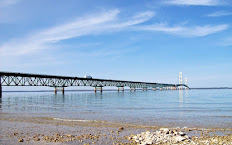
The Enbridge Line 5 Pipeline under the Straits of Mackinac. (Photo courtesy National Wildlife Federation)

LANSING -- On Dec. 11, 2017, members of Michigan’s Pipeline Safety Advisory Board (PSAB) passed formal resolutions -- including a temporary shutdown of Line 5 -- at their quarterly meeting, urging the State of Michigan to amend its agreement with Enbridge on Line 5, which Governor Snyder signed without consulting the PSAB in November.

The resolutions call for a shutdown of Line 5 until the entire line is inspected for protective coating gaps and all gaps are filled; and they modify the definition of "adverse weather conditions" to a higher standard than eight-foot waves, which triggered a temporary shut down when waves exceeded nine feet on Dec. 5. An additional resolution calls for the state to study more fully Michigan’s needs from Line 5, including alternatives that focus on the needs for Michigan over the business interests of Enbridge.

"These resolutions seek to strengthen the agreement the Governor signed with Enbridge so that it actually does what it purports to do: provide a path forward for determining the future of Line 5 while protecting the Great Lakes," said Mike Shriberg, executive director of the National Wildlife Federation Great Lakes Regional Center and a member of the Pipeline Safety Advisory Board, who co-sponsored the resolutions. "While the few services Line 5 provides to Michigan have been shown to have feasible alternatives, there is no substitute for the Great Lakes and our way of life."

On Nov. 27, Governor Rick Snyder announced an agreement with Enbridge to study a tunnel replacement for Line 5, one of the alternatives included in a state-commissioned alternatives analysis released on Nov. 20. The Pipeline Safety Advisory Board was not consulted in the agreement, which included a trigger for a temporary shutdown of flow through the pipeline in "adverse weather conditions," defined as when waves reached an average of eight feet. While those conditions were met during the recent temporary shutdown, the resolutions urge that definition to be modified to three feet and include ice cover and other conditions when the Coast Guard would be impeded from an oil spill response.

All three resolutions, introduced by Mike Shriberg, R. Craig Hupp and Jennifer McKay, were passed by the Pipeline Safety Advisory Board, with support from the sponsors, as well as Homer A. Mandoka and Chris Shepler, and the rest abstaining. There was one "no" vote on the resolution to temporarily shut down Line 5 until coating gaps are repaired. Resolutions adopted by the PSAB are advisory and not binding upon the state.

Oil and Water Don't Mix: Shutdown Line 5 as soon as possible

According to Oil and Water Don't Mix, at the Dec. 11 meeting PSAB members cited their dismay at Gov. Snyder's failure to consult with the Board on the deal with Enbridge. PSAB members also noted Enbridge's repeated failures to disclose critical information about the condition of the pipeline rationale for the votes.

Sean McBrearty, coordinator for Oil and Water Don't Mix, said, "The Pipeline Safety Advisory Board, led by members representing Michigan businesses, communities, and tribes, took a promising step forward today by acknowledging the 64-year-old Line 5 pipelines are unsafe to operate; and we look forward to continuing to work with all MPSAB members, Attorney General Bill Schuette and Governor Rick Snyder to shut down these dangerous, outdated pipelines as soon as possible."

This map from Oil and Water Don't Mix shows a North American pipeline system. Line 5, which carries oil from Superior, Wis, to refineries at Sarnia, Ontario, uses the Straits of Mackinac as a short cut, jeopardizing Great Lakes waters and nearby lands. (Map courtesy Oil and Water Don't Mix)

Sierra Club's Anne Woiwode calls the PSAB actions a major turning point in the multiyear process of considering how Michigan should address Line 5: "We applaud the MPSAB's rejection of Enbridge's increasingly hollow assurances about the damaged oil pipelines that threaten our Great Lakes, as well as the drinking water, livelihood and economy of our state. There is more to do, but these brave board members have shown the path forward to permanently shut down Line 5."

The most sweeping resolution calls for an amendment to the Snyder Enbridge deal which would require the temporary shut down of Line 5 until there has been the full inspection of and repair of all the bare steel and coating breaches in the dual pipelines on the bottom of the Straits. During the meeting Enbridge acknowledged that they don't know why more than forty gaps in the coating to the pipelines have occurred, that repairs of all of those cannot be completed until next spring at the earliest and that because of mussels, debris, and vegetation, most of the length of the pipelines have not been thoroughly inspected. The resolution also calls for Enbridge to "Ensure that propane is delivered to the Michigan markets served by Line 5 at a reasonable cost to customers," mainly residents of the Upper Peninsula.

The second resolution called for an amendment to the Snyder Enbridge deal to modify the definition of "adverse weather conditions" that dictate shutting down Line 5 so that it is consistent with the limitation of emergency response to any potential spill. The last resolution calls for the state to conduct a much more robust assessment of alternatives to Line 5 by June 25, 2018. The Snyder Enbridge deal calls for completion of the review process for Line 5 by August 2018.

Michigan Tech's role: leading risk analysis team

At the same Dec. 11 PSAB meeting, Michigan Tech Professor Guy Meadows spoke to the board on the progress of a team proposal for an independent risk analysis of the Straits pipelines.

According to a Dec. 11, 2017, article by Stefanie Sidortsova in the Michigan Tech News, Meadows, who is the Robbins Professor of Sustainable Marine Engineering and director of the Great Lakes Research Center at Michigan Tech, updated the PSAB on a team of 41 researchers from nine universities and other organizations working on a risk analysis for Line 5. Meadows estimated that the final risk analysis report could be delivered in August 2018.*

In her article, Sidortsova states, "On Sept. 18, 2017, the PSAB unanimously recommended that Michigan Tech organize and lead state universities in an independent risk analysis of the Line 5 Straits pipelines, two parallel 20-inch pipelines that form the 4.5-mile section of Line 5 that runs beneath the Straits of Mackinac. In conducting the risk analysis, Michigan Tech, state universities and other collaborators would analyze the environmental and economic impacts of a 'worst-case scenario' spill or release."*

Comment period on Line 5 Alternatives Analysis ends Dec. 22

The State of Michigan released a revised Line 5 Alternatives Analysis on Nov. 20, followed by a comment period that ends this Friday, Dec. 22. Public feedback meetings were held in early December, but the closest to our area was held in St. Ignace.**

Citizens can still submit comments on line by going to the Oil and Water Don't Mix site. Click on "Submit Your Comment." This site also has extensive information about Line 5.

* Click here to read the entire Michigan Tech News article by Stefanie Sidortsova, "Meadows Updates State Advisory Board on Line 5 Risk Analysis Proposal." 

** See our Nov. 12, 2017, article, "State announces 3 public feedback sessions on final version of Line 5 Alternatives Analysis report."

Sunday, December 17, 2017

Democrats from two counties march against tax bill

By Michele Bourdieu

Marchers head across the Portage Lift Bridge on Dec. 9 to protest the tax bill heading through Congress. (Photo by Keweenaw Now)

HOUGHTON -- A group of marchers organized by both the Houghton County and the Baraga County Democratic parties braved a cold Saturday morning, Dec. 9, to protest the potential tax bill heading through the House and Senate on a fast-track this month. Carrying signs protesting a bill that, if passed, is expected to reduce taxes for the wealthy and corporations while increasing the deficit and threatening benefits for working class and middle class families and seniors, concerned citizens marched from Houghton to Hancock and back across the Portage Lift Bridge.

About 35 protesters, including members of both the Houghton County and Baraga County Democratic parties, showed up for the Dec. 9 march against the proposed tax bill, which Republicans hope to pass before Christmas. Several passers-by honk horns in support of the protesters. (Video by Keweenaw Now)

Valorie Troesch, Houghton County Democratic Party co-organizer, with Bill Binroth, of the march, said she learned from her father, a farmer who supported his family on a small Iowa farm, that the Republican idea of trickle-down economics is a flawed myth -- and now she sees the Republican/Trump/Bergman proposed tax legislation as built on that myth.

Valorie Troesch, co-organizer of the Dec. 9 march against the tax bill, displays her sign of concern for senior benefits. With her, at right, is Emily Fiala of Houghton. (Photo by Keweenaw Now)

"My father used to say that when the farmer did well, the entire country did well," Troesch said. "I didn't understand what he meant until years later. But what he was talking about is exactly the opposite of trickle down voo-doo economics which holds that, if the wealthy get wealthier through favorable tax policies, their wealth will trickle down and help the folks at the bottom. All the Republican tax bill accomplishes is to ensure that prosperity will remain in the pockets of the wealthy. A real tax cut for the low income and middle class would make sure that tax breaks go directly to them. Cuts would be targeted, obvious, immediate, and substantial. The Republican plan is a tax sham designed only to further exacerbate the wealth gap and to create a pretense for eliminating the New Deal and Great Society programs for low and middle income workers and families."

Sharon Eklund, right, Baraga County Democratic Party chair, led a group of about 10 Party members from the Baraga - l'Anse area to participate in the Dec. 9 march across the Portage Lift Bridge in Houghton. Pictured with Eklund, at left, is her granddaughter Melanie Gibbs, 10, of Ishpeming. (Photo by Keweenaw Now)

Sharon Eklund, Baraga County Democratic Party chair, said she brought a group of her Party members to join the march because of her opposition to President Trump's behavior and policies.

"When Trump was elected I was in a deep depression," Eklund said, "because if there's a presidential candidate who can get up in front of people and insult disabled people he will not be a president for any of the common people."

Liz Hakola of Pelkie, also a Baraga County democrat, was among the group Eklund led to Houghton for the march.

"I came to protest the tax giveaways to the billionaires and the takeaway from the poor and the working middle class," Hakola told Keweenaw Now. "I think that the next step is the Republican Congress will use the deficit that they cause to rationalize cuts in spending for social security, medicare and medicaid."

Liz Hakola of Pelkie, left, in pink hat, is pictured here with other march participants from Baraga County, including Linda Zimmer, second from left, and Sharon Eklund, center, in white hat. (Photo courtesy Sharon Eklund and Baraga County Democratic Party)

During the march, two Houghton County residents, Nancy Imm, left, and Denise Heikinen display their signs opposing U.S. Rep. Jack Bergman's support of the tax plan and Trump's negative character, respectively. (Photo by Keweenaw Now)

Bill Binroth, co-organizer for the march and Houghton County Democratic Party co-chair, displays a sign showing his concerns about health care and government programs that could be cut if the Republican tax bill is approved. (Photo by Keweenaw Now)

According to a Dec. 15 article in The Hill, Republicans revealed the final version of their tax bill on Dec. 15 and hope to have Trump sign it before Christmas. The House is expected to vote on the bill this Tuesday, followed by the Senate.*

In another article today, Dec. 17, The Hill quotes Sen. Bernie Sanders as saying Democrats did all they could in opposing the bill.

"Sanders described the GOP legislation as a 'massive attack on the middle class,' countering Republicans’ argument that the bill will help middle-class families through tax cuts."**

The article continues, "The bill cuts the top individual rate from 39.6 percent to 37 percent and also slashes the corporate tax rate from 35 to 21 percent.

"Sanders blamed the resulting legislation on the 'priorities' of the individuals who wrote the bill."**

Notes: 

* See "Republicans unveil final version of tax bill."

** See "Sanders: 'I think we did everything we could' to stop tax bill."

Click here for the final (Dec. 15) text of the tax bill. You can call Rep. Bergman at (202) 225-4735 to express your views on his support of the tax bill.

Tuesday, December 12, 2017

Michigan Tech Concert Choir, Superior Wind Symphony to present joint concert Dec. 16

Michigan Tech's Superior Wind Symphony. (Photo courtesy Rozsa Center)

HOUGHTON -- The Rozsa Center for the Performing Arts and Michigan Tech's Department of Visual and Performing Arts will present a concert by the Michigan Tech Concert Choir and Superior Wind Symphony titled The Sound from Within Us, an evening of celebratory music, at 7:30 p.m. this Saturday, Dec. 16, in the Rozsa Center. The concert celebrates themes of common humanity with varied instrumentation and beautiful texts and features music by American and British composers, including Vincent Persichetti’s Celebrations, Lee Hoiby’s Hymn for a New Age, Charles Ives’ Psalm 90 and Circus Band, and John Rutter’s Gloria.

According to Michael Christianson, Michigan Tech’s director of bands, "From the many possible ways humans have invented for making music, groups of singers and wind instrumentalists have in common that the human breath initiates all sounds. Jared [Jared Anderson, chair, Visual and Performing Arts Department, and choirs director] and I first just wanted to make music together, because we like to do different things and this combination is surprisingly rare. There are many more instruments that are struck, bowed, plucked, etc., that are 'inspired by expiration.' And the human voice is the first true musical instrument, the most universal, so it seemed like a logical conclusion to concertize together. Our repertoire focus started out as "American," but we were enamored with some other great musical opportunities. We will offer the work of stellar composers: Charles Ives, Vincent Persichetti, John Rutter, and Lee Hoiby, as well as the words of Walt Whitman. All words in English."

Michigan Tech Concert Choir. (Photo courtesy Rozsa Center)

Anderson adds, "The Sound from Within Us celebrates the fact that wind players and singers both create music by using perhaps our most common trait, breath. The capacity to make beautiful sounds is within us all. The texts of the music that will be performed emphasize what we share as individuals and communities, the need for connection and kindness. It is a great opportunity to hear beautiful music and to celebrate in the midst of the holiday season."

UPDATED: Tickets for The Sound from Within Us are on sale now: $15 for adults, $5 for youth, and no charge for Michigan Tech students with the Experience Tech fee, available by phone at (906) 487-2073, online at mtu.edu/rozsa, in person at the Central Ticketing Office in the Student Development Complex, or at the Rozsa Box Office the evening of the performance. Please note the Rozsa Box Office only opens two hours prior to performances.

Friday, December 08, 2017

Citizens concerned about tax bill to march across Portage Lift Bridge Saturday, Dec. 9

The Portage Lift Bridge will again be the scene of a march by concerned citizens no matter what the weather on Saturday, Dec. 9, 2017. (Keweenaw Now 2016 file photo)

HOUGHTON -- Concerned citizens will hold a Protest March at 10:30 a.m. Saturday, Dec. 9, against the tax bill that is moving through Congress. Meet on the Houghton side of the Portage Lift Bridge (at the bridge on Shelden next to the Downtowner) and walk across peacefully to Hancock and back. This bill would negatively affect students and families. This bill would also allow destructive commercial oil drilling in the Arctic National Wildlife Refuge (ANWR).* The tax bill as proposed is set to benefit corporations and the wealthy one percent. Bring a sign to send a message to our representatives in Congress, especially Republican Rep. Jack Bergman. For more information contact Valorie Troesch at vtroesch@gmail.com. If you can't make it to the march you can call Rep. Bergman at (202) 225-4735.

* Read more about this bill and the Arctic National Wildlife Refuge here.

Monday, December 04, 2017

Noteworthy women's chorus, with Maple Sugar Folk, to perform two Christmas concerts -- Dec. 7, 10

Noteworthy women's chorus will perform two free Christmas concerts this week -- Dec. 7 and Dec. 10. (Photo courtesy Noteworthy)

CALUMET -- Noteworthy invites everyone to come celebrate the season at one of its two free Christmas concerts. The first is set for 7 p.m. Thursday, Dec. 7, at Sacred Heart Catholic Church in Calumet, and the second will be held at 2 p.m., Sunday, Dec. 10, at Gloria Dei Lutheran Church in Hancock.

The chorus will be joined by Maple Sugar Folk, who will sing a selection of French carols under the direction of David Bezotte.

Maple Sugar Folk sing French Canadian songs during the 2017 Parade of Nations Multicultural Festival. They will join Noteworthy for two Christmas concerts this week. (Photo by Keweenaw Now)

"There’s a lot of variety in this program: songs that are sassy, funny and upbeat, and those that remind us of the true meaning of the season," said Noteworthy director Joan Petrelius. 

The only women’s barbershop chorus in the Copper Country, Noteworthy is recognized for its intricate, a cappella harmonies and fun, accessible melodies.

The program ranges from lighthearted -- Da Yoopers’ "Rusty Chevrolet" -- and traditional -- Mel Torme’s "The Christmas Song" -- to devout songs of the season, including a medley of traditional Christmas hymns.

Other favorites are "Mary’s Boy Child," "Caroling Caroling" and a wistful rendition of "Little Drummer Boy."

Admission is free. Noteworthy always takes a free-will offering for local charities during its concerts; and this Christmas the beneficiary will be the Copper Country United Way, which supports a variety of local charities.

"It seemed like a perfect fit for this time of year, when we are reminded to love and care for our neighbors," Petrelius said.

Noteworthy will be welcoming new members in January and invites all women who enjoy singing to come to the concert for an introduction to barbershop music. For more information, contact Petrelius at 906-482-5088 or noteworthychorus@gmail.com.

Saturday, December 02, 2017

New Slide Show: Art, Culture Oct. - Nov. 2017

By Michele Bourdieu

Ginger Alberti, professional seamstress, and her husband, Mike Sabo, have returned to Hancock from California, bringing with them a new business/craft studio, SewCranky, 322 Quincy Street, where visitors of all ages can learn to sew clothing, art works and useful items with hand-operated antique sewing machines. Check out our slide show for photos of their opening during the Nov. 24 Hancock Walk. (Photos by Keweenaw Now)

From arts and crafts to film and dance, Keweenaw Now's newest SLIDE SHOW presents photo highlights of art and cultural events we attended in the Copper Country during October and November. Here are a few photos from events we included:

Hancock Artist Bridget Riversmith talks about her gouache paintings during the Nov. 10 opening reception for her exhibit "In the Cocoon and Dreaming" at the Kerredge Gallery in Hancock.

Cynthia CotƩ, founding director of the Copper Country Community Arts Center, is pictured here with her exhibit "Words and Pictures" in the Rozsa Center hallway gallery. The exhibit continues through the academic year.

Also in the Rozsa hallway gallery are some felt art works, like these "Aerial Studies," by Phyllis Fredendall, professor of fiber and fashion design at Finlandia University's International School of Art and Design.

Joe Kirkish, Michigan Tech professor emeritus (Humanities) and well known local photographer and film lover, accepts the City Light Award from Erin Smith, right, 41 North Film Festival organizer, and Faith Morrison, Michigan Tech professor of chemical engineering and associate dean of the Graduate School, on Nov. 4, 2017, in the Rozsa Center.

Dancers in action display colorful regalia during the Oct. 14 Pow Wow at Michigan Tech.

Artist Patty Watson is pictured here with paintings in her October exhibit at Galerie BohĆØme in Calumet.

To access the complete slide show CLICK HERE. Then click on the top left photo and follow the arrows to the right for a slide show. Be sure to click on the info icon (upper right corner of each photo) to read the captions.

Monday, November 27, 2017

New agreement requires increased safeguards for Michigan waters, sets final schedule for decision on future of Enbridge's Line 5 petroleum pipeline

LANSING -- Gov. Rick Snyder today signed an agreement requiring immediate steps be taken to improve environmental protection for the Great Lakes and other state waterways through a binding agreement with the owners of Line 5.

"Business as usual by Enbridge is not acceptable and we are going to ensure the highest level of environmental safety standards are implemented to protect one of Michigan’s most valuable natural resources," Snyder said. "The items required in this agreement are good strides forward. The state is evaluating the entire span of Enbridge’s Line 5 pipeline and its future, but we cannot wait for the analyses to be completed before taking action to defend our waterways."

Line 5 is a 645-mile pipeline that begins in Superior, Wisconsin, passes under the Straits of Mackinac, and terminates in Sarnia, Ontario, Canada. Line 5 transports up to 540,000 barrels a day of light crude oil and natural gas liquids

Congressman Fred Upton, chair of the Subcommittee on Energy in the U.S. House of Representatives, has been working closely with the state on addressing concerns he has about Enbridge operations.

"This issue is not going away until it gets fixed," Upton said. "Zero tolerance for error is the only thing we will accept along with the highest safety standards in place to ensure the Great Lakes will not be at risk. I look forward to continuing to work with Governor Snyder and the state of Michigan in coordinating a state and federal response. We will stay on the case through completion."

Under stipulations detailed in the agreement announced today, the state is requiring Enbridge to do the following:
  •  Replace the portion of Line 5 that crosses beneath the St. Clair River with a new pipe in a tunnel under the river, a site where similar pipeline construction for Line 6B was successfully accomplished a few years ago. The St. Clair River is an important source of drinking water and an environmentally sensitive location along the pipeline. The underground replacement line will significantly lower the risk that oil could reach the river or the Great Lakes.
  • Undertake a study, in conjunction with the state, on the placement of a new pipeline or the existing dual pipelines in a tunnel beneath the Straits of Mackinac. The state’s alternative analysis identified tunneling as an alternative to the current pipelines. This study will examine several possible techniques and allow a much more detailed examination on the technical feasibility of such a tunnel.
  • Temporarily shut down operation of Line 5 in the straits during periods of sustained adverse weather conditions, because those conditions do not allow effective response to potential oil spills. “Sustained adverse weather conditions” are defined in an appendix of the agreement.
  • Assess the possible installation of underwater technologies, including cameras, to better monitor the pipeline beneath the Straits of Mackinac. 
  • Implement technologies that improve the safety of Line 5 in the straits by allowing faster detection and a more immediate response in the event of a spill.
  • Implement measures to mitigate a potential vessel anchor strike on Line 5 beneath the straits. A vessel anchor strike was identified in the final alternatives analysis as one of the most serious threats to Line 5 safety in the straits.
  • In partnership with the state, implement additional measures to minimize the likelihood of an oil spill at every Line 5 water crossing in Michigan.
  • Increase transparency by:
    o    providing the opportunity for the state to fully participate in each of the evaluations required under the agreement;
    o    providing all information requested by the state about the operation of Line 5 in Michigan; and
    o    meeting regularly with the state to assess and discuss any changes to the pipeline’s operation.
"This agreement is necessary to ensure increased oversight, transparency and accountability on the part of Enbridge," said DNR Director Keith Creagh. "As we continue to evaluate the pipeline at the straits, we must make sure appropriate safeguards for natural resources are in place along the full length of Line 5 in Michigan."

The agreement includes deadlines for each action. The state will hire its own experts to monitor Enbridge’s actions and review and verify the company’s data. The agreement requires the company to cooperatively identify and make available to the state relevant information regarding the operation of Line 5. The full agreement can be found on the Pipeline Safety Advisory Board website.

"Tunneling under the St. Clair River and shutting down Line 5 during adverse weather are promising first steps in safeguarding our waterways," said Valerie Brader, executive director of the Michigan Agency for Energy. "The assessment of all the options in the agreement should be done thoroughly, but quickly, so that we can move forward with additional concrete actions all along the pipeline."

Today’s agreement does not represent a final decision by the state regarding Line 5, but instead provides a clear schedule on which a decision will either be reached cooperatively with Enbridge or the state will take another path. In the meantime, the actions mandated in the agreement will improve the information available and improve safety, stewardship, and transparency.

As these measures are put in place, the evaluation of Line 5 called for by the Michigan Petroleum Pipeline Task Force Report will continue. That evaluation is being conducted by the Michigan Agency for Energy (MAE), the Michigan Department of Environmental Quality (DEQ) and the Michigan Department of Natural Resources (DNR), with advice from the Pipeline Safety Advisory Board.

On Nov. 20, the state released a final alternatives analysis report. The state will be accepting public feedback online and at public meetings in December on what should be done regarding Line 5 in the long term.*

With the report’s release Nov. 20 on the Pipeline Safety Advisory Board website, a month-long window opened for online comments about what the State should do regarding the future of Line 5. The deadline for comments is  Dec. 22. Comments can also be mailed to: Department of Environmental Quality, Attn: Line 5 Alternatives Analysis, P.O. Box 30473, Lansing, MI 48909-7973.

"The Line 5 crossing at the Straits of Mackinac continues to be of utmost concern to the DEQ," said C. Heidi Grether, director of DEQ. "Our charge is to protect the Great Lakes as demonstrated in this agreement. It is, however, time we start reviewing the potential impact of Line 5 in its entirety throughout Michigan. The stipulations presented in this agreement are steps in the right direction to not only protect the Great Lakes, but to protect all of Michigan’s pristine waterways and environment."

A contract for a separate independent risk analysis -- led by top researchers at Michigan Technological University -- is being finalized.* These analyses, along with public input and the new agreement, will shape a final recommendation from the state on the future of Line 5.

* Editor's Note: See our Nov. 12, 2017, article, "State announces 3 public feedback sessions on final version of Line 5 Alternatives Analysis report."