By Marcia Goodrich, Michigan Tech Magazine Editor
Posted Sept. 5, 2013, on Michigan Tech News
Reprinted with permission
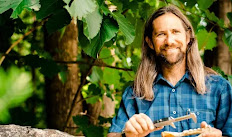
John Van Tuyl's VaxBeads, designed to serve as a vaccination record for children in the developing world, won first prize in the 3D Printers for Peace contest. (Photo © and courtesy John Van Tuyl)
HOUGHTON -- A brightly colored innovation to help families and doctors keep track of childhood vaccine records in the developing world has won the 3D Printers for Peace Contest.
The contest was organized last spring by Michigan Technological University’s Joshua Pearce, who had become alarmed that 3D printing was known primarily as a technology for making homemade guns. "We wanted to celebrate designs that will make lives better, not snuff them out," said Pearce, a 3D printing aficionado and an associate professor of materials science and engineering and electrical and computer engineering.
The 3D Printers for Peace contest did just that, by underscoring the power of the new technology to make the world a better place, according to Pearce. "I’m really happy with the diversity of designs," he said. "They showcase the ability of the 3D printing community to benefit humanity."
The first-place entry, VaxBeads, was submitted by John Van Tuyl of Hamilton, Ontario. The plastic blocks act as an immunization record. Each color and shape represents a vaccine, and the blocks can be printed with a child’s initials, date of birth and an identifying number. Van Tuyl receives the top prize, an Open-source Series 1 3-D Printer donated by Type A Machines.
A master’s student in mechanical engineering at McMaster University, Van Tuyl has a biomedical background, which prompted him to focus on improving immunization rates in the developing world. "We have the capacity to immunize against many diseases, but it’s not getting accomplished," he said. Putting easily interpreted medical records into the hands of the people could help, he thought. So he developed VaxBeads, which can be strung into a necklace to represent a person’s immunization record. "They are more permanent than paper, and I thought families would be more likely to save the beads than standard vaccination cards."
The judges were impressed with the design’s originality and practicality. "VaxBeads are a novel idea; no one has done anything like that yet," said Pearce. "John demonstrated the ability of 3D printing to address a real need in the developing world. You could print beads fast enough to hand to children, and if they were to wear the necklace to the doctor’s office, it would be quick and easy to identify missing vaccinations."
Matthew Courchaine, who took second place in the contest, is working on a double major in computer and electrical engineering at Michigan Tech. He will receive a MOST version of the RepRap Prusa Mendel open-source 3D printer kit for his entry, a solar-powered water purification cone. It is designed for use during disasters or in regions where clean water is a precious commodity. "As long as you have some sunlight and a source of water, it will work," Pearce said.
This solar water purification cone, by Matthew Courchaine, earned second place in Michigan Tech's 3D Printers for Peace competition. (Photo © and courtesy Matthew Courchaine.)
Courchaine, of Crystal Falls, has been hooked on 3D printers since he built one himself and started using it to make household items, knick-knacks and the like. "When I saw Dr. Pearce’s description of the contest, I completely agreed with his reasoning. Often times, I will get asked jokingly to print someone a gun, but I think that the 3D printing revolution is a great thing and has endless possibilities."
Several similar products are already on the market. "The challenge was to recreate the technology so that it can cheaply be produced using 3D printing," Courchaine said.
The third prize, a MatterHackers sampler pack of filament, was awarded to Aaron Meidinger for his design of a braille tablet, which could let a sighted person leave short notes to a blind person, or vice versa. Plastic tiles with letters in both braille and the alphabet can be arranged on a platform reminiscent of Scrabble. "It’s simple, easy to make, and definitely would work," said Pearce.
Aaron Meidinger designed Scrabble-like tiles with letters in both braille and the alphabet to take third place in 3D Printers for Peace. (Photo © and courtesy Aaron Meidinger)
Meidinger, a mechanical engineering major at Arizona State University, started thinking about language after taking a sign language class in high school. "Braille is to the blind as sign language is to the deaf, and braille is certainly not intuitive for a sighted person," he said. "There are extremely expensive tools out there that aim to create braille on a computerized tablet, but I wanted to design something that would be simple and educational for a sighted person to use, and could be useful in many ways for non-verbal communication for the blind. Even if you can’t write braille, you can arrange tiles to spell out what you need to."
Pearce expressed his thanks to all the 3D Printers for Peace participants. "All the open-source entries demonstrated the technical ability and promise of low-cost 3D printers to provide for humanity’s needs and advance the cause of peace."
All the entries are posted on Thingiverse.com, which now has 146,000 open-source designs that can be downloaded for free and printed by anyone with a 3D printer.
Saturday, September 07, 2013
Friday, September 06, 2013
Photos: Labor Day Mackinac Bridge Walk
MACKINAC BRIDGE -- Friends of Keweenaw Now shared some photos of the 56th Annual Labor Day Mackinac Bridge Walk, Sept. 2, 2013:
After a visit to Houghton last week, Jessie Vital Files (Michigan Tech graduate in forestry) and her husband, Michael Files, headed back to southern Michigan with a stop at the Mackinac Bridge and joined thousands of energetic walkers for the annual Mackinac Bridge Walk. "Ready to do it (5 miles to go) non stop," she writes about this photo. (Photos © and courtesy Jessie Vital Files unless otherwise indicated.)
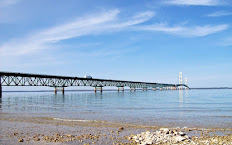
The large crowd sets out across the Straits of Mackinac on the five-mile bridge, which connects the Upper Peninsula, near St. Ignace, with the Lower Peninsula at Mackinaw City, Mich.
Traffic guards help keep the walkers on one side of the bridge, while the flow of traffic continues.
A great view of the majestic bridge ...
The large crowd gathers at the Finish Line!
Alexandra Thebert, left, Save the Wild U.P. executive director, sent this photo, commenting, "We made it! It was about 50 degrees but didn't rain and no one lost their hat to the wind!" Also pictured with her are Jennifer Finstrom, Louise Anderson, and Paul Finstrom. (Photo © and courtesy Alexandra Thebert)
Click here for more information about the Mackinac Bridge Walk -- in case you plan to do it next year!
After a visit to Houghton last week, Jessie Vital Files (Michigan Tech graduate in forestry) and her husband, Michael Files, headed back to southern Michigan with a stop at the Mackinac Bridge and joined thousands of energetic walkers for the annual Mackinac Bridge Walk. "Ready to do it (5 miles to go) non stop," she writes about this photo. (Photos © and courtesy Jessie Vital Files unless otherwise indicated.)
The large crowd sets out across the Straits of Mackinac on the five-mile bridge, which connects the Upper Peninsula, near St. Ignace, with the Lower Peninsula at Mackinaw City, Mich.
Traffic guards help keep the walkers on one side of the bridge, while the flow of traffic continues.
A great view of the majestic bridge ...
The large crowd gathers at the Finish Line!
Alexandra Thebert, left, Save the Wild U.P. executive director, sent this photo, commenting, "We made it! It was about 50 degrees but didn't rain and no one lost their hat to the wind!" Also pictured with her are Jennifer Finstrom, Louise Anderson, and Paul Finstrom. (Photo © and courtesy Alexandra Thebert)
Click here for more information about the Mackinac Bridge Walk -- in case you plan to do it next year!
Orpheum Theater to host local folk music bands TONIGHT, Sept. 6
HANCOCK -- The Orpheum Theater in Hancock will host two local folk music bands TONIGHT, Friday, Sept. 6 -- Adam Kentala and Tony Laux (known as The Marquette Generals) and Gratiot Lake Road.
"Come out to the Orpheum for a night of thought-provoking lyrical harmonies, banjo-plucked melodies, and some tasty bass-driven jams," says Orpheum owner Michael Shupe. "These guys have all played the Orpheum stage in the past, but never all together, so be sure not to miss it."
Shupe adds that, as rumor has it, Gratiot Lake Road and Tony Laux will be moving away soon, so don't miss the show tonight!
Doors open at 7:30 p.m. Music begins at 8 p.m. Cost: $5 for the show.
For details visit these Web sites: https://soundcloud.com/tony-laux and http://gratiotlakeroad.com/.
Next Friday, Sept. 13, the Orpheum will host Copper Country favorites Red Tail Ring and on Saturday, Sept. 14, Superstars Greensky Bluegrass.
The Orpheum Theater is located at 426 Quincy St. in downtown Hancock. Call 906-482-5100 for more information.
"Come out to the Orpheum for a night of thought-provoking lyrical harmonies, banjo-plucked melodies, and some tasty bass-driven jams," says Orpheum owner Michael Shupe. "These guys have all played the Orpheum stage in the past, but never all together, so be sure not to miss it."
Shupe adds that, as rumor has it, Gratiot Lake Road and Tony Laux will be moving away soon, so don't miss the show tonight!
Doors open at 7:30 p.m. Music begins at 8 p.m. Cost: $5 for the show.
For details visit these Web sites: https://soundcloud.com/tony-laux and http://gratiotlakeroad.com/.
Next Friday, Sept. 13, the Orpheum will host Copper Country favorites Red Tail Ring and on Saturday, Sept. 14, Superstars Greensky Bluegrass.
The Orpheum Theater is located at 426 Quincy St. in downtown Hancock. Call 906-482-5100 for more information.
Labels:
Gratiot Lake Road band,
local folk music,
Marquette Generals band,
Orpheum Theater in Hancock
Thursday, September 05, 2013
First Friday in Calumet, Sept. 6, to offer art, music, dance
CALUMET -- First Friday evening, Sept. 6, will offer new gallery exhibits, an art workshop, music and dance events in downtown Calumet.
Paige Wiard Gallery to host work by Erv Lewandowski
Lynx in Winter, by Erv Lewandowski. (Photo courtesy Paige Wiard Gallery)
The Paige Wiard Gallery will be welcoming award-winning artist Erv Lewandowski who specializes in colored pencil drawings of subjects and settings from across North America and beyond. Recognized for his contemporary realism/hyperrealism studies, his approach to nature, landscapes, and waterscapes is unique in style, meticulously rendered in detail, and visually appealing in form, content, and composition.
Black Slate Falls, by Erv Lewandowski. (Photo courtesy Paige Wiard Gallery)
Lewandowski's waterscape images depicting slowly moving stream currents, quiet river pools, bubbling brooks, cascading waterfalls, and shoreline settings perfectly illustrate his ability to create the illusion of a speck of time, measure of space, and fluid movement with a subject that is in constant motion.
An opening reception for the artist will be held from 6:30 p.m. to 8 p.m. Friday, Sept. 6, 2013, at the Paige Wiard Gallery, 109 5th St., Calumet. If you have any questions please call 906-337-5970.
Create miniature "Art from Nature" at Copper Country Associated Artists
Copper Country Associated Artists will offer a workshop, "Creating Art from Nature," from 6 p.m. to 8 p.m. on First Friday, Sept. 6, at their Gallery and Working Studio, 205 Fifth St. in Calumet.
Participants will learn the technique of natural impression using inking and paint with specimens of nature to create miniature works of art. Designs created with this technique can be used as an accent on a greeting card, a framed piece of art or original wrapping paper.
For more information, please call 906-337-1252. This workshop is free and open to the public, and refreshments will be available.
Tom Rudd to exhibit his Lake Superior fish at Galerie Bohème
Silver Shiner, by Tom Rudd. (Photo courtesy Galerie Bohème)
September at Galerie Bohème will be a month for fish -- with art by Tom Rudd -- a series of 38 fish native to Lake Superior, 20 of them so far.
"Mostly small fish made big -- sculpins, sticklebacks, darters, bass, a couple of trout and other outrageous sweet-water monsters," Rudd notes. "Will also have a couple of stone fish and plenty of cast and painted Pisces."
The public is invited to the opening reception from 7 p.m. to 9 p.m. on Friday, Sept. 6, at Galerie Bohème, 423 5th St. in Calumet. Punch, bread and cheese will be served.
Omphale Gallery and Café to feature art by Margo McCafferty and Tom Rudd
Just up Fifth Street from Galerie Bohème, from 7 p.m. to 9 p.m. on Sept. 6, First Friday visitors will find more art by Tom Rudd -- and by his wife, Margo McCafferty -- at the Omphale Gallery and Café. Music will be provided by Robin Oye.
The Omphale will be offering their two-for-the-price-of-one Latte Frappuccino Special again as well.
Please note their winter hours: M-T-Th-Fri-Sat: 8 a.m. to 6 p.m. (9 p.m. on First Friday). Closed for rest and restocking Sunday and Wednesday!
Music, art at Calumet Art Center Sept. 6
While you're in Calumet on First Friday, stop by the Calumet Art Center, 57055 Fifth Street, and tap your toes to the accordion music of Marilyn Monsivais!
Find your inspiration while touring the center and open studio featuring looms of all types, lamp work bead station, library and writing studio and the clay studio where artists are gearing up for the Empty Bowls Project. Learn about the center's recent classes and projects and upcoming events.
More music events on First Friday ...
Click here to read about the Keweenaw Social Dance Argentine tango workshop.
Click here to read about the benefit dance to raise funds for lightning damage to the Keweenaw Heritage Center at St. Anne's.
If you missed First Friday events in July or August, see Keweenaw Now's new slide show, Summer Art 2013, with photos of local art exhibits and activities. Right now it's at the top right corner of Keweenaw Now -- or click here to go directly to the slide show.
Paige Wiard Gallery to host work by Erv Lewandowski
Lynx in Winter, by Erv Lewandowski. (Photo courtesy Paige Wiard Gallery)
The Paige Wiard Gallery will be welcoming award-winning artist Erv Lewandowski who specializes in colored pencil drawings of subjects and settings from across North America and beyond. Recognized for his contemporary realism/hyperrealism studies, his approach to nature, landscapes, and waterscapes is unique in style, meticulously rendered in detail, and visually appealing in form, content, and composition.
Black Slate Falls, by Erv Lewandowski. (Photo courtesy Paige Wiard Gallery)
Lewandowski's waterscape images depicting slowly moving stream currents, quiet river pools, bubbling brooks, cascading waterfalls, and shoreline settings perfectly illustrate his ability to create the illusion of a speck of time, measure of space, and fluid movement with a subject that is in constant motion.
An opening reception for the artist will be held from 6:30 p.m. to 8 p.m. Friday, Sept. 6, 2013, at the Paige Wiard Gallery, 109 5th St., Calumet. If you have any questions please call 906-337-5970.
Create miniature "Art from Nature" at Copper Country Associated Artists
Copper Country Associated Artists will offer a workshop, "Creating Art from Nature," from 6 p.m. to 8 p.m. on First Friday, Sept. 6, at their Gallery and Working Studio, 205 Fifth St. in Calumet.
Participants will learn the technique of natural impression using inking and paint with specimens of nature to create miniature works of art. Designs created with this technique can be used as an accent on a greeting card, a framed piece of art or original wrapping paper.
For more information, please call 906-337-1252. This workshop is free and open to the public, and refreshments will be available.
Tom Rudd to exhibit his Lake Superior fish at Galerie Bohème
Silver Shiner, by Tom Rudd. (Photo courtesy Galerie Bohème)
September at Galerie Bohème will be a month for fish -- with art by Tom Rudd -- a series of 38 fish native to Lake Superior, 20 of them so far.
"Mostly small fish made big -- sculpins, sticklebacks, darters, bass, a couple of trout and other outrageous sweet-water monsters," Rudd notes. "Will also have a couple of stone fish and plenty of cast and painted Pisces."
The public is invited to the opening reception from 7 p.m. to 9 p.m. on Friday, Sept. 6, at Galerie Bohème, 423 5th St. in Calumet. Punch, bread and cheese will be served.
Omphale Gallery and Café to feature art by Margo McCafferty and Tom Rudd
Just up Fifth Street from Galerie Bohème, from 7 p.m. to 9 p.m. on Sept. 6, First Friday visitors will find more art by Tom Rudd -- and by his wife, Margo McCafferty -- at the Omphale Gallery and Café. Music will be provided by Robin Oye.
The Omphale will be offering their two-for-the-price-of-one Latte Frappuccino Special again as well.
Please note their winter hours: M-T-Th-Fri-Sat: 8 a.m. to 6 p.m. (9 p.m. on First Friday). Closed for rest and restocking Sunday and Wednesday!
Music, art at Calumet Art Center Sept. 6
While you're in Calumet on First Friday, stop by the Calumet Art Center, 57055 Fifth Street, and tap your toes to the accordion music of Marilyn Monsivais!
Find your inspiration while touring the center and open studio featuring looms of all types, lamp work bead station, library and writing studio and the clay studio where artists are gearing up for the Empty Bowls Project. Learn about the center's recent classes and projects and upcoming events.
More music events on First Friday ...
Click here to read about the Keweenaw Social Dance Argentine tango workshop.
Click here to read about the benefit dance to raise funds for lightning damage to the Keweenaw Heritage Center at St. Anne's.
If you missed First Friday events in July or August, see Keweenaw Now's new slide show, Summer Art 2013, with photos of local art exhibits and activities. Right now it's at the top right corner of Keweenaw Now -- or click here to go directly to the slide show.
Club Indigo to feature Disney's "Fantasia" Sept. 6
CALUMET -- This could be the last time to see the Disney original (1940) classic Fantasia -- with its inspired animation set to familiar classical music -- on the big screen.
Club Indigo will feature this historic film at 7:15 p.m. TOMORROW, Friday, Sept. 6, at the Calumet Theatre with a fantasy buffet from Calumet's Miskowabik Club at 6 p.m. Cost of food and film is $19 and film alone is $5. Special discount for children ten and under. For seating at the buffet, call the Calumet Theater at 337-2610.
Wednesday, September 04, 2013
Benefit dance at Keweenaw Heritage Center Sept. 6 to help repair steeple struck by lightning
Damage to the Keweenaw Heritage Center (St. Anne's) steeple from a recent lightning strike. A benefit dance will be held here Sept. 6 to raise funds for repairs. (Photo courtesy Anita Campbell)
CALUMET -- Jim and Teri Enrietti, along with Don Masnado, will be providing music for a benefit dance from 7 p.m. to 10 p.m. on Friday, Sept. 6, in the lower level of the Keweenaw Heritage Center at St. Anne's, at 5th and Scott streets in Calumet. Admission will be $5, and additional donations will be very welcome.
Proceeds will go toward meeting any deductible for repairs to the steeple following the recent near-catastrophic lightning strike and to putting measures into place that will help prevent future strikes.
Click here to read about the lightning strike and see photos of the Keweenaw Heritage Center at St. Anne's.
CALUMET -- Jim and Teri Enrietti, along with Don Masnado, will be providing music for a benefit dance from 7 p.m. to 10 p.m. on Friday, Sept. 6, in the lower level of the Keweenaw Heritage Center at St. Anne's, at 5th and Scott streets in Calumet. Admission will be $5, and additional donations will be very welcome.
Proceeds will go toward meeting any deductible for repairs to the steeple following the recent near-catastrophic lightning strike and to putting measures into place that will help prevent future strikes.
Click here to read about the lightning strike and see photos of the Keweenaw Heritage Center at St. Anne's.
Keweenaw Social Dance to offer two Argentine tango workshops Sept. 5, 6 in Calumet
CALUMET -- Keweenaw Social Dance will host two workshops of Argentine tango in their Calumet studio at 6 p.m. Thursday and Friday, Sept. 5 and 6. Each workshop will be followed by an open dance at 8 p.m.
Braden Giacobazzi, former vice president of the Michigan Tech Social Dance Club, will be coming to the Keweenaw to teach some of his very well polished Argentine tango. He excels in this dance and is a great teacher. Take advantage of this a once-in-a-year opportunity to learn the tango or to improve your dancing skills. Casual dress and somewhat slippery shoes are a good thing to have for these occasions.
Admission is $10. The studio is at 333 Fifth Street in Calumet. Call 906.370.9532 or email keweenawsd@gmail.com for more information.
Braden Giacobazzi, former vice president of the Michigan Tech Social Dance Club, will be coming to the Keweenaw to teach some of his very well polished Argentine tango. He excels in this dance and is a great teacher. Take advantage of this a once-in-a-year opportunity to learn the tango or to improve your dancing skills. Casual dress and somewhat slippery shoes are a good thing to have for these occasions.
Admission is $10. The studio is at 333 Fifth Street in Calumet. Call 906.370.9532 or email keweenawsd@gmail.com for more information.
Christine Saari's "Cigar Box Shrines" exhibit to open TONIGHT, Sept. 4, at Community Arts Center
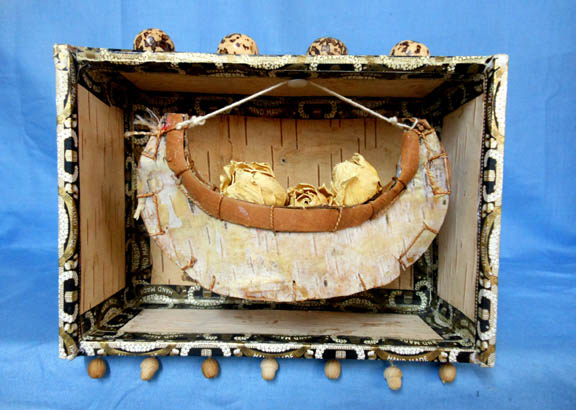
Canoe full of Roses, a Cigar Box Shrine by artist Christine Saari, is part of her exhibit opening with a reception tonight, Sept. 4, at the Copper Country Community Arts Center in Hancock. (Photo courtesy Copper Country Community Arts Center)
HANCOCK -- The Copper Country Community Arts Center will host "Cigar Box Shrines," a recycling project by Christine Saari, who will give a gallery talk at the opening reception for the exhibit to be held from 6 p.m. to 8 p.m. TONIGHT, Wednesday, Sept. 4.
"Like much of my work, this project is about creating something new from something old, recycling 'stuff' I have kept for years," Saari says. "This project started in 2012, when a friend gave me a few cigar boxes while I was going through accumulated materials in my studio. As I worked, I realized I was making little shrines, honoring other artists' work as well as gifts that had been sitting around for years, little noticed -- giving these objects new life."
More than 50 Cigar Box Shrines will be included in this exhibit, promising to be a rich spectacle of treasured items showcased by Christine's sensitive and whimsical imagination.
The exhibit, in the Kerredge Gallery, will continue through Sept. 28.
HANCOCK -- The Copper Country Community Arts Center will host "Cigar Box Shrines," a recycling project by Christine Saari, who will give a gallery talk at the opening reception for the exhibit to be held from 6 p.m. to 8 p.m. TONIGHT, Wednesday, Sept. 4.
"Like much of my work, this project is about creating something new from something old, recycling 'stuff' I have kept for years," Saari says. "This project started in 2012, when a friend gave me a few cigar boxes while I was going through accumulated materials in my studio. As I worked, I realized I was making little shrines, honoring other artists' work as well as gifts that had been sitting around for years, little noticed -- giving these objects new life."
More than 50 Cigar Box Shrines will be included in this exhibit, promising to be a rich spectacle of treasured items showcased by Christine's sensitive and whimsical imagination.
The exhibit, in the Kerredge Gallery, will continue through Sept. 28.
Monday, September 02, 2013
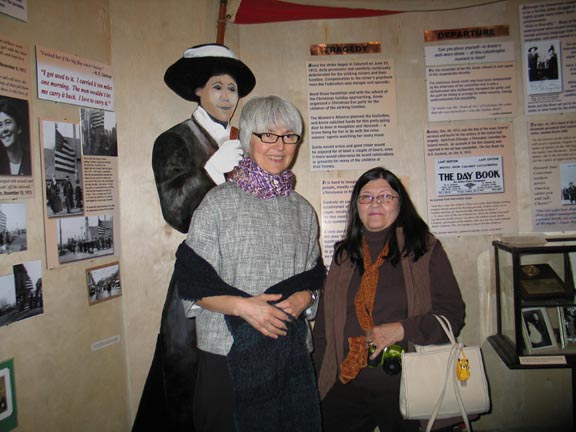
Induction Ceremony for "Big Annie" Clemenc into Labor's International Hall of Fame honors Calumet labor leader of 1913 Copper Miners' Strike
By Michele Bourdieu
Shawn Ellis, Labor co-chair of Labor's International Hall of Fame, presents an award honoring Big Annie Clemenc to Annie's great granddaughter Anne Marie Kelly of Oak Lawn, Illinois, during the Induction Ceremony for Big Annie held on July 26, 2013, in the Calumet Visitor Center. (Photos by Keweenaw Now)
CALUMET -- An estimated 175 people nearly filled the Third Floor Lodge Room of the Calumet Visitor Center on July 26, 2013, for the Induction Ceremony to mark the acceptance of Big Annie Clemenc, labor leader during the 1913 Copper Miners' Strike in Calumet, into Labor's International Hall of Fame.
Keweenaw National Historical Park officials hosted the event, which was held just a few days after the actual centennial of the strike's official beginning -- July 23, 1913. The ceremony was one of many events scheduled this year in commemoration of the centennial.*
Special guests for the ceremony included Big Annie's great granddaughters, Anne Marie Kelly and Debra Devlin of Oak Lawn, Illinois, and their children; Shawn Ellis, Labor co-chair of Labor's International Hall of Fame; Lyndon Comstock, nominator of Annie for the honor and author of Annie Clemenc and the Great Keweenaw Copper Strike (2013).
In the Calumet Visitor Center, Keweenaw National Historical Park Ranger Tom Baker welcomes the audience to the July 26, 2013, Induction of Annie Clemenc into Labor's International Hall of Fame and introduces special guests, including Annie's descendants -- Anne Marie Kelly and Debra Devlin of Oak Lawn, Illinois, and their children, seated in the front row.
After a welcome by Mike Pflaum, Keweenaw National Historical Park (KNHP) superintendent, and an introduction by Tom Baker, KNHP park ranger and management assistant, Comstock presented the historical context for the induction. He reported on the research he did for his book on Annie and the strike -- and he noted how his interest in Annie began while working on research with his cousin Joanne Thomas of Allouez, who put together the museum exhibit on Annie, now displayed in the Coppertown Mining Museum in Calumet.**
At the July 26, 2013, Induction of Annie Clemenc (Big Annie) into Labor's International Hall of Fame in the Calumet Visitor Center, Lyndon Comstock, author of Annie Clemenc and the Great Keweenaw Copper Strike, talks about Big Annie's origins and how she came to embody the 1913 Copper Miners' Strike in Calumet, Michigan. (Videos by Keweenaw Now)
Comstock continues his talk about Annie and describes the events that led up to the Italian Hall tragedy of Christmas Eve, 1913:
Shawn Ellis, Labor co-chair of Labor's International Hall of Fame, presents an award honoring Big Annie Clemenc to Annie's great granddaughter Anne Marie Kelly of Oak Lawn, Illinois, during the Induction Ceremony for Big Annie held on July 26, 2013, in the Calumet Visitor Center. (Photos by Keweenaw Now)
CALUMET -- An estimated 175 people nearly filled the Third Floor Lodge Room of the Calumet Visitor Center on July 26, 2013, for the Induction Ceremony to mark the acceptance of Big Annie Clemenc, labor leader during the 1913 Copper Miners' Strike in Calumet, into Labor's International Hall of Fame.
Keweenaw National Historical Park officials hosted the event, which was held just a few days after the actual centennial of the strike's official beginning -- July 23, 1913. The ceremony was one of many events scheduled this year in commemoration of the centennial.*
Special guests for the ceremony included Big Annie's great granddaughters, Anne Marie Kelly and Debra Devlin of Oak Lawn, Illinois, and their children; Shawn Ellis, Labor co-chair of Labor's International Hall of Fame; Lyndon Comstock, nominator of Annie for the honor and author of Annie Clemenc and the Great Keweenaw Copper Strike (2013).
In the Calumet Visitor Center, Keweenaw National Historical Park Ranger Tom Baker welcomes the audience to the July 26, 2013, Induction of Annie Clemenc into Labor's International Hall of Fame and introduces special guests, including Annie's descendants -- Anne Marie Kelly and Debra Devlin of Oak Lawn, Illinois, and their children, seated in the front row.
After a welcome by Mike Pflaum, Keweenaw National Historical Park (KNHP) superintendent, and an introduction by Tom Baker, KNHP park ranger and management assistant, Comstock presented the historical context for the induction. He reported on the research he did for his book on Annie and the strike -- and he noted how his interest in Annie began while working on research with his cousin Joanne Thomas of Allouez, who put together the museum exhibit on Annie, now displayed in the Coppertown Mining Museum in Calumet.**
Comstock continues his talk about Annie and describes the events that led up to the Italian Hall tragedy of Christmas Eve, 1913:
Author Lyndon Comstock speaks about Annie's leadership role in the 1913 Copper Miners' Strike, her heroism and the Italian Hall tragedy.
In his conclusion, Comstock affirms his belief that Big Annie deserves being included in Labor's International Hall of Fame and introduces Shawn Ellis, Labor co-chair of the organization, based in Detroit:
Lyndon Comstock concludes his speech about Annie and introduces Shawn Ellis, Labor co-chair of Labor's International Hall of Fame, who explains the process for selection of inductees. (The official induction of Annie Clemenc into Labor's International Hall of Fame took place on May 16, 2013, in New York, NY.)
Anne Marie Kelly, great granddaughter of Big Annie Clemenc, accepts the 2013 Labor's International Hall of Fame Induction Award from Shawn Ellis and offers an acceptance speech to the appreciative audience:
After accepting the 2013 Labor's International Hall of Fame Induction Award from Shawn Ellis, Anne Marie Kelly, Big Annie's great granddaughter, introduces her sister, Debra Devlin, and welcomes Virginia Burns, author of Tall Annie, a biography of Big Annie for young readers. Kelly also notes she is inspired to meet young visitors who attended the event because they are interested in Annie and writing about her for school projects.
A program from the May 16, 2013, Labor's International Hall of Fame event, distributed at the Calumet event, notes Annie Clemenc shared the honor of 2013 induction with Evelyn Dubrow, a lobbyist for the International Ladies' Garment Workers Union, and with Viola Liuzzo, who was killed by Ku Klux Klansmen while aiding civil rights marchers during the march to Selma, Alabama, in 1965.
The program describes how Annie Klobuchar Clemenc carried the flag in the daily marches during the 1913-14 Copper Miners' Strike in Calumet.
"She was arrested several times," the program notes. " She was physically attacked by strikebreakers, company goons and local police. But she never wavered in her determination to bring social justice to a mining workforce that was underpaid, forced to work under dangerous conditions and subject to constant management harassment."
Stuart Baird, manager of the Coppertown Mining Museum, who has been enthusiastic about having the "Big Annie" exhibit in the museum for the centennial, commented on the induction ceremony.
"I think it's the best event they ever had to celebrate Big Annie's legacy," Baird said.
Virginia Burns makes a special friend during the book signing -- Madison La Bonte of Sault Ste. Marie, Mich., who is doing a school project on Big Annie.
Virginia Burns is pictured here at her book signing in Coppertown Museum with her family members who attended the Induction Ceremony -- from left, her grandson John Ritchie, her daughter Meg Ritchie of Owosso (Mich.) and her son Duncan Ritchie. Duncan and his son John made the trip from Madison, Wis.
After the Induction Ceremony, Big Annie's descendants from Oak Lawn, Ill. -- Anne Marie Kelly and her daughter Aine, right, and Debra Devlin and her son Patrick -- visit the "Big Annie" exhibit at the Coppertown Mining Museum. Debra and Aine are holding the 2013 Labor's International Hall of Fame Induction Award the family received during the ceremony.
Susan Comstock, left, author Lyndon Comstock's sister, from Evanston, Ill., and Peggy Germain of Calumet, author of articles on the Italian Hall disaster, visit the "Big Annie" exhibit after the induction ceremony.
* Click here to see our videos of the Italian Hall Ceremony held in Calumet during Finn Fest on June 20, 2013.
** Click here to read our July 22, 2013, article with photos of the "Big Annie" exhibit, created by Joanne Thomas.
A program from the May 16, 2013, Labor's International Hall of Fame event, distributed at the Calumet event, notes Annie Clemenc shared the honor of 2013 induction with Evelyn Dubrow, a lobbyist for the International Ladies' Garment Workers Union, and with Viola Liuzzo, who was killed by Ku Klux Klansmen while aiding civil rights marchers during the march to Selma, Alabama, in 1965.
The program describes how Annie Klobuchar Clemenc carried the flag in the daily marches during the 1913-14 Copper Miners' Strike in Calumet.
"She was arrested several times," the program notes. " She was physically attacked by strikebreakers, company goons and local police. But she never wavered in her determination to bring social justice to a mining workforce that was underpaid, forced to work under dangerous conditions and subject to constant management harassment."
Stuart Baird, manager of the Coppertown Mining Museum, who has been enthusiastic about having the "Big Annie" exhibit in the museum for the centennial, commented on the induction ceremony.
"I think it's the best event they ever had to celebrate Big Annie's legacy," Baird said.
More photos ...
After the Induction Ceremony, Big Annie's great-granddaughters, Anne Marie Kelly, right, and Debra Devlin (holding award) are pictured here with Shawn Ellis, Labor co-chair for Labor's International Hall of Fame.
Following the Induction Ceremony, authors Lyndon Comstock and Virginia Burns offered book signings for the public.
Lyndon Comstock, author of Annie Clemenc and the Great Keweenaw Copper Strike and nominator of Annie to Labor's International Hall of Fame, is pictured here with Janet Gregorich of South Range after signing his book for her. The two chatted about their Croatian heritage, very close in background to Annie's. In his book, Comstock discusses Annie's Slovenian heritage and her connection with Slovenian women's groups.
During her book signing event at the Coppertown Museum after the Induction Ceremony, Virginia Burns of Owosso, Mich., author of Tall Annie, chats with Debra Devlin, great granddaughter of Annie Clemenc, and her son, Patrick.After the Induction Ceremony, Big Annie's great-granddaughters, Anne Marie Kelly, right, and Debra Devlin (holding award) are pictured here with Shawn Ellis, Labor co-chair for Labor's International Hall of Fame.
Following the Induction Ceremony, authors Lyndon Comstock and Virginia Burns offered book signings for the public.
Virginia Burns makes a special friend during the book signing -- Madison La Bonte of Sault Ste. Marie, Mich., who is doing a school project on Big Annie.
Virginia Burns is pictured here at her book signing in Coppertown Museum with her family members who attended the Induction Ceremony -- from left, her grandson John Ritchie, her daughter Meg Ritchie of Owosso (Mich.) and her son Duncan Ritchie. Duncan and his son John made the trip from Madison, Wis.
After the Induction Ceremony, Big Annie's descendants from Oak Lawn, Ill. -- Anne Marie Kelly and her daughter Aine, right, and Debra Devlin and her son Patrick -- visit the "Big Annie" exhibit at the Coppertown Mining Museum. Debra and Aine are holding the 2013 Labor's International Hall of Fame Induction Award the family received during the ceremony.
Susan Comstock, left, author Lyndon Comstock's sister, from Evanston, Ill., and Peggy Germain of Calumet, author of articles on the Italian Hall disaster, visit the "Big Annie" exhibit after the induction ceremony.
* Click here to see our videos of the Italian Hall Ceremony held in Calumet during Finn Fest on June 20, 2013.
** Click here to read our July 22, 2013, article with photos of the "Big Annie" exhibit, created by Joanne Thomas.
New slide show: Summer Art 2013
HANCOCK -- See our latest slide show, Summer Art 2013, for some samples of art exhibited in July and August in Calumet and Hancock.
Click here for the slide show. Watch for announcements on First Friday in Calumet exhibits, coming up this Friday, Sept. 6.
Calumet artist Jack Oyler's work is displayed during the July 5, 2013, open house for Laura Smyth's Smythtype Design at 104 Fifth St., Suite A, above Café Rosetta in Calumet. (Photo by Keweenaw Now)
Click here for the slide show. Watch for announcements on First Friday in Calumet exhibits, coming up this Friday, Sept. 6.
Sunday, September 01, 2013
From The Progressive: Wis. GOP to ban public for miles from mine
By Rebecca Kemble
Posted Aug. 31, 2013, on The Progressive
Reprinted in part with permission
MADISON -- This week’s Friday afternoon news dump in Wisconsin was a doozy: A new bill to allow the Gogebic Taconite iron mining company to bar the public from using public access land on an eight-square-mile parcel near their proposed mine site. This is an area that attracts people from all over the country to enjoy the excellent trout fishing and hunting.
Announced late on Friday afternoon before the long Labor Day weekend, the bill is being fast-tracked and may pass into law before the end of September. It is up for a public hearing this Wednesday and is scheduled to be voted out of committee on Thursday. (Photo inset © and courtesy Rebecca Kemble. Reprinted with permission.)
Senate Bill 278 was introduced by Senators Tom Tiffany (R-Hazelhurst) and Glenn Grothman (R-West Bend). Tiffany championed the second go round for the massive mining deregulation bill that finally passed into law last spring, after corporate interests backing the plan spent millions unseating Democratic State Senator Jess King last November to clinch the extra Republican vote needed on the bill, since Sen. Dale Schultz (R-Richland Center) broke ranks to oppose the measure.
Outside a public hearing at the Hurley High School, August 15, 2013. (Photo © and courtesy Rebecca Kemble. Reprinted with permission)
Nobody was willing to take credit for writing the bill before it was passed, but after it was signed into law Senate Majority Leader Scott Fitzgerald was not ashamed to admit that lawyers for GTac wrote the bill.
Even though the law pushes the contested case hearing (an administrative legal proceeding in which the public may contest mining company data and claims and call them to testify under oath) until after the mining permit has already been granted, and severely reduces the role of the Department of Natural Resources in the regulatory process, eliminating most of their enforcement authority and rendering them little more than bureaucratic "box checkers," apparently the company’s lawyers didn’t go far enough and now they have to pass a new law. ...
Click here to read the rest of this article.
Posted Aug. 31, 2013, on The Progressive
Reprinted in part with permission
MADISON -- This week’s Friday afternoon news dump in Wisconsin was a doozy: A new bill to allow the Gogebic Taconite iron mining company to bar the public from using public access land on an eight-square-mile parcel near their proposed mine site. This is an area that attracts people from all over the country to enjoy the excellent trout fishing and hunting.
Announced late on Friday afternoon before the long Labor Day weekend, the bill is being fast-tracked and may pass into law before the end of September. It is up for a public hearing this Wednesday and is scheduled to be voted out of committee on Thursday. (Photo inset © and courtesy Rebecca Kemble. Reprinted with permission.)
Senate Bill 278 was introduced by Senators Tom Tiffany (R-Hazelhurst) and Glenn Grothman (R-West Bend). Tiffany championed the second go round for the massive mining deregulation bill that finally passed into law last spring, after corporate interests backing the plan spent millions unseating Democratic State Senator Jess King last November to clinch the extra Republican vote needed on the bill, since Sen. Dale Schultz (R-Richland Center) broke ranks to oppose the measure.
Outside a public hearing at the Hurley High School, August 15, 2013. (Photo © and courtesy Rebecca Kemble. Reprinted with permission)
Nobody was willing to take credit for writing the bill before it was passed, but after it was signed into law Senate Majority Leader Scott Fitzgerald was not ashamed to admit that lawyers for GTac wrote the bill.
Even though the law pushes the contested case hearing (an administrative legal proceeding in which the public may contest mining company data and claims and call them to testify under oath) until after the mining permit has already been granted, and severely reduces the role of the Department of Natural Resources in the regulatory process, eliminating most of their enforcement authority and rendering them little more than bureaucratic "box checkers," apparently the company’s lawyers didn’t go far enough and now they have to pass a new law. ...
Click here to read the rest of this article.
Saturday, August 31, 2013
Sen. Levin: statement on President Obama’s announcement on using military force against Syria
WASHINGTON –- Sen. Carl Levin, D-Mich., chairman of the Senate Armed Services Committee, issued the following statement today, Saturday, Aug. 31, 2013, after the president’s announcement that he will seek congressional support for the use of military force in response to the Syrian government’s use of chemical weapons:
"The president made a strong case today, and wisely chose to seek congressional support, even though he believes he is not required by law to do so. A congressional vote to authorize the use of force would strengthen the president’s decision to take military action. It is important that the president is seeking support and participation from other countries, including Arab countries.
"I have again urged the president to use this time to help the Syrian people defend themselves by assisting vetted elements of the Syrian opposition in obtaining more effective weapons such as anti-tank weapons."
"The president made a strong case today, and wisely chose to seek congressional support, even though he believes he is not required by law to do so. A congressional vote to authorize the use of force would strengthen the president’s decision to take military action. It is important that the president is seeking support and participation from other countries, including Arab countries.
"I have again urged the president to use this time to help the Syrian people defend themselves by assisting vetted elements of the Syrian opposition in obtaining more effective weapons such as anti-tank weapons."
Friday, August 30, 2013
Sen. Levin's statement on consultations with Obama administration on Syria
WASHINGTON -- Sen. Carl Levin, D-Mich., chairman of the Senate Armed Services Committee, issued the following statement on his consultations today with the Obama administration on the situation in Syria:
"I again expressed my view that the United States should not undertake a kinetic strike before the U.N. inspectors complete their work, and that the impact of such a strike would be weakened if it does not have the participation and support of a large number of nations, including Arab nations. I also urged the Administration to send a powerful message to the Assad regime by immediately getting lethal aid to vetted elements of the Syrian opposition. Doing so can change the balance militarily and also contribute to a political solution in Syria."
Michigan laws have age, safety requirements for jet ski, boat operators; DNR reminds boaters of safety precautions
By Michele Bourdieu
A jet ski (personal watercraft) approaches Hancock Beach, passing close to the buoy marking the swimming, no boats area. (Keweenaw Now file photo)
EDITOR'S NOTE: Have you noticed that some young operators of jet skis (Personal Watercraft) come awfully close to Hancock Beach, sometimes checking to see who is on the beach rather than watching where their speeding "personal watercraft" is heading -- oblivious to whether they might be within the swimming area heading for a swimmer? I have. Two other swimmers and I were trying to swim laps one day this week when one of these careless jet skiers came dangerously close to wiping us out.
And it wasn't just one day that I've witnessed this sort of behavior near our beach. Luckily the children who sometimes swim out to the sand bar (farther out than we were swimming) were not doing so at that time. Unfortunately there is no lifeguard and no one to enforce rules at Hancock Beach.
The Department of Natural Resources sent a press release this week reminding the public in general about boat safety during the Labor Day weekend. Although they sent a press release on boater safety last March (well in advance of the boating season!) they did not include in this recent release the fact that state laws actually do require people of a certain age to pass a safety test and carry a safety card if they drive a jet ski -- facts I learned after reporting this incident to City Councilor John Slivon, who helped me find these laws.
Hancock City Manager Glenn Anderson is now aware of the situation and has expressed concern.
Here is the Michigan law concerning age restrictions for operating a "Personal Watercraft" (jet ski):
Personal Watercraft (PWC)
Those less than 14 years of age may not legally operate a PWC.
Those 14 and 15 years of age may operate a PWC legally only if they have obtained a boating safety certificate and …
Those born on or before December 31, 1978, may operate a PWC legally without restrictions. (Thus, they need to be 35 years old by the end of this year!)
Enforcement
Michigan law enforcement officers patrol the waterways to make your boating experience safe and pleasant. Cooperate with them by following the laws and guidelines.
Carry the Card: Vessel operators who are required to have a Boater Education Card must carry the card on board the vessel and have it available for inspection by an enforcement officer.
Penalty: Not carrying your Boater Education Card when one is required can result in a fine.
(According to the City of Hancock, the U.S. Coast Guard and the Houghton County Sheriff's Dept. are charged with enforcement in the local area.)
Click here for details about the boater education law, who is exempt from the education requirement, which courses are approved, the Online Course Exam, and the application for the Boater Education Card. (Click more for info about Personal Watercraft)
The following is information from the Department of Natural Resources (DNR), sent Aug. 29, 2013:
Michigan conservation officers issue safe boating reminder for Labor Day weekend
LANSING -- As summer winds down in Michigan with the Labor Day holiday weekend, conservation officers at the Department of Natural Resources (DNR) remind Michigan residents to practice safety when boating. The DNR encourages Michigan residents and visitors to:
"In most of the drowning accidents in the United States, people have life jackets on board their boats, but they just aren’t wearing them," he said. "Life jackets must be Coast Guard-approved, and must be in good and serviceable condition, and properly fitted to the person wearing it."
In Michigan, anyone younger than 6 years of age must wear a life jacket when on the open deck of any vessel. But wearing a personal flotation device (PFD) is recommended for everyone.
"Every study shows that using life jackets saves lives," said Turner. "Life jackets have been redesigned in recent years so that they come in styles that are comfortable and easy to wear. Having a life jacket on prevents the search for one during a boating emergency."
For more information on safe boating, visit the U.S. Coast Guard’s Boating Safety Resource Center at www.uscgboating.org.
A jet ski (personal watercraft) approaches Hancock Beach, passing close to the buoy marking the swimming, no boats area. (Keweenaw Now file photo)
EDITOR'S NOTE: Have you noticed that some young operators of jet skis (Personal Watercraft) come awfully close to Hancock Beach, sometimes checking to see who is on the beach rather than watching where their speeding "personal watercraft" is heading -- oblivious to whether they might be within the swimming area heading for a swimmer? I have. Two other swimmers and I were trying to swim laps one day this week when one of these careless jet skiers came dangerously close to wiping us out.
And it wasn't just one day that I've witnessed this sort of behavior near our beach. Luckily the children who sometimes swim out to the sand bar (farther out than we were swimming) were not doing so at that time. Unfortunately there is no lifeguard and no one to enforce rules at Hancock Beach.
The Department of Natural Resources sent a press release this week reminding the public in general about boat safety during the Labor Day weekend. Although they sent a press release on boater safety last March (well in advance of the boating season!) they did not include in this recent release the fact that state laws actually do require people of a certain age to pass a safety test and carry a safety card if they drive a jet ski -- facts I learned after reporting this incident to City Councilor John Slivon, who helped me find these laws.
Hancock City Manager Glenn Anderson is now aware of the situation and has expressed concern.
Here is the Michigan law concerning age restrictions for operating a "Personal Watercraft" (jet ski):
Personal Watercraft (PWC)
Those less than 14 years of age may not legally operate a PWC.
Those 14 and 15 years of age may operate a PWC legally only if they have obtained a boating safety certificate and …
- He or she is accompanied on board by his or her parent or legal guardian or by a person at least 21 years of age who has been designated by the parent or legal guardian or …
- He or she is operating or riding the PWC at a distance of not more than 100 feet from his or her parent or legal guardian or from a person at least 21 years of age who has been designated by the parent or legal guardian.
Those born on or before December 31, 1978, may operate a PWC legally without restrictions. (Thus, they need to be 35 years old by the end of this year!)
Enforcement
Michigan law enforcement officers patrol the waterways to make your boating experience safe and pleasant. Cooperate with them by following the laws and guidelines.
Carry the Card: Vessel operators who are required to have a Boater Education Card must carry the card on board the vessel and have it available for inspection by an enforcement officer.
Penalty: Not carrying your Boater Education Card when one is required can result in a fine.
(According to the City of Hancock, the U.S. Coast Guard and the Houghton County Sheriff's Dept. are charged with enforcement in the local area.)
Click here for details about the boater education law, who is exempt from the education requirement, which courses are approved, the Online Course Exam, and the application for the Boater Education Card. (Click more for info about Personal Watercraft)
The following is information from the Department of Natural Resources (DNR), sent Aug. 29, 2013:
Michigan conservation officers issue safe boating reminder for Labor Day weekend
LANSING -- As summer winds down in Michigan with the Labor Day holiday weekend, conservation officers at the Department of Natural Resources (DNR) remind Michigan residents to practice safety when boating. The DNR encourages Michigan residents and visitors to:
- Wear a life jacket. More than 80 percent of drowning accidents in the United States are due to people not wearing their life jackets.
- Make sure your boat is properly equipped and your equipment is in good working order. In addition to all legally required equipment, such as life jackets and fire extinguishers, always carry a first-aid kit, nautical charts and an anchor. Make sure your navigation lights are working properly.
- Avoid drinking alcohol. Nearly half of all boating accidents involve alcohol. Studies show that passengers are 10 times more likely to fall overboard when they have consumed alcohol. Boating under the influence is against the law.
- File a float plan. Always let a family member or friend on shore know the details of your trip – and when you are expected back. Give them phone numbers for the local sheriff (for inland waters) or U.S. Coast Guard (for Great Lakes waters) in the event you don’t return when expected.
- Maintain a sharp lookout. Stay alert for other boats, swimmers, skiers and objects in the water. This is especially true when operating in crowded waterways, at night and during conditions of restricted visibility.
- Carry a marine radio or cell phone. Be prepared to call for help in case you are involved in an accident, your boat becomes disabled or you otherwise need assistance. Program the phone numbers for the county sheriff or U.S. Coast Guard in your cell phone. Make sure your cell phone is fully charged, but be aware that there are often gaps in coverage on the water.

- If you are pulling persons on water skis, tubes or rafts, have someone be a spotter on your vessel or personal watercraft (jet ski) to keep an eye out for hazards and other watercraft.
"In most of the drowning accidents in the United States, people have life jackets on board their boats, but they just aren’t wearing them," he said. "Life jackets must be Coast Guard-approved, and must be in good and serviceable condition, and properly fitted to the person wearing it."
In Michigan, anyone younger than 6 years of age must wear a life jacket when on the open deck of any vessel. But wearing a personal flotation device (PFD) is recommended for everyone.
"Every study shows that using life jackets saves lives," said Turner. "Life jackets have been redesigned in recent years so that they come in styles that are comfortable and easy to wear. Having a life jacket on prevents the search for one during a boating emergency."
For more information on safe boating, visit the U.S. Coast Guard’s Boating Safety Resource Center at www.uscgboating.org.
Thursday, August 29, 2013
Letter: Loss of MTU Lakeshore Center office space is hardship for Conservation District
Dear Constituents and Associates:
The Houghton Keweenaw Conservation District (HKCD) is very sad to report that after almost 20 years at 600 E. Lakeshore Drive (now known as Michigan Tech's Lakeshore Center), the current landlord, Michigan Technological University (MTU), has elected to take the joint HKCD/USDA Natural Resources Conservation Service (NRCS) office for some other purpose effective September 1, 2013. MTU is unwilling to work out an ongoing lease. As a result, the office space at 600 E. Lakeshore Drive and the federal funding grandfathered for that specific location have been lost. This is a major hardship for our organizations.
At the March 21, 2013, annual meeting of the Houghton Keweenaw Conservation District (HKCD), held at Michigan Tech's Lakeshore Center in Houghton, where HKCD has had an office for nearly 20 years until this month, Gina Nicholas, HKCD chairperson and author of this letter, summarizes the District's 2011-2012 projects. (Photo by Keweenaw Now)
600 E. Lakeshore Drive has been an ideal professional setting for HKCD and NRCS to serve the natural resource conservation needs for the citizens and landowners of Houghton and Keweenaw Counties and for accomplishing collaborative grant funded projects. Many MTU students and professors have been and are included in HKCD sponsored projects. Projects include the Eagle River Watershed, Pilgrim River Watershed, Bete Grise Preserve, Bete Grise Wetlands, Hills Creek and Cliff Mine.
At the March 21, 2013, annual meeting of the Houghton Keweenaw Conservation District, Gina Nicholas, HKCD chairperson, speaks about the District's 2011-2112 projects and thanks the partners and volunteers in the community -- from Michigan Tech University faculty and students to Trout Unlimited, the Michigan Dept. of Environmental Quality and others for their help and participation. (Videos by Allan Baker for Keweenaw Now)*
During fiscal years 2012 and 2013, HKCD projects paid over $150,000 to MTU to help provide better educational and research opportunities for students and professors and to help MTU address financial challenges with its land holdings. HKCD also provides countless hours of pro bono service for MTU sponsored projects.
During her presentation at the March 21, 2013, annual meeting of the Houghton Keweenaw Conservation District, Gina Nicholas speaks about restoring fisheries to Hills Creek and Eagle River by remediating stamp sand; expanding the Lizzadro Preserve and the Bete Grise Preserve on Lake Superior; and cooperating with partners on other projects.
In order to minimize disruption to projects and partners, HKCD/NRCS will relocate to a new office at 711 W. Lakeshore Drive in early September on a temporary basis. During the interim from August 23 to a date to-be-determined after September 3, 2013, the HKCD/NRCS office will be closed. There will be times when both files and systems are unavailable and some reports will not be completed on schedule. However, planned fieldwork and construction projects will continue as scheduled. Project partners can continue to reach Sue Haralson and Rob Aho via email and cell phone.
At the March 21, 2013, Houghton Keweenaw Conservation District annual meeting, Chad Kotke, Water Resources Division of the Michigan Department of Environmental Quality, presents "Preserving Our Past, Restoring Our Future in the Eagle River Watershed." (Photo by Keweenaw Now)
Additional plans for the joint HKCD/NRCS office will be discussed at HKCD’s regular monthly public Board meeting at 12:30 p.m. on Tuesday, Sept. 17, 2013. This meeting will be held in Houghton at the Portage Lake District Library conference room.
Thank you for your understanding and support as HKCD and NRCS work through this challenging situation. Please call me at 906-370-7248 if you have questions.
Gina Nicholas, Chairperson, Houghton Keweenaw Conservation District
Editor's Notes: The above letter is reprinted with permission. We have added our video clips and photos of HKCD's 2013 Annual Meeting to illustrate Gina Nicholas's letter with some details about HKCD projects, partners and volunteers.
* HKCD helped with the Natural Resources Trust Fund purchase of 320 acres, including the summit, of Brockway Mountain. See the Aug. 25, 2013, article, "Story of Brockway Mountain -- now part of Keweenaw Coastal Wildlife Corridor," by Gina Nicholas.
See the June 25, 2013, article, "Conservation District purchase adds Point Isabelle, Bete Grise wetlands, Lac La Belle shoreline to Bete Grise Preserve."
The Houghton Keweenaw Conservation District (HKCD) is very sad to report that after almost 20 years at 600 E. Lakeshore Drive (now known as Michigan Tech's Lakeshore Center), the current landlord, Michigan Technological University (MTU), has elected to take the joint HKCD/USDA Natural Resources Conservation Service (NRCS) office for some other purpose effective September 1, 2013. MTU is unwilling to work out an ongoing lease. As a result, the office space at 600 E. Lakeshore Drive and the federal funding grandfathered for that specific location have been lost. This is a major hardship for our organizations.
At the March 21, 2013, annual meeting of the Houghton Keweenaw Conservation District (HKCD), held at Michigan Tech's Lakeshore Center in Houghton, where HKCD has had an office for nearly 20 years until this month, Gina Nicholas, HKCD chairperson and author of this letter, summarizes the District's 2011-2012 projects. (Photo by Keweenaw Now)
600 E. Lakeshore Drive has been an ideal professional setting for HKCD and NRCS to serve the natural resource conservation needs for the citizens and landowners of Houghton and Keweenaw Counties and for accomplishing collaborative grant funded projects. Many MTU students and professors have been and are included in HKCD sponsored projects. Projects include the Eagle River Watershed, Pilgrim River Watershed, Bete Grise Preserve, Bete Grise Wetlands, Hills Creek and Cliff Mine.
During fiscal years 2012 and 2013, HKCD projects paid over $150,000 to MTU to help provide better educational and research opportunities for students and professors and to help MTU address financial challenges with its land holdings. HKCD also provides countless hours of pro bono service for MTU sponsored projects.
In order to minimize disruption to projects and partners, HKCD/NRCS will relocate to a new office at 711 W. Lakeshore Drive in early September on a temporary basis. During the interim from August 23 to a date to-be-determined after September 3, 2013, the HKCD/NRCS office will be closed. There will be times when both files and systems are unavailable and some reports will not be completed on schedule. However, planned fieldwork and construction projects will continue as scheduled. Project partners can continue to reach Sue Haralson and Rob Aho via email and cell phone.
At the March 21, 2013, Houghton Keweenaw Conservation District annual meeting, Chad Kotke, Water Resources Division of the Michigan Department of Environmental Quality, presents "Preserving Our Past, Restoring Our Future in the Eagle River Watershed." (Photo by Keweenaw Now)
Additional plans for the joint HKCD/NRCS office will be discussed at HKCD’s regular monthly public Board meeting at 12:30 p.m. on Tuesday, Sept. 17, 2013. This meeting will be held in Houghton at the Portage Lake District Library conference room.
Thank you for your understanding and support as HKCD and NRCS work through this challenging situation. Please call me at 906-370-7248 if you have questions.
Gina Nicholas, Chairperson, Houghton Keweenaw Conservation District
Editor's Notes: The above letter is reprinted with permission. We have added our video clips and photos of HKCD's 2013 Annual Meeting to illustrate Gina Nicholas's letter with some details about HKCD projects, partners and volunteers.
* HKCD helped with the Natural Resources Trust Fund purchase of 320 acres, including the summit, of Brockway Mountain. See the Aug. 25, 2013, article, "Story of Brockway Mountain -- now part of Keweenaw Coastal Wildlife Corridor," by Gina Nicholas.
See the June 25, 2013, article, "Conservation District purchase adds Point Isabelle, Bete Grise wetlands, Lac La Belle shoreline to Bete Grise Preserve."
Wednesday, August 28, 2013
Bells to ring around the world at 3 p.m. TODAY to commemorate 50th anniversary of Dr. Martin Luther King's "I Have a Dream" speech
From Tech Today:
HOUGHTON -- At 3 p.m.TODAY, Wednesday, Aug. 28, bells will ring around the world to commemorate the 50th anniversary of Dr. Martin Luther King Jr.’s seminal "I Have a Dream" speech, delivered at the 1963 March on Washington.
At Michigan Tech, the carillon will also ring, joining in the Let Freedom Ring global celebration.
". . . So let freedom ring from the prodigious hilltops of New Hampshire. Let freedom ring from the mighty mountains of New York. Let freedom ring from the heightening Alleghenies of Pennsylvania! Let freedom ring from the snowcapped Rockies of Colorado! Let freedom ring from the curvaceous slopes of California! But not only that, let freedom ring from Stone Mountain of Georgia! Let freedom ring from Lookout Mountain of Tennessee! Let freedom ring from every hill and molehill of
Mississippi . . ."
Dr. Martin Luther King Jr.
August 28, 1963
Editor's Note: Click here to see a YouTube video of the 1963 March on Washington and Dr. King's speech.
At 3:05 p.m. at the Lincoln Memorial, President Obama is scheduled to deliver remarks at the Let Freedom Ring ceremony commemorating the 50th Anniversary of the March on Washington for Jobs and Freedom.
HOUGHTON -- At 3 p.m.TODAY, Wednesday, Aug. 28, bells will ring around the world to commemorate the 50th anniversary of Dr. Martin Luther King Jr.’s seminal "I Have a Dream" speech, delivered at the 1963 March on Washington.
At Michigan Tech, the carillon will also ring, joining in the Let Freedom Ring global celebration.
". . . So let freedom ring from the prodigious hilltops of New Hampshire. Let freedom ring from the mighty mountains of New York. Let freedom ring from the heightening Alleghenies of Pennsylvania! Let freedom ring from the snowcapped Rockies of Colorado! Let freedom ring from the curvaceous slopes of California! But not only that, let freedom ring from Stone Mountain of Georgia! Let freedom ring from Lookout Mountain of Tennessee! Let freedom ring from every hill and molehill of
Mississippi . . ."
Dr. Martin Luther King Jr.
August 28, 1963
Editor's Note: Click here to see a YouTube video of the 1963 March on Washington and Dr. King's speech.
At 3:05 p.m. at the Lincoln Memorial, President Obama is scheduled to deliver remarks at the Let Freedom Ring ceremony commemorating the 50th Anniversary of the March on Washington for Jobs and Freedom.
Sunday, August 25, 2013
Wolf advocates kick off second petition drive, seek referendum on Michigan wolf hunt law
By Michele Bourdieu
PA 21 extends to the NRC the authority to designate any species (except mourning doves) as game. The NRC, with their new found authority, quickly designated the wolf as game and authorized a public hunt for Nov. 15 to Dec. 31, 2013, with a quota of 43 wolves to be killed in three designated Wolf Management Units (WMUs), or areas -- labeled A, B and C -- of the Upper Peninsula.
Nancy Warren, National Wolfwatcher Coalition Great Lakes Regional director, says this law is not just about the wolf.
"They (NRC) can designate anything (except mourning doves) as game -- the lynx, sand hill cranes etc," Warren says. "Their decisions cannot be challenged through the referendum, but PA 21 can since it is a new law. Therefore the second petition drive. If successful -- and based on the outpouring of support I am confident we will get the signatures -- two measures will be on the ballot: the repeal of PA 520 and the repeal of PA 21." (Inset: Photo of Nancy Warren by Allan Baker for Keweenaw Now)
On July 24, 2013, Warren and representatives from Keep Michigan Wolves Protected came to Houghton to rally concerned citizens wishing to help collect these signatures.
Warren, who had just flown in from Arizona, where she was doing work to help the Mexican gray wolf, kicked off that meeting with a presentation on how recent legislation has overruled Michigan's Wolf Management Plan and how the NRC, a politically appointed, unelected body -- only one of whom has a natural resources background -- has the authority to designate a game species and establish a hunt that is not based on science. Here is an excerpt from the first part of her presentation:
During a July 24, 2013 kick-off meeting in Houghton, Mich., for the second petition drive calling for a Michigan referendum against recent wolf hunt legislation, Nancy Warren, National Wolfwatcher Coalition Great Lakes Regional director, speaks about Michigan legislation involving wolf management and the current PA 21, a law allowing the Michigan Natural Resources Commission decision to designate a wolf hunt in the fall of 2013. (Videos by Allan Baker for Keweenaw Now unless otherwise indicated.)
In the same presentation, Warren introduced some new information on wolf depredation she recently received from the Michigan Department of Natural Resources (DNR) -- information she has been requesting under the Freedom of Information Act to determine the actual number of depredations in each Upper Peninsula unit designated for a wolf hunt. Here is a video clip in which Warren speaks about that information and what it reveals about the disconnect between depredations and the authorized wolf hunt:
At the July 24 meeting for the petition drive on PA 21, Nancy Warren continues her presentation on Michigan's wolf legislation, noting some recent DNR information on wolf depredations in the Upper Peninsula. She points out that federal funding is now available for farmers who lose livestock, and she explains how wolf management without a hunt has allowed both non-lethal and lethal means of dealing with problem wolves.
During the public comment period of the July 15, 2013, meeting of the Western Upper Peninsula Citizens
Advisory Council in Ewen, Warren spoke to DNR officials about how her FOIA requests had been refused.
During the July 15, 2013, meeting of the DNR Western Upper Peninsula Citizens Advisory Council in Ewen, Nancy Warren (standing, center) speaks about her difficulties in obtaining information about wolf depredations through the Freedom of Information Act (FOIA) and the fees she was asked to pay for what she believed should be public information. Later, through an appeal, she received the information requested, as indicated in the interview above. Present at the meeting also is 110th District State Rep. Scott Dianda, second from left, who voted for the bill that became PA 21. (Photo by Keweenaw Now)*
At that July 15 meeting, Terry Minzey, DNR Wildlife Division, brought Citizens Advisory Council members up to date on the wolf
legislation, the petitions for referenda and the authorized hunt for
fall 2013. He noted that trapping will not be allowed except on a
case-by-case basis under certain circumstances. He also attempted to answer some of Warren's questions on why her FOIA requests were refused.
At the July 15, 2013, (Michigan) Dept. of Natural Resources Western Upper Peninsula Citizens Advisory Council meeting in Ewen, Mich., Terry Minzey, DNR Wildlife Division, summarizes the legislation and the actions of the Natural Resources Commission (NRC) that resulted in the approval of a public wolf hunt for certain areas of Michigan's Upper Peninsula -- scheduled for the fall of 2013. J. R. Richardson, NRC chair, of Ontonagon, is present at this meeting (Minzey refers to him as "J.R.") A council member asks a question on trapping. (Video by Keweenaw Now)
Here Minzey attempts to answer Nancy Warren's questions:
During the July 15, 2013, meeting of the DNR Citizens Advisory Council in Ewen, Terry Minzey of the DNR Wildlife Division attempts to answer questions posed by Nancy Warren, National Wolfwatcher Coalition Great Lakes Regional director, concerning FOIA requests she made for statistics on wolf depredation events in areas of the Upper Peninsula now designated for a public wolf hunt. (Video by Keweenaw Now)
Following the July 15 DNR Citizens Advisory Council meeting, Warren sent the DNR her appeal on the FOIA refusals. In the appeal, dated July 16, 2013, she writes as follows:
"The Wildlife Conservation Order does not provide a breakout of the depredations for each of the years, only the totals.
"I requested a breakout for the number of livestock depredations (calves/adult cows) for each of the years 2010-2013 for each of the units; the amount of payments made in each of the years; the most paid to any one producer for each of the years. Since the DNR tabulated the final figures for the Order (example 80 for WMU B) and stated the problems continue, the figures for each individual year should be readily available. The breakout for the years is critical, since (in) 2010 and 2011, lethal control was not allowed, but in 2012 and 2013, lethal control was allowed."
Warren has since been analyzing the information she received on wolf depredations in the three units designated for a wolf hunt. She is especially concerned that 73 percent of ALL livestock depredations in Unit B for the period 2010-2013 occurred at one farm with a history of poor animal husbandry practices.**
"This producer was provided non-lethal tools, yet failed to utilized them. Wildlife Services have killed wolves at this property and this producer was given permits to kill wolves," Warren says. "For the years 2006, 2007, 2008, 2009 the Koski farm had 18 of the 22 verified depredations in Ontonagon County. The 2009 data shows he had the only 4 depredations in the county and in 2008 the only other depredations were some rabbits and another farm with ducks/geese."
A February 2013 DNR report on the Koski farm, whose owner had failed to dispose properly of dead animals, which can attract wolves and other predators, indicated to Warren that the justification for a wolf hunt used by the DNR and NRC (to reduce conflicts) is misleading.**
"It resonates well with the public if they are led to believe a wolf hunt will make wolves more wary and that will reduce conflicts. The true intent of the hunt has nothing to do with livestock conflicts and is purely to satisfy a vocal minority who just want a trophy hunt," Warren says. "It is interesting to note that since delisting (January 2012), lethal control of wolves responsible for depredation was implemented; and, so far, there have not been any depredations within any of the Units where the wolf hunt is planned. So the combination of lethal and non-lethal measures do work."
At a June 7, 2013, town hall meeting in Calumet, State Sen. Tom Casperson (R-Escanaba), who sponsored the bills that eventually became PA 520 and PA 21, told an audience made up mostly of his supporters that PA 21 passed the legislature thanks to votes from House Democrats who added their support to the wolf hunt legislation and the Republican majority -- including 110th District Rep. Scott Dianda (D-Calumet) and 109th District Rep. John Kivela (D-Marquette).***
State Senator Tom Casperson, sponsor of both bills that led to legislation for a wolf hunt in Michigan, speaks about that legislation during a town hall meeting on June 7, 2013, at Calumet High School. (Photo by Allan Baker for Keweenaw Now)
"I was in a position that if I got it done a lot of my people would appreciate that. They would respect that," Casperson said. "I think we did a pretty good job of working together and not playing the party line, bickering or anything like that."
Volunteers collect signatures statewide for second petition
Also speaking at the July 24 meeting on the petition was Jill Fritz, Michigan director of the Humane Society of the United States (HSUS), who summarized the legislature's approval of both PA 520, passed in December 2012, and PA 21, passed in May 2013. She described the successful petition effort that put PA 520 on hold, only to be followed by the NRC's decision, under authority given to them by PA 21, to hold a wolf hunt in the fall of 2013 -- thus the need for this second petition drive.
"The Wildlife Conservation Order does not provide a breakout of the depredations for each of the years, only the totals.
"I requested a breakout for the number of livestock depredations (calves/adult cows) for each of the years 2010-2013 for each of the units; the amount of payments made in each of the years; the most paid to any one producer for each of the years. Since the DNR tabulated the final figures for the Order (example 80 for WMU B) and stated the problems continue, the figures for each individual year should be readily available. The breakout for the years is critical, since (in) 2010 and 2011, lethal control was not allowed, but in 2012 and 2013, lethal control was allowed."
At the July 24 meeting on the second petition, Keweenaw Now's
Allan Baker interviewed Nancy Warren about the new information she
recently received from the DNR on wolf depredations in the U.P. Warren
explained how her FOIA requests were at first refused, but finally
answered when she appealed the DNR decision not to release information.
In
an interview during the July 24 a kick-off meeting in Houghton for the
petition drive for a referendum on PA 21, Nancy Warren speaks about her
efforts to FOIA information about wolf depredation from the Michigan
DNR. She also gives more details on how, since wolves in Michigan were
removed from the Endangered Species List in 2012, lethal control has
been used to manage problem wolves.
Warren has since been analyzing the information she received on wolf depredations in the three units designated for a wolf hunt. She is especially concerned that 73 percent of ALL livestock depredations in Unit B for the period 2010-2013 occurred at one farm with a history of poor animal husbandry practices.**
"This producer was provided non-lethal tools, yet failed to utilized them. Wildlife Services have killed wolves at this property and this producer was given permits to kill wolves," Warren says. "For the years 2006, 2007, 2008, 2009 the Koski farm had 18 of the 22 verified depredations in Ontonagon County. The 2009 data shows he had the only 4 depredations in the county and in 2008 the only other depredations were some rabbits and another farm with ducks/geese."
A February 2013 DNR report on the Koski farm, whose owner had failed to dispose properly of dead animals, which can attract wolves and other predators, indicated to Warren that the justification for a wolf hunt used by the DNR and NRC (to reduce conflicts) is misleading.**
"It resonates well with the public if they are led to believe a wolf hunt will make wolves more wary and that will reduce conflicts. The true intent of the hunt has nothing to do with livestock conflicts and is purely to satisfy a vocal minority who just want a trophy hunt," Warren says. "It is interesting to note that since delisting (January 2012), lethal control of wolves responsible for depredation was implemented; and, so far, there have not been any depredations within any of the Units where the wolf hunt is planned. So the combination of lethal and non-lethal measures do work."
At a June 7, 2013, town hall meeting in Calumet, State Sen. Tom Casperson (R-Escanaba), who sponsored the bills that eventually became PA 520 and PA 21, told an audience made up mostly of his supporters that PA 21 passed the legislature thanks to votes from House Democrats who added their support to the wolf hunt legislation and the Republican majority -- including 110th District Rep. Scott Dianda (D-Calumet) and 109th District Rep. John Kivela (D-Marquette).***
State Senator Tom Casperson, sponsor of both bills that led to legislation for a wolf hunt in Michigan, speaks about that legislation during a town hall meeting on June 7, 2013, at Calumet High School. (Photo by Allan Baker for Keweenaw Now)
"I was in a position that if I got it done a lot of my people would appreciate that. They would respect that," Casperson said. "I think we did a pretty good job of working together and not playing the party line, bickering or anything like that."
Volunteers collect signatures statewide for second petition
Also speaking at the July 24 meeting on the petition was Jill Fritz, Michigan director of the Humane Society of the United States (HSUS), who summarized the legislature's approval of both PA 520, passed in December 2012, and PA 21, passed in May 2013. She described the successful petition effort that put PA 520 on hold, only to be followed by the NRC's decision, under authority given to them by PA 21, to hold a wolf hunt in the fall of 2013 -- thus the need for this second petition drive.
At the July 24 meeting for volunteer petition signature gatherers, Jill Fritz, Michigan director of the Humane Society of the United States (HSUS), describes how 255,000 signatures succeeded in putting a referendum on the Dec. 2012 wolf hunt legislation on the November 2014 ballot in Michigan. She also explains why a second referendum is needed. (Video by Allan Baker for Keweenaw Now)
Local resident Diane Miller attended the July 24 meeting and is now collecting signatures for a referendum on PA 21. Miller says she believes she has to work to end the wolf hunting season since none of the reasons given for it is sound.
"Rather," Miller notes, "the hunting season seems to be based on hate and misinformation, as well as a desire to shoot for sport. That is, farmers already have the right to shoot problem wolves and access to alternate methods of protecting livestock and dogs from wolves, whose territory is constantly shrinking. I hope that by gathering signatures I can participate in a process that reminds people that while there are many documented cases of domestic dogs biting humans every year, the number of Michigan wolves harming humans EVER is zero. As a citizen, it's important for me to participate in the act of creating a meaningful referendum question -- a democratic process that Public Act 21 blatantly seeks to block."
Miller adds she has found that some citizens who care least about wolves are livid about that democratic process being constrained in such an underhanded way.
"Over the past several weeks as I have been gathering signatures at public places across the state, I've been heartened by the support our residents are showing for this effort," Miller says. "Even people who are not necessarily fond of wolves or are frank about NOT liking them see that the hunt is not a good idea, and they are especially angry about Public Act 21."
Miller said local residents who wish to sign the petition can call her at 906-370-1069 and she will arrange to get their signatures.
"It occurs to me that people might be especially interested in knowing that, in a way, they represent their county in an additional way when they sign the petition," Miller added. "KMWP (Keep Michigan Wolves Protected) is keeping track of the top signature gatherers in the state, and I am number four. I'm rather proud of this, since the top three are in Kalamazoo, where there is a much higher population."
Ellie Hayes, campaign manager for Keep Michigan Wolves Protected, spoke at the July24 meeting and explained the procedures for collecting signatures on the petition.
Ellie Hayes, campaign manager for Keep Michigan Wolves Protected, explains to volunteers at the July 24 petition meeting the correct procedures for collecting signatures. (Photo by Allan Baker for Keweenaw Now)
More recently, Hayes reports, "We just concluded our 15-stop kick-off tour through Michigan. We traveled to Detroit, Houghton, Sault Ste. Marie, St. Joseph, Kalamazoo, Flint, Harbor Springs, Grand Rapids, Marquette, Traverse City, and many more cities to meet volunteers eager to keep Michigan's wolves protected and put a stop to the legislature's egregious power grab from the voters."
Michigan resident Kristi Lloyd, who collected signatures for the first petition, is enthusiastic about collecting them again to support this effort for a referendum on PA 21. In fact, she finds people are even more willing to sign this petition because of the way the legislature went about disregarding, nullifying, and silencing the 255,000 Michigan voters who signed the first petition.
"I'm collecting signatures for the petition because the wolf hunt in Michigan, as in other wolf-hunting states, has nothing to do with the wolves," Lloyd says. "The 'hunts' are all about politics from federal and state levels. In Michigan we are fortunate to have the right to referendum our state government to change laws with which we disagree. The non-hunting, non-consumptive users of our wildlife in MI have the same right to contribute to the preservation of our wildlife and do have a say in how it is 'managed,' but we have no way to financially support the preservation of our wildlife -- unlike hunters or trappers or anglers who pay to take our wildlife via licenses, tags, taxes on guns and ammunition. Gov. Rick Snyder and MI's GOP-led legislature took only the well-financed, high-powered organizations into consideration in proposing and signing SB 288 into law (PA 21)."
Lloyd, who also has experience with wolf issues in Yellowstone National Park and other areas of the West, says she has found that hunting wolves does not necessarily reduce their numbers in a certain area.
"Wolves need room to roam and where there is space, they (or other animals) will move in," Lloyd notes. "Shooting or killing wolves teaches them nothing. And wolves ARE still afraid of humans -- otherwise we would have many, many reported attacks on people and that just is not happening. Even hunters and trappers that go IN to the woods where wolves live have never been attacked. And neither have researchers, biologists, hikers, fishermen/women. "
Keweenaw Bay Indian Community (KBIC) member Charlotte Loonsfoot, who also collected signatures for the first petition, plans to collect them again in Baraga for this petition against PA 21.
"Wolves are not for hunting and stripping them of their hides," Loonsfoot says. "If you Don't Eat it, Don't Kill it! Our little rodents and small game will overflow in the forests if this hunt happens, and we will definitely be infested when those rodents come into our towns."
Loonsfoot sees both the wolf hunt and excess logging of the forest as facilitating access for mining companies now doing drill testing in many areas of the Upper Peninsula.
"They (the mining companies) will have easier road access for extracting the minerals from the ground," Loonsfoot notes. "The map of mining companies buying up mineral rights in the western UP is outrageous, and I bet they are cutting (forests) close to these mineral right properties or right on top them."
In Houghton, Chris Alquist, Community Program director at Portage Lake District Library, is also volunteering to collect signatures for this petition. Stop in at the library or call the library at 482-4570 and ask for Chris. She'll provide a petition form for you to sign. Petitions must be signed in person.
Petition signing events are posted on the Keep Michigan Wolves Protected Web site under Events. Click here to find an event near you.
Tomorrow, Aug. 26, Keep Michigan Wolves Protected will host a petition signing event beginning at 11 a.m. and at 1 p.m. in the Academic Mall at Northern Michigan University, 1401 Presque Isle Ave. in Marquette.
If you would like to help collect signatures for this petition drive click here for the Keep Michigan Wolves Protected online form to volunteer as a signature gatherer.
You can also email info@keepwolvesprotected.com if you have any questions about how you can help volunteer or just questions about the campaign in general.
Nancy Warren is traveling at present, but you can email her at nancy@wolfwatcher.org if you need more information about upcoming petition signing events.
Notes:
* See our May 8, 2013, article, "Michigan legislators offer views on hunting bills, signed into law today; NRC may establish wolf hunting season despite public opposition."
** See the June 27, 2013, article by Nancy Warren, "Opinion: Nearly half of wolf depredations attributed to one farm with poor animal husbandry practices."
*** State Sen. Tom Casperson participated in a "Media Meet" broadcast, "Wolf Hunt in the U.P," on Public Radio 90, WNMU-FM, Aug. 11 and 12, 2013. The panel also included wildlife advocate Adam Robarge and Michigan Department of Natural Resources wildlife biologist Brian Roelle. Click here for the podcast.
Local resident Diane Miller attended the July 24 meeting and is now collecting signatures for a referendum on PA 21. Miller says she believes she has to work to end the wolf hunting season since none of the reasons given for it is sound.
"Rather," Miller notes, "the hunting season seems to be based on hate and misinformation, as well as a desire to shoot for sport. That is, farmers already have the right to shoot problem wolves and access to alternate methods of protecting livestock and dogs from wolves, whose territory is constantly shrinking. I hope that by gathering signatures I can participate in a process that reminds people that while there are many documented cases of domestic dogs biting humans every year, the number of Michigan wolves harming humans EVER is zero. As a citizen, it's important for me to participate in the act of creating a meaningful referendum question -- a democratic process that Public Act 21 blatantly seeks to block."
Miller adds she has found that some citizens who care least about wolves are livid about that democratic process being constrained in such an underhanded way.
"Over the past several weeks as I have been gathering signatures at public places across the state, I've been heartened by the support our residents are showing for this effort," Miller says. "Even people who are not necessarily fond of wolves or are frank about NOT liking them see that the hunt is not a good idea, and they are especially angry about Public Act 21."
Miller said local residents who wish to sign the petition can call her at 906-370-1069 and she will arrange to get their signatures.
"It occurs to me that people might be especially interested in knowing that, in a way, they represent their county in an additional way when they sign the petition," Miller added. "KMWP (Keep Michigan Wolves Protected) is keeping track of the top signature gatherers in the state, and I am number four. I'm rather proud of this, since the top three are in Kalamazoo, where there is a much higher population."
Ellie Hayes, campaign manager for Keep Michigan Wolves Protected, spoke at the July24 meeting and explained the procedures for collecting signatures on the petition.
Ellie Hayes, campaign manager for Keep Michigan Wolves Protected, explains to volunteers at the July 24 petition meeting the correct procedures for collecting signatures. (Photo by Allan Baker for Keweenaw Now)
More recently, Hayes reports, "We just concluded our 15-stop kick-off tour through Michigan. We traveled to Detroit, Houghton, Sault Ste. Marie, St. Joseph, Kalamazoo, Flint, Harbor Springs, Grand Rapids, Marquette, Traverse City, and many more cities to meet volunteers eager to keep Michigan's wolves protected and put a stop to the legislature's egregious power grab from the voters."
Michigan resident Kristi Lloyd, who collected signatures for the first petition, is enthusiastic about collecting them again to support this effort for a referendum on PA 21. In fact, she finds people are even more willing to sign this petition because of the way the legislature went about disregarding, nullifying, and silencing the 255,000 Michigan voters who signed the first petition.
"I'm collecting signatures for the petition because the wolf hunt in Michigan, as in other wolf-hunting states, has nothing to do with the wolves," Lloyd says. "The 'hunts' are all about politics from federal and state levels. In Michigan we are fortunate to have the right to referendum our state government to change laws with which we disagree. The non-hunting, non-consumptive users of our wildlife in MI have the same right to contribute to the preservation of our wildlife and do have a say in how it is 'managed,' but we have no way to financially support the preservation of our wildlife -- unlike hunters or trappers or anglers who pay to take our wildlife via licenses, tags, taxes on guns and ammunition. Gov. Rick Snyder and MI's GOP-led legislature took only the well-financed, high-powered organizations into consideration in proposing and signing SB 288 into law (PA 21)."
Lloyd, who also has experience with wolf issues in Yellowstone National Park and other areas of the West, says she has found that hunting wolves does not necessarily reduce their numbers in a certain area.
"Wolves need room to roam and where there is space, they (or other animals) will move in," Lloyd notes. "Shooting or killing wolves teaches them nothing. And wolves ARE still afraid of humans -- otherwise we would have many, many reported attacks on people and that just is not happening. Even hunters and trappers that go IN to the woods where wolves live have never been attacked. And neither have researchers, biologists, hikers, fishermen/women. "
Keweenaw Bay Indian Community (KBIC) member Charlotte Loonsfoot, who also collected signatures for the first petition, plans to collect them again in Baraga for this petition against PA 21.
"Wolves are not for hunting and stripping them of their hides," Loonsfoot says. "If you Don't Eat it, Don't Kill it! Our little rodents and small game will overflow in the forests if this hunt happens, and we will definitely be infested when those rodents come into our towns."
Loonsfoot sees both the wolf hunt and excess logging of the forest as facilitating access for mining companies now doing drill testing in many areas of the Upper Peninsula.
"They (the mining companies) will have easier road access for extracting the minerals from the ground," Loonsfoot notes. "The map of mining companies buying up mineral rights in the western UP is outrageous, and I bet they are cutting (forests) close to these mineral right properties or right on top them."
In Houghton, Chris Alquist, Community Program director at Portage Lake District Library, is also volunteering to collect signatures for this petition. Stop in at the library or call the library at 482-4570 and ask for Chris. She'll provide a petition form for you to sign. Petitions must be signed in person.
Petition signing events are posted on the Keep Michigan Wolves Protected Web site under Events. Click here to find an event near you.
Tomorrow, Aug. 26, Keep Michigan Wolves Protected will host a petition signing event beginning at 11 a.m. and at 1 p.m. in the Academic Mall at Northern Michigan University, 1401 Presque Isle Ave. in Marquette.
If you would like to help collect signatures for this petition drive click here for the Keep Michigan Wolves Protected online form to volunteer as a signature gatherer.
You can also email info@keepwolvesprotected.com if you have any questions about how you can help volunteer or just questions about the campaign in general.
Nancy Warren is traveling at present, but you can email her at nancy@wolfwatcher.org if you need more information about upcoming petition signing events.
Notes:
* See our May 8, 2013, article, "Michigan legislators offer views on hunting bills, signed into law today; NRC may establish wolf hunting season despite public opposition."
** See the June 27, 2013, article by Nancy Warren, "Opinion: Nearly half of wolf depredations attributed to one farm with poor animal husbandry practices."
*** State Sen. Tom Casperson participated in a "Media Meet" broadcast, "Wolf Hunt in the U.P," on Public Radio 90, WNMU-FM, Aug. 11 and 12, 2013. The panel also included wildlife advocate Adam Robarge and Michigan Department of Natural Resources wildlife biologist Brian Roelle. Click here for the podcast.
Story of Brockway Mountain -- now part of Keweenaw Coastal Wildlife Corridor
Gina Nicholas, fourth from left, Houghton Keweenaw Conservation District chairperson, and other partners who helped with the Michigan Natural Trust Fund grant and fundraising for the purchase of 320 acres of property including the summit of Brockway Mountain, participate in the Aug. 13, 2013, dedication of the parcel, which adds to the Keweenaw Coastal Wildlife Corridor for conservation and recreational access. Also pictured are, from left, Dana Richter, Copper Country Audubon; Evan McDonald, Keweenaw Land Trust; Jeff Knoop, The Nature Conservancy; Steve DeBrabander, Michigan Department of Natural Resources (DNR) Grants Management section supervisor; attorney Jim Tercha; and Eagle Harbor Township Supervisor Rich Probst. (Photo by Nick Wilson and courtesy Gina Nicholas)
Note: The following speech was written and read by Gina Nicholas, Keweenaw County citizen and chairperson of the Houghton Keweenaw Conservation District, speaking on behalf of the core partners at the Brockway Mountain Summit dedication on August 13, 2013. The core partners were Ed Kisiel and later Rich Probst, Eagle Harbor Township supervisors; Doug Sherk, Eagle Harbor Township Parks Committee; Dana Richter, Copper Country Audubon; Evan McDonald, Keweenaw Land Trust; Jeff Knoop, The Nature Conservancy; and Gina Nicholas, Houghton Keweenaw Conservation District.*
By Gina Nicholas
The Brockway Mountain story combines the ancient tale of Mother Nature’s wondrous creation with the recent one of how farsighted individuals, the community and many working together can serve the needs of society and protect the beauty and integrity of the natural world.
A billion years ago, shifting plates crashed together creating a rift fault with deep cracks in the earth’s crust. A series of lava flows emerged and formed the Lake Superior basin from Isle Royale to the Keweenaw Peninsula. Eons of geologic events, glaciers, time and weather sculpted this coastal ridge of which Brockway Mountain is a part.
This topography of basalt, conglomerate and sandstone is the canvas for the mosaic of native habitats you see from where we stand. Flora and fauna evolved over time and thousands of native plant and animal species call these forests, balds and wetlands home. The Peninsula’s position as a bony finger of land jutting into Lake Superior also make this Keweenaw Coastal Wildlife Corridor important to migratory species -- raptors, water fowl, passerines, bats and insects.
This osprey is typical of birds observed from Brockway Mountain, which is also a site for the Keweenaw Raptor Survey. (File photo © and courtesy Michael Shupe Photography.**)
Ancient Native Americans, and later the Anishinaabe, used the land lightly for its abundance of wild berries and game. They discovered the red metal copper and used it for tools and trade. Hundreds of years later the United States formed and its pioneers moved beyond the eastern seaboard. Horace Greeley said, "Go west young man, go west." While some thought he meant the California Gold Rush, he was really talking about the UP for Copper. Keweenaw County’s highest mountain visible to the southwest was named for Greeley.
In the 1840s Douglass Houghton and other geologists explored and documented the mineral riches of the Keweenaw. Mt. Houghton, just visible to the southeast, was named after Houghton, Michigan’s first State Geologist.
Miners and settlers followed including Daniel and Lucena Brockway. Brockway was a mine agent at Cliff, a business man, served as a postmaster, road commissioner and opened the first school in Copper Harbor. At that time, Keweenaw County was the heart of the Copper Boom.
By the early 1900s mines at Quincy and Calumet and Hecla had supplanted the earlier mines on the north end.
A new industry -- tourism -- was emerging. The National Park System, urbanization, the loss of wilderness and mass-production of affordable automobiles all contributed to scenic road trips becoming the popular family vacations. Michigan, rich with beautiful natural features, established public beaches, campgrounds and wilderness areas. Landscape architect Warren H. Manning is credited with first suggesting a scenic drive along this ridge in the 1920s.
The Great Depression hit in 1929 and miners and many others were out of work. These men had hungry families to support, and federal efforts to create a safety net were mired in political wrangling.
The Keweenaw County Road Commission -- Ocha Potter, William Hartman and William Bolley and engineer Clem Veale -- took the lead in organizing a local project that would give many productive work and build something of lasting benefit for the community. Manning’s concept to build a scenic highway along this coastal rocky ridge was resurrected in 1932. Construction began in 1933. This road was built by the manual labor of many men. Road Commission employment increased -- from about 70 to 700 -- to give meaningful work to as many as possible. Although the rock walls came later, the road itself was completed in October 1933 and named "Brockway Mountain Drive." While the builders’ names are long forgotten, their work -- Brockway Mountain Drive -- is here for the benefit of all of us today. Our project was possible only because of theirs.
This view from Brockway Mountain Drive along the Keweenaw Coastal Wildlife Corridor shows Copper Harbor on Lake Superior, at left, and Lake Fanny Hooe, at right. (File photo courtesy Eagle Harbor Township.)
During 1934-35, Harold Wescoat purchased the 320-acre summit and built the original "Skytop Inn." Brockway Mountain has been in the Wescoat family for three, going on four, generations, and, although private land, has always been open to the public.
Clyde and Lloyd Wescoat had foresight and realized how important Brockway Mountain was to the community and the environment. In 2010, rather than sell to developers who would subdivide and alter the land, Clyde called The Nature Conservancy. TNC knew this should be a local project, so Jeff Knoop called together the locals -- a.k.a core team: Eagle Harbor Township, Keweenaw Land Trust, Copper Country Audubon and the Houghton Keweenaw Conservation District -- to find a way to permanently protect Brockway Mountain.
The Michigan Natural Resources Trust Fund Grant was identified. Ed Kisiel, former township supervisor, led the successful grant proposal effort.**
However, the Trust Fund grant required a 25 percent local match. The core team, with help from Houghton to Copper Harbor and across the State, got the word out that donations were needed to Save Brockway Mountain. Hundreds and hundreds of people -- from local areas, Michigan, most states and even foreign countries -- sent donations, wrote articles, told friends, penned thank you notes, filled out forms, documented history and geology, took photographs, did the legal work pro bono and made contributions in uncountable ways. The project started in late 2010 and Brockway Mountain summit was acquired by Eagle Harbor Township in February 2013.
On the summit of Brockway Mountain, before cutting the ribbon on the sign, Michigan Governor Rick Snyder (standing left of sign) speaks at the Aug. 13, 2013, dedication of the Brockway Mountain parcel, now part of Eagle Harbor Township -- protected for conservation and open to the public for recreation. (Photo courtesy Bonnie Hay, Gratiot Lake Conservancy executive director.)
Just like the many that built Brockway Mountain Drive 80 years ago this year, we also worked together and got the job done. The summit of Brockway Mountain is permanently protected. Our names may be forgotten, but our work will stand for future generations to enjoy thanks to all of you!
My hope is that 80 years from now our grandchildren, great-grandchildren and others will be here to take in the views of Lake Superior and the Keweenaw Coastal Wildlife Corridor, to see the constellations, Milky Way and the Northern Lights in the night sky, to count raptors flying down the valley as they rise on the updrafts, and to enjoy this unique, beautiful and ecologically rich place called Brockway Mountain. I also hope that our heirs continue the Keweenaw legacy of farsighted conservation for the benefit of man and nature.
* Author's Note: Clyde Wescoat, "The Brockway Mountain Drive Story" by Paul Lavanway, geologist Bill Rose, the Keweenaw Coastal Wildlife Corridor proposal prepared by Ed Kisiel, and other online research the author forgot to document were used or contributed oral information for this article. Thanks Everyone!
** Editor's Notes:
Click here for a TV-6 video clip of the ribbon cutting and comments from Lloyd Wescoat, Gina Nicholas and Gov. Snyder at the Brockway Mountain dedication.
View more photos of raptors at www.mjshupephotography.com, the Keweenaw Raptor Survey and the Brockway Mountain Hawk Watch.
See Keweenaw Now's Dec. 9, 2011, article, "Updated: Michigan Natural Resources Trust Fund Board recommends funding for Brockway Mountain parcel in Eagle Harbor Township."
Note: The following speech was written and read by Gina Nicholas, Keweenaw County citizen and chairperson of the Houghton Keweenaw Conservation District, speaking on behalf of the core partners at the Brockway Mountain Summit dedication on August 13, 2013. The core partners were Ed Kisiel and later Rich Probst, Eagle Harbor Township supervisors; Doug Sherk, Eagle Harbor Township Parks Committee; Dana Richter, Copper Country Audubon; Evan McDonald, Keweenaw Land Trust; Jeff Knoop, The Nature Conservancy; and Gina Nicholas, Houghton Keweenaw Conservation District.*
By Gina Nicholas
The Brockway Mountain story combines the ancient tale of Mother Nature’s wondrous creation with the recent one of how farsighted individuals, the community and many working together can serve the needs of society and protect the beauty and integrity of the natural world.
A billion years ago, shifting plates crashed together creating a rift fault with deep cracks in the earth’s crust. A series of lava flows emerged and formed the Lake Superior basin from Isle Royale to the Keweenaw Peninsula. Eons of geologic events, glaciers, time and weather sculpted this coastal ridge of which Brockway Mountain is a part.
This topography of basalt, conglomerate and sandstone is the canvas for the mosaic of native habitats you see from where we stand. Flora and fauna evolved over time and thousands of native plant and animal species call these forests, balds and wetlands home. The Peninsula’s position as a bony finger of land jutting into Lake Superior also make this Keweenaw Coastal Wildlife Corridor important to migratory species -- raptors, water fowl, passerines, bats and insects.
This osprey is typical of birds observed from Brockway Mountain, which is also a site for the Keweenaw Raptor Survey. (File photo © and courtesy Michael Shupe Photography.**)
Ancient Native Americans, and later the Anishinaabe, used the land lightly for its abundance of wild berries and game. They discovered the red metal copper and used it for tools and trade. Hundreds of years later the United States formed and its pioneers moved beyond the eastern seaboard. Horace Greeley said, "Go west young man, go west." While some thought he meant the California Gold Rush, he was really talking about the UP for Copper. Keweenaw County’s highest mountain visible to the southwest was named for Greeley.
In the 1840s Douglass Houghton and other geologists explored and documented the mineral riches of the Keweenaw. Mt. Houghton, just visible to the southeast, was named after Houghton, Michigan’s first State Geologist.
Miners and settlers followed including Daniel and Lucena Brockway. Brockway was a mine agent at Cliff, a business man, served as a postmaster, road commissioner and opened the first school in Copper Harbor. At that time, Keweenaw County was the heart of the Copper Boom.
By the early 1900s mines at Quincy and Calumet and Hecla had supplanted the earlier mines on the north end.
A new industry -- tourism -- was emerging. The National Park System, urbanization, the loss of wilderness and mass-production of affordable automobiles all contributed to scenic road trips becoming the popular family vacations. Michigan, rich with beautiful natural features, established public beaches, campgrounds and wilderness areas. Landscape architect Warren H. Manning is credited with first suggesting a scenic drive along this ridge in the 1920s.
The Great Depression hit in 1929 and miners and many others were out of work. These men had hungry families to support, and federal efforts to create a safety net were mired in political wrangling.
The Keweenaw County Road Commission -- Ocha Potter, William Hartman and William Bolley and engineer Clem Veale -- took the lead in organizing a local project that would give many productive work and build something of lasting benefit for the community. Manning’s concept to build a scenic highway along this coastal rocky ridge was resurrected in 1932. Construction began in 1933. This road was built by the manual labor of many men. Road Commission employment increased -- from about 70 to 700 -- to give meaningful work to as many as possible. Although the rock walls came later, the road itself was completed in October 1933 and named "Brockway Mountain Drive." While the builders’ names are long forgotten, their work -- Brockway Mountain Drive -- is here for the benefit of all of us today. Our project was possible only because of theirs.
This view from Brockway Mountain Drive along the Keweenaw Coastal Wildlife Corridor shows Copper Harbor on Lake Superior, at left, and Lake Fanny Hooe, at right. (File photo courtesy Eagle Harbor Township.)
During 1934-35, Harold Wescoat purchased the 320-acre summit and built the original "Skytop Inn." Brockway Mountain has been in the Wescoat family for three, going on four, generations, and, although private land, has always been open to the public.
Clyde and Lloyd Wescoat had foresight and realized how important Brockway Mountain was to the community and the environment. In 2010, rather than sell to developers who would subdivide and alter the land, Clyde called The Nature Conservancy. TNC knew this should be a local project, so Jeff Knoop called together the locals -- a.k.a core team: Eagle Harbor Township, Keweenaw Land Trust, Copper Country Audubon and the Houghton Keweenaw Conservation District -- to find a way to permanently protect Brockway Mountain.
The Michigan Natural Resources Trust Fund Grant was identified. Ed Kisiel, former township supervisor, led the successful grant proposal effort.**
However, the Trust Fund grant required a 25 percent local match. The core team, with help from Houghton to Copper Harbor and across the State, got the word out that donations were needed to Save Brockway Mountain. Hundreds and hundreds of people -- from local areas, Michigan, most states and even foreign countries -- sent donations, wrote articles, told friends, penned thank you notes, filled out forms, documented history and geology, took photographs, did the legal work pro bono and made contributions in uncountable ways. The project started in late 2010 and Brockway Mountain summit was acquired by Eagle Harbor Township in February 2013.
On the summit of Brockway Mountain, before cutting the ribbon on the sign, Michigan Governor Rick Snyder (standing left of sign) speaks at the Aug. 13, 2013, dedication of the Brockway Mountain parcel, now part of Eagle Harbor Township -- protected for conservation and open to the public for recreation. (Photo courtesy Bonnie Hay, Gratiot Lake Conservancy executive director.)
Just like the many that built Brockway Mountain Drive 80 years ago this year, we also worked together and got the job done. The summit of Brockway Mountain is permanently protected. Our names may be forgotten, but our work will stand for future generations to enjoy thanks to all of you!
My hope is that 80 years from now our grandchildren, great-grandchildren and others will be here to take in the views of Lake Superior and the Keweenaw Coastal Wildlife Corridor, to see the constellations, Milky Way and the Northern Lights in the night sky, to count raptors flying down the valley as they rise on the updrafts, and to enjoy this unique, beautiful and ecologically rich place called Brockway Mountain. I also hope that our heirs continue the Keweenaw legacy of farsighted conservation for the benefit of man and nature.
* Author's Note: Clyde Wescoat, "The Brockway Mountain Drive Story" by Paul Lavanway, geologist Bill Rose, the Keweenaw Coastal Wildlife Corridor proposal prepared by Ed Kisiel, and other online research the author forgot to document were used or contributed oral information for this article. Thanks Everyone!
** Editor's Notes:
Click here for a TV-6 video clip of the ribbon cutting and comments from Lloyd Wescoat, Gina Nicholas and Gov. Snyder at the Brockway Mountain dedication.
View more photos of raptors at www.mjshupephotography.com, the Keweenaw Raptor Survey and the Brockway Mountain Hawk Watch.
See Keweenaw Now's Dec. 9, 2011, article, "Updated: Michigan Natural Resources Trust Fund Board recommends funding for Brockway Mountain parcel in Eagle Harbor Township."
Subscribe to:
Posts (Atom)