Friday, May 17, 2013

Michigan Tech News: Most Scientists Agree: Humans are Causing Global Climate Change

By Jennifer Donovan, Michigan Tech Director of Public Relations
Posted on Michigan Tech News May 16, 2013
Reprinted with permission

HOUGHTON --Do most scientists agree that human activity is causing global climate change? Yes, they do, according to an extensive analysis of the abstracts or summaries of scientific papers published over the past 20 years, even though public perception tends to be that climate scientists disagree over the fundamental cause of climate change.

To help put a stop to the squabbling, two dozen scientists and citizen-scientists from three continents -- including Sarah Green, professor and chair of chemistry at Michigan Technological University in Houghton, Mich. -- analyzed the abstracts of nearly 12,000 peer-reviewed scientific papers on climate change published between 1991 and 2011. They also surveyed the authors of those papers, to find out how well the analysis agreed with the authors’ own views on how their papers presented the cause of climate change.

They found that more than 97 percent of the scientists who expressed any opinion in their papers about the primary cause of global climate change believed that human activity was the cause. Approximately the same percentage of authors who responded to the survey said that their papers endorsed anthropogenic (human-caused) climate change. Nine of the scientists who analyzed the abstracts -- including Green -- reported their findings this week in the journal Environmental Research Letters, published by the Institute of Physics.

Green says she got involved because she was curious about the apparent disconnect between the general public’s lack of concern about climate change and what she calls "the clear scientific evidence that humans are changing the planet's atmosphere." That led her to SkepticalScience.com, a web site that tracks and addresses common myths about climate change. She has since contributed several articles.

John Cook, who maintains the web site, is a climate communications fellow for the Global Change Institute at the University of Queensland in Australia. He found that one dominant myth about climate change is the idea that scientists disagree about the cause. To investigate how much disagreement there really is in the peer-reviewed scientific literature, Cook set up an on-line system that enabled a group of SkepticalScience.com authors to rate nearly 12,000 abstracts from the Web of Science database (1991-2011) on whether they report human activities as the main contributors to climate change.

"John cleverly set up the rating process so it felt like a game to me," says Green. "After I rated five abstracts, another five would quickly appear, and counters showed how many each person had done, making it like a contest."

The abstract raters were a combination of professional and citizen-scientists from Australia, Canada, the UK, Finland, the US and Germany. The group was organized through the skeptical science web site.

"I read and rated 4,146 abstracts for this study, over about 4 months in winter/spring 2012," Green explains. "This is the first time I’ve published a paper where all the research was accomplished sitting on my couch." 

Green adds, "I found it fascinating to see the array of implications of climate change identified in the abstracts -- beyond the usual ones we hear about. They examined everything from production of tea in Sri Lanka, the stripes on salamanders, child undernutrition, frequency of lightning strikes, distribution of prickly pear cactus (and pine trees, kelp beds, wild boars, penguins, arctic fishes, canine leishmaniasis, and many, many others), mitochondrial electron transport activity in clams, copper uptake by minnows, lake effect snowfall, the rotational speed of the Earth and the prevalence of naked foxes in Iceland."

Green also found a large number of papers addressing mitigation of climate change through alternative energy and other ways to limit carbon emissions.

"It is critical to raise public awareness of the scientific consensus on climate change, so the public can make policy decisions based on factual evidence," she says. "Typically, the general public thinks that only around 50 percent of climate scientists agree that humans are causing global warming. This research has shown that the reality is 97 percent."

(Photo of Prof. Sarah Green courtesy Michigan Technological University.) 

Thursday, May 16, 2013

Reflection Gallery to host exhibit of high school student art May 16 - June 1

HANCOCK -- The Finlandia University Reflection Gallery, Hancock, will host "How Am I Going to Use This in Real Life," an exhibit of work by more than 300 area high school student-artists, from May 16 to June 1, 2013.

An opening reception for the artists and their families will take place at the gallery at 7 p.m. TONIGHT, Thursday, May 16. The event is free and open to the public. Refreshments will be served.

The artwork featured in the exhibit was created in a series of workshops conducted this spring at schools in the western Upper Peninsula.

Denise Vandeville, dean of Finlandia’s International School of Art and Design (ISAD), explains that the free workshops focused on careers in the arts and how one’s passion can be turned into a career. Vandeville, along with ISAD faculty members Phyllis Fredendall, Robert Grame and Rick Loduha, led workshops in several fine arts disciplines.

The workshops were funded by a mini-grant from the Michigan Council for the Arts and Cultural Affairs (MCACA), which was administered by the Copper Country Community Arts Center of Hancock.

The Finlandia University Reflection Gallery is located on the second level of the university’s Jutila Center campus at 200 Michigan Street, Hancock.

For additional information, please call 906-487-7225.

Women's chorus Noteworthy to perform favorite 20th-century tunes TONIGHT, May 16.

HOUGHTON -- The women’s chorus Noteworthy will present "Vintage … Vibrant … Vivacious," a concert of favorite 20th-century melodies dating from the early 1900s to the 1960s, at 7 p.m. TONIGHT, Thursday, May 16, at St. Peter and St. Paul Lutheran Church in Houghton.

The women's chorus Noteworthy, directed by Joan Petrelius, left, performs at the Church of the Resurrection in Hancock last December. Tonight they will offer a concert at St. Peter and St. Paul Lutheran Church in Houghton. (Keweenaw Now file photo)

Noteworthy, the only women’s barbershop chorus in the Copper Country, is recognized for its lush tonal quality and intricate, a cappella harmonies.

Songs on the program range from high-energy dance tunes like "This Joint is Jumpin'" and  Carole King’s "One Fine Day" (made famous by the Chiffons) to the torch ballad "It’s a Pity to Say Good Night," once sung by Ella Fitzgerald. Other favorites include the barbershop standard "Bye Bye Blues," "Wild and Wooly Cowgirl," the Barbra Streisand classic "Second Hand Rose," "Consider Yourself" from the musical Oliver! and the toe-tapping gospel tune "Ride the Chariot."

"We picked this music because we love it, and we thought our audience would love it too," said Director Joan Petrelius. "Plus, it reflects the vibrant, vivacious women of Noteworthy."

The Copper Notes quartet -- with Marilyn Sager, Bonnie Horn, Shelba Marietta and Hollie Pierce -- will also perform "Baby Face" and the Elvis Presley tune "Have You Ever Been Lonely." Carla Johnson will join Pierce in singing "Tonight, You Belong to Me."

Admission is free. A free-will donation will be taken to benefit the Angel Mission in Calumet, which provides free items to families in need, and music scholarships for St. Peter and St. Paul Lutheran Church.

Noteworthy welcomes new members. If you are interested in joining the group, contact Petrelius at petreliusj@cts.k12.mi.us or 482-5088.

St. Peter and St. Paul Lutheran Church is at 1010 Madeleine Street, Houghton.

Wednesday, May 15, 2013

Upper Peninsula citizens skeptical of Rio Tinto "Community Forums"

By Michele Bourdieu with press release from Save the Wild U.P.

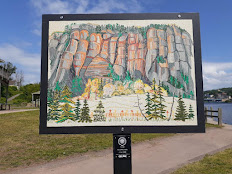
The decline tunnel for the portal to Rio Tinto's Eagle Mine descends under Eagle Rock, at left, a sacred Ojibwa site. Keweenaw Bay Indian Community tribal members are allowed to visit Eagle Rock, but still object to the placement of the mine portal. (Keweenaw Now file photo, August 2012)

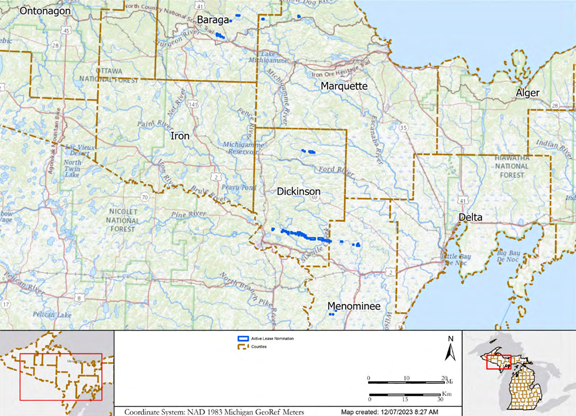
MARQUETTE -- As Rio Tinto continues another round of community forums, local citizens voiced their skepticism at Marquette’s Rio Tinto Eagle Mine Community Forum Tuesday, May 14.

"Rio Tinto portrays this data as scientific -- but that could not be farther from the truth," said Kathleen Heideman, vice president of Save the Wild U.P. (SWUP). "Their 'data' from the last round polled less than 300 people -- hardly representative of the 76,502 residents of Marquette and Baraga counties. It's a global mining corporation's idea of democracy: first they show slides about how great they are -- then we should click to indicate our agreement. That's meaningless. It's not voting."

One category of the voting, "Leaving more wood on the woodpile," is intended to show Rio Tinto's contributions to benefit the community after they leave. SWUP President Margaret Comfort commented on one of the these.

"I am surprised to see the addition of 30 miles of power lines referred to as 'more wood on the woodpile,'" said Comfort. "Rio Tinto manipulated the public process by saying they needed 30 miles of power lines for mining exploration and then sought a small modification to their Eagle permit to bring the lines to the mine site. It might be illegal, and it’s definitely unethical. They should have had their Eagle Mine permit modified, which would have included public scrutiny to discover if the public approved of this action."*

This October 2010 photo shows power lines being run along the AAA Road leading to the Eagle Mine without a request from (Rio Tinto's) Kennecott Eagle Minerals Co. (KEMC) for an amendment to their mining permit for this infrastructure. (File photo by Keweenaw Now)*

Jeffery Loman, Keweenaw Bay Indian Community tribal member and former federal oil regulator, spoke about Eagle Rock, the Ojibwa sacred site used as a portal for the mine.

"Rio Tinto touted 75 visitors to Eagle Rock as demonstration of their willingness to work with Native Nations. But we know full well that Rio Tinto placed the mine portal into Eagle Rock for one reason and one reason only: They knew that this would draw the attention away from what all Upper Peninsula residents value -- water," Loman noted. "That worked yesterday but from this day forward we will, as guided by our Great Spirits, bring the attention squarely back to the protection of our waters and everything that depends on water."

SWUP Executive Director Alexandra Thebert commented on the fact that, in early April, citing "economic headwinds," Eagle Mine announced the layoffs of 11 employees and downsized contractors by 20 per cent.

"Rio Tinto representatives announced the life of the mine has been extended to 8 years by discovering a 20 per cent increase in ore, but that’s no career for the people working in the area. The U.P. needs and deserves stable jobs to support families and send kids to college, not layoffs and short-term work," said Thebert, who recently attended Rio Tinto's Annual General Meeting (AGM) for stockholders in London, England.** 

Save the Wild U.P. is a grassroots environmental organization dedicated to the preservation of the Upper Peninsula’s unique cultural and natural resources.

Rio Tinto will hold their next community forum on the Eagle Mine from from 6 p.m. to 7:30 p.m., with additional time afterwards for discussion, TONIGHT, May 15, at the L’Anse American Legion Building, 115 N. Front St., L'Anse, MI 49946.***

Editor's Notes:

* Concerned Citizens of Big Bay filed a contested case petition on this electric power issue in 2011. See our Feb. 22, 2011, article, "Concerned citizens file contested case: Kennecott Eagle Mine."

** See our Apr. 20, 2013, article, "Save the Wild U.P. Director Alexandra Thebert speaks about Rio Tinto's Eagle Mine at events in London."

*** See "Rio Tinto Community Forum to be held in L'Anse May 15; videos: Sept. 2012 forum held in L'Anse."

Tuesday, May 14, 2013

Rio Tinto Community Forum to be held in L'Anse May 15; videos: Sept. 2012 forum held in L'Anse

By Michele Bourdieu

Simon Nish, Rio Tinto director of community communications and external relations, explains the Rio Tinto Community Scoring process during the Sept. 26, 2012, community forum in L'Anse. Another Rio Tinto communtiy forum will be held TOMORROW, May 15, 2013, at the L’Anse American Legion Building. Click on photo for larger version. (Photo by Allan Baker for Keweenaw Now)

HUMBOLDT, MICH. -- Rio Tinto will hold a community forum on their Eagle Mine and Humboldt Mill from 6 p.m. to 7:30 p.m., with additional time afterwards for discussion, TOMORROW, Wednesday, May 15, at the L’Anse American Legion Building, 115 N. Front St., L'Anse, MI 49946.

This is the third year Rio Tinto has held community forums so the public can learn more about the status of Eagle Mine, participate in its Community Scorecard process, and meet with Eagle representatives, according to Dan Blondeau, Rio Tinto Eagle Mine advisor for Communications and Media Relations.

Blondeau spoke about the forums in a May 6 interview on Marquette's SUNNY Morning Show (101.9 FM, WKQS).*

The forums begin with an update on the Eagle Mine, located near Big Bay, Mich., and the mill in Humboldt, Mich., destined for processing the ore. The company has also moved its local office to Humboldt.

The attendees will then have an opportunity to vote on the community scorecard to evaluate Rio Tinto's performance in the areas of environment, safety, economic effects on the community, local hire, safety and transparency. The votes will by followed by discussion, questions and answers.

Superior Watershed Partnership, the organization doing independent monitoring for the Rio Tinto Eagle Mine, will be present with information on their work.

Two more forums will be held (same evening time as above) this month: Tuesday, May 21, at the Michigamme Township Hall and Wednesday, May 22, at the Powell Township School. Community forums were held last week in Humboldt and Marquette.

Blondeau said results of the scorecards will probably be posted on their Web site by July 2013.**

These forums offer an update six months after the September 2012 Community Forums.

Videos: Discussion from Sept. 26, 2012, Rio Tinto Community Forum held in L'Anse

During the Sept. 26, 2012, Rio Tinto Community Forum in L'Anse, Linda Rulison, president of FOLK (Friends of the Land of Keweenaw), asks about mineral rights and Rio Tinto's reasons for contracting the Superior Watershed Partnership to do independent monitoring of the Rio Tinto Eagle Mine. Simon Nish, Rio Tinto director of community communications and external relations, replies. (Videos by Allan Baker for Keweenaw Now)

At the Sept. 26, 2012, Rio Tinto Community Forum in L'Anse, Michigan, participants in the audience vote to rate the company's environmental performance for the Eagle Mine.

At the Sept. 26, 2012, Rio Tinto Community Forum in L'Anse, Michigan, audience participants ask questions about the company's policy of local hire for the Eagle Mine.

At the Sept. 26, 2012, Rio Tinto Community Forum in L'Anse, Mich., Keweenaw Bay Indian Community members Jessica Koski and Jeffery Loman question the company's financial assurances against pollution, such as acid mine drainage, at the Eagle Mine.

Keweenaw Bay Indian Community member Jeffery Loman asks Rio Tinto representatives why Eagle Rock was used as the portal to the Eagle Mine, since it is not above the ore body.

Notes:

* Click here for the interview with Dan Blondeau on the SUNNY Morning Show.

** Click here for the Rio Tinto Eagle Mine Web site.

Public comment requested on two Public Health Assessments for Torch Lake Superfund Site; public meeting to be May 15 in Lake Linden

LANSING -- The Michigan Department of Community Health (MDCH) has released two Public Health Assessments for the Torch Lake Superfund site and surrounding areas located in the Upper Peninsula, specifically Houghton and Keweenaw counties, for public comment. The assessments focus on breathing air that has stamp-sand dust in it, potential exposure to the chemicals in the stamp sands at beaches and effects of eating fish from the area.

Map of the Torch Lake Superfund Site exhibited at the June 20, 2012, multi-agency open house sponsored by the Michigan Department of Community Health, Michigan Department of Environmental Quality, U.S. Environmental Protection Agency, and Western Upper Peninsula Health Department. The same agencies will sponsor a follow-up open house and public meeting on two public health assessments for the site and surrounding areas TOMORROW, Wednesday, May 15, at Lake Linden-Hubbell High School. Click on photo for larger version. (Photos by Keweenaw Now)

MDCH will host a multi-agency open house from 4:30 p.m. - 6:30 p.m. -- with the Michigan Department of Environmental Quality, U.S. Environmental Protection Agency, and Western Upper Peninsula Health Department -- followed by a public meeting at 7 p.m., on Wednesday, May 15. The meeting will take place at Lake Linden-Hubbell High School, located at 601 Calumet St. in Lake Linden.

This poster with information on the Torch Lake Area of Concern was exhibited at the June 20, 2012, multi-agency open house in Lake Linden. Click on photo for larger version.

The Public Health Assessment about the inhalation of airborne stamp sands in the Torch Lake Superfund site and the surrounding area in Houghton and Keweenaw Counties, evaluated concentrations of metals in airborne stamp sands. MDCH estimated the air concentrations using site-specific data, when available, and relying on regulatory guidance. Exposures that may occur during excavating or riding off-road vehicles at the Gay tailings pile along Lake Superior are not expected to cause harm. MDCH needs more information to determine the public health implications of exposure during street-sweeping activities in Calumet, when stamp sands that were applied to the roads in the winter become airborne. The discussion in this Public Health Assessment can guide other agencies in future evaluations of these and other stamp-sand piles.

During the June 20, 2012, multi-agency open house in Lake Linden, Sharon Baker, right, Michigan Department of Environmental Quality Area of Concern coordinator, discusses information about the Torch Lake Superfund site with Sarah Green, Michigan Tech professor and chair of the Department of Chemistry.

The Public Health Assessment about recreational use at beach areas at Lake Linden and along Torch Lake in Houghton County looked at potential chemical exposure from recreationally used areas around Torch Lake, Boston Pond, and Calumet Lake. Even though contaminated soil and sediment have been removed from several areas, additional sampling is needed to determine if the remaining chemicals present may harm people's health. Fish from Torch Lake, Boston Pond, and Calumet Lake are under waterbody-specific and statewide fish-eating guidelines. Visit www.michigan.gov/eatsafefish for more information.

MDCH also invites the public to provide comments on the Public Health Assessments. The assessments are online at www.michigan.gov/mdch-toxics under "Health Assessments and Related Documents." Copies also are available at the Lake Linden-Hubbell Public School Library, and the Portage Lake District Library located at 58 Huron St. in Houghton. Comments must be received by June 24. Responses to all comments will be provided in the final version of the assessments.

The department's Division of Environmental Health conducted the Public Health Assessments under a cooperative agreement with the federal Agency for Toxic Substances and Disease Registry (ATSDR). Information concerning the human health effects of exposure to environmental contaminants can be found on the ATSDR web page at http://www.atsdr.cdc.gov/toxfaqs/index.asp.

Monday, May 13, 2013

Dianda introduces resolution aimed at reducing emissions from correctional facilities

LANSING -- State Representative Scott Dianda (D-Calumet) introduced House Resolution 136 today that will urge the governor and Department of Corrections to convert heating plants at the state's correctional facilities to combined heat and power plants.

"Correctional facilities are some of the biggest consumers of energy in our state. Combining heat and power plants at our prisons will save millions and millions of taxpayer dollars. That's the smart way to save money -- unlike the governor's idea of privatizing prison food service," said Dianda, referring to Michigan Department of Corrections Officials' recent decision to contract prison food services to a private corporation.

In 2012, corrections facilities consumed nearly 172 million kilowatt-hours of electricity at a cost of almost $15 million. Nine of the facilities in the corrections system operate heating plants on-site to meet the heating and cooling needs of multiple buildings. The nine facilities with on-site heating plants collectively account for nearly 50 percent of the department's annual electricity use, which presents an opportunity for substantial savings from more efficient delivery of utilities. The combination of existing heating capacity and electricity demand make these facilities ideal candidates for new cogeneration projects.

"This is a win-win situation. We are able to demonstrate leadership and a sense of urgency in managing taxpayer investments in our state, and we are meeting the demand for implementing energy saving initiatives," continued Dianda.

The resolution gives an example of a facility that provides electricity, heat and air conditioning "through a cogeneration system fired by natural gas, a cleaner burning fuel."

Click here to read the resolution as presented.

Letter: Doubts concerning the wolf hunt regulations

The Pros have figured out how best to regulate the wolf hunt "to reduce predation on pets and livestock and to minimize wolf/human conflicts." The published regulations leave me puzzled. I wonder if I am alone in that category. Show me the predation and the conflicts.

1. 1200 licenses are to be sold beginning in August.
2.  The goal is to "Kill" 43 wolves, any age or sex.  That 4-letter word sets the stage -- get the kids used to killing for fun. That’s what guns are for, isn’t it?
3.  Bait and traps are allowed to hold the wild dog captive while mighty hunter shoots it. In no way are the contestants evenly matched. It’s an execution, not a sport.
4.  Licenses can be used in any or all of the three zones set up for hunting, beginning Nov 15th.
5.  Any "hunter" can set out bait if he sees wolf sign, and replenish it frequently, much like bones for bear bait.
6.  Three months hence he can bury traps around his baitpile, later to entrap those semi-domesticated wolves.
7.  On opening day he can sit in his blind and shoot his wolf, or all of them if he is truly anti-wolf.  Otherwise his buddies can shoot the rest.  3-2-1- Shoot together at designated targets.
8. That does not thin out the wolf population -- it wipes out the local pack.
9. Repeat that pattern with 1200 licensees in other territories and there is no way that the regulators will be able to stop the shooting when the so-called quota is filled.
10. Consider too the hundreds of deer hunters sitting in blinds waiting for something to move, to take a potshot and, if it be a wolf -- to hope that it will go away to hide and die.  Pray for snow.
11. Experts, Commission members, responsible officers at MDNR and Governor Snyder, please explain to us, your neighbors and in some cases your employers, how you plan to determine how many wolves have been killed and how you will ensure that the quota will not be exceeded? Anything beyond the quota can not be designated collateral, like humans in warfare.

With these ill-conceived "Regulations" I would expect around 100 wolves to be shot and would hold the regulators culpable and deserving of punishment. $1000 each/wolf, minimum. Or revoke the regulations.

Jack Parker
Baltic MI 49963

Democratic industry discussion to be held May 14 at Café Rosetta

CALUMET -- "Rebuilding the Copper Country Through Democratic Industry," a free community event, will be held from 5 p.m. to 7 p.m. at the Café Rosetta in Calumet on Tuesday, May 14. Open discussions will center around growing the local economy through new small-business industry opportunities and democratically-owned district heating projects using abandoned mines.

Guest speakers will be Ken and Pam Rieli of Phoenix Navigation and Guidance Inc. (PNGinc), located in Munising, Mich.

"Our for-profit company has developed high-value renewable energy products, high-efficiency turbine engines and space-age vehicles for decades,"says Pam Rieli. "Now we are transferring our know-how as an educational non-profit to jumpstart democratic industries. We invite all stakeholders who want to see the U.P. become the center of global economic recovery to attend this event."

Discussions will include how to implement successful garage-level industries, personal power plants and democratically-owned district heat/power utilities that use abandoned mines for geothermal storage, supplemented by backyard solar collectors.

Bring your ramstick to download free do-it-yourself plans.

Visit www.phoenixnavigation.com for more information.

Café Rosetta is at 104 Fifth Street in Calumet.

Sunday, May 12, 2013

Park recruits Youth Conservation Corps applicants

CALUMET -- Keweenaw National Historical Park (Keweenaw NHP) Facility Manager Charles Masten has announced that area young people will share in a summer work opportunity offered through the Youth Conservation Corps (YCC) program, administered by  Keweenaw NHP in Calumet, Michigan. Applications are being distributed to area high schools for students between the ages of 15 and 18 interested in applying for the popular YCC program. Applications may also be picked up at park headquarters, located at 25970 Red Jacket Road (corner of US-41) in Calumet. There are no income restrictions for this youth employment program.

The Youth Conservation Corps, a nationwide federal program for young people administered by the National Park Service, provides opportunities to contribute to the conservation of our national parks, forests, and wildlife refuges through a combined work and environmental/cultural education program.

The young people will work with National Park Service professionals on conservation and cultural heritage related projects such as trail and roadside maintenance, museum collections, vegetation removal, historic stone ruin stabilization, painting, and other facility repair and clean-up projects.

The Keweenaw National Historical Park YCC program will run eight (8) weeks from June 10 to August 2, 2013. YCC enrollees will work a 40-hour week and receive $7.40 per hour. Five to six positions are expected to be filled and are selected from among all area youth submitting applications to the Keweenaw National Historical Park headquarters in Calumet. The deadline for submitting applications by mail or hand delivery is close of business (5 p.m.) May 24, 2013. Selections of YCC enrollees are made by random drawing by Human Resources personnel. The drawing and notification of selected employees will take place the week of May 27, 2013. The names of six alternates will also be drawn for the program and will be used to fill positions if any of the original selected YCC enrollees decline a position.

Questions about the YCC work program may be directed to Keweenaw National Historical Park YCC program director at (906) 483-3034. Applications must be received by the May 24, 2013, 5 p.m. deadline at Keweenaw National Historical Park, 25970 Red Jacket Road, Calumet, MI  49913.

Stamp collecting group to meet May 14 at Portage Library

HOUGHTON -- The Portage Lake District Library will host local stamp collecting group the Portage Lake Philatelists from 6:30 p.m. to 8 p.m. on Tuesday, May 14.

This meeting will focus on general topics of interest to stamp collectors and share the latest news of the world’s largest collecting organization.

The Portage Lake Philatelists' meetings are open to beginner and experienced stamp collectors as well as those who are curious about stamp collecting. The group is actively seeking people who are interested in learning the art of stamp collecting, and they are eager to share their knowledge about this hobby.

For more information, please call the library at 482-4570 or visit www.pldl.org.

Friday, May 10, 2013

Natural Resources Commission authorizes limited public wolf harvest

By Michele Bourdieu
With information from Michigan Department of Natural Resources Press Release dated May 9, 2013
Comments from concerned wolf advocates added with their permission

Photo of wolf courtesy WolfWatcher.org. Reprinted with permission.

ROSCOMMON, MICH. -- At their meeting on Thursday, May 9, the Michigan Natural Resources Commission (NRC) approved a limited public wolf harvest in three distinct regions of Michigan’s Upper Peninsula. The decision followed a process of dedicated conversation with the public and experts, along with a thorough review of the pertinent science.

"The recovery of Michigan's wolf population has been a remarkable success story," said Natural Resources Commission Chairman J.R. Richardson. "Today's decision by the NRC supports ongoing scientific management of this game species, just as voters intended when by an overwhelming margin they approved Proposal G in 1996. The public harvest proposal approved by the commission ensures the long-term presence of wolves while providing a valuable tool for managing conflicts between wolves and human populations. This is a thoughtful, science-based decision."

The commission adopted the regulations during its regular monthly meeting, held in Roscommon May 8 and 9, 2013.

According to the Department of Natural Resources, "The regulations establish a limited harvest of 43 wolves in three areas of the Upper Peninsula where wolf-human conflicts -- including depredation of livestock and pets and human safety concerns -- have been persistent despite employing a number of control measures."

Opinions vary on "human safety" concerns

A two-part article on Michigan Radio this week by Steve Carmody, who interviewed residents in some of these problem areas, points out differences of opinion on the extent of this depredation and suggests the proponents of the wolf hunt have exaggerated the degree of "human safety" concerns, since wolf attacks on humans in Michigan are non-existent.

"There have been no wolf attacks on people in Michigan," Carmody writes in Part 2 of his radio report.

He also questions the statement by State Sen. Tom Casperson, who introduced the wolf hunt legislation (SB 288) that became law -- PA 21 -- on May 8, 2013, that people in Ironwood, Mich., are "living in fear." As Carmody points out through his interviews, it depends which residents you talk to.*

Michigan's wolf population has grown significantly since 2000, with a current minimum population estimate of 658. The target harvest is not expected to impact the overall wolf population trajectory, based on published scientific research.

"This decision was the culmination of a long and thorough process by the NRC," said Department of Natural Resources (DNR) Director Keith Creagh. "The DNR will continue to work closely with the commission to be certain that Michigan's wolf population is managed according to the principles of sound science."

Concerned wolf advocate groups question DNR "sound science" claims

However, citizens concerned about wolves, their role in Nature and their importance to the ecosystem, have challenged the "sound science" claims by the DNR.

"It is disappointing that the Natural Resource Commission chose to ignore sound science and instead listened to and was influenced by outside hunting interests, including the NRA, Safari Club International and Rocky Mountain Elk Foundation," says Nancy Warren, National Wolfwatcher Coalition Great Lakes regional director. "There are currently non-lethal and lethal measures in place to resolve conflicts. The wolf hunting regulations which include trapping on public lands will target some packs not involved in depredation and may cause conflicts to increase due to pack disruption."

Warren, an Upper Peninsula resident who has spoken at previous NRC meetings concerning this issue, calls this NRC decision, which follows immediately the May 8 signing of Public Act 21, "a direct assault on our democracy and the right of citizens to challenge wildlife laws."

The NRC vote in favor of the wolf harvest was reportedly 6 to 1.

"We applaud Commissioner Steinman for having the courage to vote no on the hunting of Michigan wolves," Warren added.

Commissioner Annoesjka Steinman is the only NRC member with any credentials related to the environment. In addition to holding holds a master's degree from Grand Valley State University in natural resources management and a bachelor's degree in natural science from the University of South Florida, she is executive director and CEO of the Blandford Nature Center in Grand Rapids, a nonprofit organization which offers 143 acres of walking trails, an interpretive center and animal hospital, a small farm. The Center also features community and school programs.**

Kristi Lloyd of Wolves of the Rockies, who has been involved with wolf hunting issues near Yellowstone National Park and in the state of Montana, has been following the Michigan legislation leading to this NRC wolf harvest decision. She questions the need for the wolf harvest and also challenges the Michigan DNR's claims of "sound science" in their management plan.

"Sen. Casperson used fear-mongering and MISinformation to garner support for killing wolves via a hunt," Lloyd says. "If this situation is so dire then why not deal directly and promptly with the 'offending' wolves? Why wait until November if the situation is so urgent?"

Lloyd notes the laws in Michigan, before PA 21, allow stock growers and pet owners to shoot wolves that attack their animals -- or to have the DNR/Wildlife Services take
appropriate measures.

The Michigan Legislature passed two laws in 2008 to allow livestock or dog owners, or their designated agents, to remove, capture, or, if deemed necessary, use lethal means to destroy a wolf that is "in the act of preying upon" (attempting to kill or injure) the owner's livestock or dog(s). These state laws went into effect upon federal delisting on Friday, Jan. 27, 2012. 

"If wolves are killing at the rate that Sen. Casperson claims, why are not more homeowners/stock growers killing these offending wolves?" Lloyd asks. "The hypocrisy is over-the-top -- the proponents of the wolf hunt say that they will use 'sound science' to guide them in creating the regulations of a hunt. Define 'sound'? It seems, though, that over time, 'sound' was used less and it just became science. Well, Michigan has two of the top wolf researchers in the country yet the NRC had experts from other wolf-hunting states testify or give presentations about hunting wolves. John Vucetich wrote a very compelling presentation as to what could happen when wolves are killed. Garrick Dutcher, from Living With Wolves, did as well in a letter to Gov. Snyder." *** 

Wolf regulations designate Nov. 15 - Dec. 31 season in 3 areas

The regulations create three Wolf Management Units (WMU):
WMU A in Gogebic County in the far western Upper Peninsula -- target harvest of 16 wolves; WMU B in portions of Baraga, Houghton, Ontonagon and Gogebic counties -- target harvest of 19 wolves; and WMU C in portions of Luce and Mackinac counties -- target harvest of eight wolves.

The 2013 wolf season will open Nov. 15 and will run until Dec. 31 or until the target harvest for each WMU is reached. The bag limit is one wolf per person per year. Firearm, crossbow and bow-and-arrow hunting and trapping (foothold traps only, with an outside jaw spread of 5.25 inches to 8 inches) will be allowed on public and private lands.

Hunters will be required to report successful harvest over the phone on the day of harvest. Once the target harvest is met for a management unit, the entire unit will be closed for the season. Licensed hunters will be required to check daily by phone or online to determine whether any management units have been closed.

A total of 1,200 licenses will be available for over-the-counter purchase, on a first-come, first-served basis, starting Aug. 3, 2013. Licenses will be valid for all three WMUs until each unit is closed. As established by the Legislature, the cost of a wolf hunting license is $100 for residents and $500 for nonresidents. In order to purchase a license, a hunter is required to have either purchased a previous hunting license or taken a state-approved hunter safety education course.

The NRC’s Policy Committee on Wildlife and Fisheries presented a recommendation to the full commission that included a review of the experience of other states currently engaged in public wolf harvest and testimony from experts in the field with respect to wolf hunting issues, wolf biology and wolf population matters.

"We anticipate that this limited public harvest could both change wolf behavior over time -- making them more wary of people, residential areas and farms -- and reduce the abundance of wolves in these management areas that have experienced chronic problems," said DNR Wildlife Division Chief Russ Mason. "We're aiming to decrease the number of conflicts and complaints while maintaining the long-term viability of the wolf population."

Keep Michigan Wolves Protected, the organization that collected more than 250,000 signatures to request a referendum on PA 520, the law passed in December 2012 designating the wolf as a game species, has expressed disappointment that Michigan Gov. Rick Snyder signed PA 21 into law (on the same day the NRC met to discuss the wolf harvest).

"The Keep Michigan Wolves Protected (KMWP) coalition expressed its deep disappointment in Gov. Rick Snyder, who (on May 8) signed legislation (SB 288) that circumvents voter rights by allowing the Natural Resources Commission (NRC) to establish a wolf hunting and trapping season before Michigan voters can decide the issue in the November 2014 election," KMWP states on their Web site.

Update: Posted May 13, 2013, on Native News Network:
"Michigan Indian Tribal Leaders Respond to Wolf Hunt Approval."

Notes:

* Click here to listen to or to read Carmody's radio broadcast Part 1. Click here for Part 2.

** The other NRC members have backgrounds in tourism, chemical engineering and the paper industry, surveying, corporate law, and the building trades. Click here to read about them.

*** See our Apr. 29, 2013, article,"Scientists, wildlife advocates ask legislators to consider science in wolf management."  See also "Letter from John Vucetich, wildlife ecologist: Reasons to oppose SB288."

Click here for "Letter to Gov. Snyder from Living With Wolves," by Garrick Dutcher.

Wednesday, May 08, 2013

Michigan legislators offer views on hunting bills, signed into law today; NRC may establish wolf hunting season despite public opposition

By Michele Bourdieu

The Anderson House Office Building in Lansing, seen from the park in front of the Capitol. Keweenaw Now interviewed our 110th District Rep. Scott Dianda in his office on the 14th floor (near the flag at the top of the building) on May 1, 2013. (Photos by Keweenaw Now unless otherwise indicated.)


LANSING -- [Editor's Note: A week ago, on Tuesday, Apr. 30, 2013, the Michigan House of Representatives Natural Resources Committee heard more than four hours of testimonies on SB 288 -- the bill that gives the Natural Resources Commission (NRC) the responsibility to establish managed open season hunts for wild game (including wolves) and authority to regulate the taking of fish. It exempts the taking of mourning doves, pets and livestock. The Legislature maintains its ability to both add and remove species on the list. Although Keweenaw Now was unable to attend that meeting, we did have an opportunity the following day (May 1) to interview two representatives who are members of the committee -- 110th District Rep. Scott Dianda (D-Calumet) and 50th District Rep. Charles Smiley (D-Burton), vice-chair of the committee -- both of whom took time from their busy schedules to answer our questions on this controversial legislation. We tried to contact Rep. Andrea LaFontaine (R-Columbus Township), chair of the House Natural Resources Committee, for an appointment; but she did not answer messages.]

110th District Rep. Scott Dianda's aides Elise Matz, left, and Danielle Stein, walk in front of the State Capitol in Lansing on a sunny May 1, 2013. Matz and Stein helped Keweenaw Now secure interviews with Rep. Dianda and Rep. Charles Smiley during our brief visit to Lansing.

During the House Natural Resources Committee meeting on Apr. 30, 2013, a majority of public testimonials opposed SB 288, the bill introduced by Sen. Tom Casperson (R-Escanaba) that would give the Michigan Natural Resources Commission (NRC) authority to establish a hunting season for game, including wolves. Nevertheless, that committee voted 8 to 0 in favor of the bill.

Since the interviews reported here, SB 288 was approved by both the Michigan Senate and the House and, just today, May 8, was signed into law by Gov. Rick Snyder. The Governor also signed SB 289, also introduced by Casperson, which guarantees the legal right to hunt and fish.

SB 288 and SB 289 are now Public Acts 21 and 22 of 2013.

"It has been an emotional issue for everybody," 110th District Rep. Scott Dianda, a member of the committee, told Keweenaw Now during an interview in his Lansing office on May 1, 2013.

In his office in Lansing, Rep. Scott Dianda (D-Calumet) speaks with Keweenaw Now on May 1, 2013, about his vote for SB 288 and 289 in the Natural Resources Committee meeting on Apr. 30.

Dianda said the committee listened to public testimonials, most of them opposed to SB 288, for at least four hours. The meeting began at noon in the Anderson House Office Building, but the representatives had to suspend the meeting after about an hour and a half to report to their regular House floor session in the Capitol across the street. Afterwards they returned for several more hours of testimonials, followed by their vote, in the packed committee room.

"We got a chance to listen to everyone who came to the committee," Dianda said. "It was an all-day affair."

However, the room reportedly did not hold everyone who wanted to speak. Those who were not admitted (including Keweenaw Now guest photographer Marshall Anderson) were invited to watch a televised broadcast of the meeting in the "overflow" room.

In the "overflow" room, a monitor shows Michigan House Natural Resources Committee members readying for a vote on SB 288 on Apr. 30, 2013. (Photo by Marshall Anderson for Keweenaw Now)

Asked why he voted for the bill since most people there were against it, Dianda said no one from his district was present to speak against the bill and most of those who opposed it were from areas outside the Upper Peninsula. He said he felt they didn't understand the situation of U.P. residents who claim to have a wolf problem in their backyard. Hunting groups from the U.P. did come to testify in favor of the bill.

On the other hand, the committee received 63 pages of emails -- most dated April 29 or the morning of April 30 -- all asking the committee to vote against SB 288.*

Public comments oppose SB 288

Here are just a few excerpts from the emails, three of them sent by Upper Peninsula residents:

Adam Robarge of Marquette, who helped collect signatures for a petition for referendum on the 2012 PA 520 wolf hunt law, and who recently made two trips to Lansing and spoke to legislators about SB 288, writes on Apr. 29, 2013, "There is much we still do not understand in regard to the gray wolf and its role in Michigan, economically and biologically. I supported the Keep Michigan Wolves Protected campaign because it gave us time. I oppose SB 288 as it is written because the bill gives us neither time nor science."

Jacqueline and James Winkowski of Gwinn write, "Though the waters have been muddied by our legislators, as you know, Senate Bill 288 is about rendering ineffective the signatures of about 250,000 registered voters who signed petitions to place the question of the gray wolf as a game animal on the ballot .... SB 288 will allow only the legislature and the politically appointed NRC to decide which species (including, of course, the wolf) are hunted, with no chance for voters to appeal. This is a major grab of power away from the people of Michigan. To introduce this Bill was punitive and wrong."

Catherine Parker of Marquette offers these comments: "What's really troubling me is that our elected representatives are saying that voters are not equipped to make a decision on the wolf hunt, or on wildlife management issues in general, when in fact there are many highly specialized scientists and countless citizens who have devoted much time to studying these issues."

An example of a knowledgeable scientist who sent a letter to the committee is Barbara J. Barton of Lansing, an endangered species biologist, who objects to the NRC being given the authority to designate game species in Michigan, to the title of the bill -- "Scientific Wildlife Management" -- and to the exclusion of the Tribes in the decision making process.

Barton notes that only one NRC member has "any experience even remotely related to wildlife management (the director of a nature center)." She also refers to the Inland Consent Decree of 2007, which provides for consultation between the State of Michigan and the five Tribes under the 1836 Treaty.

Barton quotes from this Decree, Part 23.4: "The State and the Tribes shall notify each other at least annually of proposed regulatory changes before they take effect and seek to resolve any concerns arising from such changes before implementing them."**

It is not clear at this time whether the Natural Resources Committee members had a chance to read these email messages before their vote on Apr. 30. Moreover, the fact that many of the citizens who sent them did not include their place of residence makes it difficult to know how many of the emails were from Upper Peninsula residents.

Concerning his own vote in favor of SB 288, Dianda said, "I just felt it was important for our people in our area -- that they felt safe."

Dianda admitted that the discussion on SB 288 was added to the meeting agenda at the last minute, making it difficult for people to travel from the U.P. in time to testify.

"That was disappointing to me, too," he said.

110th District Rep. Scott Dianda takes time for a photo in his office with his aides, from left, Danielle Stein, Elise Matz and Curtis Audette.             .

Dianda noted he was opposed to the earlier version of the bill that included appropriations of $1 million, which would have made it impossible to petition for a referendum after the bill becomes a law. His objection appeared to be based on the fact that Democrats are trying to secure more funding for education and other needs at this time.

He said he also voted in favor of SB 289, the bill giving Michigan residents the right to hunt, trap and fish. Dianda explained he himself is a sportsman who has hunted for small game such as rabbits and deer but has never trapped.

"I like the idea that we've got legislation that gives the people the right to hunt and fish," he said. "It's very important to me."

Dianda opposes anti-biodiversity bill, SB 78

Dianda noted he is opposed to SB 78, the anti-biodiversity bill, also proposed by State Sen. Tom Casperson.

Dianda said he believes that the NRC should work with state biologists and that legislators should have input with the DNR on wolf management.

"I want to make sure that we're watching the DNR -- to make sure that in our district they do it right and humanely and to make sure that they (hunters) take only the (wolves) in the towns," Dianda added.

He said he is suggesting a reporting system so that if a wolf attacks a pet the County Sheriff should be notified immediately. After the recent incident of a wolf attack on a dog in the Red Ridge area of Atlantic Mine, Houghton County Sheriff Brian McLean was not notified until three days later, Dianda noted.

"I just feel for public safety that should be reported right away so people can be warned to bring their pets inside," he said. "I really feel that the DNR has to have direction from the elected representatives. It's important not only for this issue but also the impact on policy for other issues in the U.P."

DNR official, Isle Royale wolf experts say public safety not an issue 

However, DNR Conservation Officer Dennis Gast, who responded immediately to the call about the wolf attack on that dog, said it is not a public safety issue.

"It's a good idea to let the Sheriff know, but there's not a danger to the public," Gast told Keweenaw Now in an interview today. "Wolves are a minimal if non-existent danger to people. They will sometimes attack dogs and livestock."

Wolves are competitive with dogs, he explained, just as they are with other wolves who trespass on their territory. Gast said he speculated these wolves (at least four were involved in the attack) came very close to the dog owner's house, possible about 100 yards, and were probably more aggressive because they had pups in this season.

"In North America wolf attacks on people are extremely rare," Gast noted. "Wolves don't attack dogs very often. It's relatively rare. There are more dogs in Houghton County than there are wolves in the U.P."

Gast said he was called at the DNR office the day the attack happened and he went there very shortly after the call.

"It had happened earlier that morning," he noted. "I verified it was by a wolf and later a wildlife technician (Brad Johnson from the Baraga DNR office) went out there and also corroborated on that."

While wolves are not a danger to people, an attack on a dog that was that close to the house is unacceptable, Gast added, noting the dog owner was not at fault. His dog apparently sensed the wolves and went to investigate, but Gast guessed the wolves' den area was close to the house.

In an Apr. 2, 2013, memo from the DNR to the NRC, the public safety issue is mentioned as one purpose for hunting wolves. However, two internationally known wolf experts have questioned whether public safety is a real threat.

In a May 1, 2013, statement submitted as written testimony against a public wolf harvest -- for the NRC hearings related to wolf hunting in Michigan -- Isle Royale Wolf-Moose Study Co-Directors Rolf Peterson and John Vucetich, referring to the DNR memo, say this about the public safety issue:

"One problem is that many people's perception of a threat is at gross odds with the reality of a threat. The memo fails to recognize the best-available science, which is abundantly clear: genuine threats to human safety by wolves are exceedingly rare. Recognizing and dealing with public perceptions about human safety is critically important. However, treating perception as reality, when the best-available science indicates otherwise, is poor wildlife management and counter productive to solving the problem."

Peterson and Vucetich also note why a wolf hunting season does not guarantee solving the problem: "Protecting human safety cannot wait until the upcoming hunting season, with the subsequent hope that some hunter has the good fortune to kill the offending wolf," they note.***

Rep. Charles Smiley passes on Committee vote, citing lack of time

Following the interview with Dianda, Keweenaw Now was able to meet briefly with 50th District Rep. Charles Smiley (D-Burton), vice-chair of the Natural Resources Committee, who passed on the Apr. 30 committee vote (the only member of the committee who did not vote yes on SB 288 and SB 289 in committee, though he later voted for them in the May 2 session on the House floor).

Michigan 50th District Rep. Charles Smiley (D-Burton), vice-chair of the Natural Resources Committee, took time before the House session in the Capitol on May 1, 2013, to speak with Keweenaw Now on why he passed on the Apr. 30 committee vote on SB 288 and SB 289.

"They scheduled to have the committee meeting on the bills (SB 288 and 289) and then vote on them the same day, and I felt it wasn't giving us enough time to listen to all the testimony and, basically, get all the facts and talk about the bills -- what they really are," Smiley told Keweenaw Now. "I don't feel that it's good practice for us to have testimony and then report it out the same day."

Smiley added he took a pass on both SB 288 and SB 289 because of the lack of time to read and understand the bills. Like Dianda, he confirmed most of the testimonies were in opposition to SB 288.

"And I'm really torn on this," he said. "I'm an avid hunter. I understand how important it is that we have a balance -- in any animal."

Smiley said he would have liked to introduce a compromise but he wasn't sure "how many wolves are too many" or what hunting methods would be used.

"When I hunt I don't trap," he noted.

Smiley said when he was mayor of the city of Burton, near Flint, he was used to the fact that after passing city ordinances they could go back and tweak them. He believed that could be done with these bills. As an example, he mentioned the limitations put on hunting licenses for elk and bear.

"I'm assuming they're going to do the same with this (wolf hunt)," he said. "It's going to be very selective and very restrictive."

Smiley said he had never worked with the NRC but he believes the legislature should have input in their decisions.

To a question on whether PA 520 and the petition for a referendum on it would be thrown out if SB 288 becomes law, Smiley indicated it would.

"That's tragic," he said. "We fought hard to get the appropriations out of it (SB 288)."

The appropriations would have disallowed any referendum on the law. Smiley said he realized people may not want to start over, but at least the voters have the right to petition for a referendum should they wish to do it again. He would not vote for it if appropriations had been left in -- or if they tried to put them back in, he explained.

"But I'm willing to sit down and work with everyone in trying to come up with some sort of compromise or to make things better as we work through this," Smiley added.

Asked about SB 78, the anti-biodiversity bill, Smiley said he would not support it.

"There's just certain things we have to protect, and I know that Republicans are not real good at protecting some of our environments," he said. "There's no way I'm going to support that bill in its present condition."

As of today, the Michigan League of Conservation Voters reports that SB 78 is now on hold.

Both Dianda and Smiley voted in favor of SB 288 and SB 289 in the May 2, 2013, House session vote.

Rep. Sarah Roberts: House ignored her proposed amendments

One representative who voted against both bills, 18th District Rep. Sarah Roberts (D-St. Clair Shores), sent a letter to one of her constituents, including these statements:

"Thank you for kind words regarding my efforts to oppose Senate Bill 288. I regret that many of my colleagues did not agree with me and voted to prevent our citizens from exercising their constitutional right to petition their government with a referendum.

"As you know, on Thursday May 2nd, I voted no on SB 288. Unfortunately I was in the minority, as the bill passed the House by a vote of 72 to 38. The bill will now go the Governor for his signature.

I offered amendments that would have let the citizens decide these issues and let the vote on wolf hunting take place. However the majority party in the House would not even let the members of the House of Representatives vote on my amendments. In fact, my debate on these amendments was cut off by House republicans."

The NRC met today, May 8, in Roscommon, Mich., to receive information in preparation for a Thursday, May 9, vote of the full commission on a wolf harvest. Today, the committee was to hear presentations from the Wisconsin and Minnesota departments of natural resources and to consider written testimony from outside experts.

Notes:

* Click here to read the emails to the House Natural Resources Committee. All are opposed to SB 288.

** Native Americans consider the wolf their brother and the Ojibwa are culturally opposed to hunting wolves. The Keweenaw Bay Indian Community, in their Wolf Management Plan approved January 10, 2013, states the following: "In the event that legislation is enacted for a wolf hunt, KBIC will designate the Home Territory, approximately 3.9 million acres within the 1842 Treaty area, as Wolf Sanctuary where sport hunting and/or trapping will not be allowed (See Appendix 2 for Home Territory Map). In addition, KBIC will not provide Tribal wolf hunting permits to community members. These measures will help to protect wolves and maintain a strong culturally based stance against the killing of wolves. KBIC Natural Resource Department will also participate in and maintain close communication with those involved in wolf monitoring and control of human-wolf conflicts. As funding allows, we intend to increase monitoring of wolves on and near the Reservation preferably with tracking of radio-collared wolves to keep tabs on any changing status of wolf packs."  Click here to read the KBIC Wolf Management Plan.

*** Click here to read the rest of this statement by wolf experts Rolf Peterson and John Vucetich. This statement is also posted in pdf format on The Wildlife News Web site. Thanks to Nancy Warren of Wolfwatchers.org and Kristi Lloyd of Wolves of the Rockies for sharing these links. See also this article on Wolfwatchers.org: "John Vucetich’s Presentation 'Hunting Wolves.'"

Green Film Series to present documentary on melting Arctic ice May 9

HOUGHTON -- The Green Film Series will present the documentary film, Chasing Ice, beginning at 7 p.m. on Thursday, May 9, in the Atrium and G002 Hesterberg Hall, Noblet Forestry Building, on the Michigan Tech campus.

Coffee, dessert and facilitated discussion will follow the 76-minute film. Cost: Free, $3 suggested donation.

In this film, acclaimed environmental photographer James Balog ventures to the Arctic to document the melting of ice mountains using state-of-the-art, time-lapse photography. Chasing Ice depicts a photographer trying to deliver evidence and hope to our carbon-powered planet. The discussion facilitator will be Prof. Sarah Green, chair, Michigan Tech Department of Chemistry.

The Green Film Series is co-sponsored by Lake Superior Stewardship Initiative, Michigan Tech Center for Water and Society, Keweenaw Unitarian Universalist Fellowship, and Keweenaw Land Trust.