See our right-hand column for announcements and news briefs. Scroll down the right-hand column to access the Archives -- links to articles posted in the main column since 2007. See details about our site, including a way to comment, in the yellow text above the Archives.
Showing posts with label Agassiz research vessel. Show all posts

Tuesday, June 09, 2015

Geology expert Bill Rose to lead 2015 Keweenaw Geoheritage tours July 27-30

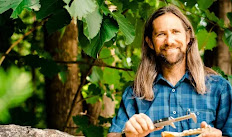
Bill Rose, Michigan Tech professor emeritus (Geological Engineering and Sciences), talks about Keweenaw geology at a beach near Point Isabelle on Lake Superior during one of his July 2014 Geo-tours. This year he will lead four one-day geoheritage tours of the Keweenaw by water and land -- July 27, 28, 29 and 30. (Keweenaw Now file photo)

HOUGHTON -- Michigan’s Keweenaw Peninsula is a place of natural beauty with a fascinating mining history. Join local expert Bill Rose, Michigan Tech professor emeritus (Geological Engineering and Sciences) in reading the landscape to learn how the Copper Country came to be the way it is today. Rose will lead four different tours during the week of July 27-30, 2015.

Each one-day field trip explores one of four major events in Earth’s history that make up the strong geoheritage of the Keweenaw -- Lavas, the Keweenaw Fault, the Jacobsville Sandstone and Copper Mining Waste of Lake Superior. Participants can expect to cover a lot of ground and be outside all the time. Travel is a combination of van transport, short walks and trips aboard Michigan Tech’s research vessel, the Agassiz. Trips are limited by boat capacity to 17 people. Each day trip costs $145 and includes lunch and snacks, boat and van transport.


At the beginning of the July 25, 2014, geotour on Jacobsville Sandstone, Bill Rose introduces participants to the sites they will visit on the Agassiz research vessel. (Video by Keweenaw Now)

Highlights of this year's geotours include the following:

Monday, July 27 -- Lavas and the Keweenaw Rift: This trip focuses on the Keweenaw’s black rocks and its volcanic past -- the site of Earth’s largest lava outpourings. Visit the great lava reefs and related shipwrecks along the shoreline from Eagle Harbor to Copper Harbor, learn about the relationship between copper and lavas, walk the Lake Shore Traps on Manitou Island and visit the Greenstone lava flow -- the largest lava flow on Earth!*

Tuesday, July 28 -- The Keweenaw Fault: This trip highlights the magnificent Keweenaw Fault, a massive thrust fault which split the peninsula lengthwise and uplifted rocks, including native copper, to a place where people could find it.

Bill Rose recently spoke about the Keweenaw Fault in a presentation on Torch Lake Watershed Geology at the May 26, 2015, meeting of the Torch Lake Watershed group. Here is an excerpt from his talk:

Bill Rose explains the importance of the Keweenaw Fault during his presentation at the May 26, 2015, meeting of the Torch Lake Watershed group at Michigan Tech's Great Lakes Research Center. (Video by Keweenaw Now)

Participants in the July 28 geotour will have the opportunity to trace the Keweenaw Fault along the shoreline from Bete Grise to Keweenaw Point and visit gorgeous features shaped by the fault such as Gratiot Lake, the Trap Rock Valley, the mysterious Natural Wall, celebrated Hungarian Falls and the Pilgrim River Valley.

Wednesday, July 29 -- Jacobsville Sandstone: The red rocks of the Keweenaw originate from the ancient, and once massive, Huron Mountains that eroded and filled the great valley of the Keweenaw Rift. View this stunning formation from a unique perspective via the lake. Visit the rocks on land at Point Isabelle and then by water from Grand Traverse -- passing Point Louis, Rabbit Island, Traverse Bay, and Rabbit Bay.


Geology expert Bill Rose talks about interpreting geological layers in the Jacobsville sandstone during the July 25, 2014, geotour on the east side of the Keweenaw Peninsula. (Video by Keweenaw Now)

This tour ends with a visit to the rock’s namesake, the quaint town of Jacobsville where the group will meet with local historians and community members.

Toward the end of the July 25, 2014, Jacobsville Sandstone geotour abord Michigan Tech's Research Vessel Agassiz, passengers arrive at Jacobsville for a visit with local residents and a talk about the history of the area. (Photo by Keweenaw Now)

Thursday, July 30 -- Copper Mining Waste of Lake Superior Today: The Keweenaw’s recent mining past is a distinctly visible part of the landscape. Learn about the dynamic lake processes that have scattered mining waste in Lake Superior and inland lakes. Highlights include visits both on land and from the lakeside to the Gay and Torch Lake stamp sands.**

This photo, taken from the Agassiz during the July 25, 2014 geotour, shows the smokestack at Gay and the stamp sand that covers a wide area of beach on Lake Superior. The stamp mill deposited millions of tons of this copper mining waste in Lake Superior, where a current has carried it for miles along the shoreline and farther into Lake Superior. (Photo by Keweenaw Now)

Click here for details and registration for any of the geotours.

Teachers who register for the 2015 geotours can receive Michigan Tech graduate credits through the Michigan Tech Summer Teacher Institutes. See: "Michigan Tech Summer Teacher Institutes registration extended to June 19."

Visit the Keweenaw Geoheritage Web site to learn more about the strong Geoheritage of the western UP, including the Keweenaw Peninsula and Isle Royale.

Notes:

* Click here to read about Keweenaw Lava Flows, including the Greenstone lava flow.

** For more info on the Gay Stamp Sands, including a video clip of Bill Rose speaking about them during a July 2014 geotour, see Keweenaw Now's Nov. 17, 2014, article, "Geology expert notes concerns about arsenic in Gay stamp sands as DEQ accepts comments on stamp sand removal proposal."

Tuesday, July 22, 2014

Adults and kids learn about Great Lakes research, fish food web, marine robotics, more ...

By Michele Bourdieu

On July 1, 2014, visitors board Michigan Tech's research vessel Agassiz at the dock outside the Portage Lake District Library for a short excursion to Michigan Tech's Great Lakes Research Center (GLRC). On the boat they learned about equipment scientists use to study the bottom of the lake. (Photos by Keweenaw Now)

[EDITOR'S NOTE: Michigan Tech's research vessel Agassiz has been making a round of public appearances this summer, offering kids and adults a chance to learn about ways that scientists study the Great Lakes. Keweenaw Now had a chance to visit the Agassiz on some of these trips and take photos and videos for a series of articles. This is the first article in the series.]

HOUGHTON -- Kayla Golde, 8, and her sister, Madison Golde, 10 -- accompanied by their parents, Tammy and Emmett Golde, of Elo, Mich. -- recently participated in a variety of activities designed to offer families a chance to learn about life forms in the Great Lakes and how scientists study them.

On July 1, 2014, the Portage Lake District Library and Michigan Tech's Great Lakes Research Center (GLRC) partnered for a science program that included a ride on the Agassiz from the Portage Library to the GLRC, a visit to a GLRC laboratory to see what's in the water -- using microscopes -- and to dissect a fish stomach, and a chance to drive and observe the ROV (Remotely Operated Vehicle) designed by Dollar Bay (Mich.) High School students to photograph what's under the water.

Here are some photos and videos from that event:

Before riding on the Agassiz, Kayla and Madison learned about the ROVs from Lance Kangas, a Dollar Bay High School student in science teacher Matt Zimmer's marine robotics class ...


Near the Portage Lake District Library, Dollar Bay High School 10th grader Lance Kangas demonstrates how to control the ROV and view what it is photographing on the bottom of the Keweenaw Waterway (Portage Canal). Kayla Golde, 8, and Madison Golde, 10, of Elo, observe closely. Casper Carn, 4, of Hancock, takes a peek at the computer screen. Life guard Sarah Lyle of Houghton is on hand for safety. (Videos by Keweenaw Now)

After some instructions from Lance, Kayla and Madison were anxious to drive the ROV themselves:

Madison drives the ROV by remote control as Kayla follows its movements on the computer screen. Dollar Bay (Mich.) High School students first designed the ROV in their marine robotics classes (2011-2012). It has been used by National Park Service staff at Isle Royale National Park to identify invasive species underwater.

Asked what she thought of the ROVs, Kayla said, "They're cool!"

Dollar Bay High School senior Stanley Peterson was on the dock making adjustments to one of the ROVs for a demonstration.

"It's fun," Peterson said -- about working with the ROVs. "I want to go to school for engineering. This has a lot of science and math involved."

Stanley Peterson, who will be a senior at Dollar Bay High School next year, works on one of the student-designed ROVs on the dock outside Portage Lake District Library. He hopes to study engineering in college.

Dollar Bay High School science teacher Matt Zimmer (in green shirt) answers visitors' questions about the Remotely Operated Vehicles designed by his students.

Soon it was time for Kayla, Madison and their parents to take the boat ride on the Agassiz, followed by a visit to a fish laboratory in the Great Lakes Research Center.

Joan Chadde -- Education/Outreach Program coordinator for the Center for Science and Environmental Outreach, Western U.P. Center for Science, Math and Environmental Education -- checks off names of passengers who reserved their seats for the Agassiz scientific excursion on July 1, 2014. Captain Steve Roblee, standing on boat deck,  welcomes visitors and provides life jackets for those who need them (including a special size required for small children).

At left is Captain Roblee's assistant, Terrianna Bradley of Detroit, who explains  equipment used on the research boat. Passengers pictured here include, from right, Barry Drue, L'Anse Sentinel editor (ready to take notes!); his wife, Kathy Drue; an unidentified passenger; Peter Rudnicki of Chaplin, Conn., and his Mom, Wendy Heikka.

"How unsinkable is this boat?" asked Peter Rudnicki, age 7 and 3/4.

Agassiz Captain Steve Roblee explained the many safety features of the boat, including, if ever it should be required for rescue, aircraft from Traverse City, Mich. He noted the Agassiz has multiple uses -- research, a lab for Michigan Tech classes, and public education.

Assisting Captain Roblee on this trip was Terrianna Bradley, Michigan Tech environmental engineering student.

Agassiz Captain Steve Roblee and his assistant, Terrianna Bradley, are pictured here with some of the equipment used to study the lake and its sediments. Bradley is holding an instrument that measures the depth of the water, dissolved oxygen and temperature.

Bradley said she is really enjoying her summer job working under the General Motors Ride the Waves program that helps support these educational excursions on the boat.

"I've been doing this all summer," she said. "I love this! The best part of my job is going on the lake and teaching science to kids."

The Agassiz dropped off the passengers at Michigan Tech's Great Lakes Research Center, where they headed for a fish lab.

During the lab visit in the GLRC, Mark Kransz of DeWitt, Mich., a Michigan Tech environmental engineering student who has a minor in fish biology, explains the food web for fish in Lake Superior.

While visitors observe dissected fish to learn about what fish eat, Mark Kransz explains that one purpose of the dissection is to show how the lakes are affected by what fish eat, since pollution goes up the food chain.

Xena Cortez, Michigan Tech environmental engineering student, points out to Kayla Golde and her family a drawing of an organism Kayla has just observed under a microscope in the fish lab.

Helping visitors observe bloodworms, a type of benthos found in Portage Lake, under a microscope in the lab was Julia Rice, who is studying civil engineering at Michigan Tech. Rice is from Alcoma, Mich., near Lake Huron. She says she has lived near the water all her life and wants to be a "green" civil engineer.

"Right now I'm interested in the water side of civil engineering," Rice explained.

Julia Rice, center, of Alcona, Mich., who is studying civil engineering at Michigan Tech, shows some bloodworms under the microscope to Robin Kisiel and her Mom, Sharyn Kisiel, of Chassell.

A poster in the fish lab explains the life cycle of the bloodworm, a common type of benthos in Portage Lake.

Peter Rudnicki, age 7 and 3/4, said he didn't know what fish ate before the excursion on the Agassiz and the visit to the lab but he learned a lot from the event.

"The boat is like a mini-lab where they take samples and then take them to another lab, where they analyze and study them," Peter noted.

In the GLRC fish lab, Peter Rudnicki and his Mom, Wendi Heikka, of Chaplin, Conn., study a poster that explains how the mouth position of the fish while eating helps identify them.

After the lab visit,  a Michigan Tech van took the visitors back to the Portage Library for some boat building or more observations of the ROVs.

Madison Golde, left, and her sister, Kayla, build their boats in the community room at Portage Lake District Library.

At Portage Library kids have fun sailing boats they made themselves in a small, plastic "lake."

Chase Crisman, who will be 10 in August, said he liked the boat ride, but the activity he liked the best was making this submarine out of aluminum foil and toilet paper rolls.

Iriina Aho, 4, of Hancock, proudly displays the colorful sailboat she made at Portage Library.

Portage Library also provided materials for young artists who just wanted to draw or color their own creations. Here Arli O'Connor, 10, of Chassell, draws a woodpecker. Arli said she went on the boat excursion and found out there was a lot to learn about the lake. "I didn't dissect a fish, though," she said.

Chris Alquist, Portage Lake District Library community program director, who helped organize the activities, said she loves this kind of event.

"It was a lot of fun," Alquist said. "What was really nice about this was that there was a variety of events that appeal to many interests."

At least 60 people rode on the Agassiz that day and more visitors came for other activities, she added.

This science program was funded by General Motors and the Portage Lake District Library.

Saturday, June 28, 2014

Great Lakes Research Center, Portage Library to host science program on Great Lakes July 1

Michigan Tech's Great Lakes Research Center (GLRC). Boat docks are to the right of photo. The GLRC will partner with Portage Lake District Library for a special science program on the Great Lakes, including a boat ride on the Agassiz research vessel on Tuesday, July 1. (Keweenaw Now file photo)

HOUGHTON -- The Michigan Tech Great Lakes Research Center (GLRC) will partner with Portage Lake District Library to host a special science program that will pique students' interest in the Great Lakes and what lives there.

The program is scheduled for 6 p.m. - 9 p.m., Tuesday, July 1, and will begin at the library. Participants will ride the Agassiz research boat to the GLRC where they’ll visit a laboratory to use microscopes to peer at the water and dissect a fish stomach to find out what they eat! At the completion of the lab, students and adults will travel by Michigan Tech van back to the library where there will be more to do.

Station Activities

Station One: A library book activity run by the library staff in the community room of the library. All ages are welcome.

Station Two: The remotely operated vehicle (ROV) run by Dollar Bay High School SOAR -- outside the library on the dock. All ages are welcome.

Outside the Portage Lake District Library, Dollar Bay science teacher Matt Zimmer, second from left, chats with students, parents and kids during a demonstration of the Remotely Operated Vehicles (ROVs), or underwater robots, students designed and constructed in their Marine Robotics classes (2011-12) and took to Isle Royale in May 2012 to monitor invasive species such as zebra mussels. (Keweenaw Now file photo)

Station Three: The scientific excursion on Agassiz, which will board at the dock by the library. It is for ages seven and up, with room for 14 youth and adults. The Agassiz departure times are as follows: 6, 6:45, 7:30 and 8:15 p.m. It is advised to arrive 15 minutes early.

Station three also has boat making at the library, which will be run by the library staff and will be held at the swimming pool on the lawn outside. All ages are welcome.

Station Four: A visit to the GLRC Lab to view plankton with a microscope, dissect fish stomachs and examine sediment/Diporeia. The Agassiz will drop off youth and adults at the lab. Lab participants will return to the library via Michigan Tech van.

Station four also will be hosting the opportunity to make A Great Lakes Mural along the library windows. The library staff will be running this event. All ages are welcome.

Reserve a space on the Agassiz by calling the Portage District Library at 482-4570 or sign up at the library checkout desk. First come, first served.

For more information, contact Joan Chadde at 487-3341 at the GLRC or Chris Alquist at 482-4570 at the Portage Lake District Library.

This program is funded by General Motors and the Portage District Library.

Monday, June 25, 2012

Teachers learning about Great Lakes watershed at Michigan Tech Teachers Institute

Michigan Tech's research vessel, the Agassiz, will help teachers learn about Great Lakes water quality during the 5-day Great Lakes Teachers Institute this week. (Photo courtesy Michigan Technological University)

HOUGHTON -- Middle and high school teachers from Michigan and Ohio are spending the week at Michigan Technological University, at a 5-day Great Lakes Teachers Institute. The 14 teachers will learn about the Great Lakes watershed, water quality, wetlands ecology, stream monitoring and more. Then they will work on ways to bring Great Lakes information into their classrooms in an engaging way.

Hands-on activities include a trip on Michigan Tech’s research vessel, the Agassiz, and a research field trip to Gratiot Lake, where the teachers will collect samples and compare the Great Lakes watershed to that of an inland lake.

Dollar Bay High School Enterprise teacher Matt Zimmer and Doug Oppliger, head of Michigan Tech’s High School Enterprise program, will demonstrate the operation of an ROV (remotely operated vehicle) that the high schoolers designed and built. The underwater ROV is used to help National Park Service rangers at Isle Royale National Park locate, monitor and study invasive zebra mussels in the waters of Lake Superior.

Outside the Portage Lake District Library, Dollar Bay science teacher Matt Zimmer, second from left, chats with students, parents and kids during a demonstration of the student-designed Remotely Operated Vehicles (ROVs), or underwater robots, students took to Isle Royale recently. This week teachers at Michigan Tech's Great Lakes Teachers Institute will learn how the robots help monitor and study invasive species. Also pictured are students Justin Rogan, left, and Samantha Richards. Nathan Olson, right, of Hubbell, accompanied his son Riley Olson, 6. (Keweenaw Now file photo)*

Institute leaders include Michigan Tech Professors Alex Mayer and Marty Auer of the Department of Civil and Environmental Engineering; Joan Chadde of Tech’s Center for Science, Math and Environmental Education; Bonnie Hay, program director of the Gratiot Lake Conservancy; and graduate student James Bass.   

The teacher institute is sponsored by Michigan Tech’s Center for Science and Environmental Outreach. Funding is provided by the Michigan Tech Center for Water and Society, the Gratiot Lake Conservancy and the Michigan Space Grant Consortium.

Twelve teachers from Michigan, Indiana and Minnesota attended a five-day Global Change Teacher Institute at Michigan Tech last week. The institute prepared middle and high school teachers to engage their students in real-world studies of the effects of global change on ecosystems, including the impacts of climatic change on forests due to elevated carbon dioxide and ozone levels, nitrogen saturation, acid rain and invasive species. Professor Andrew Burton of the School of Forest Resources and Environmental Science and two graduate students, Micki Jarvi and Carley Kratz, were lead instructors for the institute. 

* Click here for our May 28, 2012, story on the Dollar Bay students' robotics demonstration at Portage Library.

Sunday, May 08, 2011

CLK students learn, write about Lake Superior

CALUMET -- "Going Deep -- Life in Lake Superior" was a special hands-on program for CLK (Calumet, Laurium, Keweenaw) Elementary students in April presented by Dr. Martin Auer, Michigan Tech professor of civil and environmental engineering, assisted by some of his graduate students and Lloyd Wescoat, Lake Superior Stewardship Initiative co-stewardship project advisor.

Lloyd Wescoat, Lake Superior Stewardship Initiative co-stewardship project advisor, uses a floor map to introduce facts about Lake Superior to CLK Elementary students. (Photos by Keweenaw Now)

This special event was part of CLK’s Lake Superior Stewardship Initiative Heritage Garden project and the school’s month-long celebration of Earth Month, "3LK at CLK: Living, Learning and Loving the Keweenaw."

Auer's research at Michigan Tech focuses on modeling of Great Lakes and inland waters and field monitoring and laboratory studies related to water quality modeling and management. He is familiar to many in the Keweenaw for his work with Michigan Tech’s research vessel, the Agassiz, bringing people to the water and the water to people in the Lake Superior basin. Each year, Auer and colleagues host hundreds of K-12 students aboard the R/V Agassiz, where they learn how scientists study the Great Lakes.

Aboard the Agassiz in July 2007, a curious young science student observes samples from the bottom of Portage Lake as Michigan Tech Professor Martin Auer explains some of the organisms on the slide. (Keweenaw Now file photo)

Students in each grade level had a chance to spend 55 minutes at the following stations with hands-on activities led by presenters in Prof. Auer's team:

Station 1: Lake Superior: Big, Deep, Cold, Beautiful (Lloyd Wescoat)
Station 2 Riding the Waves: Equipment (Erica Jones) On Board the Research Vessel (Dr. Auer)
Station 3 Lake Superior - Plankton: The Garden of Eatin' (Rasika Gawde)
Station 4 Lake Superior - Fish: Who Eats Who? (Sue Larson and Renn Lambert)

Fifth grade students from writing teacher Melissa Schneiderhan's classes contributed essays describing what they learned. Here are some excerpts from the fifth graders' writing along with our photos of the first grade and kindergarten students. Captions are courtesy Barbara Kinnunen, CLK kindergarten teacher.

Dr. Martin Auer, Michigan Tech professor of civil and environmental engineering, shows a video of life on the research boat Agassiz to CLK Elementary students, Julie Giachino, kindergarten teacher (standing), and Helen Corey, Best Start assistant. "He talked about how they were on the boat for seven days, showed the equipment used, the living quarters, the weather conditions," says kindergarten teacher Barbara Kinnunen. "The big hit of the video was when Dr. Auer showed them the waves crashing up and hitting the front of boat -- the footage was from inside the boat from the captain's viewpoint. Dr. Auer got them very excited and would oooh and aahhh louder than the children. This was my class's first station and they got so excited and interested! It was great!"

From Jenna Kivela-Heinz:

"At Dr. Auer's presentation this morning, I learned that Lake Superior is 1,332 feet deep! I also learned that about 65,500 Torch Lakes can fit into Lake Superior! That's one big lake! I learned so much I can't write it all down on paper.

"My favorite station had to be the station that had microscopic plankton and bugs under a microscope. I thought it was so cool and interesting to see live plankton on a screen that no human eye would be able to spot on its own."

From David Haapala:

"On the Agassiz they study four things: water, sediment, fish, plankton. When they're catching the plankton they use nets with holes that are 1,000,000th of an inch."

Students take turns looking at tiny creatures under the microscope, assisted by Rasika Gawde of Prof. Auer's team. "The children were able to each look into the microscope and see actual plankton," Kinnunen writes. "They had to stand on a chair to do so -- that's how big this microscope was. They appeared to be absolutely awed by what their eyes were seeing. As one of the children leaned towards the microscope, she said, 'Look at me! I'm a scientist!'"

From Allison Spence:

"Then (Dr. Auer) showed us how they use bottles that look like oxygen tanks to get water samples from the bottom of the Lake. A lady named Erica showed us how they use a special special claw to take sediment from the lake floor."

Erica Jones demonstrates equipment from the Agassiz research boat. Kinnunen writes, "She showed the equipment used for taking mud samples. The children loved this part. She showed them how the container opens at impact, seals off and then is opened again to extract the sample. It was quite loud and dramatic. She even let the children, with her help, open and close the hinges of the equipment. They could have stayed there all day. The last part of this station was seeing the equipment used to collect water samples. She climbed up on a ladder (again, the children loved this part) and showed how it is dropped in to the water and how the canister opens and closes and then how to empty the contents in to bottles afterwards."

From Amara Berg:

"Did you know Lake Superior is usually 40 degrees Farenheit? the food chain goes like this: phytoplankton <---- zooplankton <---- little fish <---- big fish <---- you."

From Amber Johnson:

"We eat big fish that eat little fish. They eat zooplankton that eat phytoplankton. The usual water temperature for Lake Superior is 40 degrees F. In a boat on Lake Superior you can see about twenty feet down. On a boat on Torch Lake you can see about six feet down. That's how clean Lake Superior is!"

Kindergarten children are asked to put their hands into a large tank of water and experience how cold Lake Superior is. "That also got quite the effect!" Kinnunen says.

From David Haapala:

"There was another station that was cool. It was a station where a scientist dissected a fish's stomach so we could see what it ate. In that station we also learned about a food chain."

From Jenna Kivela-Heinz:

"I didn't really have a least favorite activity, but if I had to choose, it would be the station with fish guts. The guy dissected the stomach of a lake trout and showed us the dead fish inside. It was interesting, sort of, but I have a weak stomach and the smell was AWFUL!!!"

From Amara Berg:

"I didn't like the fish guts station. It was so ... gross! It didn't smell good either! There were a kind of bigger fish and a really small one too."

From Warren Torola:

"My favorite station was where a scientist was opening up the stomach of a trout so we could see what it had eaten. It smelled very strongly of fish, which isn't unusual. He also showed us how the Lake Superior food chain goes from sun and nutrients to phytoplankton to zooplankton, then the small fish eat them and the big fish then eat the small fish and are eaten by us."

Sue Larson dissects fish to teach children about the food chain in Lake Superior.

From Amara Berg:

"My favorite station was when we learned about how many Torch Lakes fit in Lake Superior and how deep Lake Superior is. We learned about lots of things. We also learned a cheer."

Carrie Molloy, kindergarten Best Start assistant, leads students in a cheer about Lake Superior: "The lake is BIG, the lake is DEEP, the lake is COLD, the lake is BEAUTIFUL!!!!" Kindergarten teacher Barb Kinnunen notes the children continued to repeat the cheer later in the school day and even in days following.

From Warren Torola:

"At the program with Dr. Auer, we learned that Lake Superior is, at its deepest point, 1,332 feet deep, which is ten of the smoke stack outside our school stacked up. The smokestack is 149 feet tall so it's very hard to imagine what ten of it stacked up would be like.

Lloyd Wescoat uses her fingers to represent the smokestack multiplied ten times to represent the depth of Lake Superior. Pictured at right is kindergarten teacher Mandy Galetto. "(Lloyd Wescoat) gave them some information about the lake and when she got to the depth part she opened the side door, showed the children the smoke stack across the street and told them that the depth is approximately 10 of those stacked on top of each other. The children 'OOOHHED' as they tried to picture this in their heads. To emphasize her meaning she used her fingers to represent the stack and moved it up 10 times," kindergarten teacher Barbara Kinnunen writes.

"Dr. Auer and his graduate students helped bring Lake Superior to over 700 students this week and we are so very thankful," said Lloyd Wescoat.

Other CLK fifth-grade teachers who participated in the program were Julie Fenton, Amy Hakala, and Jody Sever.

The Lake Superior Stewardship Initiative (LSSI) connects schools and communities in the stewardship of Lake Superior and its watershed. The Initiative is one of eight hubs statewide that are part of the Great Lakes Stewardship Initiative, with support from the Great Lakes Fishery Trust and the Wege Foundation.

LSSI will hold a Celebration and Sharing from 6:30 p.m. - 8:30 p.m., Monday, May 9, on the two floors of Michigan Tech’s Forestry Building. The public is invited to
attend. Click here for details.