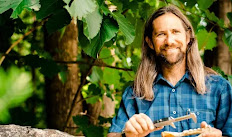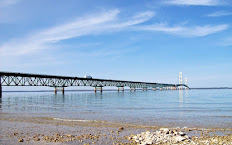
First District Congressional Candidate Lon Johnson speaks at a Town Hall on Line 5, the aging pipeline under the Mackinac Straits. More than 100 concerned citizens attended the Town Hall, held last spring at Little Bear Arena Community Center in St. Ignace, Mich. (Photo courtesy Lon Johnson)
TRAVERSE CITY -- In his extensive campaign for U.S. Representative in Congress in Michigan's 1st District (including the Upper Peninsula and Northern Michigan), candidate Lon Johnson has given priority to the Line 5 pipeline issue, joining efforts by bipartisan elected officials -- national, state, tribal and local -- as well as communities and groups from unions to environmentalists, to shut down the 63-year-old Enbridge oil pipeline under the Straits of Mackinac.
In response to news that Michigan Congressional Rep. Candice Miller introduced legislation to shut down Line 5, Johnson released the following statement:
"I am glad to see that our efforts on the ground across the U.P. and Northern Michigan have resulted in bipartisan action on both the state and now the federal level. I have said for months that this 63-year-old Enbridge oil pipeline should be shut down at the Straits of Mackinac so it can be independently inspected to be safe. The impact on the health of our Great Lakes and on our economy in the event of an oil spill would be devastating.*
"While I’ve been calling for lawmakers to address the issue of Line 5 for months, it’s disappointing that Lansing politicians like Tom Casperson would rather defend a Canadian oil company than protect the health and jobs of the people of the U.P. and Northern Michigan. Maybe it’s the $28,000 in campaign donations Casperson has taken from oil and gas industry PACs that’s influencing his decision?"
When State Senator Casperson (R-Escanaba), who is a Republican Congressional candidate for Michigan's 1st District, defended Enbridge's Line 5 pipeline running through the Great Lakes in a speech on the Senate floor in Lansing, Johnson reacted to that speech saying, "Among many things Michiganders learned from the crisis in Flint was not to trust politicians in Lansing when they tell us not to worry about our water. Here we have in Tom Casperson yet another Lansing politician trying to shout down the protests of 29 mayors, communities, and townships in Michigan who are calling for the Line 5 pipeline to be inspected.
"Instead of listening to the people of the U.P. and Northern Michigan, Casperson takes to the Senate floor to defend a Canadian oil company, risking another Flint-level water crisis in the Great Lakes to protect the oil companies funding his campaign."
Johnson has been taking on Enbridge officials at numerous town halls in the U.P. and Northern Michigan, as well as helping local communities pass resolutions urging their elected leaders address the pipeline. Townships, local boards, and communities have passed resolutions.**
Congressional
Candidate Lon Johnson addresses a large crowd during the May 7, 2016,
Houghton County Democratic Party Spring Fling. The Houghton County
Democratic Party has endorsed Lon Johnson as candidate for Congress.
(Photo courtesy Houghton County Democratic Party)
Johnson has summarized his position on the Line 5 Pipeline as follows: "I’ve said this consistently: 1) Shut down the Line 5 oil pipeline at the Mackinac Straits; 2) Independently verify if it’s safe; and 3) Work with the Governor’s task force to seek alternatives to this pipeline."
Tomorrow, Tuesday, Aug. 2, local voters will decide through the State Primary Election which of the following candidates will lead their party in the race for the Michigan 1st District U.S. Congressional Representative in Congress, the seat now held by Congressman Dan Benishek, who is retiring.
Johnson will face Democrat Jerry Cannon, a retired general from Kalkaska, while Casperson will run against two other Republicans, Jason Allen of Traverse City, and Jack Bergman of Watersmeet Township. In the State Primary Election voters must vote for one party only.****
* Click here to see Lon Johnson's YouTube video on why Line 5 should be shut down.
** See the list of communities that have passed resolutions here.
*** See our Apr. 28, 2016, article, "Candidate Lon Johnson to Houghton County Dems: Shut down Line 5, protect fresh water, more ...," including an interview with Johnson during his April 2016 visit with Houghton County Democrats.
**** See our right-hand column for helpful voting information. Click here to see the long list of Lon Johnson supporters.
Showing posts with label State Sen. Tom Casperson. Show all posts
Monday, August 01, 2016
Tuesday, February 17, 2015
Michigan League of Conservation Voters releases 2014 Lame Duck Scorecard for legislators on conservation, environmental issues
ANN ARBOR -- Today, the Michigan League of Conservation Voters (Michigan LCV) released their 2014 Lame Duck Scorecard. This special-edition Scorecard offers a non-partisan window into the voting records of Michigan’s State Representatives and State Senators on conservation and environmental issues during the busy last few weeks of the 2013 - 2014 legislative session.
"We saw serious attacks waged on Michigan’s land, air and water, including bills that promoted air pollution and denied the scientific management of public land, all in the span of a few weeks," said Lisa Wozniak, Michigan LCV executive director. "We also saw strong bipartisan support for clean energy legislation that promotes the reduction of energy waste. Lame Duck legislative sessions are often overlooked, but Michigan LCV members took action to stop bad bills and move good policy forward. Today, we are proud to release a complete description of all that took place in the waning days and hours of the legislative session, and hold elected officials accountable for their actions. Did they or did they not work to protect the natural resources that define our Great Lakes State?"
Upper Peninsula constituents should not be surprised at the following scores for our local state legislators:
State Senator Tom Casperson of Escanaba -- (R, 38th District, most of the U.P.) and chair of the Senate Committee on Natural Resources, Environment and Great Lakes -- received a 2014 Lame Duck session score of 40 percent, up from his original 2013-2014 score of 0 percent, giving him an overall score of 20 percent for 2013-2014. That ties Casperson with House Committee on Natural Resources Chair Andrea LaFontaine (R, District 32), who also received an overall score of 20 percent. Both score in Michigan LCV's "No" category (scores of 0 to 49 percent) on their performance for land, air and water issues. Casperson sponsored three of the Lame Duck session anti-environment bills scored by Michigan LCV.*
State Rep. Scott Dianda of Calumet (D, 110th District) received a Lame Duck session score of 47 percent, down from his 2013-2014 score of 64 percent, giving him an overall new score of 56 percent for 2013-2014. That score puts him in Michigan LCV's "Maybe" category (scores of 50 percent to 74 percent) for his legislative performance on conservation and environmental issues.
Here are the scores of state representatives from the Marquette/ Menominee area:
State Rep. John Kivela of Marquette (D, 109th District):
Lame Duck score: 62 percent
Original 2013-14 score: 56 percent
Overall 2013-14 score: 59 percent ("Maybe")
State Rep. Ed McBroom of Vulcan (R, 108th District):
Lame Duck score: 10 percent
Original 2013-14 score: 51 percent
Overall 2013-14 score: 31 percent ("No")
Michigan LCV’s 2014 Lame Duck Legislative Scorecard scores votes on six bills, including committee votes and votes on the floor of the House and Senate. It also includes bill sponsorship for three bills introduced during the Lame Duck session that would have expanded and strengthened Michigan’s commitments to renewable energy and energy efficiency.
Finally, for the first time the Scorecard also includes a count of a conservation majority in the state legislature.
Click here for a full summary of the 2014 Lame Duck Scorecard, including brief descriptions of the lame duck bills.
"The Lame Duck session clearly illustrates that our elected officials in Lansing are sorely lacking a core conservation commitment, which is counter to the assumption held by the majority of citizens in this state. Our Pure Michigan is a shared value among citizens from Detroit to Marquette. Those who represent us in Lansing must understand that their constituents expect strong leadership to protect both our world-class Great Lakes and the amazing outdoors that define our state," said Wozniak. "The legacy of the 2014 Lame Duck session will live on this year, and we look forward to working with Michiganders and state legislators to move Michigan forward."
Click here for the 2014 Lame Duck Legislative Scorecard. See p. 8 for the list of Lame Duck session bills and scroll through the following pages to see how your State Senator and Representative voted.
* See Senate Bills 78, 891, and 910 summarized here.
"We saw serious attacks waged on Michigan’s land, air and water, including bills that promoted air pollution and denied the scientific management of public land, all in the span of a few weeks," said Lisa Wozniak, Michigan LCV executive director. "We also saw strong bipartisan support for clean energy legislation that promotes the reduction of energy waste. Lame Duck legislative sessions are often overlooked, but Michigan LCV members took action to stop bad bills and move good policy forward. Today, we are proud to release a complete description of all that took place in the waning days and hours of the legislative session, and hold elected officials accountable for their actions. Did they or did they not work to protect the natural resources that define our Great Lakes State?"
Upper Peninsula constituents should not be surprised at the following scores for our local state legislators:
State Senator Tom Casperson of Escanaba -- (R, 38th District, most of the U.P.) and chair of the Senate Committee on Natural Resources, Environment and Great Lakes -- received a 2014 Lame Duck session score of 40 percent, up from his original 2013-2014 score of 0 percent, giving him an overall score of 20 percent for 2013-2014. That ties Casperson with House Committee on Natural Resources Chair Andrea LaFontaine (R, District 32), who also received an overall score of 20 percent. Both score in Michigan LCV's "No" category (scores of 0 to 49 percent) on their performance for land, air and water issues. Casperson sponsored three of the Lame Duck session anti-environment bills scored by Michigan LCV.*
State Rep. Scott Dianda of Calumet (D, 110th District) received a Lame Duck session score of 47 percent, down from his 2013-2014 score of 64 percent, giving him an overall new score of 56 percent for 2013-2014. That score puts him in Michigan LCV's "Maybe" category (scores of 50 percent to 74 percent) for his legislative performance on conservation and environmental issues.
Here are the scores of state representatives from the Marquette/ Menominee area:
State Rep. John Kivela of Marquette (D, 109th District):
Lame Duck score: 62 percent
Original 2013-14 score: 56 percent
Overall 2013-14 score: 59 percent ("Maybe")
State Rep. Ed McBroom of Vulcan (R, 108th District):
Lame Duck score: 10 percent
Original 2013-14 score: 51 percent
Overall 2013-14 score: 31 percent ("No")
Michigan LCV’s 2014 Lame Duck Legislative Scorecard scores votes on six bills, including committee votes and votes on the floor of the House and Senate. It also includes bill sponsorship for three bills introduced during the Lame Duck session that would have expanded and strengthened Michigan’s commitments to renewable energy and energy efficiency.
Finally, for the first time the Scorecard also includes a count of a conservation majority in the state legislature.
Click here for a full summary of the 2014 Lame Duck Scorecard, including brief descriptions of the lame duck bills.
"The Lame Duck session clearly illustrates that our elected officials in Lansing are sorely lacking a core conservation commitment, which is counter to the assumption held by the majority of citizens in this state. Our Pure Michigan is a shared value among citizens from Detroit to Marquette. Those who represent us in Lansing must understand that their constituents expect strong leadership to protect both our world-class Great Lakes and the amazing outdoors that define our state," said Wozniak. "The legacy of the 2014 Lame Duck session will live on this year, and we look forward to working with Michiganders and state legislators to move Michigan forward."
Click here for the 2014 Lame Duck Legislative Scorecard. See p. 8 for the list of Lame Duck session bills and scroll through the following pages to see how your State Senator and Representative voted.
* See Senate Bills 78, 891, and 910 summarized here.
Monday, November 18, 2013
Michigan Tech's Center for Diversity and Inclusion: Events on campus this week
HOUGHTON -- Michigan Tech's Center for Diversity and Inclusion announces several campus events happening this week:
Alpha Gamma Delta is hosting a fundraiser for diabetes research and awareness TODAY, Monday, Nov. 18. Please stop by the Michigan Tech library café today. An anonymous donor will match all sales at the café today up to $5,000.
Global City will host local resident and former Peace Corps Volunteer Linda Belote who will present "La Mega Cooperativa Artesanal: How Ecuadorian Indian Women Found Economic Success through Hand-Woven Beadwork" at 6:30 p.m. TONIGHT, Monday, Nov. 18, in Fisher 133. Refreshments will be provided and the cooperative's beadwork will be for sale. Click here for details.
Michigan Tech's USG (Undergraduate Student Government) is hosting an open forum on "The Future of Higher Education in Michigan." Representative Scott Dianda and a representative from State Senator Tom Casperson’s office will be present to answer questions from students. The event will be at 7 p.m. TONIGHT, Monday, Nov. 18, in 202 Great Lakes Research Center.
Keweenaw Pride will host a film screening of Southern Comfort at 7:30 p.m. on Wednesday, Nov. 20, in Fisher 135 in honor of Transgender Day of Remembrance. There will be free admission and concessions. For more information, visit http://diversitycenter.mtu.edu/SoCo.pdf.
Alpha Gamma Delta is hosting a fundraiser for diabetes research and awareness TODAY, Monday, Nov. 18. Please stop by the Michigan Tech library café today. An anonymous donor will match all sales at the café today up to $5,000.
Global City will host local resident and former Peace Corps Volunteer Linda Belote who will present "La Mega Cooperativa Artesanal: How Ecuadorian Indian Women Found Economic Success through Hand-Woven Beadwork" at 6:30 p.m. TONIGHT, Monday, Nov. 18, in Fisher 133. Refreshments will be provided and the cooperative's beadwork will be for sale. Click here for details.
Michigan Tech's USG (Undergraduate Student Government) is hosting an open forum on "The Future of Higher Education in Michigan." Representative Scott Dianda and a representative from State Senator Tom Casperson’s office will be present to answer questions from students. The event will be at 7 p.m. TONIGHT, Monday, Nov. 18, in 202 Great Lakes Research Center.
Keweenaw Pride will host a film screening of Southern Comfort at 7:30 p.m. on Wednesday, Nov. 20, in Fisher 135 in honor of Transgender Day of Remembrance. There will be free admission and concessions. For more information, visit http://diversitycenter.mtu.edu/SoCo.pdf.
Saturday, September 08, 2012
Michigan LCV: Casperson bill wants ATVs on conservancy lands
From Michigan League of Conservation Voters Political Week in Review
Posted Aug. 27, 2012 (Reprinted with permission)
By Ryan WerderImagine walking down a path that winds through your local nature preserve. Birds are chirping, squirrels are chattering. Walking quietly, you spot a deer just off the trail upwind from you. The sounds of the forest put you at ease, but you suddenly hear a roaring motor rapidly accelerating toward you. The deer spooks, the birds fly away, and you’re splashed with mud thrown up by an ATV as it zips past on the once-peaceful trail.
This could be the new reality for nature conservancies if Sen. Tom Casperson has his way. According to excellent reporting by Bridge Michigan’s Jeff Alexander, Sen. Casperson is working on a bill that would require nature conservancies to allow motorized access in order to qualify for tax exemptions.* Nature conservancies, however, often have covenants prohibiting motorized access that the bill would require them to break in order to continue their tax status.
In the article, Sen. Casperson said that the bill was about public access, but conservancies already allow public access. All you have to do is walk in. This bill, unfortunately, continues language included in other recent bills -- like SB 1238 and the Land Cap Bill -- which attempt to restrict quiet-use areas.** There is nothing wrong with having some areas of public land open to motorized trails, but there is nothing wrong with conserving some areas for quiet uses like hiking and cross-country skiing, either. After all, since when does enjoying nature require a whirring engine?
Notes:
* Click here to read Jeff Alexander's Aug. 23, 2012, Bridge Michigan article, "Land Wars: Senator targets private land conservancies."
** Click here to read Michigan LCV's Jan. 13, 2012, article on Casperson and the Land Cap Bill.
Read more articles on the Michigan League of Conservation Voters Aug. 27, 2012, Political Week in Review.
Monday, January 16, 2012
Hunters, anglers, pack Alpena town hall to oppose Casperson's Land Cap
From the Michigan League of Conservation Voters
ALPENA -- A Jan. 13, 2012, article from the Michigan League of Conservation Voters reports that On Tuesday, Jan. 10, 2012, State Sen. Tom Casperson (R-Escanaba) presented his public land bill to a room full of hunters and anglers at a town hall meeting in Alpena, Mich.
The article states, "This town hall wasn’t about just any bill; it was about SB 248, the Land Cap Bill, which would restrict the amount of land available for hunting, fishing, horseback riding, and hiking. The citizens at this town hall proved that conservation is not a partisan issue, and that protecting and preserving land for public use transcends party politics."*
The article notes that, in addition to members of the League of Conservation Voters, this town hall was attended by a large group from Michigan United Conservation Clubs (MUCC) as well as representatives from Trout Unlimited, the Pigeon River Country Association, the Quality Deer Management Association, horseback riding groups and township administrators.
"The Land Cap Bill would require the state to sell land if it wanted to purchase more after it reached the cap," the article explains. "If a parcel became available in southern Michigan, where there is currently little public land, the DNR would have to sell off land somewhere else, likely in the Upper Peninsula, where timber, paper, and mining companies could acquire it cheaply."
Since Casperson refuses to exempt Natural Resources Trust Fund land from the cap, his bill "would also eliminate the primary purpose of the Natural Resources Trust Fund, which is to purchase state land for recreation," the article adds.**
While he tried to counter citizens' concerns about the Trust Fund by saying it is protected by the Michigan Constitution, Casperson "failed to mention that a constitutional amendment he proposed would use the Trust Fund to build logging and mining roads on state land," the article says.***
* Click here to read the whole article from the Michigan League of Conservation Voters.
** Click here to read about the State Senate vote on this bill last June.
***Read about this proposed amendment.
Click here to see You Tube videos of this town hall meeting.
ALPENA -- A Jan. 13, 2012, article from the Michigan League of Conservation Voters reports that On Tuesday, Jan. 10, 2012, State Sen. Tom Casperson (R-Escanaba) presented his public land bill to a room full of hunters and anglers at a town hall meeting in Alpena, Mich.
The article states, "This town hall wasn’t about just any bill; it was about SB 248, the Land Cap Bill, which would restrict the amount of land available for hunting, fishing, horseback riding, and hiking. The citizens at this town hall proved that conservation is not a partisan issue, and that protecting and preserving land for public use transcends party politics."*
The article notes that, in addition to members of the League of Conservation Voters, this town hall was attended by a large group from Michigan United Conservation Clubs (MUCC) as well as representatives from Trout Unlimited, the Pigeon River Country Association, the Quality Deer Management Association, horseback riding groups and township administrators.
"The Land Cap Bill would require the state to sell land if it wanted to purchase more after it reached the cap," the article explains. "If a parcel became available in southern Michigan, where there is currently little public land, the DNR would have to sell off land somewhere else, likely in the Upper Peninsula, where timber, paper, and mining companies could acquire it cheaply."
Since Casperson refuses to exempt Natural Resources Trust Fund land from the cap, his bill "would also eliminate the primary purpose of the Natural Resources Trust Fund, which is to purchase state land for recreation," the article adds.**
While he tried to counter citizens' concerns about the Trust Fund by saying it is protected by the Michigan Constitution, Casperson "failed to mention that a constitutional amendment he proposed would use the Trust Fund to build logging and mining roads on state land," the article says.***
* Click here to read the whole article from the Michigan League of Conservation Voters.
** Click here to read about the State Senate vote on this bill last June.

***Read about this proposed amendment.
Click here to see You Tube videos of this town hall meeting.
Subscribe to:
Posts (Atom)