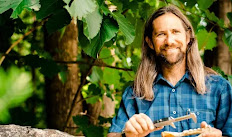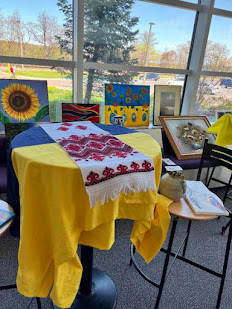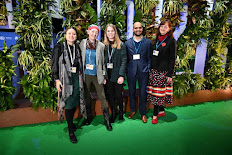
The Ryan Street Garden in Hancock is one of nine recipients of a Community Gardens award from Portage Health Foundation. (Photo © and courtesy Michael H. Babcock at Portage Health Foundation)
HANCOCK -- Portage Health Foundation (PHF) is proud to announce $37,400 has been awarded for nine projects who responded to the foundation’s Community Gardens request for proposals that was released in January.
"Overall, we are very pleased with this group of grantees," said Dr. Michelle Seguin, Director of Community Health at PHF. "The projects funded will serve a wide cross-section of the community in a variety of different settings including traditional community gardens, schools, and residential housing complexes. It’s especially exciting to see the collaborations involved including school-community-based partnerships and opportunities for intergenerational learning. When we learn, grow and eat together, we all win."
The nine project awardees:
Chassell Township Schools - Chassell School Garden -- $5,000. Chassell Public Schools is creating a shared greenspace, including a community garden. This new school garden fits into the district’s goal of creating a nature trail through a partnership with the Lake Superior Stewardship Initiative.
City of Hancock - Herb and "Three Sisters" Garden -- $1,900. In an effort to continue the beautification of Hancock and provide an opportunity for food education and security, Portage Health Foundation, with the assistance of a private donor, has funded garden projects at Porvoo Park, site of the new Hancock Outdoor Farmers Market, on the waterfront in the City of Hancock. The new raised garden bed and the previous overgrown circular bed are now full of edible herbs for public use.
Dollar Bay-Tamarack City Schools - DB-TC Tower Gardening Project -- $2,500. The school district will be measuring lettuce consumption rates before, during and after learning about the hydro garden, which will use a tower gardening system -- known to grow more in less time with few resources.
Finlandia University - Ryan Street Community Garden -- $5,000. One of the longest-running community gardens in Michigan’s Copper Country, the Ryan Street Community Garden was founded in 2010 on the Finlandia University campus. Since then it has provided a rich and fruitful experience for a stable membership group that has now created more demand than capacity. With the $5,000 grant, the all-volunteer organization will install two new raised beds, install and plant a new perennial garden, offer workshops, add a picnic table and benches, and host field trips.
Gogebic-Ontonagon Intermediate School District - School Community Garden -- $5,000. In an effort to increase the consumption of healthy produce for students and community members, increase opportunities for health education, and create a space to foster social connection among community members Gogebic-Ontonagon Intermediate School District in partnership with Ontonagon Area Schools is going to create a community garden on the school district's campus.
Hancock Public Schools - Barkell Elementary School Garden -- $5,000. A 20’ x 30’ school garden will be created behind Barkell Elementary School in Hancock -- in close proximity to the location of their previous garden, which was ruined in 2019 because of a roof collapse. The new garden will support six beds, including an elevated raised bed that will be used by three Copper Country ISD special education classes.
Ontonagon Village Housing Commission - Pedestal and Raised Bed Gardens -- $3,000. This grant allowed the construction of raised bed gardens that are accessible to individuals with mobility issues and help create a community environment within Ontonagon Village Housing, a 60-unit residential housing complex. The grant funded materials to construct the gardens, including wood, dirt, fencing and mulch.
Osceola Township - Dollar Bay Community Garden -- $5,000. A community garden in Dollar Bay (Osceola Township) will provide local residents access to fresh, seasonal vegetables as well as serve as an educational resource for the community. The new garden will be located within walking distance of the school, creating the potential to host on-site learning tied to grade-level curriculum. See the Dollar Bay Community Garden on Facebook.
Village of South Range - South Range Community Garden -- $5,000. The creation of a community garden in the Village of South Range should provide a space for many programs to be successful, help the village promote more community involvement and spark a strong sense of community pride. The Adams Township School District hopes to involve students in the trades and culinary programs at Jeffers High School and younger students at South Range Elementary School to use this space as a tool for learning about plants and ecosystems.
Follow Portage Health Foundation on Facebook, Instagram and Twitter for updates on each project throughout the summer, and visit phfgive.org for more information on these grants and on the health-focused foundation.
Showing posts with label community gardens. Show all posts
Wednesday, July 08, 2020
Sunday, May 24, 2020
Fresh, Local, Dependable: Nurturing UP Food Systems
By Kelley Christensen, Michigan Tech Science and Technology Publications Writer
Posted May 12, 2020, on Michigan Tech News
Reprinted in part with permission
Michigan Tech facilitates conversations among farmers, farmers market coordinators and area food banks to ensure people can get the food they need while supporting local growers and increasing food access efforts in the UP. (Photo courtesy Michigan Tech University)
Michigan Tech is partnering with local agencies to strengthen western Upper Peninsula food systems during the pandemic and beyond.
It’s said that to survive and thrive in Michigan’s Upper Peninsula, it takes a healthy serving of "sisu" -- a Finnish word that roughly translates as "grit." The term is also apt for describing how scientists, health care professionals and planners have pivoted to ensure Yoopers have access to nutritious, local food and to gardening despite the COVID-19 pandemic.
Last fall, Angie Carter, assistant professor of environmental and energy justice, received a Michigan Technological University Research Excellence Fund grant to study local food systems in the Keweenaw Peninsula, including community gardeners, community-supported agriculture (CSA) farming, and farmers markets. When Michigan's "Stay Home, Stay Safe" executive order went into effect, at first Carter thought she couldn’t continue her research, as it had included numerous face-to-face interviews and in-person meetings.
Then she recognized the opportunity the stay-home order provided -- it was a chance to strengthen the area’s food system for the long term. When people source their food locally, they aren’t reliant on far-flung supply chains, which have been challenged by the COVID-19 pandemic. Additionally, this new focus to Carter’s research could be conducted remotely.... Click here for the rest of this article.
Posted May 12, 2020, on Michigan Tech News
Reprinted in part with permission
Michigan Tech facilitates conversations among farmers, farmers market coordinators and area food banks to ensure people can get the food they need while supporting local growers and increasing food access efforts in the UP. (Photo courtesy Michigan Tech University)
Michigan Tech is partnering with local agencies to strengthen western Upper Peninsula food systems during the pandemic and beyond.
It’s said that to survive and thrive in Michigan’s Upper Peninsula, it takes a healthy serving of "sisu" -- a Finnish word that roughly translates as "grit." The term is also apt for describing how scientists, health care professionals and planners have pivoted to ensure Yoopers have access to nutritious, local food and to gardening despite the COVID-19 pandemic.
Last fall, Angie Carter, assistant professor of environmental and energy justice, received a Michigan Technological University Research Excellence Fund grant to study local food systems in the Keweenaw Peninsula, including community gardeners, community-supported agriculture (CSA) farming, and farmers markets. When Michigan's "Stay Home, Stay Safe" executive order went into effect, at first Carter thought she couldn’t continue her research, as it had included numerous face-to-face interviews and in-person meetings.
Then she recognized the opportunity the stay-home order provided -- it was a chance to strengthen the area’s food system for the long term. When people source their food locally, they aren’t reliant on far-flung supply chains, which have been challenged by the COVID-19 pandemic. Additionally, this new focus to Carter’s research could be conducted remotely.... Click here for the rest of this article.
Saturday, September 14, 2013
KUUF to host "Eating Green" potluck and forum on growing and eating local food Sept. 15
HOUGHTON -- The Keweenaw Unitarian Universalist Fellowship will host a potluck and forum, "Eating Green," from 10:30 a.m. to 11:30 a.m. TOMORROW, Sunday, Sept. 15, at BHK Center Conference Room (1 block off M-26 -- turn at Hilltop Restaurant) in west Houghton. The presenters will be Barb Hardy, Western UP Food Hub, and Mark Pittillo, Portage Health Nutritional Services Director.
This forum will focus on the topic of growing and eating local foods and why we should care about our food sources. Learn about the goals of the Western UP Food Hub from Barb Hardy. Mark Piettillo will describe Portage Health's project with the Hancock schools and provide some ideas for how you can prepare your food once you've grown or bought "local."
The forum will be followed by a potluck meal of locally grown foods. (Please bring a card with the name of your dish and a list of locally grown ingredients in the dish.)
For hundreds of years gardens have been an American tradition. They provided people with sustenance and a more reliable means of survival than hunting or fishing. They often engaged all of the family members -- from working the soil in the spring to planting, weeding, and -- ultimately -- the fall harvest. The meals shared with others from the fruits of their labors helped to foster a sense of community. As we became more urbanized, and frozen and canned produce became plentiful, gardens were left behind, until "victory gardens" sprang up in response to the shortages of WW II. Gardens again provided a sense of community and a way to provide for families. Today, with concerns of food contamination by pesticides -- and the large environmental footprint of foods that travel sometimes thousands of miles across the country or around the world before arriving at our tables -- gardens have again become a popular activity. Gardens can be found not only in rural areas, but in many urban areas where community gardens, backyard gardens, window gardens, and rooftop gardens have increased in popularity.

Along with the desire to know where our food comes from, there is a growing awareness that diets which primarily depend upon plants are healthier and use less energy. Americans can save fossil fuels and make more plant protein available for human consumption by simply reducing the number of meals they eat containing meat.
With all of this in mind, the Keweenaw Unitarian Universalist Fellowship would like to encourage "growing our own" and sharing meals together. In that spirit, we have invited these two guest speakers and will host a congregational potluck made from local foods from individual and community gardens.
This event is open to all.
This forum will focus on the topic of growing and eating local foods and why we should care about our food sources. Learn about the goals of the Western UP Food Hub from Barb Hardy. Mark Piettillo will describe Portage Health's project with the Hancock schools and provide some ideas for how you can prepare your food once you've grown or bought "local."
The forum will be followed by a potluck meal of locally grown foods. (Please bring a card with the name of your dish and a list of locally grown ingredients in the dish.)
For hundreds of years gardens have been an American tradition. They provided people with sustenance and a more reliable means of survival than hunting or fishing. They often engaged all of the family members -- from working the soil in the spring to planting, weeding, and -- ultimately -- the fall harvest. The meals shared with others from the fruits of their labors helped to foster a sense of community. As we became more urbanized, and frozen and canned produce became plentiful, gardens were left behind, until "victory gardens" sprang up in response to the shortages of WW II. Gardens again provided a sense of community and a way to provide for families. Today, with concerns of food contamination by pesticides -- and the large environmental footprint of foods that travel sometimes thousands of miles across the country or around the world before arriving at our tables -- gardens have again become a popular activity. Gardens can be found not only in rural areas, but in many urban areas where community gardens, backyard gardens, window gardens, and rooftop gardens have increased in popularity.

Along with the desire to know where our food comes from, there is a growing awareness that diets which primarily depend upon plants are healthier and use less energy. Americans can save fossil fuels and make more plant protein available for human consumption by simply reducing the number of meals they eat containing meat.
With all of this in mind, the Keweenaw Unitarian Universalist Fellowship would like to encourage "growing our own" and sharing meals together. In that spirit, we have invited these two guest speakers and will host a congregational potluck made from local foods from individual and community gardens.
This event is open to all.
Subscribe to:
Posts (Atom)