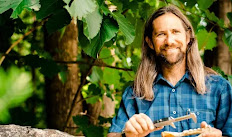
W. Charles Kerfoot, Michigan Tech professor in biological sciences and and director of the Lake Superior Ecosystem Research Center at Michigan Tech, is pictured here in his laboratory. (Photo courtesy Michigan Tech University)
[Editor's Note: The Houghton Keweenaw Conservation District reports that W. Charles Kerfoot, Michigan Tech professor in biological sciences, will be one of the featured speakers at an informational meeting on environmental issues surrounding Torch Lake from 5 p.m. to 7 p.m. on Wednesday, March 23, in the Lake Linden-Hubbell High School Auditorium. (The meeting was originally scheduled for March 16 but was postponed due to inclement weather.)* We are publishing here, with permission, this recent Michigan Tech News article on the mercury research by Kerfoot and his team.]
By Allison Mills, Michigan Tech Science and Technology Writer
Posted March 17, 2016, on Michigan Tech News
Reprinted with permission.
The northern Great Lakes are praised for being clean, but these aquatic systems don’t exist in a vacuum. Contaminants still find their way into lake water and sediments. Mercury is of particular interest because of its toxicity and persistence.
In a new study published in the Journal of Great Lakes Research in February, an interdisciplinary team from Michigan Technological University examined the legacy of mercury in Lake Superior.
Currently, the National Atmospheric Deposition Program reports low levels of mercury deposition across most of the upper Midwest. However, those figures don’t account for past mercury deposition and what that might mean for heavy metal contamination. In fact, when mining was booming around the lake in Michigan, Minnesota and Canada in the 1800s and 1900s, the researchers found mercury input was higher than expected.
"We document that the mining effort was discharging mercury at 1,000 times the normal deposition rate in the region," says W. Charles Kerfoot, a professor of biology and director of the Lake Superior Ecosystem Research Center at Michigan Tech. "We set out to quantify this deposition -- and it was a real wake-up call."
Mine Tailings
Kerfoot collaborated with Noel Urban, a professor of civil and environmental engineering and director of the Center for Water and Society at Michigan Tech. Together they dug into mine tailings buried at the bottom of local waterways near the Michigan Tech campus to start piecing together the region’s mercurial history.
Booms and busts rocked not just the area’s economy, but also heavy metal fluxes. Naturally, some metals -- including mercury -- make their way into water bodies. Mining speeds up that process; and the more mining, smelting and processing taking place, then the more heavy metals get deposited. In the Keweenaw Waterway and Torch Lake, lakebed sediments record these mercury-rich layers in lighter bands.
Because of the unique environment of the Keweenaw Peninsula, the team was able to quantify two kinds of mercury in these layers.
"That’s normally difficult to do," Urban explains. "But here, we can show that the amount of mercury in the environment due to local activities is huge compared to the amount coming from other sources like regional coal power plants."
During an educational boat ride on Torch Lake aboard Michigan Tech's Agassiz research vessel on July 4, 2014, Michigan Tech Professor Noel Urban displays samples of contaminated sediments from Torch Lake. He explained to visitors how fish in Torch Lake are contaminated with both PCBs and mercury. Behind him are historic photos of the early mining activities around Torch Lake. (Keweenaw Now file photo)**
Urban, Kerfoot and their team gathered dozens of 5-centimeter diameter core samples by boat, then lugged them back to the lab for analysis. That’s where Kerfoot and Urban uncovered some of the "lingering effects" from mercury deposits.
Methyl Mercury
Mercury as an inorganic metal is not as toxic as its organic form, methyl mercury, which is formed by bacteria. The organic form is bioavailable -- meaning it is readily taken up and stored in organisms -- and tends to accumulate up the food chain. A little plankton feeds an invertebrate that feeds a fish and then another fish. By the time a person eats that fish, the methyl mercury has accumulated every smidge from every plankton and fish into a sizable dose of heavy metals. Because of bioaccumulation, there are guidelines on how much fish is safe to consume.
During the July 30, 2015, Geotour on copper mining waste of Lake Superior, aboard Michigan Tech's Agassiz research vessel near the Gay stamp sands, Professor Charles Kerfoot speaks about copper and mercury contamination. The educational Geotour was one of a series led by Bill Rose, Michigan Tech professor emeritus in geology. (Photo by Keweenaw Now)
Understanding the quantity and timing of the initial inorganic deposition is then crucial for understanding how much methylation occurs and how much methyl mercury is hanging out in the ecosystem.
"For each core, you need to know the concentration of the total inorganic mercury, and then you need to know how much time it took to be deposited," Kerfoot says. Once that data is compiled, it’s compared to a similar set of data for methyl mercury. In this case, as the team writes in their paper, the results "reveal that methylation occurred at the time of mining operations and shortly afterwards, with an apparent time lag of 20 to 40 years."
Regional Impacts
The question remains why the lag is there and there are several possible explanations. The delay could be from the time it takes the watershed to move mercury back into surface waters. Following clear cutting and other landscape-scale changes, forest and wetland regrowth could have played a part in remobilizing mercury. On a smaller scale, the microbes living in sediments needed time to recover from copper toxicity before being abundant enough to methylate mercury.
To better understand the time lag, and connect local activities to regional impacts, the next step of the research is to scale up. Kerfoot points out that the research in the Keweenaw gives researchers a baseline to start comparing additional sites around the lake.
The work can also affect how remediation is done with mercury contamination. At the very least, knowing how much mercury is present in the environment changes the conversation about how to deal with heavy metal contaminants in the Lake Superior region.
Editor's Notes:
* Click here for more information on the Torch Lake informational meeting to be held Wednesday, March 23.
** To see videos and photos of Noel Urban's Torch Lake presentation on the Agassiz, see our May 11, 2015, article.
Showing posts with label Torch Lake Watershed Project. Show all posts
Tuesday, March 22, 2016
Wednesday, March 16, 2016
Conservation District to hold Public Meeting on Torch Lake Watershed MARCH 23 in Lake Linden
This map shows the extent of the Torch Lake Watershed. (Image courtesy Houghton Keweenaw Conservation District)
UPDATE: Because of inclement weather, the Torch Lake Watershed Project meeting has been POSTPONED to Wednesday, March 23. It will be held from 5 p.m. to 7 p.m. at the Lake Linden-Hubbell School auditorium.*
LAKE LINDEN -- The Houghton Keweenaw Conservation District (HKCD) will host a public
informational meeting on the Torch Lake Watershed Project from 5 p.m. to 7 p.m. on Wednesday, MARCH 23, at the
Lake Linden-Hubbell School auditorium.
Carol MacLennan, Michigan Tech professor of anthropology, presents a history of pollution problems in the Torch Lake Watershed at the Feb. 10 Torch Lake Watershed Project meeting in Lake Linden. (Photo by Keweenaw Now)
This meeting will provide information on previous restoration work
along Torch Lake and additional water quality information. Guest speakers will
review the history of Superfund work, current sediment mercury levels, fish
consumption recommendations, an update on the state and regional Area of
Concern meeting and next steps to take to continue remediation of Torch Lake.
This meeting is open to all interested individuals. RSVP is appreciated but not
required. Please call (906)482-0214 or email meral.jackson@macd.org
to notify Meral Jackson of HKCD that you will attend.
Funding is provided by the Areas of Concern Program, Office of the Great Lakes (OGL), Michigan Department of Environmental Quality.
*Editor's Note: We originally announced the date of this meeting as March 16. We have updated it to March 23, as requested by Houghton Keweenaw Conservation District.
Funding is provided by the Areas of Concern Program, Office of the Great Lakes (OGL), Michigan Department of Environmental Quality.
*Editor's Note: We originally announced the date of this meeting as March 16. We have updated it to March 23, as requested by Houghton Keweenaw Conservation District.
Tuesday, February 09, 2016
Torch Lake Watershed Project Public Meeting to be Feb. 10; DEQ, Michigan Tech researchers present findings on PCBs, more ...
By Michele Bourdieu
This sign was designed and posted by the Torch Lake Township board to advise visitors of the hazards at Hubbell Beach near the old town dump. These wastes can be seen in the shallow water near the swimming area. (Photo courtesy Amy Keranen, Michigan Department of Environmental Quality Remediation and Redevelopment Division)
LAKE LINDEN -- What do you know about the Torch Lake Watershed, the Torch Lake Superfund and stamp sand, the Torch Lake Area of Concern, PCBs and fish advisories, ongoing research and remediation of contaminated sites in the area? The Torch Lake Watershed Project public meeting is one way to learn about these issues and to become involved in a community effort to plan the future of this area.
The Houghton Keweenaw Conservation District (HKCD) will host a Torch Lake Watershed Project Public Meeting from 6 p.m. to 8 p.m. on Wednesday, Feb. 10, 2016, in the Lake Linden-Hubbell School Auditorium, 601 Calumet St., Lake Linden. This meeting is free and open to the public and all interested people are invited to attend.
This community meeting continues the informational sessions started in 2015 and will provide the community with background on the environmental issues of Torch Lake and its watershed including PCBs and their historic origins.
This map shows areas tested for PCBs in and around Torch Lake. Green circles indicate sediment locations; purple triangles are soil locations; and blue square indicates groundwater detection. Michigan Tech Professor Carol MacLennan discussed this cluster of PCBs in her Jan. 19, 2016, presentation at Carnegie Museum. See video below. (Photo by Keweenaw Now)
No preregistration is required; however, RSVP is appreciated. To RSVP or to obtain more information, contact Meral Jackson at HKCD at (906) 482-0214, or email meral.jackson@macd.org.
Guest speakers will be Michigan Tech Professors Noel Urban (Civil and Environmental Engineering) and Carol MacLennan (Social Sciences). They will provide information on what some of the current environmental concerns are at Torch Lake -- where they are and how they got there -- and will discuss the development of a Torch Lake Watershed Management Plan. The second Torch Lake Watershed Project Public meeting in 2016 will be held from 5 p.m. to 7 p.m. on Wednesday, March 16, at the same location.
May 2015 Torch Lake Watershed informational meeting: videos, photos
Map of the Torch Lake Watershed, presented at the May 26, 2015, informational meeting. (Photo by Keweenaw Now)
Last May HKCD held a Torch Lake Watershed informational meeting at Michigan Tech's Great Lakes Research Center with presentations by HKCD President Gina Nicholas, Michigan Tech Emeritus Professor of Geological Engineering and Geology Bill Rose and Michigan Tech Professor of Anthropology Carol MacLennan. Here is an excerpt from Gina Nicholas' introduction to the concept of the Torch Lake Watershed at that meeting:
This sign was designed and posted by the Torch Lake Township board to advise visitors of the hazards at Hubbell Beach near the old town dump. These wastes can be seen in the shallow water near the swimming area. (Photo courtesy Amy Keranen, Michigan Department of Environmental Quality Remediation and Redevelopment Division)
LAKE LINDEN -- What do you know about the Torch Lake Watershed, the Torch Lake Superfund and stamp sand, the Torch Lake Area of Concern, PCBs and fish advisories, ongoing research and remediation of contaminated sites in the area? The Torch Lake Watershed Project public meeting is one way to learn about these issues and to become involved in a community effort to plan the future of this area.
The Houghton Keweenaw Conservation District (HKCD) will host a Torch Lake Watershed Project Public Meeting from 6 p.m. to 8 p.m. on Wednesday, Feb. 10, 2016, in the Lake Linden-Hubbell School Auditorium, 601 Calumet St., Lake Linden. This meeting is free and open to the public and all interested people are invited to attend.
This community meeting continues the informational sessions started in 2015 and will provide the community with background on the environmental issues of Torch Lake and its watershed including PCBs and their historic origins.
This map shows areas tested for PCBs in and around Torch Lake. Green circles indicate sediment locations; purple triangles are soil locations; and blue square indicates groundwater detection. Michigan Tech Professor Carol MacLennan discussed this cluster of PCBs in her Jan. 19, 2016, presentation at Carnegie Museum. See video below. (Photo by Keweenaw Now)
No preregistration is required; however, RSVP is appreciated. To RSVP or to obtain more information, contact Meral Jackson at HKCD at (906) 482-0214, or email meral.jackson@macd.org.
Guest speakers will be Michigan Tech Professors Noel Urban (Civil and Environmental Engineering) and Carol MacLennan (Social Sciences). They will provide information on what some of the current environmental concerns are at Torch Lake -- where they are and how they got there -- and will discuss the development of a Torch Lake Watershed Management Plan. The second Torch Lake Watershed Project Public meeting in 2016 will be held from 5 p.m. to 7 p.m. on Wednesday, March 16, at the same location.
May 2015 Torch Lake Watershed informational meeting: videos, photos
Map of the Torch Lake Watershed, presented at the May 26, 2015, informational meeting. (Photo by Keweenaw Now)
Last May HKCD held a Torch Lake Watershed informational meeting at Michigan Tech's Great Lakes Research Center with presentations by HKCD President Gina Nicholas, Michigan Tech Emeritus Professor of Geological Engineering and Geology Bill Rose and Michigan Tech Professor of Anthropology Carol MacLennan. Here is an excerpt from Gina Nicholas' introduction to the concept of the Torch Lake Watershed at that meeting:
Gina Nicholas, Houghton Keweenaw Conservation District president, presents the concept of the Torch Lake Watershed Project during an informational meeting May 26, 2015, at Michigan Tech's Great Lakes Research Center. Click on YouTube icon for larger screen. (Video by Keweenaw Now)
Nicholas then introduced Bill Rose, who spoke about the geology of the Torch Lake Watershed -- how the lake and rivers that empty into it were formed and more.
During the May 26 Torch Lake Watershed informational meeting, Bill Rose, Michigan Tech emeritus professor of geological engineering and geology, speaks about the geology of the Torch Lake Watershed, including the Keweenaw Fault. (Photo by Keweenaw Now) *
Following Rose's geology presentation at the May 26, 2015, meeting, Carol MacLennan gave a detailed presentation on the history of the industrial mining on Torch Lake and the problems that have resulted from the mining waste.
Key points in Carol MacLennan's presentation on the history of the Torch Lake industrial site and problems of pollution that still remain from mining-related activities. (Photo by Keweenaw Now)
Community members asked questions about several issues, including the problem of building on remediated stamp sand:
Following Rose's geology presentation at the May 26, 2015, meeting, Carol MacLennan gave a detailed presentation on the history of the industrial mining on Torch Lake and the problems that have resulted from the mining waste.
Key points in Carol MacLennan's presentation on the history of the Torch Lake industrial site and problems of pollution that still remain from mining-related activities. (Photo by Keweenaw Now)
Community members asked questions about several issues, including the problem of building on remediated stamp sand:
Following her presentation on the history of Torch Lake industrial sites at the May 26, 2015, Torch Lake Watershed informational meeting, Michigan Tech Professor Carol MacLennan fields an audience question concerning requirements for building on remediated stamp sand. (Video by Keweenaw Now)
MacLennan also spoke about local legacy mining issues and moderated a group discussion at the Oct. 8, 2015, annual meeting of Friends of the Land of Keweenaw (FOLK).
Carol MacLennan gives an overview of the Torch Lake mining waste issues during the Oct. 8, 2015, annual meeting of Friends of the Land of Keweenaw (FOLK). (Photo by Keweenaw Now)
Linda Rulison, president of FOLK, told Keweenaw Now why the local environmental group is participating in the Torch Lake Watershed project.
"We were interested in getting a watershed project going because we believe the Torch Lake area has been neglected too long and that the watershed development is a good way of addressing the environmental problems by looking beyond the lake -- at what is going on in the watershed that feeds Torch Lake," Rulison said.
Bill Rose leads geoheritage tour of Keweenaw stamp sand sites
On July 30, 2015, Bill Rose led a Keweenaw geoheritage tour, "Copper Mining Waste of Lake Superior Today," that included Torch Lake. Here is how he explained how stamp sand became a man-made delta in Torch Lake:
MacLennan also spoke about local legacy mining issues and moderated a group discussion at the Oct. 8, 2015, annual meeting of Friends of the Land of Keweenaw (FOLK).
Carol MacLennan gives an overview of the Torch Lake mining waste issues during the Oct. 8, 2015, annual meeting of Friends of the Land of Keweenaw (FOLK). (Photo by Keweenaw Now)
Linda Rulison, president of FOLK, told Keweenaw Now why the local environmental group is participating in the Torch Lake Watershed project.
"We were interested in getting a watershed project going because we believe the Torch Lake area has been neglected too long and that the watershed development is a good way of addressing the environmental problems by looking beyond the lake -- at what is going on in the watershed that feeds Torch Lake," Rulison said.
Bill Rose leads geoheritage tour of Keweenaw stamp sand sites
On July 30, 2015, Bill Rose led a Keweenaw geoheritage tour, "Copper Mining Waste of Lake Superior Today," that included Torch Lake. Here is how he explained how stamp sand became a man-made delta in Torch Lake:
During his July 30, 2015, geoheritage tour of stamp sand in the Keweenaw, Bill Rose, Michigan Tech emeritus professor of geological studies, explains how stamp sand in Torch Lake forms man-made deltas. The tour group gathers near Torch Lake in Lake Linden, Michigan. Michigan Tech Professors Carol Mac Lennan and Charles Kerfoot accompany the tour and add their expertise. (Video by Keweenaw Now)
Rose, along with Michigan Tech Professor of Biology Charles Kerfoot and Professor of Anthropology Carol MacLennan, took the tour group to see the remains of the last stamp mill that operated in the Keweenaw near what is now Tamarack City. Here they discuss the closing of the nearby Hubbell Beach and other areas where PCBs have been found through the Michigan Department of Environmental Quality (DEQ) ongoing Abandoned Mining Wastes project, directed by Amy Keranen, DEQ Remediation and Redevelopment Division senior environmental quality analyst:
Bill Rose, Michigan Tech emeritus professor of geological engineering and sciences, leads his July 30, 2015, geoheritage tour to a historic stamp mill site near Tamarack City on Torch Lake. He is joined by Michigan Tech professors Charles Kerfoot (biology) and Carol MacLennan (anthropology), who talk about PCB pollution in the area. (Video by Keweenaw Now)
The tour group then walked out on a windy peninsula of the Superfund site of remediated stamp sands and discussed the EPA's efforts to cover the stamp sand. Later they rode on Michigan Tech's Research Vessel Agassiz to explore areas of Torch Lake and to view the Gay stamp sands from Lake Superior.
During his July 30, 2015, geology tour, "Copper Mining Waste of Lake Superior Today," Bill Rose, Michigan Tech professor emeritus of geological engineering and sciences, joined by Professors Kerfoot and MacLennan, speaks about the stamp sand in Torch Lake and the EPA Superfund project to remediate it. (Video by Keweenaw Now)
Carol MacLennan speaks on "Mine Polluted Waters" at Carnegie Museum
More recently Carol MacLennan presented "Mine Polluted Waters: What are our Options?" on Jan. 19, 2016, as part of the Carnegie Museum's Keweenaw Natural History Lecture Series. She gave an updated historical presentation on Torch Lake areas of contamination and the present efforts of the Michigan Department of Environmental Quality to locate and remediate some of these sites. She also described community action by a New Mexico group of citizens that has made progress in remediating mine pollution.
Here are some video excerpts from her presentation:
Carol MacLennan speaks on "Mine Polluted Waters" at Carnegie Museum
More recently Carol MacLennan presented "Mine Polluted Waters: What are our Options?" on Jan. 19, 2016, as part of the Carnegie Museum's Keweenaw Natural History Lecture Series. She gave an updated historical presentation on Torch Lake areas of contamination and the present efforts of the Michigan Department of Environmental Quality to locate and remediate some of these sites. She also described community action by a New Mexico group of citizens that has made progress in remediating mine pollution.
Here are some video excerpts from her presentation:
During her Jan. 19, 2016, presentation "Mine Polluted Waters: What are our Options?" at the Carnegie Museum, Carol MacLennan, Michigan Tech University professor of anthropology, points out areas of PCB contamination left from copper mining activities near Torch Lake. (Videos by Keweenaw Now)
Carol MacLennan talks about clusters of PCBs detected near Torch Lake and ongoing Michigan DEQ studies into the sources of PCB contamination in the area.
Here MacLennan speaks about the 800 barrels left in Torch Lake from mining activities. Joining the discussion is Charles Kerfoot, Michigan Tech professor of biology, who has studied mining waste contamination in Torch Lake.
Citing an example of a community in New Mexico that has actively participated in solving problems of mining waste, MacLennan notes the importance of community organization and long-term involvement.
During the question period following her presentation, MacLennan discusses concerns about health issues related to Torch Lake pollution from mining wastes.
"Notes from the desk of Amy Keranen"
In her talks, MacLennan mentioned the work of Amy Keranen, senior environmental quality analyst for the Michigan DEQ Remediation and Redevelopment Division, in locating areas of PCBs along the Torch Lake shoreline through soil and sediment analysis.
Last year Keranen told Keweenaw Now that MacLennan's historical research has been helpful for her DEQ Abandoned Mining Wastes (AMW) project.
"We used Carol's research to confirm where our samples should be -- targeting areas of waste streams and disposal areas," Keranen said.
On Feb.1, 2016, Keranen published a newsletter, "Notes from the desk of Amy Keranen," reporting on her AMW project team's progress in the past year.
Keranen begins with comments on the DEQ Open House she held at the Lake Linden School in May 2015.
During her May 13, 2015, Open House in Lake Linden, Amy Keranen, right, chats with Lake Linden (and Washington, DC) resident James Gekas, who grew up in Lake Linden. Gekas asked about the safety of local beaches for his grandchildren. Also pictured is Kathy Shirey, DEQ Remediation and Redevelopment Division Field Operations Section chief for western Michigan. (Open House photos by Keweenaw Now)
"We were able to show the tools we use to conduct our investigations and share the findings of our 2014 on-land and in-lake work," Keranen writes. "We received a lot of feedback from attendees who said they appreciated the opportunity to talk one-on-one with project team members to get their questions answered and receive information directly. Others preferred to just listen in or to look around and take in the information for themselves."
Clifton Clark, DEQ Remediation and Redevelopment Field Operations supervisor for the U.P. District, is pictured here with an underwater camera he purchased for the state. "I'm really impressed with the quality of the team that's been put together (for this project) -- Amy, Weston and our own Geological Services Unit in Lansing," Clark said.
Jeremy Brown of the DEQ Geological Services Unit in Lansing is pictured here near the Lake Linden School during the Open House with the geoprobe he operated for collecting soil samples last spring.
Sharon Baker, right, of DEQ Office of the Great Lakes, who has been working on Torch Lake Area of Concern issues, chats with Linda Rulison, president of FOLK, and a visitor during the Open House.
Keranen estimates between 60 and 100 visitors attended the Open House last May.
"That is a large turnout for an event like this, considering public meetings regarding Torch Lake in the recent past have drawn only 10-15 attendees," Keranen notes. "Given this response and interest, we plan to hold another open house in the spring of 2016."
Keranen's current project goes beyond the Superfund project of covering the stamp sands.
"The continued presence of PCBs in Torch Lake is preventing the recovery of the Torch Lake ecosystem and keeps it from being delisted as an Area of Concern under the Great Lakes Water Quality Agreement," Keranen explains. "In addition, other potential environmental and human health risks are present which require further evaluation and possible clean-up."
Horst Schmidt, right, of FOLK, and visitor Jim Conroy of Omaha, who is working with the Keweenaw National Historical Park, study one of the maps of Torch Lake on display at the Open House.
Last summer Keranen's team sampled the former Calumet Stampmill properties, most of which are located on the Houghton County Historical Society's museum property.
"Our investigations found that asbestos is widespread on the foundation of the former stampmill, which is located inside of the railroad tracks used by the historic society to give train rides throughout the summer and fall," Keranen reports. "Due to the extent of the asbestos and the costs associated with clean up, we have requested that the EPA Emergency Response Branch manage this asbestos project. The museum operators have indicated that access to this area of the property will be prohibited until the asbestos is cleaned up."
"Notes from the desk of Amy Keranen"
In her talks, MacLennan mentioned the work of Amy Keranen, senior environmental quality analyst for the Michigan DEQ Remediation and Redevelopment Division, in locating areas of PCBs along the Torch Lake shoreline through soil and sediment analysis.
Last year Keranen told Keweenaw Now that MacLennan's historical research has been helpful for her DEQ Abandoned Mining Wastes (AMW) project.
"We used Carol's research to confirm where our samples should be -- targeting areas of waste streams and disposal areas," Keranen said.
On Feb.1, 2016, Keranen published a newsletter, "Notes from the desk of Amy Keranen," reporting on her AMW project team's progress in the past year.
Keranen begins with comments on the DEQ Open House she held at the Lake Linden School in May 2015.
During her May 13, 2015, Open House in Lake Linden, Amy Keranen, right, chats with Lake Linden (and Washington, DC) resident James Gekas, who grew up in Lake Linden. Gekas asked about the safety of local beaches for his grandchildren. Also pictured is Kathy Shirey, DEQ Remediation and Redevelopment Division Field Operations Section chief for western Michigan. (Open House photos by Keweenaw Now)
"We were able to show the tools we use to conduct our investigations and share the findings of our 2014 on-land and in-lake work," Keranen writes. "We received a lot of feedback from attendees who said they appreciated the opportunity to talk one-on-one with project team members to get their questions answered and receive information directly. Others preferred to just listen in or to look around and take in the information for themselves."
Clifton Clark, DEQ Remediation and Redevelopment Field Operations supervisor for the U.P. District, is pictured here with an underwater camera he purchased for the state. "I'm really impressed with the quality of the team that's been put together (for this project) -- Amy, Weston and our own Geological Services Unit in Lansing," Clark said.
Jeremy Brown of the DEQ Geological Services Unit in Lansing is pictured here near the Lake Linden School during the Open House with the geoprobe he operated for collecting soil samples last spring.
Sharon Baker, right, of DEQ Office of the Great Lakes, who has been working on Torch Lake Area of Concern issues, chats with Linda Rulison, president of FOLK, and a visitor during the Open House.
Keranen estimates between 60 and 100 visitors attended the Open House last May.
"That is a large turnout for an event like this, considering public meetings regarding Torch Lake in the recent past have drawn only 10-15 attendees," Keranen notes. "Given this response and interest, we plan to hold another open house in the spring of 2016."
Keranen's current project goes beyond the Superfund project of covering the stamp sands.
"The continued presence of PCBs in Torch Lake is preventing the recovery of the Torch Lake ecosystem and keeps it from being delisted as an Area of Concern under the Great Lakes Water Quality Agreement," Keranen explains. "In addition, other potential environmental and human health risks are present which require further evaluation and possible clean-up."
Horst Schmidt, right, of FOLK, and visitor Jim Conroy of Omaha, who is working with the Keweenaw National Historical Park, study one of the maps of Torch Lake on display at the Open House.
Last summer Keranen's team sampled the former Calumet Stampmill properties, most of which are located on the Houghton County Historical Society's museum property.
"Our investigations found that asbestos is widespread on the foundation of the former stampmill, which is located inside of the railroad tracks used by the historic society to give train rides throughout the summer and fall," Keranen reports. "Due to the extent of the asbestos and the costs associated with clean up, we have requested that the EPA Emergency Response Branch manage this asbestos project. The museum operators have indicated that access to this area of the property will be prohibited until the asbestos is cleaned up."
This map shows the Calumet and Hecla Lake Linden project area. The key issues here are with asbestos at the former Calumet Stampmill; PCBs, asbestos and metals in the former Hubbell Smelter area; a small area of asbestos in a dump in Tamarack City; and, PCBs in sediments in the lake at Lake Linden and Hubbell. (Map courtesy Michigan DEQ Remediation and Redevelopment Division and Weston Solutions. Reprinted with permission.)
According to the newsletter, in the Lake Linden Recreation Area, the team's 2014 sediment PCB detections were found in water 14’ - 24’ deep, not within the swimming or wading area. In response to July 2015 concerns from Lake Linden Village residents about swimming at their beach, Keranen reports the Michigan Department of Health and Human Services (MDHHS) review of new data did not identify any new concerns.
"Based on the location and depth of PCBs in the Lake Linden Recreation Area, the risk posed by PCBs is to aquatic organisms - not to a typical beach user," she explains.
The project focus in 2015 was in the Calumet and Hecla Tamarack City Operations Area, where PCBs are less of a problem than in the Lake Linden area, Keranen notes, though the team continues to find asbestos.
Tamarack City Trail asbestos: This photo shows an area where asbestos from an old steam pipe was left behind after the pipe was removed and the mines shut down. As part of addressing the asbestos, the DEQ capped the former railroad grade and brought in soil and grass seed. (Photo courtesy Amy Keranen, Michigan DEQ Remediation and Redevelopment Division)
The newsletter reports key findings related to PCBs within and adjacent to Torch Lake include the following:
* Click here for our video clip from Bill Rose's presentation on the Keweenaw Fault.
** The above information is reprinted with permission from Amy Keranen's Fall-Winter, 2015-2016, Newsletter.
According to the newsletter, in the Lake Linden Recreation Area, the team's 2014 sediment PCB detections were found in water 14’ - 24’ deep, not within the swimming or wading area. In response to July 2015 concerns from Lake Linden Village residents about swimming at their beach, Keranen reports the Michigan Department of Health and Human Services (MDHHS) review of new data did not identify any new concerns.
"Based on the location and depth of PCBs in the Lake Linden Recreation Area, the risk posed by PCBs is to aquatic organisms - not to a typical beach user," she explains.
The project focus in 2015 was in the Calumet and Hecla Tamarack City Operations Area, where PCBs are less of a problem than in the Lake Linden area, Keranen notes, though the team continues to find asbestos.
Tamarack City Trail asbestos: This photo shows an area where asbestos from an old steam pipe was left behind after the pipe was removed and the mines shut down. As part of addressing the asbestos, the DEQ capped the former railroad grade and brought in soil and grass seed. (Photo courtesy Amy Keranen, Michigan DEQ Remediation and Redevelopment Division)
The newsletter reports key findings related to PCBs within and adjacent to Torch Lake include the following:
- In the Hubbell Processing Area, PCB contamination is present in debris, charred waste materials, waste piles, soil, surface water and groundwater.
- These materials are subject to migration into Torch Lake via erosion channels on the ground surface that lead to holes in the former coal dock bulkhead.
- Off-shore sediment sampling confirmed that PCBs are present in Torch Lake sediment in front of the former Hubbell smelter and coal dock as well as off-shore of the former leach plant in Lake Linden.
- Developing engineering estimates and designs for the Hubbell Processing Area (the former Coal Dock and Mineral Building properties), pertaining to PCB-containing materials, asbestos and drums. Until conditions at the site can be improved, the public should avoid accessing this private property without taking appropriate precautions.
- Conducting geophysical investigations of suspected buried waste in the Tamarack City area (to determine the extent of waste buried in the stampsands).
- Developing plans to address an old dump area containing asbestos in the Calumet and Hecla Tamarack City area.
- Conducting additional underwater camera work in the Hubbell area; and,
- Conducting in-lake side-scan sonar investigations in the "Quincy-Mason" area of the AMW project, in advance of the on-land investigation anticipated in 2017.
- The EPA Emergency Response Branch is working on asbestos issues at the former Calumet Stampmill.**
* Click here for our video clip from Bill Rose's presentation on the Keweenaw Fault.
** The above information is reprinted with permission from Amy Keranen's Fall-Winter, 2015-2016, Newsletter.
Monday, May 25, 2015
Conservation District to sponsor Torch Lake Watershed Project meeting May 26
During the Houghton Keweenaw Conservation District (HKCD) Apr. 22 annual meeting, Gina Nicholas, HKCD chair, speaks about the District's work with watershed projects. Here she describes the Cliff Mine area stamp sand remediation and historic preservation, part of HKCD's Eagle River Watershed Project. She also announced the upcoming May 26 meeting of the new Torch Lake Watershed Project. (Photo by Keweenaw Now)
HOUGHTON -- The Torch Lake Watershed Project will hold a meeting from 2 p.m. to 5 p.m. on Tuesday, May 26, at the Great Lakes Research Center at Michigan Tech.* The Houghton Keweenaw Conservation District (HKCD) is sponsoring the meeting, which is free and open to the public.
"We want everybody who's interested in Torch Lake to come," said Gina Nicholas, HKCD chair, who announced the May 26 meeting during HKCD's annual meeting on Earth Day, Apr. 22, 2015:
During the Houghton Keweenaw Conservation District (HKCD) annual meeting on Apr. 22, 2015, HKCD Chair Gina Nicholas announces the May 26, 2015, meeting of the Torch Lake Watershed Project group, which will be sponsored by HKCD. (Videos by Keweenaw Now)
This meeting will feature guest speakers Bill Rose and Carol MacLennan who will review the geology of Torch Lake and the history of the industries around Torch Lake. The goal is to establish a base platform of knowledge for all who are interested in being involved with the greater project of developing a Watershed Management Plan for Torch Lake. The group is also working toward developing a Watershed Council to help guide the process of writing a management plan. Light refreshments will be provided.
RSVP is appreciated but not required. To RSVP or to receive more information contact Marcy Erickson at maericks@mtu.edu or call (906) 482-0214.
HKCD has worked for several years on the Eagle River Watershed Project and Management Plan. As part of that project, they recently worked on stamp sand remediation along with historic preservation at the Cliff Mine site in Keweenaw County. Gina Nicholas spoke about the Cliff project during HKCD's Apr. 22 annual meeting:
Gina Nicholas, Houghton Keweenaw Conservation District chair, speaks about HKCD's work of stamp sand remediation and historic preservation at the Cliff Mine site in Keweenaw County.
* Click here to access a map with directions to Michigan Tech's Great Lakes Research Center.
HOUGHTON -- The Torch Lake Watershed Project will hold a meeting from 2 p.m. to 5 p.m. on Tuesday, May 26, at the Great Lakes Research Center at Michigan Tech.* The Houghton Keweenaw Conservation District (HKCD) is sponsoring the meeting, which is free and open to the public.
"We want everybody who's interested in Torch Lake to come," said Gina Nicholas, HKCD chair, who announced the May 26 meeting during HKCD's annual meeting on Earth Day, Apr. 22, 2015:
This meeting will feature guest speakers Bill Rose and Carol MacLennan who will review the geology of Torch Lake and the history of the industries around Torch Lake. The goal is to establish a base platform of knowledge for all who are interested in being involved with the greater project of developing a Watershed Management Plan for Torch Lake. The group is also working toward developing a Watershed Council to help guide the process of writing a management plan. Light refreshments will be provided.
RSVP is appreciated but not required. To RSVP or to receive more information contact Marcy Erickson at maericks@mtu.edu or call (906) 482-0214.
HKCD has worked for several years on the Eagle River Watershed Project and Management Plan. As part of that project, they recently worked on stamp sand remediation along with historic preservation at the Cliff Mine site in Keweenaw County. Gina Nicholas spoke about the Cliff project during HKCD's Apr. 22 annual meeting:
* Click here to access a map with directions to Michigan Tech's Great Lakes Research Center.
Subscribe to:
Posts (Atom)