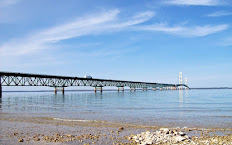
How pure is our State of Michigan when our legislators attempt to undermine the will of the people? (Image courtesy Michigan Department of Natural Resources)
By Michele Bourdieu
LANSING -- Millions of Michiganders voted to pass Proposal 2 on the November 2018 ballot by an overwhelming margin, thus amending the Michigan Constitution to move redistricting out of the Legislature and to an Independent Citizens Redistricting Commission that will redraw the congressional district lines every 10 years. Proposal 2, started by the group Voters Not Politicians, intends to end gerrymandering in Michigan.
Gerrymandering is dividing a state, county, etc., into election districts so as to give one political party a majority in many districts while concentrating the voting strength of the other party into as few districts as possible. It gives one party an unfair political advantage.
Despite the passing of Proposal 2, the lame duck session of the Michigan legislature has allowed the Republicans to propose bills that would undermine the will of the voters as expressed in the November 2018 election. One of these is Senate Bill 1254, which is described as "a bill to provide for certain duties of the secretary of state relating to the independent citizens redistricting commission; to provide for certain rules and procedures governing the application and selection process for commissioners; to prescribe standards for establishing political party affiliation; to prohibit individuals affiliated with a political party from providing services to the commission; to provide civil sanctions; and to provide for the powers and duties of certain state and local governmental officers and entities."
According to Voters Not Politicians, Senate Bill 1254 is unconstitutional, unnecessary, and unethical. It directly undermines the self-executing redistricting reform amendment (Proposal 2 on the ballot) that was overwhelmingly supported by 61 percent of Michigan voters. Senate Bill 1254 is unnecessary because the constitutional amendment does not need or even allow involvement from the Legislature. Senate Bill 1254 is unethical because it undermines the will of the voters.*
According to Michigan's Bridge magazine SB 1254 is only one of several bills being proposed in this lame duck session that would make major changes affecting Michigan’s government, environment and more.**
On Dec. 11 outgoing Michigan Senator Tom Casperson's bill, SB 1197 for constructing a tunnel under the Straits of Mackinac to "protect" the aging Line 5 pipeline was passed and on Dec. 12 outgoing Governor Snyder signed it into law as Public Act 359 of 2018, despite the fact that Governor-elect Gretchen Whitmer and Attorney General-elect Dana Nessel have opposed the tunnel plan and called for decommissioning Line 5.
Another of Sen. Casperson's anti-environment bills, SB 1211, "would carve out a slew of exemptions to state permitting requirements for property owners wanting to fill, dredge or build upon wetlands and lakes," according to the Bridge.**
A Dec. 5, 2018, Bridge article on Sen. Casperson states, "Casperson, who is term-limited, is behind a slew of bills that would loosen state environmental regulations in favor of industry, developers and other private property owners. The efforts include opening more wetlands and lakes to unregulated development, allowing landfills to accept more low-level radioactive waste and preempting local control over tree cutting and removal."***
House Bill 6595, on validity of signatures on initiative petitions, would amend the Michigan Election Law to set new requirements for signatures collected on initiative petitions and state that failure to comply with them would render the signatures invalid and unable to be counted.
Subjects of other lame-duck proposed bills include marijuana (changing elements of the November ballot's Proposal 1 approved by voters), changes in regulations for toxic chemicals, repeal of Michigan's 10-cent bottle deposit law, minimum wage, sick leave and other power grabs by Republicans in both the Michigan House and the Michigan Senate.**
A Dec. 11, 2018, article in The Guardian, "Courts likely to strike down Republican lame-duck power grabs, experts say," holds some optimism for Democrats' legal challenges to the Republican power grabs in the Michigan legislature.
"In short, some experts see the moves as a dramatic overreach by one
branch of government to grab powers in the domain of others: one
probably doomed to fail when it is legally challenged," the article states.
The article notes claims by legal experts that these Republican-controlled legislature efforts to limit executive power are unconstitutional.
* Click here to learn more about SB 1254 and how you can contact your state legislators to ask that they vote "NO" on SB 1254.
** Click here to read the Bridge magazine's "Lame Duck Tracker."
*** See the Bridge magazine's article on outgoing Sen. Tom Casperson, "Michigan Republican Senator: I’m no anti-environmental villain."
Editor's Note:
Michigan residents, you can contact Governor Snyder and express your views on these proposed bills by calling (517) 373-3400, (517) 335-7858 (constituent services) or emailing governorsoffice@michigan.gov.
Showing posts with label Michigan State Sen. Tom Casperson. Show all posts
Thursday, December 13, 2018
Lame-duck power grabs by Michigan's Republican-controlled legislature undermine voters' will; proposed bills may be unconstitutional
Sunday, June 26, 2016
The Political Project of MCRC v. EPA, Revisited
By Louis V. Galdieri*
Posted June 18, 2016, on Louis V. Galdieri's blog
Reprinted in part with permission
Judge Robert Holmes Bell dismissed the Marquette County Road Commission’s case against the EPA back in May, and last week the Road Commission’s attorneys at Clark Hill PLC filed a motion to alter and amend that judgment. They complain that the Court’s dismissal for failure to state a claim is not only mistaken on points of law but, more dramatically, it allows the "EPA and the Corps to wage a war of attrition on local governments seeking to protect the health and welfare of their people."
I was struck by this inflammatory piece of political rhetoric about federal overreach for a couple of reasons. First, because it’s just the sort of hyperbolical language Michigan State Senator Tom Casperson and StandUP, the 501c4 dark-money organization funding the Road Commission lawsuit, have used to frame the case for County Road 595 and advance what, in a series of posts (1, 2, 3, 4) last summer, I called the political project of MCRC v. EPA. Second, because the motion here tacitly admits that mining activity on the Yellow Dog Plains has put "the health and welfare" of people in Marquette County at risk. Rio Tinto and then Lundin Mining proceeded with their plans to mine copper and nickel at Eagle Mine and truck it to Humboldt Mill without a clear haul route. They not only went ahead; they were permitted by the state to do so. The risk was transferred to the public....
Click here to read the rest of this article on Louis V. Galdieri's blog.
* Guest author Louis V. Galdieri is a writer, filmmaker and co-director of the acclaimed 1913 Massacre, a documentary film about the Italian Hall tragedy in Calumet. (Inset photo of Louis V. Galdieri courtesy Save the Wild U.P.)
Editor's Note: See also Keweenaw Now's June 17, 2016, article from Save the Wild U.P.: "Environmentalists applaud dismissal of Road Commission's CR595 lawsuit."
Posted June 18, 2016, on Louis V. Galdieri's blog
Reprinted in part with permission
Judge Robert Holmes Bell dismissed the Marquette County Road Commission’s case against the EPA back in May, and last week the Road Commission’s attorneys at Clark Hill PLC filed a motion to alter and amend that judgment. They complain that the Court’s dismissal for failure to state a claim is not only mistaken on points of law but, more dramatically, it allows the "EPA and the Corps to wage a war of attrition on local governments seeking to protect the health and welfare of their people."
I was struck by this inflammatory piece of political rhetoric about federal overreach for a couple of reasons. First, because it’s just the sort of hyperbolical language Michigan State Senator Tom Casperson and StandUP, the 501c4 dark-money organization funding the Road Commission lawsuit, have used to frame the case for County Road 595 and advance what, in a series of posts (1, 2, 3, 4) last summer, I called the political project of MCRC v. EPA. Second, because the motion here tacitly admits that mining activity on the Yellow Dog Plains has put "the health and welfare" of people in Marquette County at risk. Rio Tinto and then Lundin Mining proceeded with their plans to mine copper and nickel at Eagle Mine and truck it to Humboldt Mill without a clear haul route. They not only went ahead; they were permitted by the state to do so. The risk was transferred to the public....
Click here to read the rest of this article on Louis V. Galdieri's blog.
* Guest author Louis V. Galdieri is a writer, filmmaker and co-director of the acclaimed 1913 Massacre, a documentary film about the Italian Hall tragedy in Calumet. (Inset photo of Louis V. Galdieri courtesy Save the Wild U.P.)
Editor's Note: See also Keweenaw Now's June 17, 2016, article from Save the Wild U.P.: "Environmentalists applaud dismissal of Road Commission's CR595 lawsuit."
Tuesday, February 16, 2016
Guest article: A Postscript on the Political Project of MCRC v. EPA
By Louis V. Galdieri
Posted on his blog Feb. 15, 2016*
Reprinted with permission
A ProPublica investigation of dark money organizations lends context and additional color to some of what I had to say a a short while ago about the Marquette County Road Commission’s (MCRC) lawsuit against the EPA.
Sponsored by State Senator Tom Casperson, the Republican representing Michigan’s 38th district, the MCRC lawsuit is being funded by a non-profit organization called Stand UP. Stand UP is exactly the kind of dark money organization profiled by ProPublica: it’s a special kind of non-profit, a 501c4 "social welfare" organization that is not required by law to disclose the names of donors. It does not have to confine its fundraising and expenditures to the MCRC lawsuit or any other specific purpose. It is a trough of dark money that can serve any number of political efforts.
So, as I tried to suggest in a series of posts on the MCRC complaint (here, here, here and here), while the lawsuit is nominally over a haul road that will serve both mining and timber companies, it also appears to be part of a larger, coordinated effort to sideline federal regulators, stifle local environmental watchdogs, and arrogate the authority and power to direct economic development in the Upper Peninsula to a set of undisclosed actors and moneyed interests.
Now, as Robert Faturechi reports, with efforts in 38 states to make non-profit organizations like Stand UP more accountable and transparent gaining ground, powerful conservative groups are "coaching" allies on how to fight back against any new legislation requiring the disclosure of dark money sources. The tactics they recommend should sound familiar:
Get the debate to focus on an "average Joe," not a wealthy person. Find examples of "inconsequential donation amounts." Point out that naming donors would be a threat to "innocents," including their children, families and co-workers.
And never call it dark money. "Private giving" sounds better.
They urge dark money groups to claim the victim’s mantle and to see conservatives as "a persecuted class," according to one January 2016 memo Faturechi uncovered. It’s "all part of a plan to choke off our air supply of funding," they warn.
The documents presented by Faturechi were distributed at a conference held in Grand Rapids by The State Policy Network. The Network "calls pro-regulation activists 'enemies of debate,'" and generally takes the line that regulation quashes freedom and criminalizes belief -- a refrain often heard from climate change denialists -- and that transparency will only threaten privacy.
The State Policy Network brings together conservative and tea-party organizations from around the country dedicated to "advancing freedom and making a difference," so it’s well positioned to coordinate local efforts like the MCRC lawsuit against the EPA with other state, regional and national causes. In Michigan, the Network’s member organization is the Mackinac Center for Public Policy. Just last week, they ran a widely shared update (303 "likes" and counting) on the MCRC lawsuit in which Casperson crows about the progress they’ve made in the discovery phase of the suit and wails about prejudicial treatment at the EPA.
* Click here to visit Louis V. Galdieri's blog.
Inset photo: Guest author Louis V. Galdieri. (File photo courtesy Save the Wild U.P.)
Posted on his blog Feb. 15, 2016*
Reprinted with permission
A ProPublica investigation of dark money organizations lends context and additional color to some of what I had to say a a short while ago about the Marquette County Road Commission’s (MCRC) lawsuit against the EPA.
Sponsored by State Senator Tom Casperson, the Republican representing Michigan’s 38th district, the MCRC lawsuit is being funded by a non-profit organization called Stand UP. Stand UP is exactly the kind of dark money organization profiled by ProPublica: it’s a special kind of non-profit, a 501c4 "social welfare" organization that is not required by law to disclose the names of donors. It does not have to confine its fundraising and expenditures to the MCRC lawsuit or any other specific purpose. It is a trough of dark money that can serve any number of political efforts.
So, as I tried to suggest in a series of posts on the MCRC complaint (here, here, here and here), while the lawsuit is nominally over a haul road that will serve both mining and timber companies, it also appears to be part of a larger, coordinated effort to sideline federal regulators, stifle local environmental watchdogs, and arrogate the authority and power to direct economic development in the Upper Peninsula to a set of undisclosed actors and moneyed interests.
Now, as Robert Faturechi reports, with efforts in 38 states to make non-profit organizations like Stand UP more accountable and transparent gaining ground, powerful conservative groups are "coaching" allies on how to fight back against any new legislation requiring the disclosure of dark money sources. The tactics they recommend should sound familiar:
Get the debate to focus on an "average Joe," not a wealthy person. Find examples of "inconsequential donation amounts." Point out that naming donors would be a threat to "innocents," including their children, families and co-workers.
And never call it dark money. "Private giving" sounds better.
They urge dark money groups to claim the victim’s mantle and to see conservatives as "a persecuted class," according to one January 2016 memo Faturechi uncovered. It’s "all part of a plan to choke off our air supply of funding," they warn.
The documents presented by Faturechi were distributed at a conference held in Grand Rapids by The State Policy Network. The Network "calls pro-regulation activists 'enemies of debate,'" and generally takes the line that regulation quashes freedom and criminalizes belief -- a refrain often heard from climate change denialists -- and that transparency will only threaten privacy.
The State Policy Network brings together conservative and tea-party organizations from around the country dedicated to "advancing freedom and making a difference," so it’s well positioned to coordinate local efforts like the MCRC lawsuit against the EPA with other state, regional and national causes. In Michigan, the Network’s member organization is the Mackinac Center for Public Policy. Just last week, they ran a widely shared update (303 "likes" and counting) on the MCRC lawsuit in which Casperson crows about the progress they’ve made in the discovery phase of the suit and wails about prejudicial treatment at the EPA.
* Click here to visit Louis V. Galdieri's blog.
Inset photo: Guest author Louis V. Galdieri. (File photo courtesy Save the Wild U.P.)
Wednesday, December 23, 2015
Letter: Why Casperson's SB 591 mining bill must be stopped
Dear Editor:
Anyone who has been keeping an eye on Michigan Senator Tom Casperson (R-Escanaba) knows he has made a career of getting rid of the state's environmental protections and finding new and creative ways of handing over our public lands and resources to private corporations. His 2015 highlights included an attempt to amend Michigan's 1936 Constitution to allow the legislature to raid the state's Natural Resources Trust Fund to fund private haul roads and other infrastructure for mining and drilling corporations.*
Casperson's latest bright idea is to allow anyone with heavy equipment to mine for native copper (and perhaps other hardrock minerals) just about anywhere, any time and by any method they choose, without significant state environmental or safety regulations. Senate Bill 591 would allow native copper mines to expand at a rate of 1 to 10 acres of land per year, and to remove from 10,000 to 75,000 tons of waste rock each year, not including material removed during excavation and grading. It would require no baseline data (data collected before mining starts) and no monitoring for erosion, air pollution, acid mine drainage or heavy metal contamination. In short it would create a loophole in Michigan’s existing hardrock mining law (Part 632, Section 324 of Act 451 of 1994) big enough to drive a mining haul truck through.
Senate Bill 591 would make several changes to part 632, and it proposes part 634. Under SB 591, all anyone would have to do to obtain a permit for a native copper mine is to submit $5000 along with a basic map of the planned facility and a reclamation plan to the Michigan DEQ (Department of Environmental Quality). The DEQ would then be required to issue a permit within 45 days. The permit would allow an individual or a corporation to conduct all the activities associated with large-scale mining, including clearing and grading, drilling and blasting, and crushing, grinding, and separation of concentrated ore. It would allow excavation of shafts and tunnels, the construction of water impoundments and drainage channels, and the discharge of untreated wastewater into the environment. It would also allow construction of haul roads and power lines. With no provisions for public input, the public would be totally cut out of the permitting process.
This bill was passed by the State Senate on December 15, 2015. It has not yet been passed by the House.**
Conservatives like to say they favor of local control, but SB 591 would take local control away. Sec. 63403 (3) of Casperson’s bill states, "A local unit of government shall not regulate or control mining activities that are subject to this part and does not have jurisdiction concerning the issuance of permits for those activities." Local governments would only be allowed to pass ordinances limiting highly disruptive activities such as blasting rock at night.
Casperson's bill would give fly-by-night operators a fast-track mining permit at the expense of our air, land and water -- and our way of life. Senate Bill 591 must be stopped.
If you care about this issue, call your Representative in the State House and ask him/her to vote against SB 591.***
Steve Garske
Save the Wild U.P. Board Member
(Inset photo of Steve Garske courtesy Save the Wild U.P.)
Author's Notes:
* See Senate Bill 0016 of 2015.
** See SB 0591 of 2015.
*** You can contact 110th District Rep. Scott Dianda on his Web site here or email him at sjdianda@gmail.com. You can contact 109th District Rep. John Kivela here or email him at.johnkivela@house.mi.gov. Other Michigan Representatives can be located here.
Editor's Note: An earlier version of this letter appeared in the December Marquette Monthly. This letter has been updated slightly now that the bill has passed the State Senate.
Anyone who has been keeping an eye on Michigan Senator Tom Casperson (R-Escanaba) knows he has made a career of getting rid of the state's environmental protections and finding new and creative ways of handing over our public lands and resources to private corporations. His 2015 highlights included an attempt to amend Michigan's 1936 Constitution to allow the legislature to raid the state's Natural Resources Trust Fund to fund private haul roads and other infrastructure for mining and drilling corporations.*
Casperson's latest bright idea is to allow anyone with heavy equipment to mine for native copper (and perhaps other hardrock minerals) just about anywhere, any time and by any method they choose, without significant state environmental or safety regulations. Senate Bill 591 would allow native copper mines to expand at a rate of 1 to 10 acres of land per year, and to remove from 10,000 to 75,000 tons of waste rock each year, not including material removed during excavation and grading. It would require no baseline data (data collected before mining starts) and no monitoring for erosion, air pollution, acid mine drainage or heavy metal contamination. In short it would create a loophole in Michigan’s existing hardrock mining law (Part 632, Section 324 of Act 451 of 1994) big enough to drive a mining haul truck through.
Senate Bill 591 would make several changes to part 632, and it proposes part 634. Under SB 591, all anyone would have to do to obtain a permit for a native copper mine is to submit $5000 along with a basic map of the planned facility and a reclamation plan to the Michigan DEQ (Department of Environmental Quality). The DEQ would then be required to issue a permit within 45 days. The permit would allow an individual or a corporation to conduct all the activities associated with large-scale mining, including clearing and grading, drilling and blasting, and crushing, grinding, and separation of concentrated ore. It would allow excavation of shafts and tunnels, the construction of water impoundments and drainage channels, and the discharge of untreated wastewater into the environment. It would also allow construction of haul roads and power lines. With no provisions for public input, the public would be totally cut out of the permitting process.
This bill was passed by the State Senate on December 15, 2015. It has not yet been passed by the House.**
Conservatives like to say they favor of local control, but SB 591 would take local control away. Sec. 63403 (3) of Casperson’s bill states, "A local unit of government shall not regulate or control mining activities that are subject to this part and does not have jurisdiction concerning the issuance of permits for those activities." Local governments would only be allowed to pass ordinances limiting highly disruptive activities such as blasting rock at night.
Casperson's bill would give fly-by-night operators a fast-track mining permit at the expense of our air, land and water -- and our way of life. Senate Bill 591 must be stopped.
If you care about this issue, call your Representative in the State House and ask him/her to vote against SB 591.***
Steve Garske
Save the Wild U.P. Board Member
(Inset photo of Steve Garske courtesy Save the Wild U.P.)
Author's Notes:
* See Senate Bill 0016 of 2015.
** See SB 0591 of 2015.
*** You can contact 110th District Rep. Scott Dianda on his Web site here or email him at sjdianda@gmail.com. You can contact 109th District Rep. John Kivela here or email him at.johnkivela@house.mi.gov. Other Michigan Representatives can be located here.
Editor's Note: An earlier version of this letter appeared in the December Marquette Monthly. This letter has been updated slightly now that the bill has passed the State Senate.
Tuesday, September 10, 2013
Letter: Support petition drive for referendum on PA 21 and wolf hunt
Photo of wolf courtesy wolfwatcher.org. Reprinted with permission.
Please support the petition drive to help repeal Public Act 21.
It’s not just about the wolves. Passage of PA 21 means that Michigan voters can no longer appeal the naming of any animal as a game species, a right we’d held since 1908. How did we get to this point?
In December 2012, the Michigan legislature enacted PA 520 designating the wolf as a game animal and authorized the Natural Resources Commission (NRC) to establish a wolf hunt. More than 255,000 signatures were collected from citizens opposed to the hunt and were submitted in March of this year, earning PA 520 a place on the November 2014 ballot. This also meant there could be no wolf hunt before the votes were in.
Senator Tom Casperson introduced SB 288 in April, crafting a bill that would allow the Natural Resources Commission, in addition to the legislature, to add animals to the list of game species. As a politically appointed, regulatory body, NRC’s decisions cannot be subjected to a referendum. Governor Snyder signed SB 288, now known as PA 21, into law on May 8, enabling the NRC to reinstate the hunt, which they have done.
The citizens of Michigan have a constitutional right to challenge any recently passed legislation, with the exception of instances where the attached appropriations are vital to the functioning of our state government. The escalating use of appropriations to subvert the ability of citizens to utilize this important system of checks and balances, with notable examples being the Emergency Financial Manager and Right-to-Work laws, is a huge concern.
With the introduction of SB288/PA 21, Casperson found yet another way to undermine democracy. He said he did it to protect Michigan citizens from special interest groups like the Humane Society and to ensure that the people of the Upper Peninsula are heard. He neglected to mention that groups like Safari International lobbied for a wolf hunt, and that he has effectively silenced the voices of the more than 255,000 Michigan residents who signed the petition to subject PA 520 to referendum.
Our choices now are to lie down and take it, or dust ourselves off and fight for our right to vote on wildlife management issues. Repealing PA 21 and PA 520 will restore that right. What we cannot do is repeal the current wolf hunt so speedily established by the NRC. There will be wolves killed in Michigan this fall. Whether or not you think wolves should be "harvested," this is an outrage. And with their new found authority, we can expect the NRC to add the sandhill crane and possibly lynx to the list of game species to be hunted.
During First Friday events in Calumet on Sept. 6, 2013, Diane Miller, left, collects signatures on the petition for a referendum on PA 21 -- the second petition drive to allow Michigan voters to decide whether a wolf should be a game species. Signing the petition on Fifth Street in Calumet are, from left, Nancy Sprague, Bill Sewell and Oren Tikkanen. See below to learn how you can sign the petition. (Photo by Keweenaw Now)
The repeal of PA 520 will be on the November 2014 ballot and the petition drive to repeal PA 21 is underway. To learn more about the current campaign, go to http://keepwolvesprotected.com/. If you wish to help by gathering signatures, click on Gather Signatures so you can obtain petition sheets. It is not necessary to write a letter of endorsement. If you are in the Marquette area and wish to sign the petition, please email me at brinkleycourt@yahoo.com. You just need to be a Michigan voter to sign it.
Catherine Parker
Marquette, Michigan
Editor's Notes:
Several people in the local area are collecting signatures for the petition on PA 21. You may contact Diane Miller in the Houghton / Hancock area by calling her at 906-370-1069 and she will arrange to help you sign the petition. She will also be at the Parade of Nations on Sept. 14 collecting signatures from Michigan voters.
UPDATE: In addition, Keep Michigan Wolves Protected will have a table during the Parade of Nations events at the Dee Stadium from 11 a.m. to 3 p.m. on Saturday, Sept. 14, for Michigan voters who wish to sign the petition there.
Chris Alquist, who works in the Portage Lake District Library in Houghton, also has petition sheets you may request to sign in the library.
In the Marquette area, Jackie Winkowski of Gwinn, Great Lakes advisor for Wolfwatcher, is also collecting signatures. You may email her at jwsnowyplains@yahoo.com.
Other petition gathering events are listed on the Keep Michigan Wolves Protected Web site. Click here to find an event near you.
UPDATE: Anyone interested in signing a petition personally can request a petition form via U.S. mail by emailing katie@keepwolvesprotected.com, or call KMWP at 517-993-5201.
UPDATE: Charlotte Loonsfoot of KBIC is now collecting petition signatures in Baraga. You can call her at 906-235-4220 and she will arrange for you to sign it.
Jackie Winkowski has written a letter to the editor on this issue, published in the September 2013 Marquette Monthly. She gives more details on the reasons for the petition drive. Click here and scroll down to read her letter under City Notes.
See also our Aug. 25, 2013, article, "Wolf advocates kick off second petition drive, seek referendum on Michigan wolf hunt law."
Visit wolfwatcher.org for more information and articles on wolf protection.
Please support the petition drive to help repeal Public Act 21.
It’s not just about the wolves. Passage of PA 21 means that Michigan voters can no longer appeal the naming of any animal as a game species, a right we’d held since 1908. How did we get to this point?
In December 2012, the Michigan legislature enacted PA 520 designating the wolf as a game animal and authorized the Natural Resources Commission (NRC) to establish a wolf hunt. More than 255,000 signatures were collected from citizens opposed to the hunt and were submitted in March of this year, earning PA 520 a place on the November 2014 ballot. This also meant there could be no wolf hunt before the votes were in.
Senator Tom Casperson introduced SB 288 in April, crafting a bill that would allow the Natural Resources Commission, in addition to the legislature, to add animals to the list of game species. As a politically appointed, regulatory body, NRC’s decisions cannot be subjected to a referendum. Governor Snyder signed SB 288, now known as PA 21, into law on May 8, enabling the NRC to reinstate the hunt, which they have done.
The citizens of Michigan have a constitutional right to challenge any recently passed legislation, with the exception of instances where the attached appropriations are vital to the functioning of our state government. The escalating use of appropriations to subvert the ability of citizens to utilize this important system of checks and balances, with notable examples being the Emergency Financial Manager and Right-to-Work laws, is a huge concern.
With the introduction of SB288/PA 21, Casperson found yet another way to undermine democracy. He said he did it to protect Michigan citizens from special interest groups like the Humane Society and to ensure that the people of the Upper Peninsula are heard. He neglected to mention that groups like Safari International lobbied for a wolf hunt, and that he has effectively silenced the voices of the more than 255,000 Michigan residents who signed the petition to subject PA 520 to referendum.
Our choices now are to lie down and take it, or dust ourselves off and fight for our right to vote on wildlife management issues. Repealing PA 21 and PA 520 will restore that right. What we cannot do is repeal the current wolf hunt so speedily established by the NRC. There will be wolves killed in Michigan this fall. Whether or not you think wolves should be "harvested," this is an outrage. And with their new found authority, we can expect the NRC to add the sandhill crane and possibly lynx to the list of game species to be hunted.
During First Friday events in Calumet on Sept. 6, 2013, Diane Miller, left, collects signatures on the petition for a referendum on PA 21 -- the second petition drive to allow Michigan voters to decide whether a wolf should be a game species. Signing the petition on Fifth Street in Calumet are, from left, Nancy Sprague, Bill Sewell and Oren Tikkanen. See below to learn how you can sign the petition. (Photo by Keweenaw Now)
The repeal of PA 520 will be on the November 2014 ballot and the petition drive to repeal PA 21 is underway. To learn more about the current campaign, go to http://keepwolvesprotected.com/. If you wish to help by gathering signatures, click on Gather Signatures so you can obtain petition sheets. It is not necessary to write a letter of endorsement. If you are in the Marquette area and wish to sign the petition, please email me at brinkleycourt@yahoo.com. You just need to be a Michigan voter to sign it.
Catherine Parker
Marquette, Michigan
Editor's Notes:
Several people in the local area are collecting signatures for the petition on PA 21. You may contact Diane Miller in the Houghton / Hancock area by calling her at 906-370-1069 and she will arrange to help you sign the petition. She will also be at the Parade of Nations on Sept. 14 collecting signatures from Michigan voters.
UPDATE: In addition, Keep Michigan Wolves Protected will have a table during the Parade of Nations events at the Dee Stadium from 11 a.m. to 3 p.m. on Saturday, Sept. 14, for Michigan voters who wish to sign the petition there.
Chris Alquist, who works in the Portage Lake District Library in Houghton, also has petition sheets you may request to sign in the library.
In the Marquette area, Jackie Winkowski of Gwinn, Great Lakes advisor for Wolfwatcher, is also collecting signatures. You may email her at jwsnowyplains@yahoo.com.
Other petition gathering events are listed on the Keep Michigan Wolves Protected Web site. Click here to find an event near you.
UPDATE: Anyone interested in signing a petition personally can request a petition form via U.S. mail by emailing katie@keepwolvesprotected.com, or call KMWP at 517-993-5201.
UPDATE: Charlotte Loonsfoot of KBIC is now collecting petition signatures in Baraga. You can call her at 906-235-4220 and she will arrange for you to sign it.
Jackie Winkowski has written a letter to the editor on this issue, published in the September 2013 Marquette Monthly. She gives more details on the reasons for the petition drive. Click here and scroll down to read her letter under City Notes.
See also our Aug. 25, 2013, article, "Wolf advocates kick off second petition drive, seek referendum on Michigan wolf hunt law."
Visit wolfwatcher.org for more information and articles on wolf protection.
Thursday, June 06, 2013
State Sen. Casperson to host town hall meeting June 7 in Calumet
CALUMET -- State Sen. Tom Casperson will host a town hall meeting with constituents from 5:30 p.m. to 7 p.m. on Friday, June 7, at the Calumet High School auditorium.
Casperson will give a brief overview of current issues facing the Michigan Legislature. A question and answer session will follow. The event is free and open to the public.
Subscribe to:
Posts (Atom)